Myocardial ischemia
 Ischemia of the myocardium is an acute or continuous inconsistency of myocardial needs in oxygen and nutrients to the magnitude of coronary blood flow. The frequency of occurrence of myocardial ischemia in the world practice of cardiologists is high and unfortunately the percentage of death from this pathology is also high, even despite the progressive successes in the treatment of coronary heart disease.
There is a definite direct correlation dependence of the incidence rate of myocardial ischemia and age increase. The maximum incidence of myocardial ischemia is observed in the age group after 50 years. In female patients, the incidence of a painless form of ischemia significantly prevails, while acute myocardial ischemia is more characteristic of the male part of the population. For women, a factor of increased risk of myocardial ischemia is the onset of the climacteric period, during which there is a progressive increase in blood cholesterol and a tendency to elevated blood pressure figures.
Causes of myocardial ischemia
The most common etiopathogenetic cause of myocardial ischemia is an atherosclerotic lesion of the vessels of the coronary bed. Very rarely there is a development of myocardial ischemia as a result of inflammation of the coronary arteries, which occurs with syphilitic damage, systemic vasculitis and diffuse connective tissue diseases.
The main etiopathogenetic mechanisms of myocardial ischemia development are the organic narrowing of the coronary arteries, caused by atherosclerotic lesion, coronary spasm, microcirculation disturbance and coronary thrombosis.
Organic narrowing of the lumen of the coronary arteries is due to the fact that this segment of the blood channel is the favorite localization of atherosclerotic changes. As a result of the narrowing of the lumen of the coronary artery, due to the intraluminal location of the atherosclerotic plaque, compensatory expansion of the distal coronary artery develops, temporarily eliminating hemodynamic disturbances. Another compensatory mechanism for myocardial ischemia is the formation of bypass anastomoses. With the depletion of the compensatory possibilities of the collateral circulation, a clinic of myocardial ischemia develops.
Some clinical forms of myocardial ischemia can be provoked by coronarospasm, which is extremely short-lived and is successfully stopped by the intake of nitrate-containing drugs. The appearance of coronarospasm in myocardial ischemia is most often provoked by increased reactivity of the affected coronary artery in response to vasoconstrictive action, hyperventilation with increased physical activity, local decrease in the production of humoral substances of vasodilator action due to high cholesterol content in the blood.
Subepicardial myocardial ischemia develops most often as a result of hemodynamic disorders at the microcirculatory level caused by the formation of unstable platelet aggregates that are prone to rapid spontaneous disaggregation. With an increase in the size of these platelet aggregates, caused by an increase in thromboxane A production, subendocardial myocardial ischemia can develop.
Coronary thrombosis, as one of the etiopathogenetic mechanisms of the development of myocardial ischemia, is formed as a result of ulceration of an existing atherosclerotic plaque. The duration of coronary thrombosis directly depends on the severity of hypercoagulable changes in hemostasis. In a situation where fibrinolytic activity is preserved, spontaneous thrombolysis and independent elimination of signs of myocardial ischemia of an irreversible nature can develop.
Symptoms and signs of myocardial ischemia
In regard to the clinical symptom complex, characteristic of myocardial ischemia, it is necessary to distinguish between pathognomonic manifestations in the form of a typical anginal attack and nonspecific clinical symptoms that can be observed in other diseases.
The so-called "anginal attack" in myocardial ischemia is a dramatic progressive appearance of severe pain in the squamous area of the constricting burning nature, which often occurs after physical activity or against the background of complete well-being, which is an unfavorable clinical sign. Irradiation of the pain syndrome can spread even to the inguinal region, but is most often limited to the upper humeral girdle.
The duration of an anginal attack in ischemia of the myocardium directly depends on the clinical form of this pathology and can vary from 5 minutes, as with angina, to half an hour, which is observed with myocardial infarction.
In an insignificant part of patients suffering from myocardial ischemia, atypical pain localization is observed, for example, in the epigastric region, simulating clinical manifestations of gastroenterological diseases. Such an abdominal type of anginal attack in ischemia of the myocardium is more typical for female patients. Also atypical clinical variants of myocardial ischemia include asthmatic, in which the patient has absolutely no pain, and breathing disorders progress.
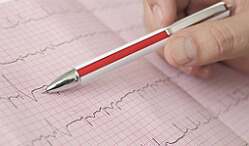
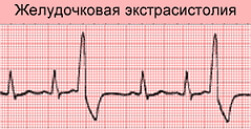
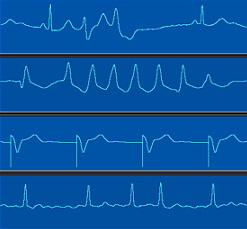
Diagnosis of myocardial ischemia solely on the basis of clinical manifestations is not possible. Instrumental techniques for diagnosing damage to the heart muscle, such as electrocardiography, are more reliable. When performing ECG-registration, you can not only suspect the fact of ischemic myocardial damage, but also to determine the localization of damage to the heart muscle. Thus, myocardial ischemia of the lower region of the left ventricle is accompanied by the appearance of direct ECG changes in the II, III, V7-9 leads, as well as reciprocal changes in the leads V1-4.Transmural myocardial ischemia of the left ventricle with localization in the anterior or posterior wall is manifested by the rise or opposite of the ST segment depression, as well as the appearance of a negative coronary T wave mainly in the thoracic leads. Difficultly diagnosed localization is ischemia of the posterior wall of the myocardium, for the detection of which electrocardiography is required not only in standard but also in additional leads.
Painless myocardial ischemia
The conclusion "painless myocardial ischemia" can be established solely from the data of additional instrumental methods of examination, in spite of the fact that this type of ischemia belongs to clinical forms. For painless myocardial ischemia, the same etiopathogenetic mechanisms of development are inherent in other clinical forms( metabolic disturbances, changes in myocardial electrical activity, perfusion) with the only difference that they are transient and not accompanied by the development of a typical clinical picture, For example, angina pectoris.
The painless form of myocardial ischemia can be equally common in people with an unidentified pre-diagnosis of "myocardial ischemia" and in patients suffering from other clinical forms of this pathology( angina pectoris) for a long time. According to the findings of numerous randomized studies devoted to the study of the phenomenon of painless myocardial ischemia, in 3% of cases the registration of signs of this pathology on ECG is observed in absolutely healthy people. The appearance of painless ischemia is facilitated by a decrease in the overall pain sensitivity to various kinds of irritants. The pathogenetic basis of painless myocardial ischemia is not only vasoconstriction, but also an increase in the need for cardiac muscle in oxygen.
The leading link in the establishment of this clinical form of myocardial ischemia is a comprehensive instrumental examination of a person. Painless ischemia of the myocardium on ECG is recorded exclusively when Holter daily monitoring is used and its signs are similar to those that exist in other variants of the course of this pathology. In addition to routine electrocardiographic studies, it is advisable to carry out stress echocardiography with the help of physical and pharmacological tests, but coronarography has the highest percentage of reliability with respect to verification of the diagnosis.
Treatment of myocardial ischemia
All the therapeutic measures used to establish a patient's myocardial ischemia are aimed at improving the quality of life, directly dependent on the reduction in the frequency of angina attacks, preventing the development of complications of the cardiac profile and increasing the percentage of survival.
Initial therapeutic measures are correction of modifiable risk factors, meaning complete rejection of bad habits, leveling of dyslipidemic disorders by the method of correction of eating behavior, avoidance of excessive psycho-emotional and physical activity.
With respect to drug treatment of myocardial ischemia, a wide variety of medicines is currently used, which can be combined into small groups based on etiopathogenetic orientation. Thus, antianginal symptomatic therapy involves the appointment of beta-blockers to the patient( Atenolol in a daily dose of 100 mg), which provide a reduction in not only the severity, but also the frequency of episodes of ischemia during the first month of regular admission. Patients suffering from frequent ischemic episodes with severe pain syndrome, note the rapid and effective relief of pain syndrome with the use of nitrate-containing drugs, even in oral form( Nitroglycerin sublingual 1 tablet).The choice of nitrates of prolonged or short pharmacological action directly depends on the clinical form of myocardial ischemia( with angina pectoris of functional class III, it is preferable to use prolonged forms of the drug).
Recent randomized studies in the field of pharmacological correction of anginal myocardial ischemia confirmed the positive results of using Trimetazidine at a daily dose of 60 mg, which is a drug of metabolic action. The antianginal effect of Trimetazidine is due to its ability to optimize energy metabolic processes occurring in the myocardium, improve microcirculation of the heart muscle and improve blood flow in the coronary arteries.
With respect to etiotropic therapy, the drugs of choice for myocardial ischemia are the drugs of hypolipidemic action( Torvacard 40 mg 1 p / day), provided they continue to be systematically taken.
All patients suffering from any pathogenetic or clinical form of myocardial ischemia are shown lifelong use of antiplatelet agents( Cardiomagnet 1 tablet at night) in order to minimize the risk of complications of the cardial profile.
Recently, cardiosurgery has improved significantly, allowing revascularization of the myocardium in ischemia, but this surgical manual should be performed solely on strict indications( absence of a positive effect from the use of drug therapy, a high risk of complications of the cardial profile, and a history of episodes of ventricular arrhythmia).The choice of an operational benefit for myocardial ischemia depends directly on the severity of hemodynamic disorders and the degree of stenosis of the coronary artery.
Ischemia of the myocardium - which doctor will help the ?If there is or suspected development of myocardial ischemia, you should immediately seek advice from such specialists as a therapist, cardiologist.