
Prader-Willi syndrome
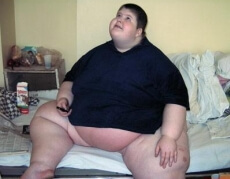 Prader-Willi syndrome is a genetic rare anomaly characterized by the arrest of the work of genes, or scientifically this phenomenon is caused by the lack of expression, which means the transfer of hereditary information from DNA to RNA.The function of genes in this case is to include in the work at the proper time. For example, boys do not have hair growth on their face in childhood, and this phenomenon begins after the onset of puberty. This disease was first described in 1956.
Prader-Willy syndrome occurs with a frequency of one case per 12,000 babies born. This disease was described in his works by Heinrich Willy, Andrea Prader, Andrew Ziegler, Alexis Labhart, Guido Fanzoni.
Pradera-Willy Syndrome Causes of
This disease is characterized by the absence or non-expression of the seven genes from the fifteenth chromosome inherited from the father. The Prader-Willi syndrome is noted with changes in the paternal chromosome, and in the case of a change in the maternal chromosome, Angelmann syndrome is observed.
In the gene set that causes the emergence of Prader-Willi syndrome, a copy of the gene obtained from the father is actively functioning, and the mother is not. This means that when most people have one working copy of these genes, then patients with Prader-Willi syndrome live without such a copy.
Prader-Willi syndrome
symptoms This disease is characterized by hip dysplasia, hypotension( decreased muscle tone), obesity( prerequisites for overeating occur by the 2-year).Sufferers of Prader-Willi syndrome have reduced coordination of movements, as well as low bone density, are owners of small feet and brushes, of low stature, prone to sleep, strabismus, and have a curvature of the spine. For such people is characterized by thick saliva, hypogonadism( decreased functions of sexual glands), the presence of bad teeth, infertility. Patients are characterized by mental retardation, as well as speech development, lag in puberty and experience difficulties in mastering motor skills.
Prader-Willi syndrome and signs of this disease are visually marked by a large bridge of nose, narrow and high forehead, almond-shaped eyes, narrow lips. All these signs and symptoms do not appear on one patient. Often, the patient meets up to five of the above symptoms.
Prader-Willi syndrome diagnosis
This disease can be diagnosed before birth. This is indicated by low mobility of the fetus or often the wrong position of the child, as well as polyhydramnios( amniotic fluid in excessive amounts).
Prader-Willi syndrome is often diagnosed after genetic analysis. This analysis is made by a newborn with a hypotonic( decreased muscle tone).Sometimes doctors make mistakes and diagnose Down's syndrome or myopathy. Signs of diagnosing the disease after birth include: birth through caesarean section, breech presentation, hypotension, lethargy, weak sucking reflex due to weakened muscle tone of the baby, difficulty in breathing, hypogonadism.
Children with Prader-Willi syndrome are similar, so an experienced geneticist immediately diagnoses the disease, even without waiting for the results of a blood test.
Prader-Willi syndrome and Angelmann syndrome
To date, another disease known as the sister disease of Prader Willy syndrome is known. This disease was called Angelman. It is characterized by a mutation in the maternal genetic material. The results of most independent studies indicate such causes of the disease as a mutation in the gene. The product of this gene is the enzyme component of the whole complex system of protein degradation. This disease is named after the pediatrician from Britain, Harry Angelmann, who described him in 1965.
Prader-Willi syndrome treatment
Disease, being a congenital genetic abnormality, remains unclear and the methods of its treatment have not been developed.
How to treat Prader-Willi syndrome? Nevertheless, there are some medical measures that improve people's quality of life. For example, children with hypotension require massage, as well as other types of special therapy. It shows the use of special techniques to improve the development of the child, as well as classes with a defectologist and speech therapist. Children 7, 8, 9 years with Prader-Willi syndrome are assigned growth hormones, hormone therapy with gonadotropins is also indicated.
Prader-Willy syndrome in boys is manifested in hypogonadism, micro penia, as well as cryptorchidism( not ovulation of the testicles).In such a situation, doctors recommend or wait until the testicles descend, or recommend surgical intervention with hormone therapy. To correct weight gain, a diet is prescribed that limits the amount of carbohydrates and fats. If obesity is already available, then the quantity and quality of food that is absorbed by patients with Prader-Willi syndrome should be monitored. For such people wolfish appetite is characteristic. Possible complication of the course of the disease of apnea, characterized by a delay in breathing in a dream.
Prader-Willie Syndrome prognosis
When planning a second child, these same parents may have a second risk of this disease. It depends on the mechanism causing the genetic malfunction. The risk is less than 1% in cases where the first child has a gene deletion or single-parent parthenogenetic disosmy. The risk is up to 50%, provided that the failure is caused by the mutation. The risk of up to 25% remains with the translocation of parental chromosomes. In any case, parents need to do a genetic examination.
Prader-Willi syndrome and its prognosis often retains a delay in speech as well as mental development. Studies conducted by Freim and Kerfs showed that 5% of patients have an average intelligence coefficient. This equates to 85 or more points on the IQ scale.27% of patients have a level of intelligence on the brink of the average, which is estimated at 70-85 points.34% of patients have an intelligence level corresponding to 50-70 points.27% of patients stay at the level of the average gap and are estimated 35-70 points.5% of patients have a strong lag and gain 20-35 points, and less than 1% have a significant lag. Other studies have data that 40% of patients show an average or decreased intelligence.
Children with Prader-Willi syndrome usually have good long-term and visual memory. They are able to learn to read, have a passive, rich vocabulary, however their own speech is often worse than its understanding. The auditory memory, writing skills and mathematical skills, short-term auditory and visual memory also suffer and do not meet age standards.
Prader-Willi syndrome is often accompanied by increased appetite, as the patients have increased blood levels of the ghrelin hormone. For patients, a low concentration of somatoliberin is typical. Some associate this with the 15th chromosome, which has a connection with the hypothalamus. Other data indicate a decrease in the total number of cells, as well as oxytocin-containing cells in the paraventricular nuclei of the hypothalamus. But interestingly, there is evidence that suggests the opposite: autopsy of the dead with this disease often does not show defects in the hypothalamus.