How to identify dyscirculatory encephalopathy?
Contents:
- Diagnosis value "vascular encephalopathy"
- Causes of vascular encephalopathy
- How does dyscirculatory encephalopathy manifest itself?
- How to treat?
Discirculatory encephalopathy is one of the most common neurological diseases to date. In this article, let's talk about what is common between vascular diseases and brain damage, how to identify and treat it? 
Diagnosis value "vascular encephalopathy"
Dyscirculatory encephalopathy is a noninflammatory lesion of the brain that arises from a violation of its blood supply. Unlike a stroke, this disease is a long-flowing, progressive ischemic damage to the central nervous system. In the above-described disease, not the large arteries supplying the brain, but the small arterioles, scattered branching into its tissues, suffer. Neurons are the most sensitive to oxygen deficiency cells in the body.
Important! The mismatch between consumed oxygen and the necessary cells, is the trigger mechanism for the development of the disease.
Causes of vascular encephalopathy
Dysirculatory encephalopathy, the cause of which is diverse, has the only mechanism of development - prolonged ischemia of the brain tissue. Its development is facilitated by the following factors:
- atherosclerotic vascular changes;
- hypertension without appropriate treatment;
- periodic fall in blood pressure( may occur due to improper dosage of drugs that reduce blood pressure, surgery, etc.);
- reduced blood supply to the brain from the vertebral artery system( trauma or osteochondrosis of the cervical spine);
- diabetes;
- ischemic disease of the brain;
- autoimmune diseases( systemic vasculitis);
- low blood pressure;
- cardiac rhythm disturbance;
- violation of outflow of venous blood.
The above factors prevent the flow of blood to the neural cells of the brain. Neurons lack food and die. Due to the fact that the site of the dead tissue has no clear boundaries and localization, and dead cells are located everywhere in the tissue, this process is called "silent infarcts".The term implies that the signs of vascular encephalopathy do not appear for a long time, despite the development of the process. 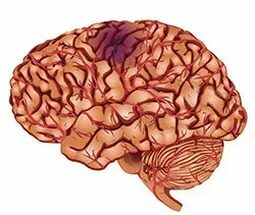
Vascular encephalopathy is characterized by fluctuations in the state due to worsening of the patient's underlying disease, for example, the increase in heart failure.
How does discirculatory encephalopathy manifest itself?
The clinical course is divided into 3 stages according to the severity and severity of the manifestations of dyscirculatory encephalopathy. The multifocal nature of the process determines the clinical picture. The leading symptoms are a change in the person's personality and behavior, as well as obvious violations of motor and autonomic functions.
In the first stage, the patient's complaints about headache, dizziness, a feeling of heaviness in the head, a decrease in concentration, insomnia prevail. Objective signs of the disease at this stage are scarce and are represented by insignificant shakiness of the gait, its slowing down. Additional studies can reveal a decrease in attention, memory, which do not affect the effectiveness of the work performed.
The treatment of dyscirculatory encephalopathy, initiated at this stage, prevents consequences that are often irreversible.
Stage 2 is characterized by a vivid clinical picture of encephalopathy with impaired thinking, loss of attention, loss of control over one's actions, instability in the vertical position of the body and walking, the change of depressive states with emotional attacks. At the same time, the working capacity is significantly reduced. Symptoms of disturbance of other organ systems join, for example, urination becomes more frequent at night. 
In Stage 3, the above symptoms of vascular encephalopathy are characterized by a severe course requiring additional care in the care of the patient. Often there is a disability of the patient and a rough change in his personality.
How to treat?
It is important to solve the underlying cause of vascular encephalopathy, whose treatment is presumed by the appointment:
- antiplatelet drugs( Aspirin);
- of hypoglycemic drugs;
- antihypertensive drugs( substances that reduce blood pressure).
Along with this, the patient is prescribed drugs that improve blood flow in the brain, prevent damage to neurons( antioxidants), and also improve blood circulation in the ischemic area. Given the progressing course of the disease, the course of drug therapy should not be interrupted.
No less important in the treatment of dyscirculatory encephalopathy is the diet, which includes:
- rejection of fatty, fried, smoked food;
- decrease in the amount of salt consumed( no more than 2 grams per day);
- sufficient fluid intake( 1.5-2 liters);
- exclusion of fast food from the diet.
It is worth saying that the death of nerve cells is an irreversible and fast flowing process, requiring urgent and clear action. If you have general symptoms, you should pay attention to them and turn to the doctor on time to not miss the precious time for treatment.
write the question in the form below: