Ischemic heart disease - signs, forms, treatment
Ischemic heart disease( CHD) is a disease associated with a mismatch between the need of the heart in oxygen and the ability of blood vessels to provide this need. Arteries of the heart are called coronary, so IHD has the definition of coronary heart disease( CBC).This emphasizes the relationship of the disease with the changes in blood vessels, because there are diseases that are similar in appearance to IHD, not associated with the pathology of the arteries of the heart. These are injuries, anemia, poisoning, inflammation, heart defects, etc.
One third of the world's population have CFS, as many suffer from arterial hypertension, excess body weight, are smokers. The importance of the problem of IHD is to increase the loss of productive years of life. The increase in the incidence of IHD inhibits the economic progress of the state, hitting the most able-bodied part of the population, qualified personnel.
Contents
- 1 Why does it occur?
- 2 Types of IHD and their manifestations
- 3 How is the diagnosis made?
- 4 Treatments for coronary heart disease
- 4.1 Non-drug therapy
- 4.2 Medication therapy
- 4.3 Surgical therapy
Why does it occur?
There are signs of coronary artery disease with spasm or thrombosis of the arteries of the heart( see Figure 1), as well as with the loss of the ability of the vessels to increase the clearance in response to physical, emotional stress. In older men, manifestations of IHD can be triggered by the ingestion of abundant food. This condition of the heart vessels is associated with the development of atherosclerosis, of which we know almost everything except the cause. Its essence consists in changing the properties of the inner layer of large arteries, the development of nonspecific inflammatory processes with a decrease in the lumen of the vessels, and the loss of their elasticity.
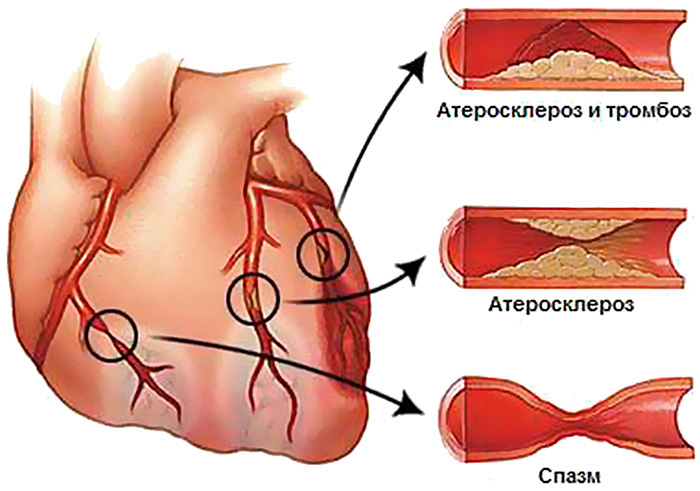
Fig.1 - Causes of coronary heart disease.
90% of cases of coronary artery disease are associated with the development of coronary artery atherosclerosis and instability of its course( see Figure 2).Much less often this is a systemic lesion of arteries of a different nature( especially rheumatic diseases).Less common is coronary artery disease in the form of functional vessel spasms without changing their walls.
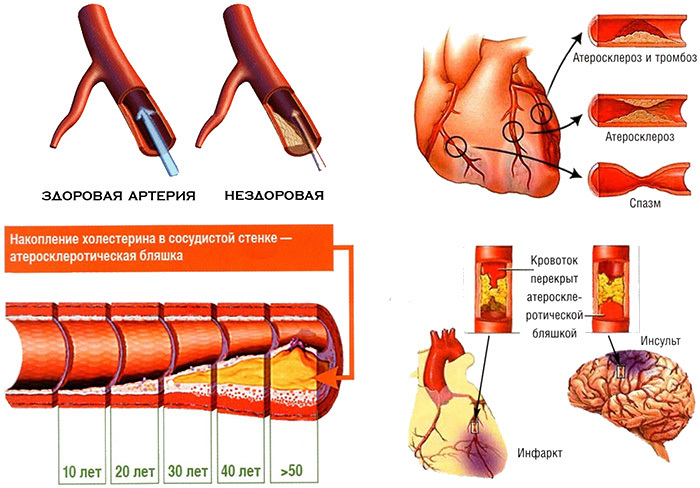
Fig.2 - Factor of atherosclerosis in ischemic heart disease and stroke.
In the structure of the mortality of men in the world, KBC occupies almost 15%, women fall behind by 2%( but by 2% more often die from strokes).The constant growth of these figures is associated with the degree of population aging, an increase in life expectancy, almost no connection with income level, geographical location. Long-term observations of scientists have established a clear connection of severe forms of atherosclerosis with conditions that were called "risk factors".These are:
- decrease in the level of physical activity;
- excess weight;
- diabetes;
- arterial hypertension;
- smoking.
Men are more likely than women to have CBC in middle age( 45-60 years).This is associated with the "protective" effect of estrogen( female sex hormones).Residents of cities have more often than not rural.
The causal relationship between cholesterol and the risk of developing atherosclerosis has long been undeniable. At present, there is evidence of a lack of direct connection of these conditions, as well as life expectancy with cholesterol level( articles by J. Medvedev, 2008).More and more facts of the genetic conditionality of the development of atherosclerosis and KBS, the influence of environmental factors on the manifestations of this pathology.
Types of IHD and their manifestations
IHD is classified by severity, reversibility of the ischemia process. Acute forms develop within a few minutes-hours, chronic - for many years. With the reversible form of cardiac ischemia( angina pectoris), the blood supply of the myocardium is restored, with irreversible( myocardial infarction) - foci of necrosis( dying of the tissue) of the heart muscle develop.
Angina pectoris. The manifestations of IHD in men occur in the form of angina more often than in women, differ classical symptom severity, the main one of which is pain( the cry of the heart for help with lack of oxygen during the episode of ischemia).
Pain:
- occurs when exercising;
- lasts up to half an hour;
- is located behind the sternum;
- has an irradiation( the spread of pain) within the shoulder girdle( less often the pain is localized in the stomach);
- passes at rest, even faster - after taking nitroglycerin.
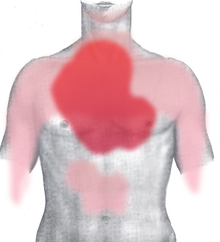
Fig.3 - Irradiation of pain in IHD( the intensity of the color indicates the frequency of occurrence of the spread of pain in this area).
In the presence of diabetes, pain may not be, instead of it there are so-called "equivalents of heart muscle fatigue" in the form of severe weakness, sweating, asphyxia.
Coronary death. This form of IHD as an acute coronary death occurs in men much more often than women. This is a death that has developed for 1-6 hours. The reason for it is considered to be life-threatening heart rhythm disturbances. Necrosis of the myocardium develops in this case does not have time.
Myocardial infarction. Myocardial infarction( MI) in men, unlike women, can be at a young age, but its development up to 40 years in 75% of cases is associated with the presence of alcoholism. The earlier the age of the infarction, the more seriously the prognosis for life. The localization of necrosis is important - extensive lesions of the anterior wall lead to problems of restoring physical activity and working capacity. Manifestations of myocardial infarction are similar to angina pectoris, always require a doctor's examination.
Postinfarction cardiosclerosis. Postinfarction cardiosclerosis is a chronic form of ischemic heart disease, can not appear in men or remind oneself of episodes of angina pectoris, restriction of physical and sexual activity.
How is the diagnosis made?
In the diagnosis of IHD, the main sections are identified:
- description of the pain syndrome( pain and concomitant complaints should be evaluated by a doctor);
- ECG for the detection of signs of necrosis or ischemia;
- registration of changes in blood enzymes;
- other ways of visualizing necrosis or ischemia.
As already mentioned, in men there is a classic pain in any form of IHD, when it forces to stop physical activity. Such a pain almost does not cause doubts in its nature. The frequency of the development of pain, the conditions for their appearance are determined by functional classes.
ECG at the time of an attack of angina registers changes in its final complex, which disappear with the cessation of pain. To provoke such changes in the ECG for the purpose of diagnosis, samples are taken with physical exertion( BEM, Treadmill test), the method of visualizing this condition is ECHO.
In acute myocardial infarction, ECG changes are persistent, associated with the process of scar formation at the site of necrosis. ECG changes correspond to the stage of the process. After myocardial infarction, the ECG acquires features specific to a particular person. Therefore, to diagnose recurrent coronary events, all ECG should be compared.
With necrosis of the myocardium, intracellular enzymes of dead heart tissue enter the blood, their number is determined by laboratory methods. This is one of the markers of myocardial infarction when the normative indices are exceeded, taking into account the assessment of the pain syndrome. The most revealing is the determination of enzymes called cardiac troponins.
Signs of myocardial infarction( acute or transferred) can be seen on echocardiography, with myocardial scintigraphy, CT, MRI of the heart. Myocardial infarction two months after its development is called postinfarction cardiosclerosis. Often is the cause of heart failure, heart rhythm disorders in men who do not follow the doctor's recommendations.
"Gold standard", that is, the most accurate method in the diagnosis of coronary artery disease is coronary angiography( CAG).A contrast agent is injected into the arteries of the heart, a series of X-ray images record the permeability of the vessels with the measurement of their lumen. Reliable arterial narrowing is 75% or more for the diagnosis of ischemic heart disease. Usually such changes are eliminated promptly in the CAG process, if a small number of large vessels are affected( stenting is performed).
Methods of treatment of coronary heart disease
Non-drug, medicinal, They are aimed at eliminating ischemia, risk factors for IHD, stopping the progression of the disease.
Non-pharmacological therapy
Non-pharmacological treatment methods include normalization of working conditions, rest, complete nutrition with body weight control, sufficient physical activity. Usually, men are invited to exclude heavy physical labor associated with anaerobic stress( heavy physical work, lifting weights).An unnormal working day with emotional overloads, night shifts is undesirable.
We recommend a diet that is approximate in composition to Mediterranean( see "Nutrition after myocardial infarction").Body weight can be controlled by the patient himself with a waist circumference of not more than 90 cm. The aerobic type of exercise is able to improve the course of the disease( the heart muscle having skeletal muscle characteristics is trained to improve blood flow).
Medical therapy
Medicinal treatment of IHD performs several tasks: it relieves spasm of vessels during a pain attack, prevents the appearance of vasospasm, their thrombosis, as a cause of acute myocardial infarction.
Table 1 - Medications used in the therapy of coronary heart disease.
| PREPARATION GROUP | |
| Nitrates of short( nitroglycerin) and long-acting( monochinque) | Warn and relieve pain |
| Beta-blockers( anaprilin, concor) | Reduce myocardial oxygen demand |
| Statins | Improve the condition of the inner vascular envelope, preventing the instability of atherosclerosis |
| Aspirin preparations | Reduce the possibility of thrombus formation in atherosclerotic arterial changes |
| ACE inhibitors | Increase effects of eachx medication, improving the disease |
In the treatment of acute myocardial infarction, in addition, other drugs are used to restore the patency of the coronary arteries( thrombolytics), to eliminate the arising complications( rhythm disturbances, heart failure, etc.).
Surgical therapy
Surgical methods of treatment of IHD are used in all its forms according to strict indications determined by the doctor.
Cardiothoracic surgery:
- stenting;
- coronary artery bypass graft;
- to eliminate the emerging complications of IHD( left ventricular aneurysm, major blood clots, etc.).
From all that has been said, it can be concluded that ischemic heart disease in a man is a serious pathology that not only reduces life, but strikes a blow to physical, sexual activity. Like any disease, it is easier to prevent than treat for the rest of your life. The principles of healthy lifestyle( the main one of which is physical activity) with optimistic attitude to the surrounding world can be referred to the methods of IHD prevention. It helps to cope with emerging health problems, improve the quality of life.
Cardiologist Kuklina E. N.
Recommended for viewing: