
Recommendations for a diet with diarrhea
Diets with diarrhea are one of the key moments in the treatment of acute conditions and the normalization of the digestive system as a whole.
From this article you will learn that not all people know what diarrhea is and what to do to cope with the problem.
surprising answer to the question, what is diarrhea
Contents:
- surprising answer to the question, what is diarrhea
- Nutrition in acute diarrhea
- especially chronic diarrhea
- diet in chronic diarrhea
diarrhea or diarrhea - a condition where the twists in the abdomen, a strong urge toDefecation occurs sometimes sharply and unexpectedly, the stool acquires a watery consistency.
It looks like acute diarrhea characteristic of many diseases, although loose stools - not always a painful event, for example, so the body can react to stress or a strong emotional experience.
In addition to acute, diarrhea can be chronic. It lasts longer than acute diarrhea: the transition to a chronic form is said if diarrhea lasts longer than two to three weeks.
The pattern of chronic diarrhea may differ materially from that described at the beginning of the subheading.

First, diarrhea can occur without additional symptoms, without accompanied by pain in the abdomen or emergency urges for defecation. Secondly, diarrhea is not only liquid, but also any kinds of unformed stool.
Normally, the chair should be decorated in "sausage".This means that the food chyme( intestinal contents) has gone through all stages of processing, the body took from it all the necessary substances and only spent slag remained.
If the chair is not designed to some extent, then it means that the process of processing the chyme has not been completed.
Acute diarrhea leads to a sharp dehydration of the body and the washing out of it valuable salts - electrolytes, which are necessary for normal operation of organs and body systems.
If diarrhea in time is not taken under control, then quickly dangerous to the body can develop.
Chronic diarrhea is usually not accompanied by severe symptoms, the patient little worried, he did not worry about his condition and did not seek medical attention.
However, the same deficiency that is characteristic of acute diarrhea develops in chronic, but much slower.
Video:
Gradually one may notice, for example, signs of premature skin aging - it can become drier, loses its elasticity and firmness, her soon wring their wrinkles.
Or else hair can fall out and grow worse, the condition of nails or joints and so on can worsen. Analyzes, most likely, will show a shortage of certain electrolytes in the body.
This is the reason that diarrhea does not even cause severe discomfort, to be treated, and the diet with diarrhea is one of the ways to do this.
Nutrition for acute diarrhea
Features of nutrition for diarrhea in an adult do not differ much from the menu for pediatric diarrhea.
The best nutrition for diarrhea caused by acute infectious( bacterial or viral) disease - a complete refusal to eat.
The liver actively participates in the digestion of food, it also fights against infections. As soon as the body is distracted by digestion, it can not fully form the defenses of the body with diarrhea, which will give viruses or bacteria a head start.
Usually during an infectious disease the appetite disappears - the liver sends a signal to the brain that it has more important work. This is especially pronounced in diarrhea in children.
There are often situations when a child returns from kindergarten and refuses to eat. For mom and even more grandmother, it becomes a challenge - the baby with songs, dances and persuasions are fed, and the next morning the same mother or grandmother calls the teacher that the child is sick.
If adults fed on baby's appetite, the liver without interference would quickly overcame the infection, and in the morning from her would have gone.
Video:
Children who have been actively weaned from intuitive nutrition in accordance with their own organism, grow up adults who are not able to listen to their bodies and eat properly with diarrhea.
Then the diet for diarrhea in an adult should consist in a conscious, rather than intuitive, refusal to eat until the symptoms of diarrhea are substantially weakened.
For vomiting and diarrhea, it is extremely important to replenish fluid and chemical losses.
For this you can use a decoction of dried fruits or pomegranate peels, strong black tea, herbal infusions and infusions, a solution of rehydration salts from the pharmacy and even ordinary water.
Doctors do not recommend products with high osmolarity for rehydration with diarrhea, for example, chicken broth, boiled milk, apple juice or carbonated drinks. The last two contain sugar, which, with diarrhea, should also be avoided.
As a rule, after 8 to 12 hours of "soldering off" diarrhea weakens, and special nutrition is needed to restore the digestive functions.
Diarrhea diet includes products that are quickly digested and do not irritate the gastric mucosa.
Rice flour dishes, well-boiled rice porridge, crackers, corn flakes, bread crumbs and so on are used. A special diet after diarrhea is necessary until the symptoms disappear completely.
Features of chronic diarrhea
The cases of chronic diarrhea in adults and children require not so much a diet( in the sense of a temporary diet, after which you can return to the habitual way of life), how much nutrition is corrected on an ongoing basis.
Almost asymptomatic flow of chronic constipation for a long time does not attract attention to the problem and is only detected when diarrhea has already caused the body some damage, which made it necessary to search for the cause of the condition.
Chronic diarrhea is not a diagnosis or an individual disease, like acute diarrhea is just a mechanism that leads to certain consequences.
Video:
The most common cause of chronic diarrhea is the syndrome of the dilated intestine, which is a symbiosis of gastroenterological and psychogenic factors, therefore it is treated by the joint efforts of a gastroenterologist and psychotherapist.
Another possible cause of diarrhea - the syndrome of functional dyspepsia - is the same disorder, which in medicine of the XX century was called gastritis.
Diarrhea in one way or another is associated with impaired motor activity of the intestine, the reasons for which it is desirable to find out in order to restore the work of the gastrointestinal tract.
Symptoms of pain, discomfort in the abdomen, emergency urge to defecate with a chronic form of diarrhea are not always observed.
In addition to the degree of stool design, you should pay attention to the following factors:
- frequency of defecation - about diarrhea can be spoken with more than three bowel movements per day;
- stool color - light yellow or green indicates insufficient degree of digestion of chyme in diarrhea;
- smell - sour speaks of poor bowel performance, usually due to unbalanced diet or overeating;
- pieces of undigested food - another sign that digestion is broken and it is about diarrhea.
Many people consoled themselves that frequent defecation is not a diarrhea, but a cleansing of the body.
In a sense, it is, but the body is not cleansed of toxins, but from vitamins and minerals that pass through it in transit, not sucked into the blood and not getting into organs and tissues.
Even if today the effects of diarrhea are insensible, it will not always be so.
Diarrhea for chronic diarrhea
The role of nutrition for normalizing digestion in chronic diarrhea can not be overemphasized, and it should be adjusted for a long, months-long rejection of certain foods that irritate the intestines and accelerate peristalsis.
Mainly we are talking about sweet fiber - sweet apples( sour can, but a little), plums and prunes, grapes and plum. It is worth to give up fresh milk, but focus on sour-milk products.
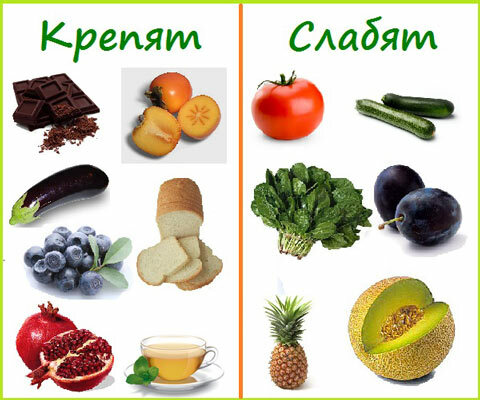
Dietary diet with prolonged diarrhea should be full, that is, it should be presented with fats, proteins and carbohydrates, but their ratio should be changed.
The amount of fats and carbohydrates should be reduced to the minimum necessary, and the main emphasis in the menu for diarrhea should be done on proteins.
To reduce the overall load on the digestive system will help regulate the diet. With chronic diarrhea, there should be a little, but every three hours.
There is a link between diarrhea and the use of choleretic products, so they should be used with caution.
There is no one universal diet for chronic diarrhea, as with most other disorders of the gastrointestinal tract, it would be too easy.
There are general recommendations, but when preparing a diet, individual reactions of a particular organism are important.
It is easier to study the reactions of your own intestines with a limited diet.
Video:
You can limit the menu for several weeks by including the simplest dishes with a large number of proteins and the minimum content of fats and carbohydrates, completely eliminating the rich in sweet fiber and cholagogue products.
Once the stool is normalized or obvious improvements are made, you can make the ration more diverse by observing the body's reaction and excluding foods that irritate the intestines and cause diarrhea.


