
Features of diarrhea in a newborn during breastfeeding
Diarrhea in a newborn can cause anxiety for young parents.
Whether it is worth experiencing with a baby's diarrhea, how to act in this situation and what treatment to choose - these issues will be discussed in the article.
Features of a newborn
Chair Contents:
- Features of a newborn's chair
- Causes of diarrhea in infants
- What is the risk of diarrhea in a baby?
- What to do with diarrhea in infants?
After birth, the baby begins to get used to the new conditions of life. For the baby everything has changed: temperature, pressure, principles of nutrition and respiration.
His body is not ready to function immediately as an adult organism, it needs time for adaptation.
The digestive system of a newborn is imperfect and continues to develop after his birth, so in the first weeks of life, there may be disruptions in the work of the baby's gastrointestinal tract.
To begin with it is necessary to determine what is normal for the newborn, and in what cases should I see a doctor.
It should be remembered that the independent choice of treatment of an infant is dangerous, since it can adversely affect the condition of the baby.
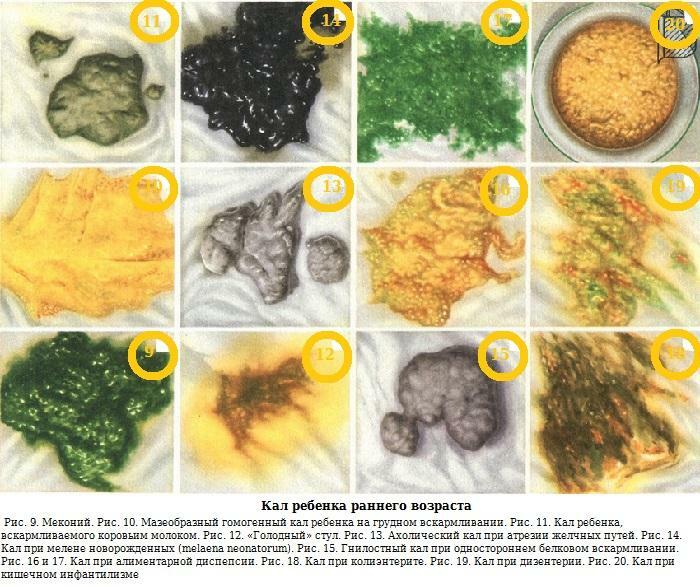
After the birth of a newborn, the original cal - meconium departs. Meconium is a cell of epithelium, hair, amniotic waters, digested during the stay in the womb of the mother.
All this baby swallowed until developed, and now the excretory system removes these particles. The color of meconium is dark or even black, with a greasy shine, it is sticky and viscous to the touch.
The departure of the original feces is absolutely normal and should not frighten the young mother.
In the first weeks after birth, the feces of the baby are liquid, light yellow in color. The smell of feces is lactic-acid, without an unpleasant shade.
Due to the fact that the liver of a newborn does not always cope with a new way of feeding a child, the enzymatic system sometimes fails.
In the stool can appear greens, whitish grains, a small amount of mucus. All this is a variant of the norm, while the child's body adapts to the digestion of breast milk.
The consistency of feces in a newborn is always fluid, since its only food is breast milk that does not contain solid particles.
The frequency of defecation in a newborn can be any, but more often it occurs 5-6 times a day, almost after every meal.

Most pediatricians believe that the type and frequency of stool in a newborn is an individual indicator and should not worry parents if the baby does not worry and gaining weight within the limits of the norm.
If a weight loss or a decrease in weight is noticeable, the child often cries, presses the legs, a lot of mucus, foam or traces of blood appears in the stool, then it is necessary to call the doctor immediately.
Causes of diarrhea in infants
How to distinguish normal stool from a newborn from diarrhea? How does the newborn look like diarrhea?
First, it is worth considering what is diarrhea. Diarrhea is a frequent evacuation of the intestine, which is characterized by the release of fecal matter in large volumes.
The stool for diarrhea in a newborn is very fluid, watery. The feces have an unpleasant odor. These are the main symptoms of diarrhea, signaling violations in the digestive system of the newborn.
Diarrhea in a child can be caused by a number of reasons:
- by intestinal infection;
- intolerance to foods;
- is an allergic reaction to certain foods;
- dysbacteriosis;
- pathological changes in internal organs.
Acute intestinal infection( OCI) is associated with the ingestion of newborn pathogens.
These pathogenic microorganisms, in the course of their vital activity, release toxins that disrupt the digestive system.
Because of bacteria, the balance of the intestinal microflora changes, which affects its motor function and the sensitivity of the walls. In OCI, in addition to diarrhea, it is often possible to observe an increase in temperature.
A breastfed can suffer from one of the diseases caused by intolerance to certain products. This phenomenon is quite rare, but sometimes it happens.
Video:
The most common celiac disease is a pathological reaction to the protein of cereals( gluten).This protein, getting into the intestines, damages its mucous membrane, which leads to the appearance of diarrhea.
In the presence of such a disease, the infant differs in appearance from healthy toddlers: muscular hypotension is developed, the abdominal circumference is enlarged, ricket changes in the skeleton are noticeable( large abdomen, narrow thorax, curved legs).
Some pediatricians insist on the connection of feeding of the nursing mother and the work of the digestive system of the baby.
In their opinion, diarrhea in a newborn baby can be a manifestation of an allergic reaction to certain products of the mother's diet.
Although such a connection is not proven, you can not exclude it. In the presence of diarrhea in a newborn it is necessary to revise the diet of the nursing mother and exclude possible allergens( citrus fruits, nuts, chocolate, seafood, etc.).
One of the most common causes of diarrhea in a newborn can be considered dysbiosis. With dysbacteriosis, the composition of microorganisms that colonize the intestine has been changed.
Pathogenic bacteria displace useful, throw out toxins that disrupt the work of the digestive tract. Dysbacteriosis often occurs when taking antibacterial drugs.
In the first weeks of the baby's life, all life support systems are tested. It is at this time that problems in the structure of internal organs can be identified.
Diarrhea is one of the symptoms of an intestinal obstruction, an inflammation of the appendix or peritoneum. All these conditions require a doctor, independent treatment is prohibited.
What is dangerous for diarrhea in a baby?
Different causes of diarrhea in a newborn explain different dangers that conceal this condition.
There is often no reason to worry, but some symptoms may indicate a disease requiring immediate treatment.
A change in the structure of internal organs and the presence of an inflammatory process in the abdominal cavity are the most dangerous causes of diarrhea.
Video:
Lack of timely treatment can lead to severe consequences for the child. To prevent the deterioration of the baby, with any suspicion of organ pathology, you should visit a doctor as soon as possible and consult the condition of the newborn.
The danger is fraught with the very process of diarrhea. When diarrhea occurs, the removal of fluid and nutrients from the body.
In newborns dehydration occurs instantly, so it is important not to allow such a condition.
When dehydrated, pathogenic bacteria and toxins produced by them can not be removed from the body in time, intoxication occurs.
Symptoms of dehydration include:
- rare urination;
- dark urine color;
- the fall of the fontanel;
- dry mucous membranes and skin;
- no tears when crying.
If these symptoms occur, the newborn should receive first aid.
To prevent dehydration, the baby with diarrhea should be drunk with clean water and monitor its weight.
Since children lose weight during dehydration, daily weighing will help determine the condition of the child.
If the infant with diarrhea behaves restlessly, cries a lot, cries when defecating, it is worth inviting a pediatrician to the house.
This behavior is not normal for a newborn and can become a symptom of inflammation or abnormalities of abdominal organs.
It is worth paying attention to the stool of a newborn with diarrhea. If feces are visible in the feces, large amounts of mucus, traces of blood, then the child's parents should resort to medical care to prevent the development of the disease and the depletion of the body.
What to do with diarrhea in infants?
When diarrhea in a newborn should pay attention not only to the symptom itself, but also to the cause that caused it.
Drug medication for diarrhea in a newborn is usually not required, it is enough to adjust the nutrition or hygiene of the mother.
So, when intestinal infection should be more closely related to hygiene. The nursing mother should wash her hands thoroughly after the toilet to prevent infection of the baby. Special medication is not required in this case.
Video:
When intolerance to gluten or other foods, diarrhea is treated by adjusting the ration of the nursing mother and excluding food that caused diarrhea in the newborn.
In the same way should be done and with allergies, manifested in the form of diarrhea in the baby. To get rid of diarrhea in this situation, you can and without medication, without stopping breastfeeding.
Many pediatricians do not advise specifically to treat dysbiosis, considering it the norm when setting up the digestive system in the first weeks of a baby's life.
However, some children's doctors can prescribe medications and dietary supplements from the group of probiotics and prebiotics.
On the recommendation of the doctor, sorbents can be taken, the most popular drug among young parents is Smecta.
The drug is relatively safe for the newborn, can be applied from the first week of life.
However, the drug has its own contraindications: it can not be given to children with intestinal obstruction, intolerance to fructose, insufficiency of isomaltase sucrose and with increased sensitivity to the components of the drug.
For any reason, the appearance of diarrhea in a newborn, parents, in the first place, must ensure the replenishment of lost fluid and microelements.
You can drink the baby with boiled water or a pharmacy electrolyte solution containing the necessary salts and substances.
All pediatricians unanimously recommend not to stop breastfeeding with diarrhea in a newborn.

Breast milk can compensate for the lost fluid in diarrhea and improve the intestinal motility of the baby, since it contains vitamins and microelements necessary for the functioning of the digestive system.
Diarrhea in a newborn during breastfeeding can be attributed to the most common problems that arise in the first weeks of a baby's life.
In most cases, this condition is not dangerous for crumbs and special treatment is not required, but pediatrician consultation will never be superfluous.


