Implantation of teeth: contraindications and possible complications
Implantation is an interference with the installation of a device made from special raw materials in a tissue to implant an artificial tooth on it.Tactics serve as a good alternative to prostheses.According to multiple reviews of patients and the results of the conducted studies it was found that this is an effective manipulation, solving a lot of problems.However, there are certain contraindications for implantation of teeth.This will be discussed in this article.
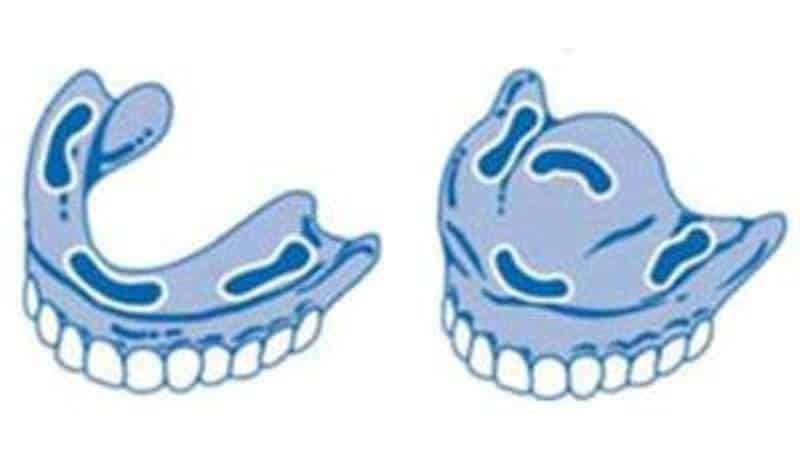
What are implants
Adaptations are made in order to provide a person with a full chewing of food, which is very important for digestion.Constructions do not cause a person's psychological complexes, which often happens when a person is obliged to walk with a conventional prosthesis.

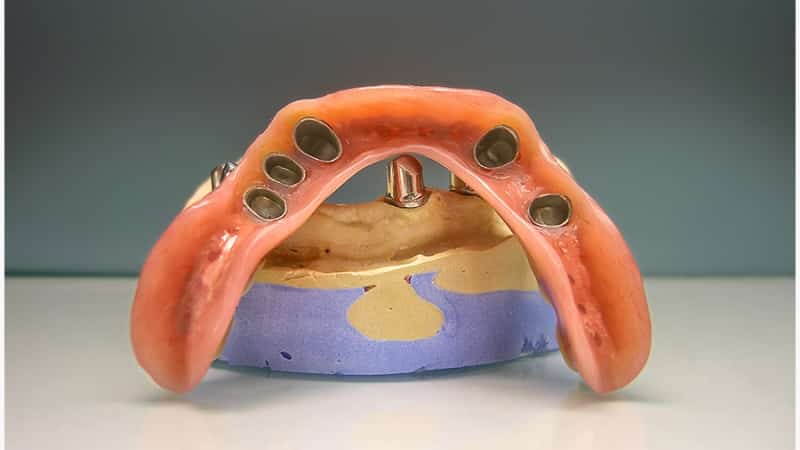
Dental implant
Create adaptations from biological raw materials, so they are very rare when not perceived by the human body.They are also used as fasteners for simple prostheses.With the help of the procedure, you can strengthen your living teeth, which for some reason began to loosen up.
Many are afraid of dentists and delay the trip to the dental clinic to the last.The installation of implants is quite a serious manipulation, but do not be afraid.The human body is designed so that the jaw does not perceive pain.The specialist uses preparations of local anesthesia and the person absolutely will feel nothing, except for easy pressure of hands of the dentist.
Let's figure out what to look for before the intervention.
Teeth implants: contraindications
Unambiguous contraindications for dental implants:
- disorders in the circulatory system;
- pathology CNS;
- availability of oncology;
- weakening of the body's immune system;
- connective tissue disease;
- tuberculosis;
- type 1 diabetes;
- excessive mobility of the chewing musculature.
Relative:

Implantation of teeth has many contraindications.Before the procedure should consult a professional
- Disease of the teeth: caries, stones, inflammation;
- is not patient compliance with oral hygiene;
- inflammation of the gums and tissues;
- incorrect bites;
- jaw disease;
- intensive tissue atrophy;
- presence of bad habits;
- child bearing.
General :
- impossibility of intervening due to intolerance to anesthesia;
- certain physical illnesses, which may affect the procedure;
- certain types of somatic pathologies;
- are separate types of therapy that have an effect on regeneration after the procedure;
- mental abnormalities;
- state of overwork of the body.
Local:
- non-observance of hygienic norms by the person;
- poor bone tissue or lack thereof.
Temporary :
- exacerbation of all possible pathologies;
- postoperative period;
- addiction to drugs;
- child bearing;
- time after irradiation.
As you can see, there is a significant list of contraindications, but most of them can be solved and make the procedure possible.
How to prepare
In this issue, the main role is played by the stage of the pathological process, the structure of bone tissue, the technique of prosthetics.Based on the variety of the disease, not only the configuration and mode of implantation is chosen, but also its dimensions.Training involves the therapy of existing diseases that can affect the process of survival.

Preparing for tooth implantation involves the treatment of existing diseases that can affect the survival process of the
The tactics of the intervention play a special role in the implementation of the intervention.Wounds heal successfully only if the principles of asepsis are correctly followed and the operation is carried out with a minimal risk of trauma.The atraumatic technique involves the implementation of a list of actions that involve the correct selection of access for intervention, the introduction of the design and the closure of the wound.
Installation of structures
The implant is implanted after it has been safely implanted.It is carried out after the adaptations are combined with the bone tissue.During the manipulation, the specialist removes special stubs.After these actions the operation is completely finished and no additional interventions are needed.
The next step is prosthetics.The task is to make an artificial limb to restore the integrity of the teeth, as well as to provide the correct load for the accompanying tissues.
Indications for implantation of teeth
The procedure is performed only if certain circumstances and problems exist:
- single tooth lesion when there is a need to keep live teeth;
- limited lesions of .For example, when a patient does not have two consecutive teeth, this defect is replenished by implantation;
- terminal lesions of , when the last teeth in the row are absent;
- complete loss of teeth .If a person does not want to use a removable denture, then a good alternative will be implantation;
- impossibility to install prosthesis due to intolerance.

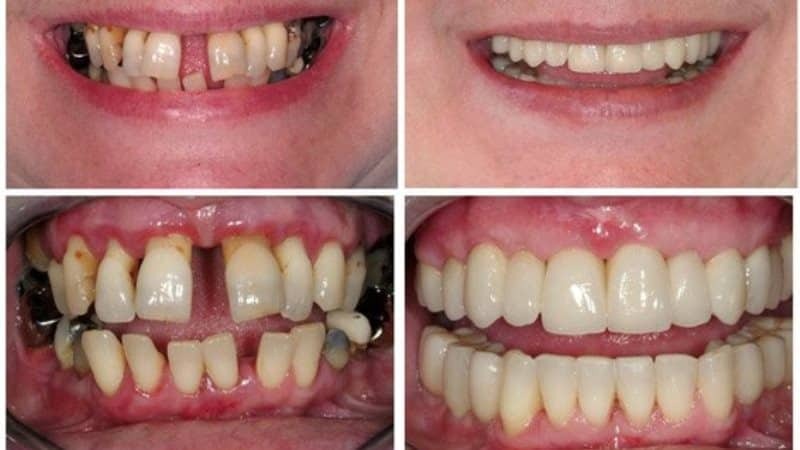
Implantation of teeth: before and after
If you have indications for the procedure, you must definitely exclude contraindications to the dental implant.Even with problems, the dentist will recommend how to get rid of them correctly.An important role is played by such factors as the desires and possibilities of a person, as this is quite an expensive pleasure.But with a huge desire and the availability of funds, modern dentistry can do real miracles: completely restore lost teeth and give the person a magnificent smile.
Implantation of teeth contraindications and possible complications
Unfortunately, in medicine there is such a thing as complication.Experienced doctors do everything possible and impossible to exclude them.Sometimes they arise because of chance.
During the operation, there are possible consequences such as the appearance of bleeding.But innovative technology reduces the probability of occurrence of these complications to zero.Sometimes the tissues overheat when exposed to mechanical stress.
During the recovery from surgery, hemorrhages, seam divisions, and the appearance of an inflammatory process in the intervention zone are possible.Everything depends on the human body and its behavior after the intervention.If the patient is trivial to disregard the recommendations of a specialist, then the likelihood of problems is increasing.

Inflammatory process
The failure to take a foreign body by the body in this case is extremely rare and appears against the background of inflammation.At the time of the intervention, tissues can overheat, resulting in granulations that do not allow the implant to digest.Osteoporosis also prevents the device from implanting, so if this problem occurs, the implant is removed.
Despite the large list of complications, the regularity of their occurrence is minimal.The successful outcome of manipulation is more than 95%.