Antibiotics for inflammation of the gums, how effective they are
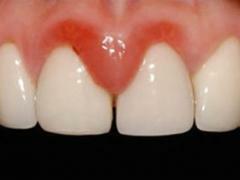
Some diseases do not directly threaten life, but they bring discomfort and aesthetic defects to a person.One such disease is gingivitis.Red and swollen gums, putrefactive smell from the mouth, ulcers and purulent discharge - this is an incomplete list of unpleasant problems that a sick person is facing.Such violations cause the patient to consult a dental specialist.Often his appointment is an antibiotic.
Contents:
- In some cases, prescribe
- antibiotics How to choose an antibiotic
- How to help heal gingivitis penicillins
- Why fluoroquinolones
- When used glikozamidy
- Will the injections of antibiotics in the gum
In some cases, antibiotics are prescribed
The etiological basis of any gingivitis is bacteria or other pathological microorganisms.However, in some cases, local treatment is sufficient, which is performed by rinsing and dissolving various antiseptic lozenges.The effect can be achieved if the process is limited and not accompanied by complications.
Nevertheless, there are certain indications to the appointment of systemic antibiotics:
- Heavy common form of the disease
- Ulcerative and necrotic elements of the mucous
- Phlegmonous character inflammation
- Complications in the form of periodontitis and infection of underlying tissues
- regional lymphadenitis
- Elderly patient
- Presence of severe concomitant pathology
- Diabetes in any form
- HIV infection
- Risk of infectionComplications after cardiac surgery
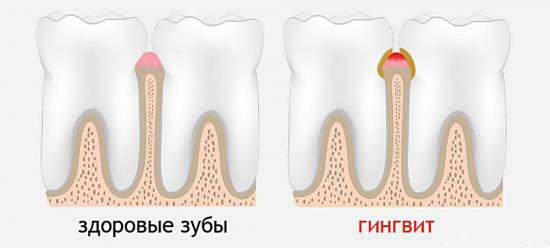
Some of these indications are conditional, since with a young age and adequate oral hygiene, even with prevalent processes, local therapy can be dispensed with.But diabetes mellitus and other diseases that reduce the immunological reactivity of the body, refer to absolute indications for antibiotic therapy.
How to choose an antibiotic
Initially, drugs with an extended antibacterial spectrum should be used.So it will be possible to block the influence of most of the most famous causative agents of gingivitis.The ideal way is to use antibiotics after determining the sensitivity of flora to them.
This is achieved by analyzing the discharge with the inflamed mucosa by seeding on nutrient media.But the result is possible only after 3 days.Sometimes this time is not for waiting.In these cases, tested drugs are used, and after receiving a response from the laboratory, correction of therapy is carried out.
The following groups of antibacterial agents are most often used.
- Protected penicillins
- Fluoroquinolones
- Glycosamides
The main way of prescribing antibiotics is inside.In the development of severe life-threatening complications or failure of the patient from oral therapy, drugs are administered parenterally.
How to cure gingivitis penicillins
The idea of using unprotected penicillins with gingivitis does not.This is due to the fact that the majority of resistant microorganisms living in the oral cavity in humans and causing inflammation, produce penicillinase.It is an enzyme that reduces the effect of simple penicillin drugs to zero.To protect such bacteria, clavulanic acid-protected amoxicillin is suitable.
This medicine is found under the trade names Flemoklav, Amoxiclav, Augmentin and others.The essence of the effect on microbes is the effect on protein synthesis in the cell wall.As a result, the bacterium is destroyed and dies.Thanks to clavulanic acid, the substance has an extended spectrum of antibacterial activity.
All gram-positive, which can cause gingivitis, sensitive to this drug.
How to use - inside.The average dose for an adult is 1500/375 mg in three divided doses.The maximum allowable for the day appointment of 2625/375 mg per day, the multiplicity does not change.Children are allowed in the form of a suspension from 1 year.Dosage is individual, depends on the weight of the child.At weight more than 40 kg, correction of a medicine is not required, it is appointed or nominated under adult dosages.The course of treatment for gingivitis is at least 10 days.
main contraindications are as follows:
- hypersensitivity to penicillins
- Any complications of penicillin in the past, especially jaundice
- Age under 1 year
- Particular caution should be exercised when administering the drug to some categories of citizens.Pregnant
- Persons with complicated allergoanamnezom
- Any gastrointestinal disease, especially pseudomembranous colitis
- Liver failure
- Lactation
The drug was well tolerated.There may be dyspeptic and allergic reactions, sometimes headache or drowsiness.When developing any rash on the drug, it is advisable to cancel it.This is due to the fact.That with continued use of allergic manifestations may worsen.
Why fluoroquinolones
These drugs are well penetrate the gum tissue and affect the majority of Gram-negative bacteria that cause gingivitis, the most common use of the following drugs in this group:
- Ciprofloxacin
- Levofloxacin
- Ofloxacin
- pefloksatsina
AllFluoroquinolones is characterized by a 12-hour activity.They are used orally 2 times a day.The average dose from the calculation of Ciprofloxacin 1000 mg per day in adults.The course of therapy is not less than 10 days.
These drugs are contraindicated for pregnant women, breastfeeding, children under 18 years of age, as well as diseases of the tendons and muscles.Preparations are toxic, can cause damage to the nervous system, intestines and hematopoiesis.
When used glikozamidy
These medicines include lincomycin and clindamycin.These drugs act on those microorganisms, in which penicillins were powerless.The advantage of the group is the possibility of influencing anaerobic flora, including spore-forming bacteria.

These agents serve as reserve antibiotics.Treatment with them does not begin, they are used only with insufficient effect from other drugs.
Lincomycin can be used orally and parenterally.The average dose for oral intake is 1500 mg for adults.When parenteral administration of 1000 mg per day.The multiplicity is not more than three times.The average dose of clindamycin is 600 mg per day.Multiplicity - every 12 hours.
Both preparations are toxic.With a minimum of contraindications, which include hypersensitivity reactions and the infants' infants, there are many side effects.
The main adverse events are as follows:
- Severe gastrointestinal disorders, including pseudomembranous colitis
- Infection of the hematopoiesis system
- Allergic reactions up to anaphylactic shock
- Asthenia or nervousness
Drugs are approved for pregnancy according to vital indications.However, in the case of gingivitis, it is better to use other antibiotics in this category of women.Feeding should be discontinued if glycosamide is to be used.In case of acute need to use this group of drugs during pregnancy, clindamycin potentially will do less harm to the future child.In addition, this medicine is allowed under the supervision of the doctor to apply and when feeding the baby.
Will the injections of antibiotics in the gum
purpose of use of antibacterial agents by administering a drug in the gum is a significant increase in the concentration of active substances locally.The result of this use can be expected to rapidly improve the symptoms of the disease.
However, not everything is unambiguous.Use in this way can only parenteral water-soluble drugs.All of them have a bactericidal effect.
At the time of introduction, as a result of a sharp increase in the drug concentration, a huge number of bacteria will die in the gums.This will lead to the release of microbial endotoxin, which damages the oral mucosa.In it, necrotic processes develop.On the weakened mucous a new superinfection is populated, which will not be sensitive to the injected drug.
There is a vicious circle.The drug is introduced to eliminate bacteria, but leads to the colonization of new resistant strains.In addition, the injection itself provokes hematomas and a violation of the local circulation.The result of the question is obvious - a medicine with an antibiotic for insertion into the gum is not applied.
Thus, in the arsenal of medicine there is a wide variety of antibacterial drugs for the treatment of gingivitis.Their use is allowed on strict indications.The introduction of drugs in the gum is contraindicated.An integrated approach to the therapy of gingivitis will provide a much greater effect than only antibiotic therapy.Parodontologists work to help patients.
More on gingivitis, symptoms, treatment with antibiotics of gum disease and other methods of treatment - look at the video: