Tooth Teeth: Effects of Removal and Possible Complications
Most people are afraid of panic visits to the dentist, especially if you need to remove the rudimentary eighth molar.Of course, everything can not be envisaged, but, nevertheless, in most cases, fears are unjustified.Today's innovative developments in the field of medicine make it possible to get rid of such a problem with little or no pain.Certainly, complications sometimes arise, but in most cases they are reversible.
First we note that the appearance of problems is possible even in the doctor's office, when he extracts a wisdom tooth.Removal, consequences and possible difficulties that may occur at this time, we briefly consider in our article.
Anesthesia
So, poor-quality anesthesia can lead to unduly unpleasant sensations of the patient during molar traction.Usually this happens in state institutions because of the clear normalization of the time of admission of each patient.
Unlike many patients who are afraid of unpleasant sensations during tooth extraction, doctors are afraid of possible complications
By the way, most people are afraid of this kind of manipulation, and not of other accompanying complications, for example, when afterRemoval of the wisdom tooth, the jaw does not open or an inflammatory process occurs in the hole.Undoubtedly, pain syndrome will have an extremely negative impact on the patient's well-being, but in this case the problem is easily solved by going to a private clinic where there are no such norms.However, experts are trying, nevertheless, to prevent many other situations that are more harmful to the health of the patient.
The causes and manifestations of failure in the traction
Despite the minimal risk, it is still possible today to remove wisdom teeth, the consequences of which will remind you of the problem for some time.The following prerequisites can cause the following situation:
- violation of growth direction;Deformation and bending of the roots;
- ;
- fully or partially grinded tooth;
- root care in the maxillary sinus.
As a rule, most troubles occur because of inexperience of the doctor.Let's try to analyze the most common mistakes of such manipulation, as removing the 8 teeth, the consequences of these incorrect actions and the possibility of solving the problem.
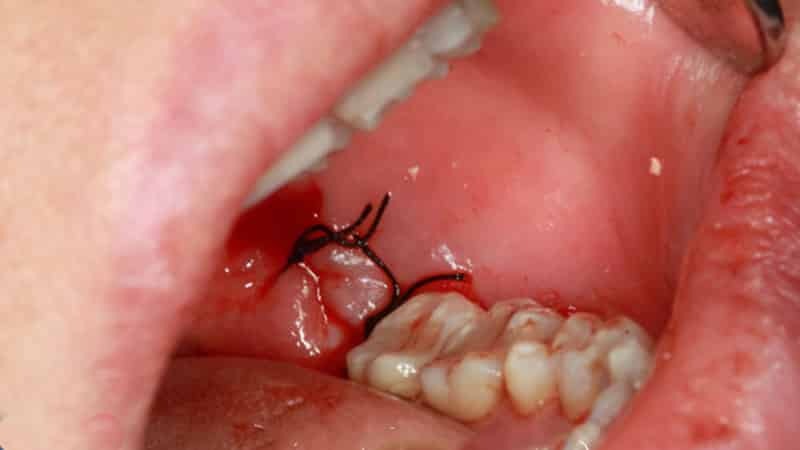
Accidental damage to tissues of the oral cavity or neighboring molar is a fairly common case for inexperienced physicians.
So, it often happens that a surgeon injures an adjacent molar.This happens because of excessive pressure on the instrument when the eight is loosened.Often, at the time of the fracture of the crown, the patient does not feel pain, as anesthesia captures a fairly large area of the cavity of the alveoli.However, the patient may feel that the after the removal of the wisdom tooth is hurt by neighboring teeth.In fairness, it should be noted that such a situation rarely occurs with a healthy seventh molar, usually a damaged seal becomes damaged.

The result of too traumatic intervention may be damage to the gum tissue.This can happen because of the too short area of the crown of wisdom tooth, when during the manipulation the forceps slide and injure soft tissues.In some cases, such trouble leads to severe bleeding, which can be stopped only by applying seams.
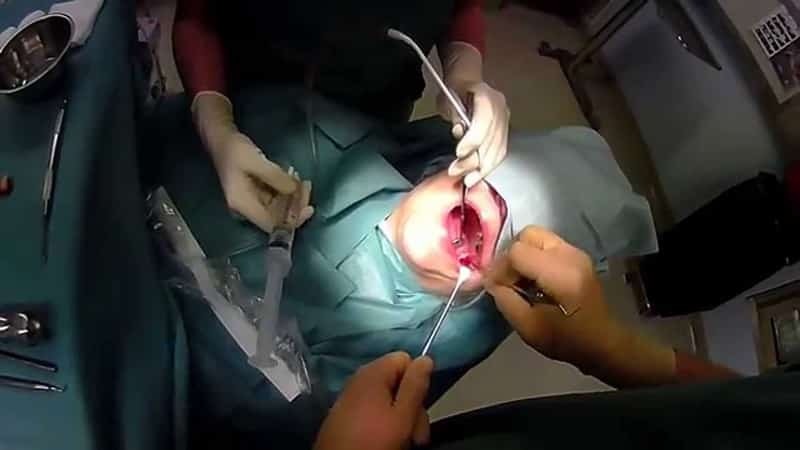
As a result of a complex removal of the wisdom tooth, there may be a fracture of the alveolar process
The next unpleasant complication after the removal of the wisdom tooth is a fracture of the alveolar process.At the time of the traction of the tooth, if it is overly tightly seized, the bone tissue that holds the molar may be destroyed.Subsequently, it manifests itself as gum sticking out of the gums and a long process of healing the socket.
Perhaps the most common problem is the penetration of the instrument or fragments of the root of the tooth into the maxillary sinus.Often this happens because of the specific structure of the molars and the location of their roots.
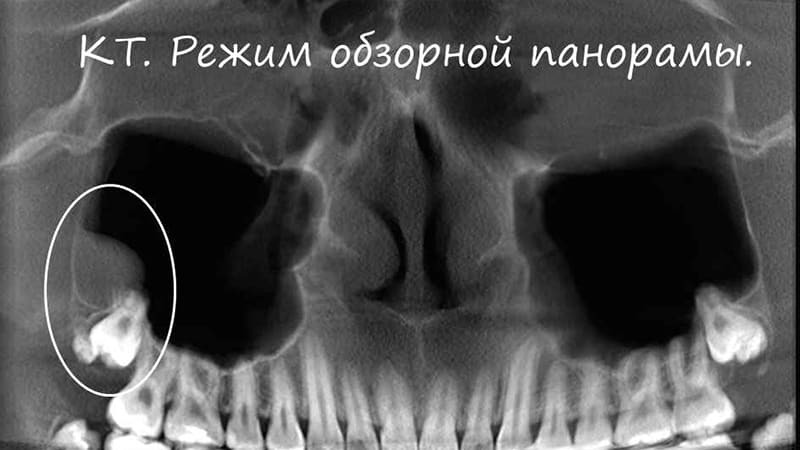
When the root of the tooth is left in the maxillary sinus, its perforation is possible.
Usually these are all possible situations that may arise in the medical office.If you decide to wrest a tooth of wisdom, the consequences of a possible unsuccessful intervention are always subject to adjustment, although they will provide the patient with significant short-term inconveniences.However, it must be remembered that even after the extraction of the rudimentary molar without complications, other manifestations of malaise are unavoidable.
Possible complications after manipulation
As we have already noticed, many people are afraid of the pain syndrome during traction, and do not think about typical ailments after it.Considering that the eight is an ordinary molar, even after its extraction, without special difficulties, all the classic symptoms of such an operation are manifested.If the tract was with complications, there may be additional troubles after surgical intervention.
Typically, the symptoms are as follows:
- occurrence of aching pain in the well;
- worsening overall health and fever;
- intermittent or persistent bleeding from the operated area of the alveoli;
- hematoma after removal of the wisdom tooth;
- loss of touch of some parts of the oral cavity.
Undoubtedly, not all such signs bear a serious threat to health.But in order to understand when you may need a second visit to the dentist, we will consider in detail the nature of these unpleasant phenomena.
Pain syndrome
It is only natural that, at the end of the anesthetic action, unpleasant aching sensations in the operated area begin to build up.Often, many are interested in why it is painful to swallow after the removal of the wisdom tooth. This is a perfectly normal reaction to outside interference.Often doctors warn about this in advance and suggest taking certain medications to reduce pain.

The pain after the manipulation will still bother you for some time.
Of course, the dosage and name of the medicine should be selected individually.Also, the dentist provides many associated factors, for example, anamnesis, the effectiveness of the drug and its cost.
Temperature rise
A possible worrisome symptom is a rise in temperature.However, nevertheless, one should realize that this phenomenon is a fully explainable reaction of the organism to the manipulation performed.Specialists claim that this phenomenon is quite normal, provided a slight temperature jump and a subsequent tendency to reduce it within 24 hours.

Constantly rising temperature is a bad sign
When the temperature does not fall more than two days, this may indicate one of such possible problems:
- incomplete extraction of the figure eight;
- Inflammation after removal of the wisdom tooth in the gum due to falling fragments of the patient with tooth decay or contents of the cyst due to insufficient sanitation;
- inflammatory process in the area of molar removal in the absence of a blood clot( "dry" hole);
- accidentally piercing the hole in the maxillary sinus and beginning the formation of cysts there.
Remember, a steadily growing temperature( above thirty-eight degrees) and the appearance of a repulsive odor can signal serious problems.Therefore, do not delay this process.The optimal solution is to immediately consult a doctor and do a repeated x-ray of the jaw.
Bleeding
In the normal outcome of the manipulation, a thrombus should form in the well within half an hour.If the blood does not stop, but continues to flow, it can be a consequence of hypertensive and cardiovascular problems.The fact of occurrence of such a problem requires its full control by a specialist, since significant blood loss is dangerous for the body.
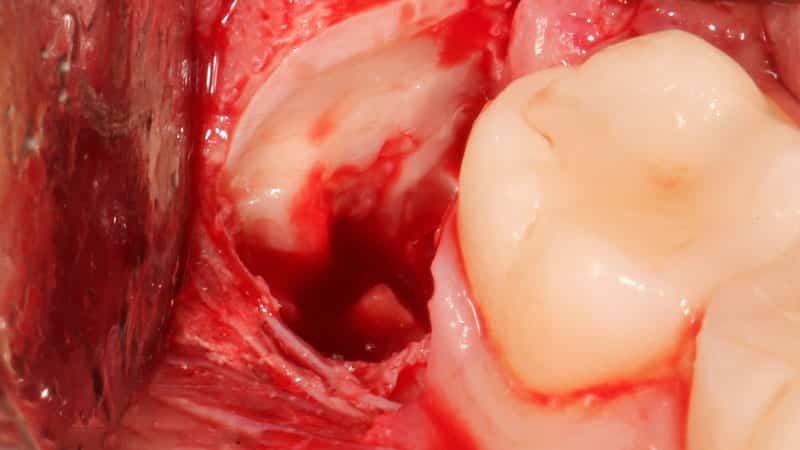
Bleeding after removal of the wisdom tooth requires a very careful approach
As a rule, experienced doctors even before the manipulation are collected anamnesis in order to clarify the patient's existing conditions for the correct choice of anesthesia and stopping blood after surgery.In cases of predisposition of the patient to blood coagulability, the dentist instead of the usual tampon installs a special hemostatic sponge into the operated hole.
Emergence of hematomas
Occasionally, a bruise appears on the face after traction.Usually the frightening appearance of the hematoma is deceptive - this is just a consequence of the damage to the small capillaries.There may also be some puffiness in the face.
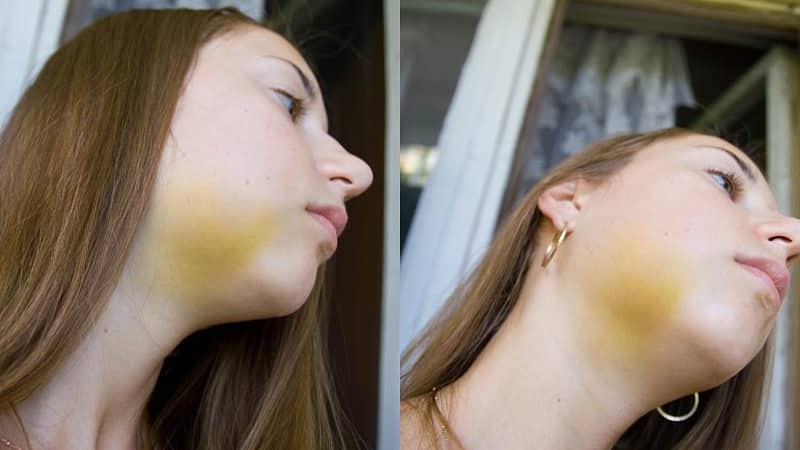
The appearance of a hematoma usually does not pose a particular health hazard
Of course, many, especially women, care how much the edema keeps after removing the wisdom tooth( photo) or hematoma.Experts argue that in the absence of other formidable signs, for example, the growing temperature and unpleasant odor, these phenomena will pass fairly quickly.
Loss of touch
Serious consequences can have damage during the manipulation of the facial nerve.Usually this is manifested by paresthesia.Patients report loss of sensitivity in the oral cavity and numbness of the tongue after removal of the wisdom tooth.
Consequences when medical treatment can not be avoided
In all fairness, all the above symptoms are not typical.This is a rare exception in particularly complex and traumatic manipulations.Of course, after removing the figure eight, one should try to follow the recommendations of the dentist and check the general condition.On the need for additional medical control speak such symptoms:
- constant temperature increase;
- mouth does not open after tooth extraction wisdom;
- pain and swelling not disappear for two days;
- marked manifestation of paresthesia( sensitivity does not return within 10 hours);
- appearance of odor and purulent discharge from the well.
Remember, all these phenomena indicate a serious inflammatory process leading to disastrous consequences, including a fatal outcome.

An inordinate symptom is the inability to open your mouth after performing the manipulation
Do not be afraid to pay a second visit to the doctor, because he is no less interested in the favorable outcome of his manipulation.Therefore, a competent surgeon will provide you with the necessary first aid, eliminate defects in your work and explain how you should act in the future.
 Sometimes after removal of the wisdom tooth, there may be edema on the face of