Allergic conjunctivitis
 Today, there is a significant increase in the number of various allergic diseases, during which there is eye damage. These include eye lesions in patients with pollinosis, allergic keratoconjunctivitis and allergic conjunctivitis. In the first place in this list( according to the frequency of occurrence) is allergic conjunctivitis. In this article, we will try to cover most of the issues associated with this allergic disease.
Allergic conjunctivitis is an inflammation of the conjunctival membrane of the eye of an allergic nature, manifested by swelling, itching and lacrimation. For reference : Conjunctiva is a tissue lining the inner surface of the eyelids, as well as the anterior surface of the eyeball.
Allergic conjunctivitis is most common at a young age, with the same sex ratio. Accurate statistics on the prevalence of the disease does not exist due to the fact that allergic conjunctivitis is often combined with other allergic manifestations, usually allergic dermatitis and allergic rhinitis. According to numerous observations and studies, it was found that the symptoms of allergic conjunctivitis are observed in about 30% of patients with other allergic pathologies
Causes of allergic conjunctivitis
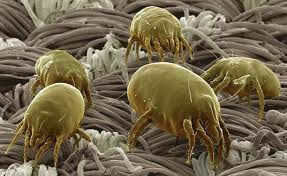
Because of the peculiarities of the anatomical structure of the eyes, access to them of various allergens from the external environment is unhindered. Most often the development of allergic conjunctivitis causes pollen allergens( more often pollen of wind-pollinated plants), epidermal allergens( feathers and feathers of birds, dander and animal hair, etc.) and household allergens( library dust, house dust, house dust mites, etc.).At women allergic reactions to household chemistry and cosmetics are often enough observed. Food allergies cause the development of allergic conjunctivitis rarely.
Symptomatic of allergic conjunctivitis develops almost immediately after contact with an allergy-causing substance
Symptoms of allergic conjunctivitis
After contact with an allergen, the symptoms of allergic conjunctivitis develop from a few minutes to a day. For allergic conjunctivitis inflammation of the conjunctival membranes of one eye is quite unusual, therefore, as a rule, both eyes are affected( one eye is usually affected only if the allergen has been brought directly into it, for example, with hands).
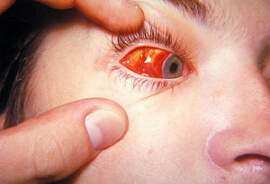
The main typical symptoms of allergic conjunctivitis: redness of the conjunctiva, puffiness, lacrimation, strong ass in the eye area. In case of severe illness, photophobia may develop. Itching is usually the most annoying symptom of allergic conjunctivitis, causing the patient to constantly rub his eyes, thereby only strengthening the remaining clinical manifestations.
Allergic conjunctivitis is divided into acute( sudden onset and fairly rapid cure) and chronic( inflammatory process has a slow flow for a long time).The nature of inflammation directly depends on the causative provoking allergen and the frequency of contact with it.
With incorrectly selected or completely absent treatment, allergic manifestations are often associated with a secondary infection, which is manifested by the appearance of a purulent discharge in the corner of the eye.
Often in the process of diagnosis, patients themselves point to causative allergens, causing them to exacerbate. A small initial relief often brings a trial of antihistamines.
Diagnosis of allergic conjunctivitis is in the sphere of interest of two doctors - an ophthalmologist and an allergist, therefore, immediately after the detection of the above symptoms, the patient has to turn to one of them for further examination, and it is desirable to start with an oculist, since such manifestations are often observedWith other eye diseases
Treatment of allergic conjunctivitis
Therapy of allergic conjunctivitis is based on the elimination of a provoking allergen, a drugimptomaticheskoy therapy and immunotherapy. If this is possible, the most effective method of therapeutic action and further prevention of the development of an allergic reaction is the complete elimination of the causative allergen.
Whenpoliallergii, as well as in the case of unexpressed reaction shown holding nonspecific hyposensitizing immunotherapy, which is in ophthalmology injections gistoglobulina( six to ten injections for the course).Specific hyposensitizing treatment is carried out only if it is impossible to achieve elimination of precisely established causative allergens and inefficiency of symptomatic drug therapy.
In case of severe course of allergic conjunctivitis, systemic use of antihistamines is indicated, and these medications are included directly in complex therapy for three to five days.
Due to the fact that all antihistamines first generation( pipolfen, Tavegil, Diazolin, Suprastin, diphenhydramine and so forth.) Have a marked sedative effect, they are administered only in exceptional cases, always cautioning patient about such side effects like constant sleepiness. In the practice of treating allergic conjunctivitis, preference is given to such a second-generation drug as Claritin. For removal
constantly vexing patient symptoms( conjunctival hyperemia, edema, tearing, photophobia, pruritus age) at all allergic conjunctivitis shown holding local antiallergic drug therapy. Already for a long time the main place in the antiallergic therapy of conjunctivitis is occupied by such two groups of eye drops as the stabilizers of mast cells of the conjunctiva and antihistamine eye drops. Moreover, they can be used either alone or in combination with each other and with medications of anti-inflammatory therapy.
In subacute and chronic conjunctivitis, eye drops of cromoglycate( Cromogexal, Alomide, etc.) are used. The drugs of choice in the case of occurrence of acute allergic conjunctivitis are providing rapid antiallergic effect and reduce the body's response to histamine antihistamines such as a drop and Allergodil spersallerg.
there should be no treatment of allergic conjunctivitis methods of traditional medicine, as experiments with eyewash different "grandmother" tinctures can only provoke an aggravation and to promote adherence to allergic conjunctivitis
secondary infection Allergic conjunctivitis
children usually allergic conjunctivitis in children after three years, Although exceptions are always possible and very rarely it is observed even at a very early age. It is quite traditional, when allergic conjunctivitis in a child is accompanied by allergic rhinitis. Most often, if a child develops allergic conjunctivitis for the first time, in the past he already had any allergic symptoms( usually by the type of diathesis, allergic dermatitis, etc.).
The highest prevalence in children was food allergy, which is treated according to generally accepted principles. If the diagnosis of food allergy is confirmed, it is necessary to start allergen-specific therapy as soon as possible, since in childhood it shows the most optimal results.
addition, children frequently observed pseudo-reaction, which looks very much like an allergy, but in fact developed due to entirely different causes( gastrointestinal diseases, parasites, etc..)
Allergic conjunctivitis during pregnancy
Very rarely, however, did it allOccurs when allergic conjunctivitis manifests during the period of pregnancy, or the existing disease is aggravated. Treatment of any allergic( and not only) diseases during pregnancy is fraught with many difficulties, which are connected with the fact that at this time most drugs and some surveys are strictly prohibited due to the potential harm to the fetus.
In pregnancy, the symptoms of allergic conjunctivitis are absolutely no different from the classical ones. The disease itself does not affect the fetus negatively. Toxic effects on the baby can occur only in the case of future mother's use during pregnancy of prohibited drugs.
Diagnosis of allergies during pregnancy is limited to the analysis of blood for specific immunoglobulins. Local treatment is possible exclusively with sodium cromoglycate derivatives. Because of the potential negative impact on the fetus, when treating allergic conjunctivitis during pregnancy, the use of antihistamines should be minimized as much as possible. If their reception is inevitable, then preference should be given to third-generation drugs( Telfast, etc.).
Like any other allergic reaction, allergic conjunctivitis is a chronic disease. Existing methods of therapy can cause a fairly long lasting remission, but the allergic mood of the body will still remain.
The prognosis for allergic conjunctivitis is quite favorable, however, in the absence of treatment, secondary infection or exacerbation of the existing pathology of the eyes( keratitis, glaucoma, etc.) is often observed.
Prevention of allergic conjunctivitis has not been developed to date. Secondary methods of prevention are aimed at eliminating the provoking allergen from the environment and preventing the exacerbation of an already existing ophthalmologic disease.