Allergy to cats
 Scientists have been proven that the maintenance of pets in the apartment, and in particular cats, has a very beneficial effect on health. People who have a pet live longer, feel more relaxed, they subsequently significantly reduce the risk of asthma. However, unfortunately, many simply can not afford to get this grateful and affectionate pet for themselves because of such an extremely unpleasant disease as an allergy to cats, and this pathology suffers quite a large number of people.
Allergy to cats, as well as to other domestic animals in recent years has become quite widespread. Most often, the allergic reaction is manifested by watery eyes, a rash on the skin and allergic rhinitis( itching in the nose, sneezing, stuffy nose, runny nose).Below we will look at how allergies to cats are manifested, its possible causes and optimal treatment options and prevention.
Allergy to cats - symptoms
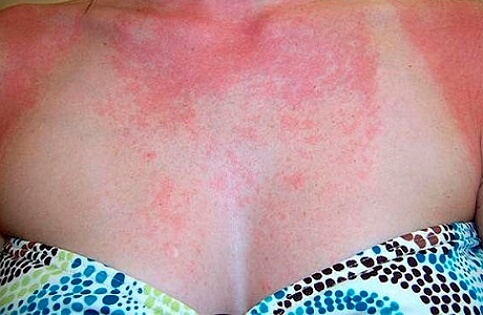
How does an allergy to cats manifest? Different people manifest several, or one particular symptom of allergy to the fur of cats. It can be tearfulness or irritability of the eyes, sneezing, nasal congestion, runny nose, shortness of breath, wheezing, redness of the skin on the place where the cat licked, bitten or scratched( cat scratch disease).Symptoms of allergies to cats often occur within a few minutes after contact, although they may manifest with a delay of several hours. Often the signs of an allergic reaction are confused with the symptoms of other diseases, but in case of allergies to cats when the animal is isolated from the patient, the symptomatology quickly disappears, appearing again only if it is near the animal.
About 30% of patients suffering from such a serious disease as bronchial asthma, after direct contact with the cat experience an exacerbation of symptoms. In spite of this, the fact that constant contacting of children with allergens can be even useful is proved, and in the future, allergy symptoms in them can generally appear. However, if the baby is predisposed to allergies to cats( when one comes into contact with the animal, one of the above symptoms begins to manifest), it should be completely protected from contact with the animal
Causes of allergy to cats
Allergy to cats in children is most likely due to hereditary predisposition. If there is an allergy in any of the family members, the risk of its development in the baby is significantly increased. If the allergy to cat hair is in both parents, the probability of its development in the child is about 80%.
Most people mistakenly believe that an allergy to cats is able to develop only on the animal's coat and therefore short-haired breeds( leonk, sphinx, etc.) are completely safe. Unfortunately, it is not. The thing is that the allergens provoking the development of this disease are not contained in the animal's fur itself, but in its saliva and also the protein of its skin, which the animal constantly loses in the form of tiny scales( similar to human dander).And since the cat is a very clean animal and spends a lot of time for licking itself from the tail to the nose, the saliva gets on the skin, hair, literally splashing in all directions.
From all of the above, it can be concluded that cats that do not cause allergies - it's a myth, because the cause of an allergic reaction of the organism to this sweet pet is the protein contained in cat's urine, saliva, and secretions of anal and sebaceous glands. This protein is very strong allergen and is spread with the help of skin particles and animal hair.
The development of allergies to cats in children, in addition to a hereditary predisposition, is directly related to the child's age and immunity reduced for some reason. The greatest risk of development of an allergic reaction is observed in young children, and if the child has not had allergic symptoms before the age of fifteen, its probability of occurrence in the future is extremely small. Allergy to cats is often combined with bronchial asthma and allergies to domestic( dust) ticks.
Allergy to cat hair, like other allergic reactions, leads to quite unpleasant consequences. In case of constant exposure to the allergen, irritability increases, immunity decreases, fatigue increases. In addition, an allergy to cats often causes such diseases as allergic rhinitis, conjunctivitis, eczema and bronchial asthma. The most dangerous allergic manifestation is anaphylactic shock, which in some particularly severe cases leads to a fatal outcome. Signs of anaphylactic shock - loss of consciousness, convulsions, a sharp decrease in blood pressure, shortness of breath. Fortunately, anaphylactic shock due to allergies to cats is very rare, usually caused by an allergy to food, medicine and insect bites.
Allergy to cats - treatment of
Many people are wondering if a child is allergic to cats - what to do? To panic and immediately remove the animal from the house is not worth it. First of all, it is necessary to establish exactly whether the cat is the direct culprit of the developed ailment. This will help a number of tests, which will hold a doctor allergist. And here already in case of the confirmed diagnosis, the cat from the house is best to be removed, since even in the absence of direct contact with the animal, particles of its dead skin through the air will necessarily spread to the entire area of residence.
Allergy treatment for cats is carried out using complex standard antiallergic methods, which include taking antihistamines and decongestants, as well as drugs that relieve painful symptoms. The most commonly used antihistamines are: Cirtec, Allegra, Benadryl, Claritin, Asteline spray. To reduce swelling and to prevent stagnation of mucus used drugs such as Allgra-D and Sudafed. In some cases, in the treatment of allergies I use such steroid( prescription drugs) drugs like Nazonex and Flonaz sprays.
In case a person can not undergo this medication for any individual reasons, there is an alternative treatment for allergy to cats, which consists in the course of injecting immunotherapy, which is much more effective in drug treatment, since recovery is observed in more than 80% of patients, howeverIt is contraindicated for children up to the age of five. The course of immunotherapy can last up to several years - during the first six months of the injection, 2 r. A week, then another three to five years 1 p. In three or four weeks. Unfortunately, this type of treatment is also not the reference one, because due to the fact that the serum for injections is produced from an allergen-causing extract of the substance, contraindications to its use are possible.
To date, to eliminate the symptoms of allergy to cat hair, not many drugs have been developed, but unfortunately their effect lasts no more than five days and almost all of them have a very negative effect on the liver and other internal organs.
To summarize the article I want the following - even before starting a pet, you should make sure that any of the family members have any allergies to cats, as in other and any other kind of allergy. This in the future will help get rid of many problems that have a negative impact on health.