Symptoms of cerebral circulation disorder
- Together with the brain, such functions as thinking, memory and speech develop. In this case, the frontal lobes of the brain are responsible for drawing up a program of activities and planning. And if this part of the brain is affected, then the activity of a person loses its purposefulness.
- The posterior frontal lobe of the right hemisphere is often called the motor center. Since it is he who controls the movements of the left arm and leg, as well as facial expressions of the left side of the face. That is, to bend the left hand or wink with the left eye, we need to use the right part of the motor center located in the right frontal lobe of the brain. Information about the movement descends from the right side to the left side, and descends to the spinal cord to the motoneurons. The corridors enrich it with peripheral nerves and pass to the muscles, which execute the necessary movement. That is, if there are violations of movements of the left side of the body or complete paralysis of the left side, then the left part of the brain, namely the posterior part of the frontal lobe of the right hemisphere, is affected. This affects not only this part of the brain, but also the motor path itself, which received information from the brain, that is, the fibers and columns of the spinal cord.
- In the lower frontal gyrus of the left hemisphere of the brain, right-handers have a speech center, which is also called the Broca center in honor of the French scientist who opened it. When violations in this part of the brain occurs motor aphasia or speech disturbance. At best, the patient can speak only individual short phrases or words, mostly nouns, in the worst patient and completely lose the opportunity to speak. In their condition, such people often remind the dumb. It is these symptoms that speak about disorders of the cerebral circulation.
- Right-handers in the left temporal part of the brain have a center for understanding the speech of others. It is also called in honor of the scientist who opened it, the center of Wernicke. Sensory aphasia develops in this part of the brain. A person with an affected part of this part of the brain not only does not understand the speech of other people, but also loses control over his own speech, and soon and completely does not own it. In the best cases, it retains the ability to understand certain words and simple sentences. His speech consists of simple words that are not related to each other.
- The occipital lobes of the brain are responsible for visual information. And the right part of the brain behind the left visual pathways, and vice versa, the left part of the brain behind the right visual pathways. That is, all the information that the left eye perceives is transmitted to the right occipital lobe. And if the left part of the brain is affected, then problems arise with the right field of vision of both eyes - right-sided hemianopsia. The patient with this disease is well aware of everything that is in the left field of vision, but to see everything that is on the right, he needs to turn his head. Because of this, a person is poorly oriented in space, especially the first time.
- .In the temporal lobes there are auditory centers. The auditory pathways from each ear rightfully enter relatively into the right and left auditory centers. If one of them is injured, the situation with hearing is practically unchanged. Hearing problems occur only if both centers of hearing are affected, which happens very rarely.
- In the parietal lobe of the brain is a zone that controls information coming from the skin, muscles and joints. It is in this part of the brain that information is processed on the cold, warmth and other information from the environment. If the right half of the parietal lobe is affected, then problems arise with the left half of the body, and vice versa. If blood circulation in the left part of the parietal lobe is disturbed, then the concept of the space of the right half of the body is violated. In the parietal region, the concept of an object is formed, and in the region at the junction of the temporal, parietal and occipital lobe is the perception of space. With the defeat of this area, the patient is completely disoriented. He is not only lost in the streets, but can get lost in his own apartment.
- The cerebellum is responsible for the balance and accuracy of voluntary movements. With the defeat of the cerebellum the person is lost balance and can move by himself, only resting against the wall and spreading his legs widely. Also, coordination of movements is lost. Similar violations occur not only in case of damage to the share of the brain, but also in a state of alcoholic intoxication.
- In the brainstem, in an area that connects the cerebral hemispheres with the spinal cord, there are important centers that regulate breathing, the activity of the cardiovascular system and control muscles that swallow and speech.
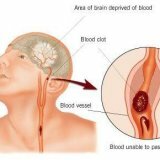
If the temporary and oxygen damage comes to the brain, the nerve cells are disconnected only for a time in a certain proportion of the brain. After the normalization of blood circulation, they continue to function normally. This temporary disconnection signifies disorders of cerebral circulation. But if oxygen does not enter the affected brain cells at the time, then the death of that site occurs.
Local symptoms of cerebral circulation disorders.
The brain is composed of areas that are responsible for different functions of the body. Some control the movements of the arms and legs, others control face mimicry, others process incoming information from the outside world, etc. When oxygen does not enter a certain area of the brain, then there appears a violation of a name of this kind for which the affected area of the brain responds.
Defeat a specific part of the brain causing local or focal symptoms. That is, inherent only in the defeat of this or that part of the brain:
If this site is affected, then there are disorders of breathing and cardiac activity, dizziness and correct articulation of speech and swallowing disorders occur.
In addition to local symptoms, there are also cerebral symptoms of circulatory disorders. Among them, a severe headache, a disturbance of consciousness, vomiting. Often these symptoms, including some local ones, appear only for a short time. So even if they disappeared, you need to see a doctor.