Heart Disease: Angina pectoris
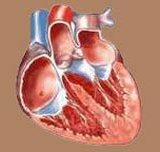
The angina pectoris disease is very common recently. Probably, such factors influence as finding a person in constant stresses, experiences and a frenzied pace of life.
General information about heart disease - angina
Angina of the heart is a process accompanied by a violation of the blood supply to the heart muscle and severe pain. This kind of pain is characterized by the following features:
- the occurrence of pain is sudden, without the absence of any precursors;Pain is often located behind the breastbone and has a spill character;
- the nature of the pain is pressing, but not sharp or stitching;
- duration of the pain syndrome from two to ten minutes;
- on the duration of pain can be influenced by the intake of nitroglycerin tablets under the tongue.
Heart disease angina, has its own functional unit for pain classes:
- 1 class - the emergence of pain are unusual physical activities and efforts like intense running or heavy weight transfer;
- 2 class - the emergence of pain are the usual loads, such as climbing stairs, running;
- Grade 3 - the onset of pain occurs with ordinary walking;
- Grade 4 - pain with low loads and at rest.
Angina pectoris is also divided into stable and unstable. Stable angina belongs to the 1,2 and 3 classes. The unstable are: angina pectoris, which originated for the first time, progressive, spontaneous and, of course, stenocardia of the 4th class of tension.
Diagnostic tests for the diagnosis of angina
Diagnosis of this disease can be either a process that proceeds quite fast according to the symptoms of the patient, and can last a very long time and include the carrying out of many necessary examinations and procedures in order to deliver an accurate and, most importantly, correct diagnosis. In cases where there are doubts among doctors and the presence of lubricated symptoms, the patient is obliged to perform such studies as: an electrocardiogram of one-time and diurnal nature, a study on a bicycle ergometer or a treadmill test with registration of ECG data, an echocardiogramLoads in the form of medicines, coronography. The most progressive and informative research, of course, remains coronography, which completely shows the patency of the heart vessels and gives a complete picture of what is happening. Coronography is not recommended for an acute attack or when surgical intervention is required.
Treatment of angina
Treatment of this disease is a long-term process and depending on the course and stage, requires treatment at home, and often in a hospital setting. Treatment consists, as a rule, of two parts: pain relief and preventive measures to eliminate complications and to obtain positive dynamics during treatment.
When relieving pain, use: nitrate therapy, i.e., primarily mononitrates, which act only for a short time;Dinitrates, trinitrates. But, unfortunately, this group of drugs relieves pain for a short time and has many side effects. The next option for relief of pain is the use of beta-blockers such as propranolol. Taking this medication, you need to monitor the pulse rate, which in some cases can be difficult, and in some cases it can get worse. And, of course, the use of calcium blockers such as nifedipine, cardafen, etc., depending on the doctor's prescription.
In order to prevent the emergence of complications, surgical revascularization consisting of balloon angioplasty is used, during which the vessels located in the coronary bed at the site of their constriction are expanded by the introduction of a special balloon and further stenirovaniya. Stenirovanie is the process of introducing a special spring into the narrowed vessel( wall), the presence of which promotes unimpeded passage of blood, and, accordingly, the establishment of blood circulation. In especially severe cases, angina pectoris is used quite a complex and lengthy operation, called aorto-coronary bypass surgery. This operation is aimed at restoring the normal functioning of the heart and its circulation by bypassing the narrowed artery by applying a parallel vessel called a shunt. The operation is long, involves a lot of risk due to many factors such as: vital signs, the state of other blood vessels and associated with the artificial heart circulation. Although the lethality during aorto-coronary bypass surgery is minimal, it still exists, so this operation is not shown to everyone and is necessary.
As for the medical prophylaxis of angina pectoris, it is primarily the use of statins, which significantly reduce and slow the process of atherosclerosis, and as a result, affect the life expectancy of patients with angina pectoris. Thanks to the use of beta-blockers, the process of preventing pain is in progress. And the use of antiplatelet agents and anticoagulants passes into the category of permanent and contributes to the systematic control and retention of the constant blood composition in the desired form, and most importantly prevents the formation of blood clots. Further, no less important is the use of ACE inhibitors, which control blood pressure and maintain its levels at the same level within acceptable limits. The drugs of the group of calcium-blockers, which contribute to the presence in the blood of the necessary substances, which ensure the normal functioning of the heart, and, accordingly, affecting the patient's health and his further full recovery, are necessary for the therapy of the treatment of angina pectoris.
Do not forget that heart angina does not tolerate self-medication. Therefore, if there is any discomfort or phenomena that impede the work of the heart, an urgent call to doctors for cardiologists is necessary.