A tooth of wisdom grows on the cheek: a photo and what to do after removal
The problem of teething wisdom has touched every person.In rare cases, these rudimentary teeth appear imperceptibly, without inconveniencing the patient.In others, people suffer from fever, soreness in the soft tissue, swelling and swelling, discomfort during chewing.
Why the third molar grows wrong
In this article, we will consider a specific problem when the wisdom tooth grows on the cheek and what to do in this situation.Also we will outline the main symptoms of pathology, the causes of its occurrence and possible consequences for the organism.
Rudimentary elements of the dentition appear far after the change of milk teeth, which ultimately complicates the process of eruption.The thing is that for the rest of the teeth, the dairy prepared a suitable channel for outlets.The formation of such channels takes many years, because the change of teeth in children begins with 5-6 years.
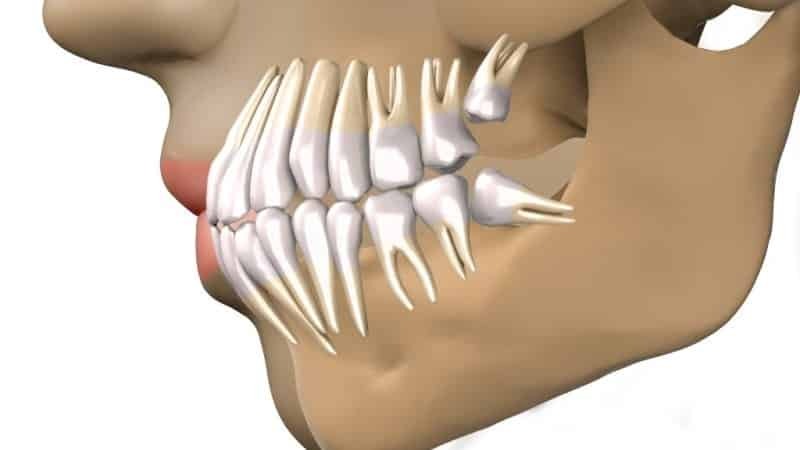
The wisdom tooth grows in the side
However, there are a number of common reasons that can affect this process.
- Hereditary structure of the jaw, which has a pathological development of the dentition.
- Incorrect position of the adjacent( seventh) tooth.
- Incorrect tooth output, too large or too small, untypical shape and structure.
- Dysfunction of the endocrine system, which leads to instability of the hormonal background.
- Problems with metabolism, because of which the patient receives less fluoride and calcium, affecting the development of the elements of the series.
- Pathology associated with an excessive number of elements in a series.
- Installation of implants or prostheses in the area of the seventh tooth.
- Wearing bracket systems, plates, cap and other orthodontic and orthopedic structures.
- Amputation of a number of teeth was performed, which made it possible to align the rear surface.This led to the appearance of an empty seat, which can partially take the wisdom tooth.
Symptoms of abnormal eruption and the consequences of this process
Like all other elements of the series, rudimentary teeth erupt painfully enough, causing discomfort to the patient.For some, the pain becomes unbearable, which forces you to regularly drink strong painkillers.
Often, if it grows at right angles to the jaw( normal), the patient additionally notices slight swelling of the tissues, small swelling, and discomfort during meals.Soreness, as a rule, intensifies in the evening.
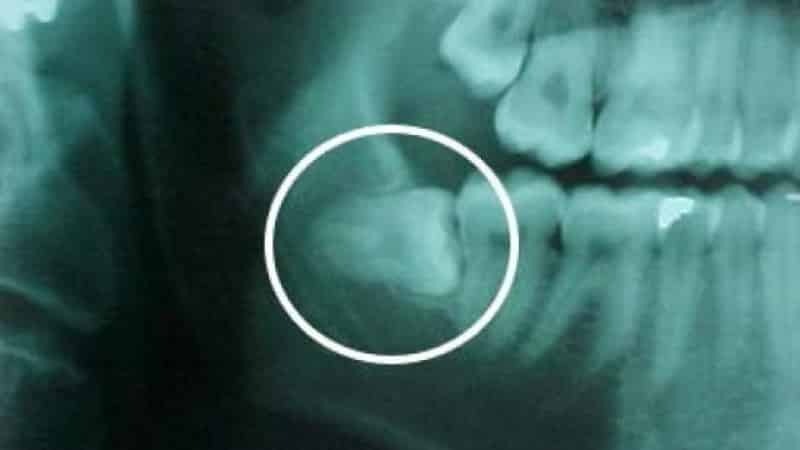
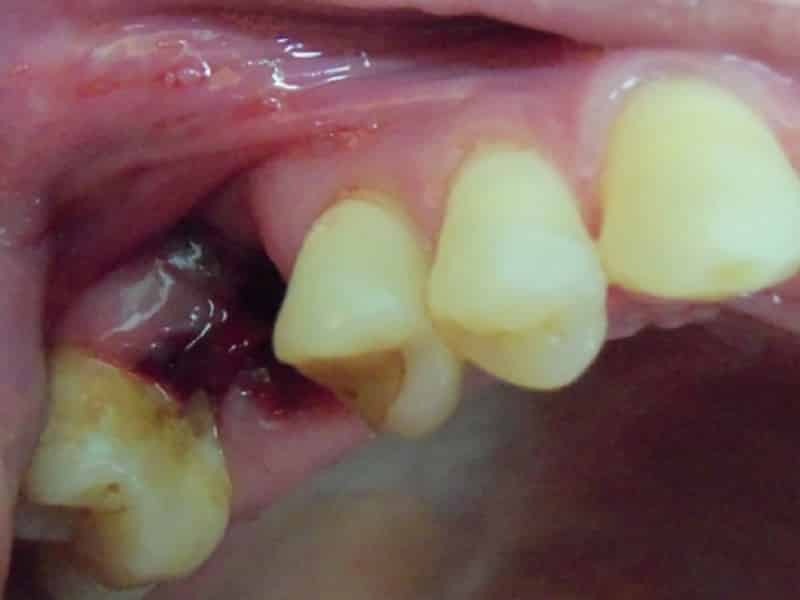
If the wisdom tooth grows on the cheek( then ) or bends at a certain angle, the patient may experience a number of characteristic symptoms:
- marked bleeding gums in the area of eruption, which is intensely manifested during cleaning teeth and eating solid foods;
- in the area blushes, the mucous surface swells and inflames, which can cause unpleasant sensations in neighboring teeth;
- food intake causes acute spasmodic pain, which renders to different parts of the mouth and even throat;
- possible damage to the inner region of the cheeks, the appearance on the mucosa of small wounds;
- cheek and gum in this area can swell and blush, numb and lose sensitivity;
- general condition worsening( weakness in muscles, apathy, headache, nausea, loss of appetite, sleep disturbance);
- hyperthermia.