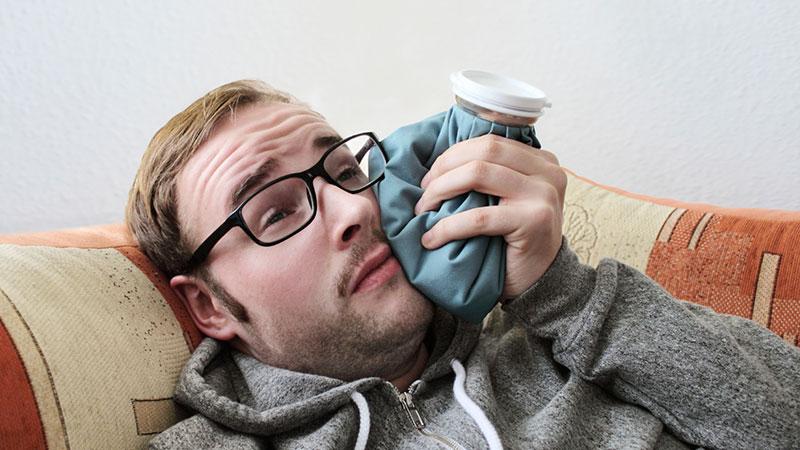
Why do my teeth hurt with cold and what should I do to get rid of it?
I have had a cold all my life, and more than once.However, when there is a throbbing or sharp toothache, the remaining symptoms are little felt, and people are looking for all possible ways to get rid of it.In the article we will consider why an ordinary cold can be accompanied by pain in the teeth and how to get rid of the problem by medical and home methods.
Causes of toothache during illness
Actually, if you are aching with colds, there can be several reasons.Most of them are associated with natural processes and respiratory signs, which, unfortunately, can not be avoided anywhere.
- Inflammation of the trigeminal nerve. As a rule, this ailment occurs due to the introduction of a viral infection, inflammation of the jaw joint.Subjectively, the patient feels pain and aches in the jaw, as well as in the dentition on the other side, where the inflammation began.Also, the process is accompanied by a small swelling and swelling.Attempts to chew and swallow food, yawn or laugh will cause severe discomfort to the person.Many infectious viruses lead to such ailment, therefore common flu can cause a painful syndrome in the jaw.

Sinusitis - can cause discomfort in the entire jaw
- Sinusitis .In some cases, a common disease gives a serious complication in the form of sinusitis, during which the maxillary sinuses are clogged.At the same time, discomfort in the entire jaw is common, especially if purulent sacs are also formed on the gums.These formations weight the root of the tooth, causing pain.In the case of the formation of purulent bags, the doctor will suggest cutting out inflamed tissues, clearing them of pathological fluid and installing drainage.This will soon get rid of the pain syndrome in the dentition.Also purulent inflammation can lead to the development of serious dental problems( abscess, cyst, pulpitis, etc.), which will require immediate surgical intervention.
- Ordinary respiratory disease. During an ordinary cold, the respiratory tract and, in the first place, the paranasal sinuses often become inflamed.The mucous surface is covered with phlegm, which prevents normal breathing, is poorly excreted and, accordingly, creates pressure in the area.It is this pressure that gives to the area of the teeth, which causes the patient to feel discomfort in the jaw.That is why we answer in the affirmative to the question "Can teeth ache for a cold?"

Respiratory disease - may be the cause of toothache
- Dryness in the oral cavity. During illness, the oral mucosa dries quickly, as we often breathe through the mouth( nose is blocked), and also cough, losing fluid from the cavity.The overdried cavity of a mouth leads to that sugar, acids and other microcells strongly settle on a teeth( are not washed off by a saliva) and damage a tooth, as though eroding it.Of course, the patient will experience unpleasant sensations, get rid of which will help the abundant drink of non-aggressive liquid( plain water, weak tea without sugar, etc.).
- Symptoms of poisoning. Often, a severe flu is accompanied by a bowel movement( diarrhea, nausea, or vomiting).During this period, the stomach produces an increased volume of acid( juice), which rises through the esophagus and comes out together with vomit.Residues of acid can settle on the surface of the enamel, quickly and deeply eroding it, which also causes pain and discomfort.Remember that with a cold, you should rinse your mouth with water, and even better rinse it several times a day with a saline-soda solution.This will help to eliminate dry mouth and remove acid residues from the enamel.
Toothache during cold
It is not always necessary to prescribe this symptomatology only to natural phenomena.Sometimes an unscrupulous attitude of a person can also aggravate the disease and cause new symptoms, such as toothache:
- Lack of good oral hygiene. The most common case is when a person is guilty of a toothache for a cold.Weakness, apathy, loss of strength, muscle aches and high fever lead to the patient spending most of the time in bed, preferring to get up only on need.Of course, during this period he completely ignores the hygiene of the mouth and thinks about it at the last moment.What happens when the flu does not pass a week or more?

The use of organic acids( lemon, berries) for colds often causes a toothache
During this time, food remains in the dental spaces, the bacteria multiply actively, secreting enzymes that destroy enamel.The above-mentioned acids, sputum, vomit residue and other pathological liquids also settle.All this gradually destroys the tooth, causing the rudiments of caries, and, hence, painful sensations in the hole and the interdental space of the .In this case, you can only recommend to find strength on the daily hygiene of the oral cavity .If the patient is difficult to climb, then place on the bedside table an antiseptic rinse and a spatula for spitting.Let it properly rinse the mouth after each meal and at least 1-2 times a week use a dental thread.
- Acid intake during illness. Each of us from the childhood planted the idea that tea with lemon or raspberries perfectly lowers the heat and fights the infection.So it is so, however, the organic acids contained in citrus and berries, destructively affect the enamel, causing it to microcracks.So gradually the sensitivity of the tooth increases, the patient begins to complain of pain when taking too cold or hot food, sweet, acidic foods.If you have a pain in the teeth with a cold, try to get vitamin C from other sources, for example, from ascorbic or Undevita, without resorting to folk recipes for medicinal drinks.

Undevit
The above cases are completely dependent on the patient himself.The main recommendations for the elimination of toothache in this case will be compliance with hygiene rules and avoidance of ingress of corrosive liquids and other components( too sharp, sour, sweet, ice or hot foods and drinks) into the mouth.
How to cope with toothache during illness
First of all you should calm down and do not wind yourself - toothache often accompanies such diseases as SARS, acute respiratory infections, flu, bronchitis and simple respiratory ailments.
Next, you should pinpoint the cause of pain to know which treatment will be effective and fast.If the above signs did not help you diagnose the cause, then try to bring down the temperature and go to the dentist.
In case of inflammation of the trigeminal nerve or joint dysfunction, you may be prescribed therapy with antibiotics and anti-inflammatory drugs.Effective also is the heating of the area using electrophoresis, other procedures. Do not use a heating pad yourself - illiterate heating( as well as cooling) of soft tissues can exacerbate the inflammatory process and, accordingly, the pain syndrome.
Sinusitis is also treated medically or requires minimal surgical intervention to drain the fluid and relieve pressure on the sinuses.
Do not expect that the bags will dissolve on their own and will disappear with the end of the illness.Once the growths on the gums are found, try to neutralize other severe symptoms( reduce the temperature, do not overload the stomach, etc.) and immediately go to the dentist.

Furacilin
Many wonder why teeth ache for colds and what to do if the cause of the pain is unknown.
As a rule, if you do not see obvious signs that caused pain, the cause is dryness of the mouth.We have considered this problem above.Try to often drink neutral drinks without sugar and fruits( berries), if possible, rinse your mouth and as quickly as possible cough and runny nose, which cause fluid outflow from the mouth.
If a digestive disorder called ( also considered above) occurs against the cold, then try to follow a strict diet to calm the stomach.Eat dry food( crackers, cookies), drink strong tea or just water, and a couple of hours after eating, eat several tablets of activated charcoal according to their weight.The consequences of each vomiting must also be eliminated!Rinse your mouth thoroughly using a weak solution of manganese or furacilin, as well as a saline-soda solution.
You can also fight the problem symptomatically .Just relieve the pain syndrome will help analgesics - Spazmalgon , Analgin , No-spindle and others.These drugs will help to relieve spasms for several hours, which will help calm sleep, and in the morning to take up more effective treatment.
You can also make compresses from Lidocaine or hold a cooled object near the aching tooth.This will dull the pain only for a while, but it will not eliminate the underlying problem.

No-spindle
There are also convenient and affordable tooth drops.Moisten the cotton sponge with a solution and apply as a compress to the aching tooth.Camphor and valerian in the composition will soothe soft tissues.
Remember that the pain in the teeth during illness can signal the development of parallel pathologies, so do not wait for a full recovery and as soon as possible, sign up for an appointment with the dentist.