Inflammation of the periosteum of the tooth: treatment and photos of periostitis
Inflammation of the periosteum of the tooth( medical name - "periostitis", folk - "flux") is a fairly common disease that causes acute pain in the area, swelling and hyperthermia.In addition to unpleasant symptoms, the disease is characterized by the presence of consequences if it is not treated in a timely manner: loss of teeth, purulent infection, a comprehensive health threat.
Symptomatics of periostitis
In this article we will consider what is the "periosteum of the tooth"( photo below), describe the main symptoms, the causes of the inflammatory process.We will also point out the methods of treating this ailment with conservative medicine.
Inflammatory processes begin with infection or mechanical damage to the gums.Immediately there is swelling, the gum increases in volume, there are painful sensations during a meal or brushing teeth.
The inflammation then spreads to the nearest soft tissue, which causes swelling of the jaw, chin, cheeks and even lips.In these places, there is a pain syndrome, as well as a slight asymmetry of the contour of the face.The process is accompanied by hyperthermia.

Chronic periostitis
If during this period there is no effective treatment, an abscess appears in the periosteum.
Visually, the disease looks like a reddened and swollen mucous area on which a white cloudy coating forms.The tooth near the inflamed periosteum changes position from the hole, mobility is observed.The gums around the tooth strongly turn red, swell, the patient feels painful when touched.
If the inflammation of the periosteum of the upper or lower jaw is accompanied by suppuration( abnormal fluid accumulates inside the abscess), pus will try to break through the capsule wall and come out, which will lead to self-cleaning of the cavity. However, without adequate treatment, the recurrence of is possible, abscesses will occur again and again and in some cases their removal will require surgical intervention.
Complications of the disease can be considered inflammation of the bone, which leads to the development of osteomyelitis, or inflammation of other facial tissues.Also, the ailment can acquire a chronic form, which will cause a lot of inconvenience to the patient and doom it to regular visits to the dentist.Chronic periostitis proceeds almost asymptomatically, sometimes the patient feels aching pain in the area, as well as signs of inflammation.Complications of the chronic form can be the appearance of a cyst near the dental root, fistula, local reactions, prolonged fever and general malaise.
Why does a periostitis occur

Periodicity often occurs as a complication of caries
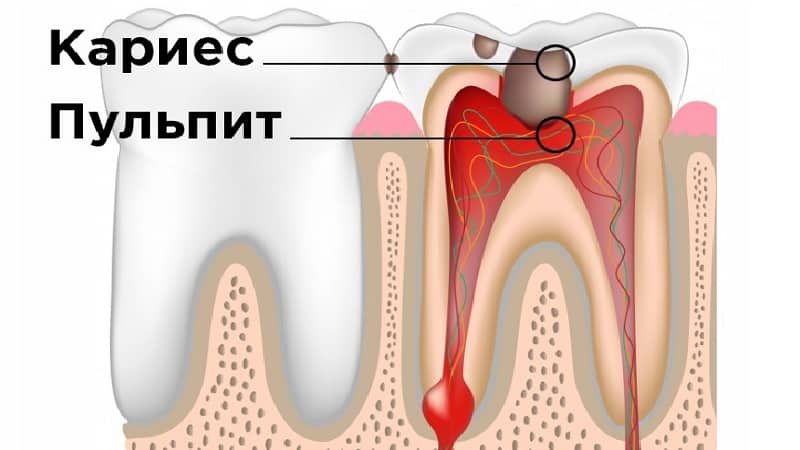
Inflammation of the periosteum of the tooth, the symptoms of which we have discussed above, often arise as a complication of caries.In case of untimely treatment, tooth decay not only destroys the dentin, but also gets to the pulp, causing deep inflammatory processes.
Acute form of the disease can also cause mechanical damage to ( impact in the jaw, injury from falling or colliding with a solid object, deformation in the area, injury, etc.).In the case of such damage, microcracks form in the tissues and bone, through which the pathological microflora that causes inflammation actively penetrates.
Sometimes it happens that the periosteum is inflamed after tooth extraction.This dental manipulation is a mini-operation, and, therefore, there is always a risk of infection or development of inflammatory processes in the hole, which can spread to the periosteum.
Treatment of periostitis
The primary goal during the treatment of this disease is to ensure the sanation of the abscess cavity( outflow of pus through the root canal, antiseptic treatment of the cavity).
After purification of the area, antimicrobial and anti-inflammatory therapy is performed.The classical treatment is completed with the removal or sealing of the affected tooth.

If there is a periostitis, you should immediately call your doctor
If during the treatment there are severe pains in the area, the doctor will suggest that you take analgesics.It will also be useful to rinse the oral cavity with a soda-brine solution, herbal decoctions, a solution of manganese or furacilin, and superimpose warm compresses on the jaw.
Inflammation of the periosteum of the tooth( photo above) requires skilled intervention, so do not prescribe self-antibacterial and anti-inflammatory drugs and especially antibiotics.
After deciphering laboratory tests and radiography, the dental surgeon will determine the stage and form of inflammation, the location of the primary focus and the extent of coverage of other soft tissues.
The early stage of the disease is treated with antibacterial medications and pain medications.
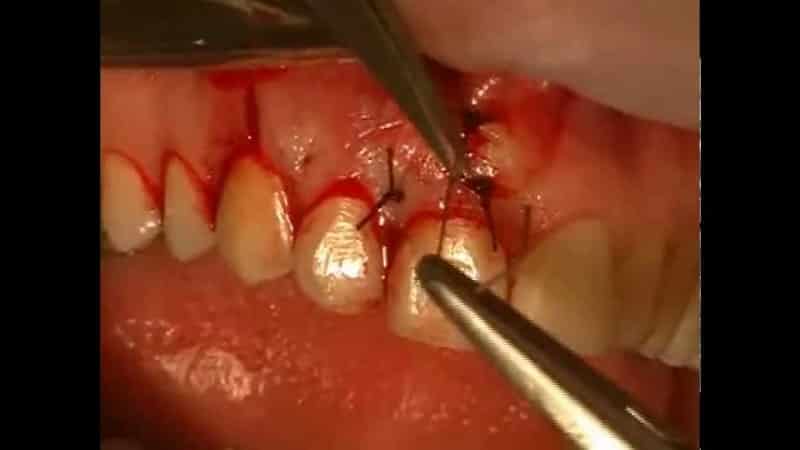
The doctor performs a cut in the area of the affected tooth and provides an outflow of purulent mass from the abscess cavity, if necessary, the damaged tooth is removed.Then complete sanitation of the oral cavity and treatment of the wound with an antiseptic solution is carried out, and the drainage system is installed for three days.
The patient is then sent home and prescribed antibacterial and anti-inflammatory drugs.Sometimes inflammation of the periosteum of the tooth requires treatment with antibiotics, which are prescribed only by the attending physician, depending on the age of the patient, the stage of the disease and the general state of immunity.
Rehabilitation after surgery

With proper treatment, the periostitis passes for 7-10 days.
Recovery involves mouth rinsing with antiseptic solutions( home remedies possible), using analgesics( if necessary), and good oral hygiene.It is important every day to inspect the dentition, as in some cases, periostitis recurs.
Completely periostitis of the tooth takes about 7-10 days .During this period, the patient should only eat food at room temperature, not allowing in the menu of ice dishes or soups "from the stove".The consistency of the food must be mucous, puree, and liquid.Meat should be grinded into minced meat, vegetables and fruit in puree.The menu must include vitamins and minerals, grains, vitamin C.
After each meal, rinse your mouth with an antiseptic conditioner that can be purchased at any pharmacy.
Also remember that periostitis is a serious inflammatory disease. If you load the body, be in stressful situations, lift weights or freeze, then the inflammation can resume and swiftly spread to other areas of the face and even bones.
In case of inflammation of the periosteum of the jaw( lower and upper), it is important to follow certain rules:
- it is forbidden to put on the sore spot a hot-water bottle or hot applications that can cause even more suppuration and accelerate the spread of the infection to other areas;
- do not prescribe medication yourself and do not rush to drink antibiotics - only a qualified specialist has the right to prescribe prescriptions, according to the diagnosis and form of the illness;
- carefully use the methods of traditional medicine( it is advisable to first specify them with the attending physician);
- after surgery is forbidden to take aspirin( may cause bleeding from the wound);
- is strictly forbidden to open the abscess on its own and try to squeeze pus - this will cause the pathological fluid to spread further along the blood vessels, infecting other organs;
- treatment should be performed promptly, as the disease quickly spreads to a number of located soft tissues and bones.
Preventive measures

To avoid the disease, you should visit the dentist
every year. To never experience periostitis or avoid recurrences, you should visit the dental clinic every year.Timely treatment of diseases and pathologies of the dentition can help prevent the onset of inflammatory processes.
Also, do not neglect the daily high-quality oral hygiene, because often the disease causes the carious process in the tooth.
And, of course, protect your face from blows and bruises if you are engaged in wrestling or extreme sports.The aseptic form of periostitis is caused precisely by injuries and injuries received in ordinary life.
We examined why the periosteal of the tooth hurts, what symptoms are accompanied by periostitis and what causes it.To avoid serious complications of this disease( osteomyelitis, cyst, abscess, pulpitis, etc.), contact the dentist promptly if there is a gingival edema of unknown origin, reddening of soft tissues and pain when touching them.