Tablets from constipation: chewing, fast acting, herbal tablets for adults and children
The word "constipation" people often assume different states. Some think that this is an infrequent stool. Others think that constipation is a hard feces, the need for tension during defecation or a feeling of incomplete bowel movement. The causes of each of these symptoms can be different, so the pill taken from constipation is selected individually for each patient.
From a medical perspective, constipation defined as scoring less than three bowel movements per week acts. However, one should not assume that a person must necessarily empt the intestines every day. The absence of stools for 2-3 days often does not cause any physical discomfort. In addition, there is no evidence that the infrequent bowel movements or constipation or accumulate toxins increases the risk of cancer.
Classification tablets feedback mechanism
There are many drugs that are used for constipation, including tablets, solutions, micro enema.
They belong to the following groups of medicines:
- Food additives with fiber and laxatives, increasing the volume of stool. These drugs are not digested in the intestines, they bind the water inside it, which helps to soften and increase the volume of the stool. Examples of these drugs are Psyllium( shells of plantain seeds), Methyl Cellulose and Polycarbophil. During treatment with dietary supplements with fiber or laxatives, increasing the volume of stool, it is important to consume enough water. The most common side effect of these drugs is increased gassing in the intestine. Take them with caution to people with intestinal obstruction and adhesions after operations on the abdominal organs.
- Lubricating laxatives. These preparations contain mineral oils that are not absorbed in the intestines and cover the stool particles, preventing the absorption of water. Holding fluid in the lumen of the digestive tract leads to a softening of the stool. Mineral oils for constipation are used only as a short-term treatment, since their long-term use has some harmful effects - for example, it can disrupt the absorption of fat-soluble vitamins and certain medications( Warfarin, oral contraceptives), reducing their effectiveness.
- Emollient stool remedy. Improve the penetration of water into the lumen of the large intestine, which helps soften the stool. Dokuzat belongs to them. Stool softening agents in the form of a gel for rectal administration or tablets are often used against constipation. Dokuzat can increase the absorption of mineral oils and certain medicines in the intestines. Absorbed mineral oils accumulate in body tissues( for example, in lymph nodes or liver), causing inflammation. Therefore, the combined use of Dokuzat and laxative, softening stools is not recommended.
- Osmotic laxatives. These are indigestible substances that remain in the lumen of the intestine and retain water inside it, which leads to a softening of the stool. The most commonly used osmotic laxatives are Lactulose, Sorbitol and Polyethylene Glycol. Long-term use of these drugs is safe and causes few side effects. Osmotic laxatives can be digested by intestinal microflora, which sometimes leads to gas formation, bloating and flatulence.
- Saline laxatives. Contain ions that are not digested in the intestines - magnesium, sulfate, phosphate and citrate. They cause an increase in the amount of water in the stool and its softening. Magnesium also has a moderate stimulating effect on the intestine. Since it is partially absorbed in the digestive tract and is excreted from the body with urine, in patients with renal insufficiency, long-term intake of magnesium-containing laxatives may accumulate toxic levels of magnesium. Saline laxatives are active for several hours. As a rule, these powerful tools are not regularly accepted.
- Stimulating laxatives. These drugs cause contractions in the muscles of the small and large intestines, thereby speeding up the passage of food through the digestive tract. They also increase the water content in the stool, reducing its absorption or causing its secretion. The most commonly used stimulant laxatives are castor oil, Senna, Bisacodyl. These drugs are highly effective, but can cause severe diarrhea, dehydration and loss of various trace elements. In addition, they often cause a spasm in the abdomen.
- Lubiproston. This drug causes the secretion of chlorine in the lumen of the intestine, which leads to an increase in the amount of water in it and the softening of the stool. Lubiprostone tablets are used to treat constipation only in adults.
- Linaclotide. This drug stimulates the secretion of fluid inside the intestine. If abdominal pain is observed during constipation, Linaklotida tablets can reduce it.

Having looked at this impressive list of constipation preparations containing tablets, solutions, rectal gels and microclysters, anyone can ask: which ones are more effective and less dangerous to the health of the intestine and the whole organism?
when non-drug methods of dealing with constipation( increased amount of fiber in the diet, drinking enough water, exercise) were not effective enough, doctors often prescribe laxatives, bulking the stool. If they do not help, you can try to use one of the osmotic laxatives.
It is believed that long-term treatment with drugs from these two groups is relatively safe. Stimulant laxatives can be used alone or in combination with osmotic drugs for severe chronic constipation. Long-term use of these drugs should be avoided.
Senade
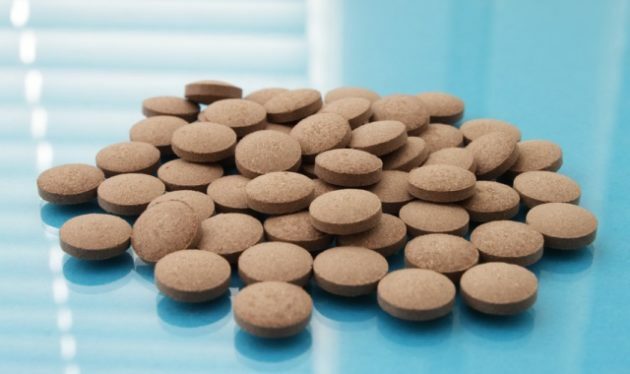
Senade - a pill for constipation herbs that contain sennosides obtained from leaves of senna. Sennosides irritate the mucous membrane of the large intestine, causing a laxative effect. Senna has long been used in folk medicine for the treatment of constipation.
Contraindications
When constipation pills Senade can not be consumed by people with hypersensitivity to the drug, spastic or ulcerative colitis, Crohn's disease, intestinal obstruction, abdominal pain of unknown origin, strangulated hernia, acute inflammatory diseases of the abdominal cavity, peritonitis, gastro-intestinalOr uterine bleeding, disturbances of water-electrolyte balance. Do not use this medication for children younger than 6 years.
Prolonged intake of Senadé tablets in case of constipation in pregnant women should be avoided, as this can lead to dependence on laxatives and damage to the liver. Also, the drug should be given with caution to women breastfeeding.
Adverse effects The adverse effects belong Senade abdominal pain, diarrhea, electrolyte metabolism disorders, excessive activity of the large intestine, nausea, nephritis, melanose colonic mucosa, yellow-brown staining of urine due to excretion by the kidneys metabolites sennosides.
Dosage and route of application
Senadé is available as tablets, each containing 13.5 mg of sennosides.
The drug is taken once a day, usually - in the evening, before going to bed, washing down with water. For constipation, adults and children over 12 years of age are prescribed 1 tablet at a time, in the absence of effect, the dose can be increased to 2-3 tablets. Children aged 6 to 12 years are prescribed ½ tablets, if necessary, the dose can be increased to 1-2 tablets.
If, in case of taking the maximum dose, defecation is absent for 3 days, you need to see a doctor.
Advantages and disadvantages of the drug
Advantages Senade belong to the relative cheapness of preparation, high efficiency and smooth operation.
Disadvantages of this remedy include the impossibility of long-term treatment( it can cause addiction to the laxative), the possibility of developing abdominal pain and other side effects.
Fitolaks
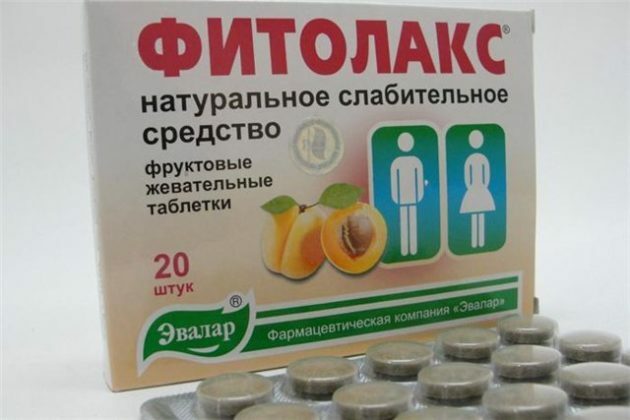
Fitolaks - a vegetable remedy for constipation, manufactured in the form of chewable tablets, sachets-filter for brewing tea, chocolate bars or concentrated solution. This remedy is not a medical product, it belongs to the biologically active additives.
Depending on the release forms of the Fitolaksa includes various plant components, including prunes, plantain, apricot, senna, dill, fennel, inulin, buckthorn, plum, chamomile, beets. The complex effect of this herbal remedy is aimed at combating constipation.
Contraindications
Fitolaks contraindicated in the presence of allergy to the components of dietary supplements, as well as children younger than 14 years old, pregnant and breastfeeding women. Do not take Phytolax in combination with senna preparations( for example, with Senada).
Side effects
Reception Fitolaksa can cause bloating, discomfort, pain or cramps in the abdomen.
Dosage
When constipation patients are recommended to be chewed or sucked Fitolaksa 2 tablets in the evening, if necessary, the dose can be increased up to 4 tablets.
Fitolax tea is also used in the evening, pouring the filter bags with a glass of hot water.
Concentrated solution should be drunk 1 teaspoonful, stirring before it in water.
Phytolax Bars can be consumed 1-2 times a day.
Like any other laxative that contains senna, Phytolax can not be consumed for long.
Advantages and disadvantages of
Phytolax has a relatively mild and effective effect, is available in various forms. However, it quickly leads to the habituation of the intestine, so long-term treatment with these pills for constipation is contraindicated. In addition, when taking Phytolax, side effects are possible.
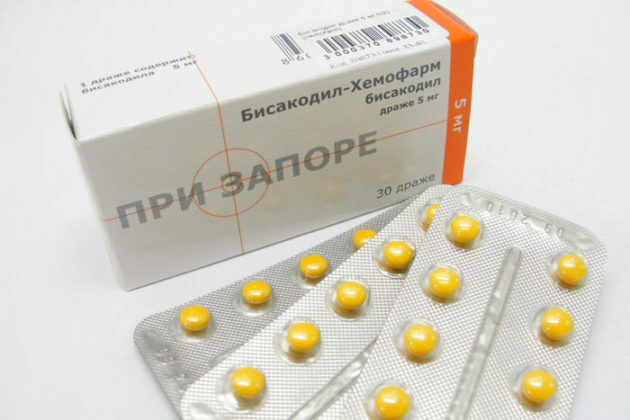
bisacodyl bisacodyl - this is one of the most commonly prescribed remedies for constipation, manufactured in the form of tablets and rectal suppositories. The drug stimulates intestinal peristalsis, irritating its smooth muscles and nerve plexuses. In addition, Bisacodyl increases the water content in the lumen of the digestive tract. Contraindications
Application bisacodyl is contraindicated in individuals with hypersensitivity to the drug, intestinal obstruction or fecal obstruction, symptomatic acute abdominal pathologies( e.g., with appendicitis), gastroenteritis, vomiting and bleeding from the gastrointestinal tract. Also, it is not possible for children under 6 years of age to take this medication. With care, Bisacodyl should be given to pregnant and breastfeeding women.
Side effects
bisacodyl may cause cramping and abdominal pain, disorders of water and electrolyte balance, severe diarrhea, nausea, vomiting, irritation of the rectum( from suppositories).
Dosage
Adult constipation is recommended to take 1-3 tablets bisacodyl once a day. Since the effect develops after 6-10 hours, take the medicine in the evening or in the morning. Children aged 6-12 years are given 1 tablet at night or in the morning, over 12 years - 1-3 tablets a night. Do not use milk or antacids within an hour before and after taking the drug.
Rectal suppositories of Bisacodyl, in contrast to tablets, are fast acting agents for constipation. The effect of their application develops in 10-60 minutes. Adults are recommended to inject into the rectum 1 suppository containing 10 mg of bisacodyl per day. Older children are prescribed 1 suppository containing 5 mg of bisacodyl.
These tablets can be used for constipation only for a short time, since they can cause intestinal addiction.
Which tools are faster?
Fastest with constipation are drugs that are injected into the rectum - for example, rectal suppositories of Bisacodyl. A rapid effect also indicates osmotic laxatives - their effect begins in 1.5-2 hours.
Features of the use of drugs herbal
Among laxatives are many herbal remedies that contain senna, plantain and other plants. Their examples are Senada and Phytolax. A feature of these drugs is a mild effect.

However, before starting any laxative, consult a physician. For each of them, including herbal remedies, there are contraindications. In addition, plant components can interact with other medications, which can be very dangerous and lead to serious complications.
It should also be remembered that some of the phytopreparations do not consist of one plant, but several. In this case, it is difficult for even a qualified doctor to predict possible interactions with other medicines.
Constipation is a common problem of modern society. To combat them, there are many medicines. However, it should be remembered that the main treatment is the modification of the way of life - increasing the fiber content in the diet, drinking enough water and physical activity.
Author: Taras Nevelichuk doctor,
specifically for Moizhivot.ru