Methods of diagnosis of male health: semen analysis

Each couple will sooner or later think about procreation. An active sex life without contraception, usually ends with the onset of pregnancy.
But sometimes, the conception did not occur even after a year or two. In this case, recommended for couples to get tested.
Earlier in the absence of children accused woman, now 40% of cases occur in male infertility.
Causes of male infertility
diagnostic methods allow to determine what was the cause of male infertility and assign effective therapy.
The main causes of infertility in men:
Important! Infertility affects on semen quality, number and mobility of spermatozoa.
Examination of the male reproductive health has been doctor-andrologist.
Gross examination circuit for diagnosing male infertility
As a rule, men's health survey begins with a consultation andrologist who collects history, finds the complaint and examines the patient. At this stage, diagnose possible violations, assess the functional and anatomical condition of the reproductive system. It is determined by the primary or secondary infertility.
For men who do not have children, determine the primary infertility.
secondary infertility diagnosed in men who already have children. It develops over a lifetime due to some reasons.
Further inspection circuit build depending on results obtained. Assign additional procedures and tests.
In general survey conducted by the following scheme:
- Semen. To evaluate the quality of sperm. Further diagnosis depends on the results of this analysis. To obtain reliable data, the man three days before the date should refrain from a hike in the bath, intimate life and alcohol consumption. Fence material is carried out in a medical institution by masturbation.
- MAR-test. Confirms or rules out immunological infertility in men. Fence semen was performed in the same manner as for the semen.
- Doppler ultrasound and scrotal organs. Examination and testicular appendages, blood flow to these organs allows to confirm or rule out surgical, physiological or inflammatory pathology.
- Transrectal ultrasound of the prostate and seminal vesicles. With this survey we investigate prostate structure that eliminates or confirm the presence of chronic or acute inflammation.
Clarify the diagnosis allow more research that is carried out as follows:
- hormones. Take a blood test for hormones that are responsible for the flow of spermatogenesis and male libido. Analysis pass fasting. Blood sampling is performed during the period from 9 to 10 o'clock in the morning;
- genetic testing. Prescribed by the physician upon detection pathospermia;
- PCR diagnosis of STDs. Eliminates or confirms the presence of infections, sexually transmitted disease, which affect the process of conception. Before any analysis is prohibited to urinate for two hours. Smear taken from the urethra;
- the secret of the prostate. The analysis allows to exclude or confirm the inflammation of the prostate. Before examining the need to abstain from intercourse for three days;
- biochemistry of ejaculate. The analysis is aimed at studying the seminal plasma. The result shows the operation of the seminal vesicles, epididymis, and prostate;
- ROS. Setting the level of free radicals. Hyperproduction of reactive oxygen species (free radicals, ozone, hydrogen peroxide) is one of ROS causes of fertility, which reduces sperm motility and reduces their ability to fertilization. The result is damage to their membranes. Moreover, the damaged DNA is a chromosome that leads to the development of apoptosis sperm;
- electro-microscopic method for the study of sperm. A complete study sperm, which can detect the internal structure of the pathology and seminal plasma contents;
- acrosomal reaction. The chemical reaction that occurs on the head of the sperm at the time of contact with the egg, allows him to penetrate her. A similar reaction occurs only in healthy sperm;
- planting semen. Assign hanged level detecting leukocytes or bacteria;
- study of the morphology of Kruger. Usually done with semen analysis. Sometimes, however, it requires a detailed analysis of semen, which comprises a semen analysis, MAR-test and morphology by Kruger;
- HLA. Appoint, if a woman can not bear a child. The study identifies antigens compatibility of spouses tissues. For analysis of venous blood pass;
- determination of tumor markers. Investigation administered for suspected cancer;
- Kurtsroka-Miller sample. Postcoital test that reveals an immunological conflict paired cervical level;
- PSA. The study is prescribed for all men over 45 years;
- Shuvarskogo sample. The test for compatibility of partners. Determine the number of viable sperm in the cervix after some time after intercourse;
- testicular biopsy. Assign with azoospermia. It allows you to make an accurate diagnosis and the correct method of treating infertility in men;
- laboratory research. Appointed on the grounds. Urine culture, blood and urine tests, biochemical blood.
Important! Each method of diagnosing the cause of infertility is a serious indication for the study and carried out only by experienced professionals.
Most cases of male infertility can be treated successfully. The main thing - to pass a comprehensive examination and start treatment.
A source: https://okeydoc.ru/diagnostika-besplodiya-u-muzhchin-polnaya-sxema-obsledovaniya/
Sperm analysis for infection

Infectious diseases, sexually transmitted infections (STIs) - a very common pathology among men. Often she is the obstacle to the conception and birth of a healthy baby, since infection impair sperm quality and lead to the formation of inflammatory processes in the pelvis.
For the diagnosis of STIs may take a swab from the urethra, or ejaculate. In the first case the resulting material was applied on glass and examined under a microscope. This method is quite effective, but do not reveal all kinds of pathogens. In the second case, a PCR analysis. Consider what it is, and how pathogens can be detected with the help of such a survey.
Features
Many people wonder whether to show the semen infection. In fact, there is no need to further study of the ejaculate, called Polymerase Chain Reaction (hereinafter PCR).
In contrast, examination under a microscope, in this laboratory assay evaluates RNA and DNA fragments of pathogens, and compares them with the database of various microorganisms. This is done by using special enzymes, in a special device.
Such a device is called a thermal cycler or PCR machine. This device creates a special temperature mode, all the time warming and cooling tubes. In this way it is possible to obtain a very precise result.
For the PCR analysis may be used not only the patient's sperm, but also other biological material, e.g., blood, urine, urethral swab, spinal fluid. Type of biological material to be used depends on the type of agent. So for the diagnosis of HIV always take blood, and for STD can take blood and semen, and smear.
Many people wonder whether it is possible to diagnose HIV on semen analysis. Sam semen analysis is not intended to detect any infections, so the answer is no. Semen analysis helps to assess sperm motility, sperm number, the presence of a blood cell and white blood cells.
Pathogens
Through PCR diagnostic in the sperm can be detected enterococci (enterococcus sp), fecal enterococci (enterococcus faecalis), Staphylococcus (Staphylococcus) and other pathogens. Using PCR analysis can detect a variety of different microorganisms:
- chlamydia;
- ureaplasma;
- gardnerella;
- mycoplasma;
- trichomonas;
- Candida fungi;
- herpes virus;
- hepatitis;
- B-lymphotropic human virus (mononucleosis);
- Listeria;
- cytomegalovirus;
- HPV;
- encephalitis et al.
Interestingly, a semen analysis can be used not only for diagnosis of infection, but also to confirm paternity or to search for criminal forensics.
Analysis of sperm in the infection often helps to establish the cause of infertility. Fertility problems provoke trichomonas, chlamydia, herpes virus, gonococci. But harmless at first glance, streptococci, staphylococci and E. coli, which could reveal the results of semen analysis with PCR in small amounts, can cause disease.
The fact is that if the semen found pathogens, it is likely that they have already established themselves in the testes, prostate. A slight deviation from the norm is not an acknowledgment of the inflammatory process. But if the patient's immune system fail bit, the bacteria begin to actively proliferate.
Benefits
PCR analysis has a number of advantages:
- The most important advantage - accurate results. Since the study does not do micro-organisms and their DNA, it is enough to very low concentrations, so that they were discovered.
- The advantage is the fact that once is enough to pass the sperm to detect all pathogens immediately.
- Not necessarily to take the sperm, though preferably with infertility. Identify the infection can often by a blood test and smear from the urethra.
- If the study has been carried out by all the rules, then the error is eliminated.
- Another advantage of the PCR - fast results. Study duration is not more than 7 hours.
- collecting material non-invasive, it does not cause any inconvenience.
Lack of sperm from one study to the infection - the need to respect a number of conditions to obtain an accurate result. First of all you need to properly pass the sperm.
To collect biological material needed in clinic conditions in a sterile container. Before delivery to exclude sexual intercourse for 3-4 days. It is forbidden to drink antibiotics several days before analysis, as well as drinking alcohol.
The result affects the professionalism of a laboratory quality equipment. The study can not make mistakes, otherwise you can get a false result.
A source: https://1ivf.info/ru/infertility/male-factor/analiz-spermy-na-infektsii
PCR diagnosis of infection in the semen (ejaculate)

| PCR analysis is by far one of the high-tech, affordable and effective methods of molecular diagnostics, applied in different fields of medicine. Most often it is used for the laboratory diagnosis of infectious human diseases, including sexually transmitted infections (STIs), and detection of pathogens of urogenital infections, which can cause a variety of inflammatory diseases of the urogenital system in men and women. |
See also:Male pattern baldness: Causes and Treatment
In this article, we will focus on the PCR method for diagnosis of infections, sexually transmitted infections, when sperm analysis (sperm). What infection can be determined in the semen, and which can not? What other materials can be used for the diagnosis of infections of the reproductive system?
Among the advantages of the PCR method as a comparison with other traditionally used for the diagnosis of infectious diseases (enzyme immunoassay, bacteriological sowing, microscopy), it is worth noting the direct detection of the infectious agent from the identification of specific DNA or RNA fragment of the pathogen in the test sample, and therefore - to directly identify the infectious agent, to carry out early diagnosis, for example, in the incubation period, to diagnose disease not only in the acute and chronic forms, but also to identify the hidden (latent) forms of infections that occur without obvious symptoms or no symptoms, and conduct screening research aimed at identifying how the existing infectious diseases and the identification of potential carriers of infection for the evaluation of the patient belonging to the group risk.
The spectrum of pathogens detectable by PCR, is extremely broad, and therefore the most widely used PCR-diagnosis received in gynecological and urological practice in dermatology.
For the diagnosis of most bacterial and viral infections, detect STD pathogens which cause sexually transmitted diseases by (STDs), material for research is mainly soskobnoe discharge mucous membranes of the urinary organs: scraping the epithelial cells of the the cervical canal and the surface of the cervix in women, the scraping of the urethra (the urethra), discharge from the genitals - for men and women. The examination of some types of infections (HIV, hepatitis B and C, Epstein-Barr et al. Virus) are bled for analysis. To detect cytomegalovirus and herpes infection can be studied urine. Clinical material for PCR diagnosis of STIs in men may be the secret of the prostate and the ejaculate (sperm). In each case, the choice of the test is determined by diagnostic biomaterial research task.
This article will review the diagnosis of sexually transmitted infections in men and the identification of pathogens of STDs and urogenital infections in the ejaculate.
Infectious-inflammatory diseases of the male reproductive system may be one of the possible reasons for the decline of male fertility (ability to reproduce offspring), and urogenital infections they cause - be associated with the male infertility.
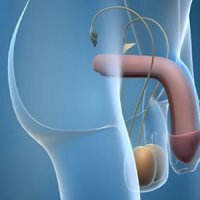
include external and internal sex organs The organs of the male reproductive system. Among the exterior include penis and scrotum.
Internal sex organs are presented eggs with their shells and appendagesLocated in the scrotum, deferens and accessory sex glands, including prostate (Prostate) - Fe-muscular body covering the urethra below the bladder, seminal vesicles - paired glandular organ located above the prostate gland, and bulbourethral (Cowper's) glands - paired rounded gland small size located between the bundles of muscles of the urogenital diaphragm.
The testes are paired sexual glands, the formation of male sex cells - sperm and the development of male sex hormones. secreta accessory sex glands form seminal fluid (seminal plasma, seminal plasma or), which when mixed with sperm form a cum. The epididymis (epididymis) is closely linked to the testis and serves as a reservoir of sperm accumulation and maturation of sperm as part ejaculatory tract.
The vas deferens is paired tubular body serving to transport of sperm from the epididymis in ejaculatory duct. When ejaculation (ejaculation) is a reduction of the longitudinal muscle fibers vas deferens, the sperm enter the vas deferens and washed away the contents of the seminal vesicles in urethra.
Contribution secretions of the seminal vesicles and prostate in total volume of semen is about 95% (about 35% from the secret Prostate, 60% - by secret seminal vesicle), and therefore fluctuations ejaculate volume, primarily dependent on accessory sex secretion glands. The close functional relationship of all organs of the male reproductive system allows to evaluate her condition through the study of the ejaculate. Among the laboratory studies semen analysis is an important and often - enough not only to assess male fertility, e.g., in the analysis of semen, but diagnosis of the most common, significant urogenital reproductively infections.
The most common infectious agents of the male urogenital tract are bacteria: gonokokk (Neisseria gonorrhoea) - the causative agent of gonorrhea, chlamydia (Chlamydia trachomatis) - the causative agent of urogenital chlamydia, trachoma and lymphogranuloma venereum, pale treponema (Treponema pallidum) - the causative agent of syphilis, mycoplasma (Mycoplasma genitalium and Mycoplasma hominis) and ureaplasmas (Ureaplasma urealyticum, Ureaplasma parvum)Which are infectious agents, inflammatory processes in urinary organs, and protozoa, e.g., Trichomonas (Trichomonas vaginalis) - the causative agent of urogenital trichomoniasis, fungi such as the genus CandidaCausing urogenital candidosis, and various viruses, including herpes simplex viruses type 1 and 2 (HSV, Herpes simplex virus, HSV1 and HSV2) - causative agents of genital herpes, cytomegalovirus (CMV), Human papilloma virus (HPV, HPV, Human papillomavirus), Hepatitis B viruses (HBV), Hepatitis C (HCV)HIV (HIV) and others.
Some of these bacterial pathogens (gonococcus, chlamydia, pale treponema, genital mycoplasma) are pathogens other (ureaplasma Enterococci, Staphylococcus and others) - belong to the group of opportunistic pathogens that can cause inflammation in the genital organs in reducing immune defense.
Viruses and bacteria can directly hit the sperm, leading to a change in their mobility.
For example, it is known that Mycoplasma genitalium and Ureaplasma urealyticum, Adhering to the head and the middle of the sperm have a negative impact not only on their mobility, but also the ability to fertilize an egg, conducted in experimental (In vitro) conditions.
Damaging effect may have produced by microorganisms and toxins. In response to the infectious process is secondary inflammatory injury develops accompanied formation of free radicals and cytokines capable of exerting a cytotoxic effect on sex cells.
In addition, infection is a risk factor for the formation of antisperm antibodies (ACAT) directed against various portions of sperm.
Mechanism of formation of ACAT on the background of the inflammatory process is still the same ability of the bacteria, viruses and fungi attached to the membrane of the sperm, so that there is the launch of an autoimmune reactions. The presence of ACAT in the ejaculate reduces its qualitative and quantitative characteristics: reduction and concentration motility, changes in the morphology of germ cells, their agglutination, to a change in pH and viscosity values of seminal plasma. Thus, infection of genitourinary organs may decrease reproductive function in men.
Most STD pathogens enter the body mainly through sex. The most common infections are detected in young people, especially those who have a large number of sexual partners.
Unprotected intercourse is a high risk of infection with chlamydia, gonorrhea, syphilis, trichomoniasis, hepatitis B and C, HIV, herpes, HPV. In total, there are currently more than twenty infections that are transmitted sexually.
Many of them are highly contagious, and therefore - the rapid spread among the population. For example, in the world each year about 90 million new cases of chlamydial infection and susceptibility to urogenital chlamydiosis is close to 100%.
It should be remembered that STIs can occur in any kind of sexual contact: anal and oral sex, genital contact without penetration. The insidiousness of these infections lies in their ability to proceed without clinically significant symptoms.
According to the World Health Organization (WHO), 50 - 80% of the population are infected with human papillomavirus, but only 1 - 2% of people have the clinical manifestations of this infection.
Asymptomatic virus carrier plays a key role in the spread of genital herpes: up to 70% of cases, transmission of the virus and infection of healthy individuals it occurs in asymptomatic nature of the disease and the presence of herpes virus in patient. The clandestine nature of the flow of infection makes it difficult to identify her.
Lack of proper attention from the men on the appearance at some of the signs or symptoms of incipient disease, delayed access to a doctor or improper treatment, such as in the case of self undertaken, can contribute to the progression of infection into a chronic form and develop chronic disease. Chronic infection is more difficult to diagnose, difficult to treat, besides the effects of chronic infectious and inflammatory process are more severe for male urogenital organs health.
See also:It is better to take Viagra or Cialis?
Depending on the localization of the infection most commonly develops in men urethritis (Inflammation of the urethra), cystitis (cystitis), prostatitis (Inflammation of the prostate) epididymitis (Inflammation of the epididymis) and orchitis (Testicular inflammation).
Acute epididymitis can spread to the testicles (Epididymo). Symptoms or signs of the disease are directly dependent on what kind of infectious agent was in the male body, and what is the state of immunity in general.
The most common infectious agents that cause urethritis, are Chlamydia trachomatis, Neisseria gonorrhoea, Mycoplasma genitalium and Ureaplasma urealyticum. Among sexually active young men epididymitis often called Chlamydia trachomatis, Neisseria gonorrhoea and trichomonas vaginalis.
In older men, and the elderly often find opportunistic pathogens (Mycoplasma hominis, Ureaplasma parvum and etc.).
Symptoms of urogenital diseases caused by various pathogens STIs often are not specific.
When acute infectious-inflammatory clinical picture of STIs among men may be expressed by symptoms such as discomfort, itching and burning sensation in the urethra, pain in the perineum, lower abdomen and the scrotum, pain when urinating (Dysuria), and sexual intercourse (dyspareunia) hyperemia and swelling of the skin in the affected area, mucous or purulent urethra. If signs of infection of latent infections may be rare, slight discharge from the urethra. The similarity of clinical manifestations of many urogenital infections does not mean that there is equal treatment of each individual infection requires medical treatment. This dictates the need for laboratory research aimed at detecting and identifying STI pathogens.
One of these types of study offered in our clinic for men, is the analysis of semen by molecular biological method PCR. The study is a screening and is a block PCR assays for infection in semen.
It designed to detect a specific DNA fragments biomaterial STI major pathogens of urinary and urogenital infections tract in men: Neisseria gonorrhoeae, Clamydia trachomatis, Trichomonas vaginalis, Mycoplasma genitalium, Mycoplasma hominis and Ureaplasma spp.
The survey does not require any invasive procedures, and therefore can be carried out as soon as possible.
The use for these purposes of modern highly sensitive and highly accurate diagnostic method, how is PCR analysis, it is now an integral part of a comprehensive approach in the laboratory evaluation of male reproductive health.
A source: http://www.CIRLab.ru/library/71/140277/
semen

Semen (spermiogram, semen analysis) - Laboratory Methods of ejaculate oplodotovoryayuschey to assess the ability of male sperm.
Spermogramma shows the ability of male fertility and, in addition, is an important diagnostic method urological diseases. During the study, evaluated the concentration, shape and motility of spermatozoa determine the quantitative, qualitative, morphological sperm parameters. This is done by experts in the laboratory with a microscope.
What are the indications for semen intended?
- Barren marriage (identifying male factor).
- Infertility in men (called prostatitis, varicocele, infection, trauma, hormonal disorders).
- Preparation for IVF, ICSI.
How to prepare for sperm deposited in the analysis?
Before any semen analysis is recommended abstinence for 3-5 days. During this period, you can not drink alcohol, beer, drugs, visit the bath or sauna, take a hot bath.
How to collect semen for analysis?
Material for the study only collected by masturbation in a special sterile container. For the analysis, it is desirable to collect all allocated sperm.
The loss of the sperm, especially the first portion, making an inaccurate picture of the total semen.
It is best to obtain sperm implement in the clinic in a specially prepared room, but allowed the collection material and at home, if the patient is able to deliver the container to the laboratory within one hours.
Timing of sperm analysis - 1 day.
What are the normal parameters of semen?
| volume | at least 2 ml |
| Consistency | viscous |
| Colour | white-gray |
| Smell | specific |
| liquefaction time | 10-40 minutes |
| Viscosity | 2 cm |
| pH | 7,2-8,0 |
| The number of spermatozoa in 1 ml | 20-120 million. |
| The number of sperm in the ejaculate | 40-500 million. |
| Actively moving (category A) | 25% |
| Slabopodvizhnye (B) A + B | not less than 50% |
| Non-progressive motile (Cat. C) C + D | not more than 50% |
| Fixed (category D) | less than 50% |
| abnormal sperm | not more than 50% |
| Number of round cells | not more than 5 Mill. |
| Spermagglyutinatsiya | not |
| normal sperm | 50% |
| leukocytes | 3-5 in sight |
In the diagnosis of male infertility results when different from the norm, you need 1-2 weeks to retake the semen analysis and the results obtained to consult a doctor-andrologist.
A source: http://medportal.ru/enc/besplodie/male/6/
semen analysis

Semen - one of the key ways of men's health diagnostics. It allows you to determine the status of sperm, its reproductive capacity. The study evaluated the micro- and macroscopic properties of the ejaculate.
It is important to understand that the semen - is not an analysis of the reproductive dysfunction. Even with the normal parameters of this study could be male sterile. To determine the cause of the pathology is recommended to pass a comprehensive examination.
Semen analysis also reveals a number of infections: candidiasis, chlamydia, HPV, herpes and others.
| Service | price, rub. |
| semen | 2000 |
| MAR-test (determination of antisperm antibodies in the ejaculate) * accepted from Monday to Thursday of a call prior to the laboratory | 2000 |
Indications for analysis
- Infertility at a regular sexual life without the use of contraceptives;
- Comprehensive survey in preparation for fertility;
- sperm donation;
- Freezing sperm;
- Measuring the success of vasectomy;
- Diagnosis reproductive ability in the presence of diseases (chromosomal, endocrine, severe diseases, transferred in childhood);
- Preparation for IVF;
- Personal initiative men.
Survey Preparation
In order to analysis provided accurate information about the state of the sperm, should follow a few guidelines:
- Refrain from sexual intimacy for 2-7 days;
- Refuse receiving hot baths, steam baths, saunas;
- 2 weeks before the study did not drink alcohol;
- In agreement with your doctor, stop taking the urogenital drugs.
How to get tested
To obtain reliable results, it is recommended to take a semen analysis at the clinic. The medical center "Health" we offer comfortable conditions, compliance with all sanitary and technical standards, as well as quality service.
- sperm collection is done in a sterile container, the container temperature should be in the range 20-40 ° C;
- It is important to collect all the sperm, especially valuable is considered to be the first drop.
You can collect the sperm and in the home, but you should strictly adhere to the following requirements:
- Sperm must be delivered to the laboratory within an hour;
- The temperature of the container material must not be below 20 ° C and above 40 ° C;
- a light-tight package should be used for transportation.
For the analysis is not suitable sperm obtained during intercourse, withdrawn from ordinary condom or collected with hands, bed and so on. D.
As we study the sperm
When semen analysis, the material studied by the following parameters:
- The amount and consistency of the material
- Color and liquefaction time
- acidity level
- Total sperm count and the percentage of live
- The presence of cellular elements in the semen
- Bonding between a sperm (normally this should not be)
- Structure and motility
Interpretation of the results conducts physician. Depending on the performance and the collected history, he may appoint additional examination.
A source: http://www.medcentr.biz/service/analysis/sperm/
The test for male infertility: rent and the price of the relevant tests

The main test of infertility in men - a semen analysis. It is through the detailed study of the semen under a microscope is determined by man's ability to fertilize.
The test can not be considered an unpleasant or painful, but it gives men the psychological discomfort at the time of the immediate delivery of the material, and especially - when it is time to receive results of the analysis.
Despite the informative value of this research, in some cases it is necessary to use additional methods to gather objective information about the state of health of the patient.
When necessary, such studies
The desire to start a family and extended kin is absolutely normal for every man.
Nowadays, many couples are starting to prepare for the birth of the baby in advance by renting the necessary analyzes and tests.
Ideally, every man must pass tests of semen, because they received through the information gives an idea not only about his ability to conceive, but also a variety of data about men's health.
Analysis for male infertility must pass both participants pairs and simultaneously. This need arises from the tendency derived indicators change, but because it is necessary to assess the readiness for fertilization both partners at a particular time.
We should also mention the need to pass such tests are those men who are at risk of occurrence of infertility, if they plan to have children. This fall:
- Men who have had mumps.
- Suffering from cryptorchidism.
- If you have been injured testicles.
- If there is a varicocele.
- Men who have excess weight.
- If there is a development of impotence.
- In the presence of sexually transmitted diseases.
- When undergoing chemotherapy.
What is the essence
Semen - a laboratory study of the composition of seminal fluid by examining it under a microscope. This method is the primary and appointed first test for suspected male sterility.
Modern science can offer a comprehensive range of analyzes on male infertility, semen analysis but it is the most informative test for the objective evaluation of fertility of a man who is also different economic and accessibility.
See also:Obesity grade 2 men: complications and treatment
Tests for infertility need to take both contestants pair.
There are two types of semen: basic and advanced. In a basic study verify quantitative, qualitative composition of semen and its morphological features. In the second case will test the above symptoms, as well as complete the discovery of the biochemical composition of sperm bodies.
The type of analysis and research will depend on the price. A simpler test costs 500-1000 rubles, while deployed - 1000-2000 rubles. The reason for price fluctuations is still in the labs themselves.
If you use more modern equipment and laboratory or clinic itself quite successfully marketed, the price can be much higher than in ordinary laboratories.
What will survey
Semen analysis is performed for the following parameters:
- The volume of seminal fluid. If it reaches the 2 mL considered phenomenon oligospermia (deficiency amount ejaculate for productive female egg fertilization). The norm is the volume of semen per ejaculation, equal to one teaspoon.
- The period for which there is liquefaction of the ejaculate. Normal time index equals 20-40 min. In the event that this time fluctuates, it is supposed to work prostate disorder.
- acidity index is 7.2-8.0. Normal sperm environment - slightly alkaline.
- Evaluate the color of the seminal fluid, which should be white and shades of gray. The presence of brown or red inclusions vas deferens to treat damage.
- Number of spermatozoa motility as well as the ratio of typical and atypical cells. Actively motile spermatozoa should be at least 25% for successful fertilization and slabopodvizhnyh - not less than 50%.
- The ability of sperm agglutination (bonding), is quite rare, however, with suspected infertility check is required.
- The presence and amount of leukocytes.
- Quantitative value lecithin granules.
To decrypt the analyzes need to contact your doctor.
Upon receipt of the test results with them you must go to the doctor.
Even if the figures coincide with those that received one of the friends, to use his treatment plan in any case it is impossible, as this may cause additional disturbances.
Spermogrammu examined, the physician can set a standard for all parameters, a deviation of several indicators or one of them, as well as azoospermia. The latter conclusion is sterility, since sperm in the ejaculate are absent.
How to give up material
For tests on infertility in men, the main test material acts sperm. A prerequisite accurate result is handed purity material. It should not be substances and precipitates except directly seminal fluid. Therefore, you must comply with the instructions for the collection.
To achieve ejaculation, you must use self-stimulation of the hand. Preliminary oral sex or coitus interruptus may cause incorrect results conducted test.
Sperm were collected in a sterile plastic container, tightly sealable lid.
Often the collection of material takes place immediately before the delivery, in the laboratory, but the collection can be carried out at home, if there is opportunity to take the raw material for the test within one hour after collection, avoiding impact on him high and low temperatures.
Three days before delivery of the analysis necessary to comply with sexual rest. Refuse visits baths or saunas, and avoid exposure to high temperature in a bath.
An important condition is also a rejection of alcohol, nicotine and drug administration. Duration analysis is one day, and on the second day the patient can return the result.
If the doctor determines the deviation from the norm or controversial figures, the test is repeated after 2-3 weeks.
Getting a detailed picture
Despite the fact that the semen gives a fairly detailed picture of the state of men's health, in order to assign the correct treatment, it may require additional checks. It can be research on infections, HIV, cytological analysis, as well as studies on the hormonal status of the patient's background.
Separately, determine the state of the thyroid hormones. On what hormones to be tested, the doctor determines by examining the history and the existing results.
Infertility treatment may occur by correction or substitution hormone therapy.
Price delivery of hormonal studies is quite high, and receive information on each individual hormone in the total amount could reach 3500-4500 thousand. rubles.
For more accurate results, it is necessary to pass additional tests.
Male infertility may also offer to hand over MAR-test. This analysis identifies the number of sperm in the ejaculate, coated with anti-body.
If this amount exceeds 50%, then the diagnosis is "immunological infertility" treatment which is very seldom crowned with success, and requires a comprehensive approach to the issue is not only Urologists, but immunologists.
Pass the test costs about 1,000 rubles, but some laboratories provide a service definition of sperm bodies as part of the expanded semen.
Infertility in men is not possible without a comprehensive survey, in which will be built not only a detailed life history and activities, but will also eliminate the possibility of building pathology vas deferens present infectious and inflammatory disease.
Treat infertility is always difficult, but if you do not give up, it is possible to cope with the problem. Even though there are quite deep and serious problems with self-conception, one of the outputs It becomes IVF procedure that helps a couple to conceive a baby extrauterine, followed by child-bearing mother.
Advantages of this release is to maintain a set of gene from both parents.
A source: https://fertilnost.com/besplodie/test-na-besplodie-u-muzhchin
Diagnosis of male infertility

In identifying the signs of infertility in men first step to determine the causes of the pathological process is to contact the advice of a urologist or andrologist. These specialists will be able to conduct specialized inspections and assign the necessary examination.
semen
Main article: Semen
One of the most important studies in the program of diagnosis of male infertility is a semen analysis. This analysis makes it possible to evaluate the following parameters of the ejaculate:
- morphology or structure of the sperm;
- sperm motility;
- sperm count.
Norm is the identification of more than 20 million sperm in 1 ml of ejaculate. The majority of sperm should have the right structure and the stored motor function. If there are deviations from these indicators can indicate the presence of the secretory form of male infertility.
Identification of immunological incompatibility
When analyzing the results of semen analysis specialists can evaluate not only the anatomical and functional parameters of sperm, but the sperm and biochemical features. One of the important indicators of semen biochemistry is the presence of sperm antibodies.
These substances can enter the male reproductive system of blood vessels in violation blood-testis barrier.
Antisperm antibodies almost completely covers the surface of sperm cells, whereby the probability of conception is greatly reduced.
Another method of checking the spouses on the immunological compatibility is HLA-typing. This procedure is to investigate the leukocyte surface antigens obtained from venous blood of patients. Based on the set of these molecules is determined by individual human HLA-phenotype.
In this case, the greater the overlap between the phenotypes of the spouses, the less the probability of conception in the couple.
For example, if an immunological compatibility spouses broken, the female body can perceive as a fertilized egg cell modified own body and try to destroy it.
Ultrasonography (US)
When conducting a pelvic ultrasound in men is possible to detect irregularities in the structure of the testes, prostate, epididymis. Since detection pronounced narrowing the diameter of the vas deferens can be indicative of obstructive infertility. Furthermore ultrasound is the method of choice for detecting pathological formations of the reproductive system.
Ultrasound can be carried out by various methods. Most often used the classic method of external research, however, and transrectal ultrasound may be used in some cases.
This technique allows to identify the pathological processes in the prostate gland and seminal vesicles.
Also available method of color Doppler mapping of the circulatory system of the genitals.
other studies
Also, the following techniques may be used for the diagnosis of male infertility:
- the study of hormones - the most important is the determination of the activity of hormones such as testosterone, LH, FSH (see. hormones in men);
- microbiological examination of ejaculate - is carried out in the case of detecting a large number of leucocytes in semen;
- PCR and ELISA - These two methods of laboratory diagnostic enable accurately confirm or disprove the presence of the patient infections, sexually transmitted diseases;
- karyotyping - is performed in order to verify the genetic compatibility of spouses. It is directed to the identification of chromosomal and genetic mutations;
- Sample Kurtsroka-Miller - is to assess the quality of the cervical mucus of women and men sperm parameters after mixing them in the laboratory;
- postcoital test - similar to the procedure for Sample Kurtsroka-Miller, however the mixing of biological fluids in this case is performed in vivo during intercourse.
For qualitative diagnosis of male infertility in addition to these studies need to consult genetics, immunology, reproductive system, and a psychologist.
A source: http://MenQuestions.ru/urologiya/diagnostika-muzhskogo-besplodiya.html