Holter ECG for 24-hour heart monitoring: description, efficiency and diagnostic principle
Content:
- Holter ECG monitoring
- Preparation and implementation
- Decoding the results
Thanks to the emerging new technologies of medical diagnostics, today it is possible to more effectively and efficiently conduct research of the whole human body in order to determine diseases and their causes, the formation of various pathologies.
Holter has been used in mainstream medicine since 1961 to monitor cardiac activity. The equipment and research technique was developed by the American biophysicist Norman Holter, after whom this diagnostic method was later named.
This is a reliable diagnosis that allows you to receive accurate data, according to the results of which effective treatment is prescribed.
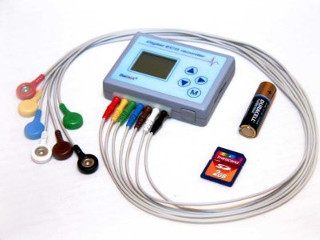
During the procedure, which can last from two days to several weeks, a apparatus - a portable recorder that continuously monitors the state of the heart and its activities. The equipment records the cardiogram, which is more informative than with the usual procedure for taking readings of cardiac activity.
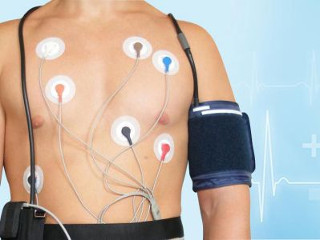
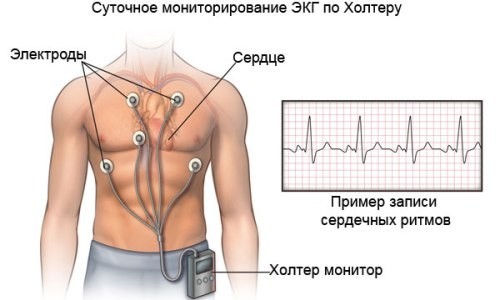
The electrode is attached to the skin of the chest and transmits a continuous signal, which the device records, registers any violation of cardiac activity.
Thanks to the Holter technique, it is possible to identify those pathologies, changes in the organ and its activity that will never be shown by a regular examination by a doctor. Do not forget that carrying out a standard electrocardiogram is the cause of the patient's stress state and the cardiogram will show a not entirely correct picture, in which there will be phenomena that have no reason for the disease.
And the usual examination also does not show how the heart functions at the moments of eating, physical exertion, at rest and relaxation. And these indications are very important for an accurate clinical picture and correct diagnosis.
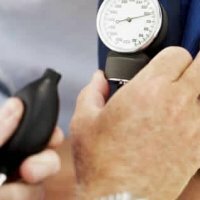
This type of study is also used in the case when there are fluctuations in blood pressure, often provoking heart disease.
Dynamic ECG - Holter monitoring is performed at different periods of time. The choice of the duration of the procedure largely depends on which abnormalities are suspected by the doctor.
For daily monitoring, a compact mobile device is used that records all cardiac indications. Many modern equipment models are capable of recording other indicators of respiration, blood pressure, and so on. Monitoring can be carried out during pregnancy, a cardiogram can be done for elderly people.
The advantage of this research method lies in its versatility: it is enough to install the sensors on the chest and carry the equipment with you in a small case. This will not change the usual way of life in any way, it will not cause discomfort. And at this time, the device will constantly record all the indications and changes that occur in the cardiac activity and the organ itself.
In parallel with this, the patient independently records any changes in his state of health, records the data on paper in time. Thanks to the holter, you can get a very detailed picture of the state of the heart and on the basis of the data obtained. The doctor will make an accurate diagnosis and prescribe an effective and adequate therapy.
- The familiar environment for the patient will give accurate readings of the work of the heart, when the patient is not disturbed by anything;
- with the help of the equipment, it is possible to identify in time the danger of the development of ischemic disease, arrhythmias, hypotension and hypertension;
- thanks to the device, you can detect or refute the presence of heart pathology;
- the multichannel nature of the equipment allows you to receive a very large amount of information, the analysis of which will give an accurate diagnosis.
Holter is indicated for all people with impaired or abnormal heart function. The only contraindication may be a skin disease in the chest area.
Holter ECG monitoring and its types
Holter ECG monitoring can be recommended in many cases, children, adults at any age are exposed to it. Often, even if the patient complains of a rapid heartbeat, repeated dizziness or loss of consciousness, the doctor prescribe a procedure to confirm or deny the diagnosis and development of ischemic myocardial disease, arrhythmias.
Holter ECG monitoring is also prescribed for:
- the patient is diagnosed with arterial hypertension for the first time;
- diagnosis of white coat hypertension;
- heart defects;
- hypertension of moderate severity or severe form that does not respond to treatment;
- transferred myocardial infarction;
- there is acute heart failure or a chronic form of the disease;
- it is necessary to check the operation of the pacemaker;
- there is a disease of the endocrine system or the patient is obese.
In order for the Holter ECG monitoring study to give correct results, it is necessary to prepare for a procedure that lasts continuously for a day or several days.
It is imperative to take a shower, as during the procedure you will not be able to remove the equipment. You should also get rid of any metal accessories (jewelry, watches, etc.), since metal can affect the accuracy of the readings and the operation of the device.
 Tell your doctor about any medications you have been taking in the recent past, as many of them can affect heart function.
If you have recently done a routine ECG, then show the results to your doctor before monitoring.
To date, Holter examination is considered the best and most informative and therefore ECG monitoring is used even in the case when a person just needs to conduct a general diagnosis of the body and his health. Daily monitoring of the state of the heart rate with a recorder helps to make an accurate diagnosis.
Holter ECG is performed in two versions - daily full-scale or fragmentary.
A fragmentary study is prescribed in the case when the patient begins to have arrhythmia. As soon as the patient feels discomfort and worsening of his condition, he just needs to press a button on the equipment and it will begin to record all the data.
Holter ECG can also be performed continuously.
A full-scale daily study can last from 1 to several days. The indications of this examination will give a complete picture of the condition and functionality of the heart. With a standard cardiogram, the picture is two times less informative than with the Holter method.
During the procedure, in order for the Holter ECG study to give accurate results, the patient must be careful with the technique: do not allow ingress of water, mechanical damage, avoid any contact of equipment with those types of equipment that create magnetic field.
On the recommendation of a doctor, a Holter ECG can also include a variety of tasks to identify various pathologies. For example, a patient will have to go up to the 5th floor and go down for the doctor to determine the level of his general health, as well as a disease that can be life-threatening.
24-hour heart monitoring (Holter ECG): proper preparation and conduct
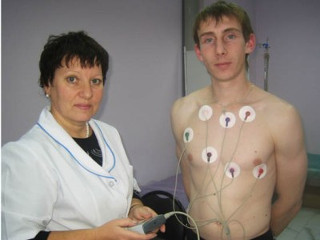 24-hour cardiac monitoring begins with preparing the patient for the procedure. It is imperative that a shower is taken so that in the process of diagnosis, a person does not experience unpleasant sensations. Cotton clothing is worn that does not interfere with air-water exchange.
Also, in the process of daily monitoring of the heart, the patient should avoid contact with equipment that can form a magnetic field around itself that negatively affects the operation of the device Holter.
The Holter apparatus consists of two main parts - a stationary decoder and a mobile recording device that takes readings. The electrodes are always attached to the least mobile skin, which prevents the risk of equipment malfunction.
24-hour full-scale monitoring of the heart takes readings of the heart, when the patient is doing the usual and usual for himself lifestyle, applies various physical activities, does physical exercise, runs and performs other actions.
Everything that the patient performs when the heart is monitored daily (1 or more days) is also recorded in the diary, which indicates the type of action, the time it was carried out, and your feelings. These are night sleep, meals, types of physical activity, medication, rest, stress, characteristics of the condition (deterioration or improvement, no change).
Holter monitoring of the heart is carried out taking into account the recommendations of the doctor and certain rules:
- protection of equipment from moisture ingress, so that the accuracy of data is not compromised due to equipment breakdowns;
- do not expose the equipment to temperature extremes, this is necessary for objective data of studies carried out in the conditions familiar to the patient;
- Holter monitoring of the heart will be accurate if, during the diagnosis process, you will not experience vibrations, pressure drops (airplane flights, attractions);
- adherence to the usual way of life without the risk of getting stress;
- when diagnosing Holter, when monitoring the heart, you can not use higher physical activity than usual. First of all, because the data will be inaccurate, and also - the electrodes may move away from the skin.
Patients should rest on their back so as not to disturb the position of the electrodes. In extreme cases - on the side, but make sure that the heart holter is functioning correctly.
This method of diagnosing Holter is completely safe and monitoring of the heart does not cause any pathologies or serious conditions.
Daily ECG monitoring provides more extensive data on the state of the heart, any changes in its work under different conditions and actions. Thanks to this technique, which was developed by an American scientist long ago, it is possible to obtain the data that a regular cardiogram or examination by a doctor will never give.
In the process of a conventional electrocardiogram, a person is in a calm and relaxed state, and it is impossible to see changes in cardiac activity in conditions of excitement, physical activity. And this information can give a complete clinical picture of the development of the disease, any pathological changes occurring in the heart. Therefore, daily ECG monitoring is today the most effective research method.
The electrodes of the equipment are attached to the patient's chest skin, which will conduct correct observation and data recording. Often, daily full-scale ECG monitoring is combined with blood pressure diagnostics and on the patient's shoulder, a cuff is also attached to fix any fluctuations and changes in pressure.
As we have already noted, no negative effects on the patient's body and state of health arise during the study. The cardiorecorder does not cause any disturbances in the functioning of the heart. This daily (with different duration) ECG monitoring is prescribed for people at any age, with different suspicions of a diagnosis of heart disease.
The indications for using heart rate monitoring during the day are complaints of patients about fainting and light-headedness, increased frequency of arrhythmia attacks. The doctor prescribes diagnostics even in the case when there is a suspicion of the presence of a pathology leading to a fatal outcome.
The risk group includes patients with high blood pressure, diagnosed with left ventricular dysfunction, valvular heart disease, and disorders. This also includes patients who have a suspicion of asymptomatic cardiac ischemia, variant angina pectoris, mute ischemia.
Holter ECG 24-hour monitoring: interpretation of results and complications
Holter ECG daily monitoring will provide an accurate and complete picture of the patient's heart condition, the changes that occur under different conditions.
After the end of the diagnosis, the stage of data decryption begins. Previously, this procedure was carried out manually and took quite a long time. Today, with modern software, a complete picture analysis is carried out using a computer, and you will receive the results very quickly.
All received signals from the device are processed automatically, and a graph of changes is displayed on the computer screen, according to which a diagnosis is made.
Due to the fact that the procedure is available to all patients, daily monitoring of ECG by Holter allows you to make accurate diagnoses, to notice on time pathological changes in the state of the heart, disturbances in its work, prescribe effective and adequate therapy to prevent the development of severe forms diseases and complications.
In the standard set of received data, the following must be present:
- sinus rhythm parameters;
- data on cardiac arrhythmias;
- cardiac conduction disorders;
- violations that manifested themselves as a result of various actions of the patient;
- dynamics of the ST segment.
24-hour full-scale Holter ECG monitoring gives results that can help you decide a lot of problems that can arise with a negative state of the heart and its disorders functionality.
For example, a doctor will be able to assess all the risks that provoke heart disease in children and adults, patients in old age, those who have recently undergone surgery and are about to start their normal work activities.
Also, the study helps to identify all the difficulties that arise with cardiac arrhythmias against the background of heart diseases: cardiomyopathy, myocardial infarction, left ventricular dysfunction, etc.
 Thanks to the Holter ECG, it is also possible to evaluate the effectiveness of therapy in various diseases and pathologies. heart, and if the analysis of the data shows the ineffectiveness of the treatment, a different method is chosen therapy.
Patients with a pacemaker are often tested to determine the performance of the equipment.
Today, daily or fragmentary Holter ECG monitoring helps to identify pathologies - tachycardia, atrial fibrillation, bradycardia and the prerequisites for the appearance of these abnormalities. A double or triple rhythm, premature contractions, bigeminy, ventricular ectopia are also determined.
With an increased likelihood of arrhythmias against the background of loss of consciousness, they will be visible when processing the results of monitoring for Holter in in the form of persistent ventricular tachycardia, atrial fibrillation, which have a response rate greater than 180 beats per minute.
Heart disorders that can pose a threat to the patient's life are defined by different types of arrhythmias:
- paroxysms of ventricular tachycardia, in which the acceleration of the rhythm occurs gradually and turns into flutter of the ventricles;
- early ventricular premature beats, leading to tachycardia of the vulnerable period;
- early, group or polytopic ventricular extrasystoles;
- malfunctions of intraventricular conduction in acute forms;
- short episodes of arrhythmia.
The study also helps to identify cardiac disorders, while taking various antiarrhythmic drugs. The analysis is carried out on such data as
Myocardial ischemia on examination, it is detected when the ST segment is elevated or depressed.
All the results obtained during Holter monitoring are purely individual and only a doctor who is familiar with the complete clinical picture of the patient can make an accurate diagnosis.
The main tasks of diagnostics remain the identification and assessment of cardiac arrhythmias, as well as the search for those areas in which displacements and fluctuations of the ST segment will be clearly expressed. As additions, the analysis of the duration of the intervals in the heart rate, the work of the ventricles, and their activity are assessed.
A modern cardio recorder helps to get a complete and accurate picture of how the heart is functioning and to prevent the onset and development of severe conditions.
Today, Holter diagnostics is carried out in specialized cardiac centers and hospitals. The procedure is available and costs from 1,500 rubles. The functionality of the research method helps to quickly go through this procedure without investing additional funds, changing lifestyle and other inconveniences.
The most important thing is to strictly follow the rules for using the equipment, not to create conditions under which disruptions in signal transmission may occur.
Partial use of site materials (no more than 30% of the content of the article) is allowed only with a hyperlink on www.med88.ru, full use of the article (more than 30% of the article content) is possible only with written permission edition.