Pulmonary hypertension: signs and causes of development in children and adults

Content:
- Views
- Treatment
- In newborns
Pulmonary hypertension occurs due to an increase in blood pressure in the pulmonary artery and practically does not manifest itself at an early stage.
The development of the disease leads to serious consequences, such as thickening of the choroid, inflammation of the muscle layer of the vascular wall and the formation of numerous blood clots.
In the later stages, blood pressure puts too much stress on the right ventricle of the heart.
This is what causes the increase in the myocardium and its walls.
Pulmonary hypertension refers to diseases, the gradual development of which allows the initiation of treatment and relief of symptoms at the initial stage of the disease.
Pulmonary hypertension does not occur spontaneously, it is caused by:
- Idiopathic, primary. Genetic disorders, congenital abnormalities and increased platelet activity. These are congenital malformations of the aortic valve, mitral stenosis, damage to the left ventricle of the myocardium.
- Secondary. It occurs in the chronic course of congenital heart disease, respiratory system disorders.
Also, there are mechanisms that contribute to the development of pulmonary hypertension:
- Anatomical. It occurs due to a decrease in the number of blood vessels in the pulmonary circle.
- Functional. As a result of frequent inflammatory processes in the bronchi, many microorganisms and bacteria appear. They cause an increase in the volume of blood that must enter the artery.
There are many reasons that provoke circulatory disorders. All of them lead to severe irreversible consequences and death.
Moderate pulmonary hypertension and other types of disease
 Moderate pulmonary hypertension belongs to the first class of the disease. To correctly indicate the development of the disease, it is necessary to take into account the intensity of the manifestation of cor pulmonale.
Indicators of the level of ventilation, disturbances in the movement of blood through the vessels, hemodynamics.
Insufficient oxygen supply to the tissues is also an important factor.
In medicine, all these indicators have been combined into one classification of pulmonary hypertension:
- Grade 1 LH. Initial asymptomatic stage. There are no signs of moderate pulmonary hypertension, and physical activity does not cause any consequences.
- Grade 2 LH. Transient form. Vigorous activity is limited by the strength of the load. The first signs of a lack of oxygen, shortness of breath, and discomfort in the chest area appear.
- Grade 3 LH. Stable stage. Additionally, there is a feeling of high blood pressure, symptoms of tachycardia and cor pulmonale.
- 4 class LH. The patient needs complete rest and lack of any activity. Signs: swelling, pronounced liver, veins in the neck appear.
It is important
The transition from one stage of the disease to another is quite fast, so you should immediately respond to any changes or deterioration in the general condition.
To prevent complications of any disease, one must pay attention to the accompanying signs of moderate pulmonary hypertension and other forms of the disease.
Lung hypertension also has its own symptoms:
- feelings of weakness, drowsiness;
- feeling of lack of oxygen;
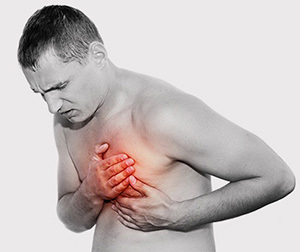
- constricting spasms in the chest area;
- ascites or chronic right ventricular failure, blue discoloration and swelling of the limbs, filling fluid in the abdomen, blood stasis, impaired blood circulation, changes in work liver;
- disorders of the gastrointestinal tract, vomiting, nausea, bloating;
- a decrease in the required level of oxygen in the blood leads to the appearance of tachycardia, rapid heartbeat.
These signs may not always indicate that this is moderate pulmonary hypertension. Therefore, when the first symptoms appear, immediately consult a doctor.
Portopulmonary hypertension is a severe form of arterial hypertension of the respiratory tract. It is expressed in 12% of all cases associated with liver cirrhosis, sometimes without its signs. It manifests itself as traditional shortness of breath, pulsation of the jugular veins, bloody discharge during expectoration, swelling.
Pulmonary hypertension with mitral stenosis and atherosclerosis is an acquired heart defect that leads to inability of blood flow from the left atrium to the ventricle due to narrowing and reduction of the area of the atrioventricular mouth.
It is the root cause of pulmonary hypertension and provokes atherosclerotic lesions of the pulmonary artery. With a significant violation of the outflow of blood from the left, the load and pressure on the right atrium increases. This leads to a change in the myocardium and decompensation of blood circulation passing through a large circle.
Cor pulmonale is a violation of the pulmonary circulation due to constant load from blood pressure, which leads to an increase in the right ventricle, myocardium and even deformation of the chest, damage to the lungs, blood vessels, fabrics.
All these are symptoms of the formation of cor pulmonale:
- Spicy. With a severe and subacute course. Causes: blood clots, parasites, bronchial asthma, stagnant blood circulation, atherosclerosis. Symptoms are dry cough, rarely bloody, enlarged liver and veins in the neck, shortness of breath;
- Chronic. Sources are inflammatory processes in the bronchi and lungs, fibrosis (for example, idiopathic pulmonary fibrosis, which can be successfully treated with Pirfenidona or preparations based on nintedaniba), chest trauma, spinal disorder, obesity. Signs of shortness of breath even when lying down, pulse in the upper abdominal cavity, development of duodenal ulcers, hypertension, pneumonia.

In order to partially normalize the condition, patients take blood thinners, diuretics and expectorants. If it worsens, it is recommended to do a heart massage and call an ambulance.
In patients with pulmonary hypertension, mitral stenosis and cor pulmonale are often the cause of hypertensive crises.
To determine the onset of these processes, you need to know their characteristic symptoms:
- labored breathing;
- shortness of breath with pulmonary hypertension;
- pain in the left side of the chest;
- tachycardia;
- displacement of the heart to the right;
- pulsation of the artery;
- suffocation;
- visible veins in the neck;
- light, abundant urination.
These symptoms are often confused with bronchial asthma, tachycardia. Idiopathic pulmonary hypertension gives vivid hypertensive crises, which can last for several hours, provoke severe pain in the region of the heart, lack of air.
Pulmonary hypertension: treatments
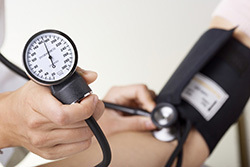
Pulmonary hypertension is diagnosed with a set of procedures that consist of the following methods:
- initial examination by a specialist, taking anamnesis;
- determination of the patient's lifestyle;
- an electrocardiogram, which allows you to determine the modification in the right heart;
- echocardiographyhelps to identify blood circulation;
- PC tomography, with its help you can see a snapshot of an increase in the volume of an artery, it will help to identify if there are any problems with the lungs and heart;
- X-ray of the lungs, helps to observe the general condition of the arteries, how much they are narrowed or dilated in volume;
- the method of catheterization, is used to reduce the force of pressure in the pulmonary artery, this method allows you to most accurately find out information about the condition and not resort to risks;
- test "6 minutes walk", using this test, you can identify the patient's physical response to different loads;
- a patient's blood test;
- angiopulmonography. Helps to identify the exact state of blood vessels and pressure in the pulmonary artery. The study takes place by introducing a certain drug into the vessels. This procedure is used with extreme caution, as it can lead to certain risks.

The main task of conservative treatment is the elimination of etiological factors or their correction. With the help of therapy, the pressure in the pulmonary artery is lowered.
Complication and thrombus formation are not allowed. Initially, pulmonary artery hypertension is treated in a hospital. After the exacerbation is removed, treatment should be carried out at home.
At home, the patient is prescribed the following drugs:
- Vasodilators - Nifedipine and Prazosin. These drugs help well in the initial stages of the anomaly, during this period there are no visible pathologies.
- Disaggregants - Aspirin and Cardiomagnet. They are used to thin the blood.
- If the hemoglobin level is higher than 170 g / l, it is necessary to conduct bloodletting on average
200-500 ml. It is also necessary for severe swelling of the neck veins. - Diuretics - Lasix and Furosemide. Discharged if there are signs of right ventricular failure.
- Digoxin (cardiac glycosides). May be prescribed if atrial fibrillation is present. Helps lower heart rate.
- Anticoagulant drugs - Warfarin and Heparin. They can be prescribed if there is a risk of blood clots in the body.
- Prostaglandins - Epoprostenol and Treprostinil. Helps to reduce pressure in the area of the pulmonary artery. Promote the inhibition of the formation of pathologies of the pulmonary vessels.
- Endothelin receptor antagonists - Bosentan. Slows down the production of endothelium. They inhibit LH prediction.
- Medications are prescribed for the treatment of various anomalies and diseases associated with the heart.
Sometimes surgical intervention helps to remove the development of the disease, and to make the patient's life longer.
Such methods of surgical treatment are carried out:
- Atrial bypass surgery, sometimes also called balloon atrial septostomy. An opening is created in the region of the two atria, due to which the LH is lowered. The patient's prognosis is getting much better.
- Lung transplant. To significantly reduce the pressure in the pulmonary artery, only one can be easily transplanted. There is one drawback of such an operation - it is the occurrence of obliterating bronchiolitis within five years (reaction and rejection of a new organ by the body). This is why life expectancy is called into question.
- Lung and heart transplant. Such a procedure is available only at the extreme stages of the disease. The disease in this variant will be caused by congenital heart disease or cardiomyopathy. When carrying out this surgical intervention at the initial stages of the disease, life expectancy may not increase, but rather decrease.
It is impossible to completely cure this disease without eliminating its initial causes. Well-known traditional methods will not even help here. But traditional medicine can reduce the manifestation of the symptoms of the disease.
Various therapies can also participate in the complex with traditional medicine:
- For 250 ml of boiling water, a tablespoon of rowan berries is needed. Steam the berries and let it brew for one hour. The course of treatment is one month, you need to drink half a glass 3 times a day.
- Flowers and herbs of spring adonis (1 teaspoon) steam 250 ml of boiling water. Leave to infuse, then take 2 liters on an empty stomach 3 times a day. The course of treatment is 21 days.
- Take 100 ml of freshly squeezed pumpkin juice daily.
It is necessary to resort to dietary restrictions. Salt and various unhealthy fats are prohibited.
Recommendations:
- Vaccination against various infectious diseases (influenza, jaundice, rubella, etc.).
- The use of physical exercise. They are prescribed for all types of cardiac anomaly. Only in the most extreme stages of PH should active movement be abandoned.
- Artificial termination of pregnancy. During pregnancy, there is a strong increase in the load on the heart, which can lead to death.
- You should constantly visit a psychologist. With this disease, people tend to enter into depressive states that violate the psychological balance.
Pulmonary hypertension in newborns and its features
 Pulmonary hypertension in newborns develops as a result of a return to the state of constriction of the small arteries of the organ, which leads to a weakening of blood flow to the baby's lungs.
The discharge of blood destabilizes the inner lining of the vessels, which causes the vessels to narrow and increase the pressure in the pulmonary system.
Therefore, the load on the small heart is greatly increased and the baby develops heart failure.
Pulmonary hypertension in newborns leads to the fact that the child has poor hearing, lags behind in development from their peers.
Observing signs of pulmonary hypertension in a child, oxygen therapy is urgently needed.
In severe cases, extracorporeal membrane oxygenation is used. The baby needs to constantly monitor the level of fluid, calcium and glucose. The temperature of the room in which the baby is located should not be higher or lower than normal.
If the disease is not identified in time, the newborn will die in a few days as a result of heart failure and severe lack of oxygen.
Prevention of pulmonary hypertension in babies falls on the shoulders of the parents. Mom should not smoke, monitor her health during and before pregnancy, not be treated with medications and be under the supervision of a gynecologist.
All this will help to bear and give birth to a healthy baby who will live a long time and delight his parents.
If the child nevertheless falls ill with pulmonary hypertension, it is necessary to fight. Remember that timely and correct treatment saves from many ailments and prolongs life for many years.
Partial use of site materials (no more than 30% of the content of the article) is allowed only with a hyperlink on www.med88.ru, full use of the article (more than 30% of the article content) is possible only with written permission edition.