Quincke's edema: symptoms and treatment at home, photos of patients
Content
- What is Quincke's edema
- Causes and provoking factors of the disease
- Varieties of the disease
- Symptoms of Quincke's edema
- Diagnosis of Quincke's edema
- Treatment of angioedema
- Traditional methods of treating angioedema with medicinal plants
- Emergency care for Quincke's edema
- Prevention of angioedema
- Forecast
- Related Videos
What is Quincke's edema
The fact that Quincke's edema was already known in 1982, the study of this disease began since the Second World War in fascist prisoner of war camps. This condition was described and investigated by the German scientist Heinrich Ireneus Quincke, after whom the disease was actually named.
Quincke's edema he is angioedema- a pathological condition characterized by sudden swelling of the skin, subcutaneous fat and mucous membranes. It mainly occurs as a response of the body to allergies.
The pathogenesis of the development of edema is associated with an increase in the permeability of the walls of blood vessels and an uneven distribution of fluid through the tissues of the body.
Causes and provoking factors of the disease
Quincke's edema belongs to the group of allergic reactions of the fulminant type of development, this is due to the fact that when ingress of an allergen into the human body, it begins to produce neurotransmitters intensively and in large quantities inflammation.
The provoking factors of Quincke's edema can be:
- plant and house dust;
- traffic fumes;
- hypoallergenic food;
- drugs (angiotensin-converting enzyme inhibitors or broad spectrum antibiotics) ;
- pet hair;
- wasp and hornet bite/stung by a bee.
In addition to the allergic etiology of Quincke's edema, one can also distinguish:
- disturbances in the work of the endocrine system and the functioning of vital organs;
- acute infectious pathologies.
Even increased sensitivity to temperature and tactile stimuli can cause the development of edema.
Varieties of the disease
- Allergic Quincke's edema - the reasons for the development of this form of the disease are associated with increased sensitivity of the body to various substances. Most often, this form is a consequence food allergies.
- Pseudo-allergic Quincke's edema - develops mainly as a form of hereditary pathology of the immune system, which in such people is unable to adequately respond to environmental factors.
- Non-allergic angioedema- arise due to the body's reactions to medications such as angiotensin-converting enzyme (ACE) inhibitors. The onset of this type can range from 1 day to several months after the first dose of the drug.
- Idiopathic angioedema — occur for an unknown reason. This type is often chronic, recurrent, and mostly accompanied by urticaria.
The danger of the pseudo-allergic form is that it is very difficult to correct with the help of medication.
Read also:Allergy to medications in adults
Symptoms of Quincke's edema
Symptomatically, the disease occurs in the form of reporting and discoloration of the skin, mucous membrane and subcutaneous tissue.
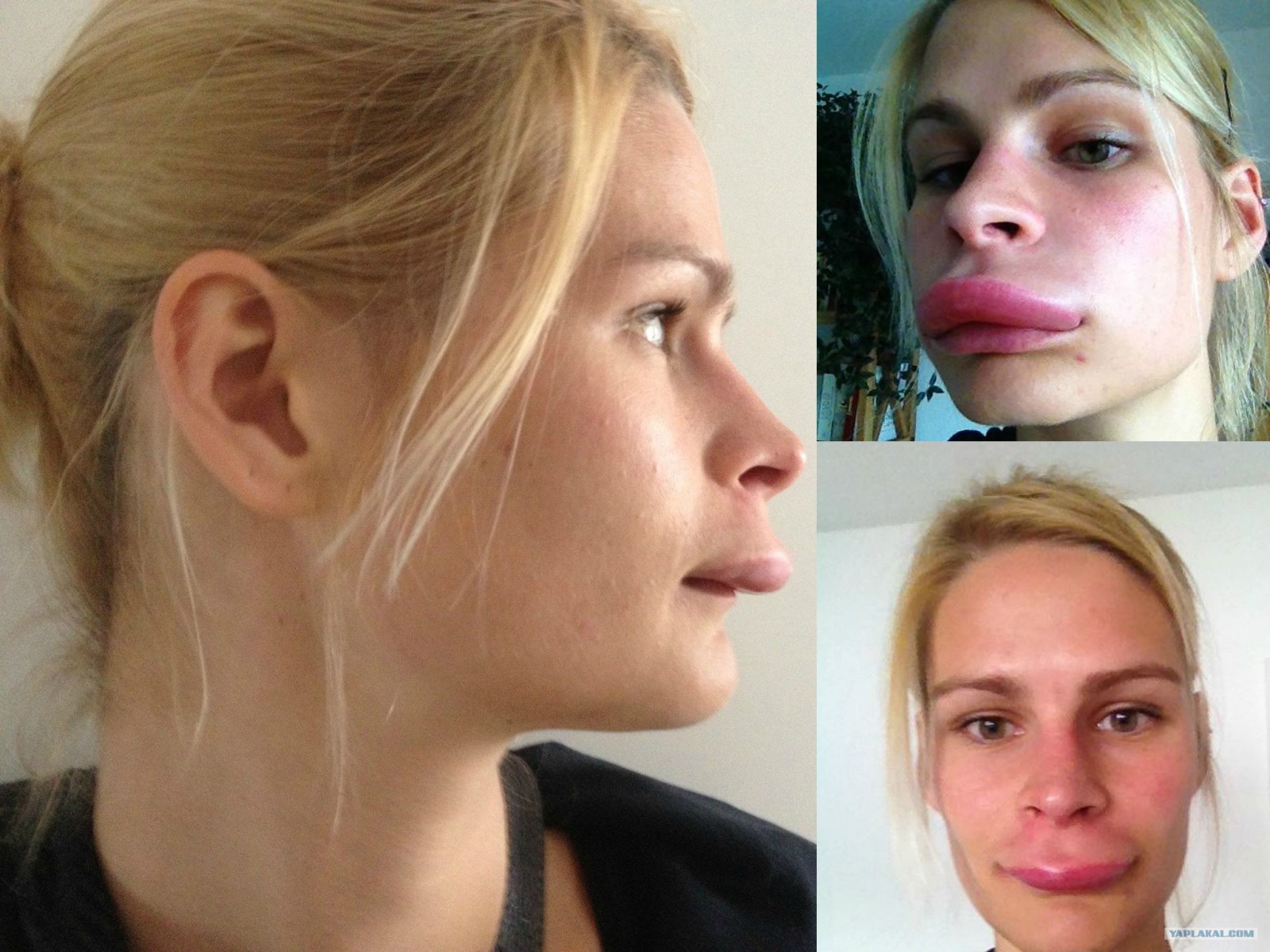
Painful sensations, as a rule, are absent in such patients, there is only slight discomfort in the affected area.
At the site of edema, the skin becomes pale in color, it becomes dense and elastic with the formation of a skin fold.
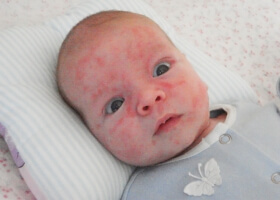
Quincke's edema can manifest itself as hives, in such cases, in addition to the above symptomatic signs, rashes in the form of spots and bumps appear on the human body. (take a look at this kind of Quincke's edema, photo below)
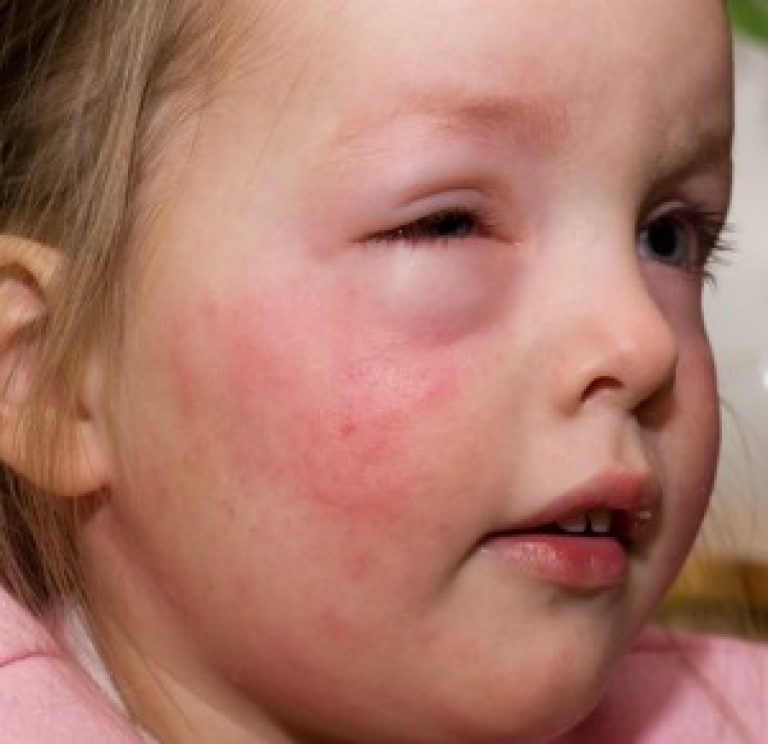
The formed elements of the rash have clear boundaries and are accompanied by unbearable itching. As a result of scratching the skin, wound foci appear in place of the elements.
This course of the disease is very uncomfortable for a person, but does not pose a particular threat to life, since the lesion is located in the surface layers of the skin.
The most common localization of pathological changes is the facial part of the skull and the distal (most remote) parts of the human body (for example, the hands).
An extremely severe form of the disease is edema of the tissues of the lumen of the pharynx, symptomatically it manifests itself in the form of:
- insufficient breathing depth (shallow breathing);
- nervous overexcitation;
- barking loud cough;
- cyanosis, cyanosis (bluish color of the skin in the facial area, due to a sharp oxygen starvation of body tissues);
- disturbances of consciousness.
An objective examination of such patients reveals swelling of the tissues of the soft palate and a narrowing of the lumen of the glottis.

With the development of such a condition in patients, the risk of death increases and therefore patients require urgent resuscitation.
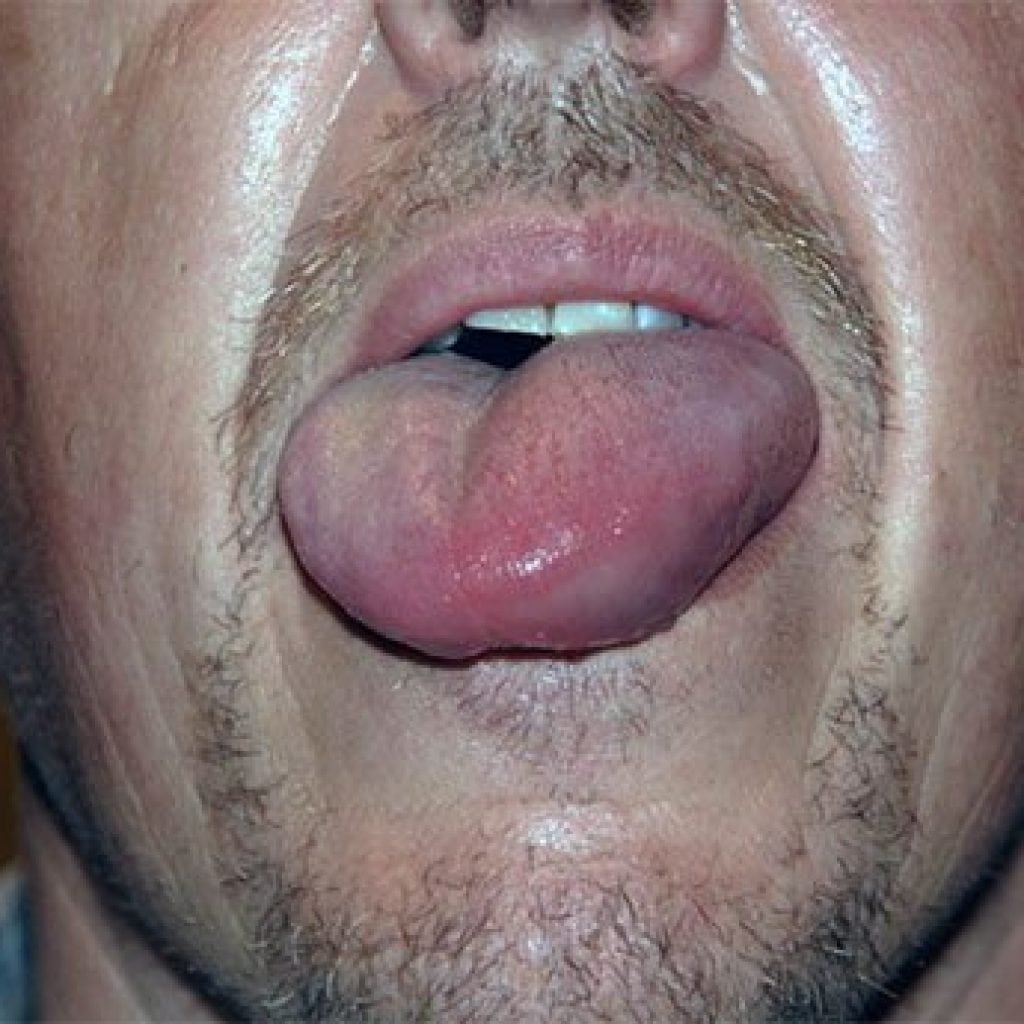

One of the variants of the course of the disease is edema of the internal organs of the human body, this condition manifests itself symptomatically in the form of:
- dyspeptic disorders (dyspepsia);
- nausea;
- vomiting;
- pain in the abdomen and general exhaustion of the body.
Diagnosis of Quincke's edema
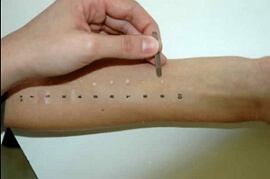
For the diagnosis of the disease, the most important is to determine the etiological factor that contributes to the provocation of symptomatic signs. For this purpose, a thorough interview of the patient and an allergological test (allergy test).
As additional methods of diagnostic research, take blood and urine tests in order to determine the inflammatory and autoimmune process.
Treatment of angioedema
The main goal of therapy for angioedema is aimed at eliminating the provoking factors (triggers) of the disease and suppressing symptoms.
Medical treatment of the disease:
1. Antiallergic drugs are aimed at inhibiting the action of the inflammatory mediator histamine;
2. Enzymatic preparations are used to reduce the body's sensitivity to the effects of specific allergens;
Read also:Allergy to latex
3. General strengthening of the body with a complex of vitamin preparations;
Emergency medications for illness are: Dexamethasone, Prednisolone, and Hydrocortisone.
If the cause of the disease could not be determined, the patient is treated with long-acting antihistamines (Rupafin, Kestin). This group of drugs is not the main method of treatment, they only temporarily eliminate the symptoms of the disease.
Traditional methods of treating angioedema with medicinal plants

Measures aimed at eliminating pathological symptoms.
Seaweed bath: Dried seaweed (kelp) in a volume of 150-200 grams is poured with slightly warmed water. After the algae swell and increase in size, they are poured into the bath. The medical procedure is carried out for half an hour.
The structural elements that make up the seaweed have an anti-edematous effect and contribute to the accelerated elimination of allergic substances from the body.
Birch leaf tea: 15 grams of dried and crushed birch leaves are poured with a glass of boiling water, the resulting mixture is infused for 20 minutes and drunk. This tea is used two or three times a day.
The plant has a pronounced diuretic effect and relieves tissue swelling. Birch leaves are also recommended for use in arterial hypertension, acute and chronic pathologies of the urinary system.
Important! Therapy with medicinal plants should be carried out under the supervision of the attending physician to prevent the development of complications.
Treatment at home using traditional medicine is carried out with the aim of general strengthening of the body.
Collection from a complex of medicinal plants for the treatment of angioedema at home:
For the preparation of the herbal collection, such medicinal plants are used as:
- chicory;
- mint;
- wheatgrass;
- immortelle;
- horsetail and chamomile;
The mixture of medicinal plants is thoroughly mixed.
One spoonful of herbal collection is filled with 250 ml of water and infused for three hours. The infusion is accepted 100 ml 2-3 times a day.
Attention! Therapy using traditional medicine and at home without the supervision of a doctor can lead to serious consequences for human health. Therefore, consult a doctor.
Emergency care for Quincke's edema
If a patient is found with pronounced symptomatic signs of Quincke's edema, first aid should first of all be based on an urgent call for an ambulance.
Subsequent actions should be carried out in accordance with the plan:
- move the victim to a well-ventilated area;
- if it is known and there is a possibility, it is necessary to urgently eliminate the factors of the disease;
- the person should be removed from the pressure clothes;
- if there are hormonal drugs in the medicine cabinet, such as Dexamethasone or Prednisolone, the contents of the ampoule should be poured onto the mucous membrane under the tongue. Due to the well-developed vascular plexuses, the drugs are quickly absorbed and act instantly;
- a cold object should be applied to the site of localization of edema;
- make the victim constantly drink water enriched with trace elements and salts, for this you can use specialized alkaline water or prepare a solution of one liter of water and one teaspoon of cooking soda;
- the patient must take a pill of any antihistamine;
Read also:Anaphylactic shock (anaphylaxis): causes, symptoms, emergency care
Correctly and consistently carried out first aid measures will not only greatly alleviate the person's condition, but also save life.
In cases where the cause of the development of this condition was pronounced swelling of the tissues of the pharynx, one should try to free the upper respiratory tract. Without this stage of resuscitation, the victim will die from a sharp attack of suffocation.
If it is impossible to ensure the permeability of air through the mouth, a tracheostomy is applied.
Tracheotomy is performed in the form of cutting the skin and cartilaginous rings of the trachea along the midline of the neck, any strong air-conducting object, for example, the rim of a pen, is inserted into the hole formed.
Attention! An incorrectly performed tracheotomy can lead to serious consequences and should be performed by a person with knowledge.
This manipulation will provide the person with the passage of air and save life.
Prevention of angioedema
Since Quincke's edema by its origin is an allergic disease, as a preventive measure, one should:
- completely avoid contact with allergens, if necessary, a person should move to a safer, ecologically clean area;
- follow dietary recommendations with the use of hypoallergenic foods;
- if the disease is associated with a hereditary predisposition, patients should minimize traumatic damage to avoid surgical interventions;
- if necessary, patients are prescribed a constant intake of hormonal drugs.
Forecast
The prognosis for recovery depends on the severity of the disease. In mild and minor symptomatic manifestations, the attack is successfully eliminated with the help of drug correction.
In more severe clinical situations, the prognosis for recovery will depend on the quality of first aid and further qualified treatment.
Most deaths occur in the case of doctors' negligence and indifference of the patients themselves.