
It hurts in the left side below the ribs in front: causes and diagnosis
When a person grasps his left side, those around him, and he himself, most often think that he has a bad heart. Even those who have never experienced heart pain are convinced that apart from this most important organ, there is nothing else on the left side of the torso, at least something that could hurt. Meanwhile, in the area under the ribs, on the left side are located: lung, part of the diaphragm, spleen, stomach, left kidney, pancreas, left the ureter, fragments of the large and small intestine and the sigmoid part of the large intestine, the left ovary in women and part of the prostate with appendages in men. And all this can cause pain in the left side if any organ begins to malfunction due to pathology or other reasons.

It hurts in the left side below the ribs in front
Content
- 1 What pain can be
-
2 Pain and its causes
- 2.1 Cardiomyopathy
- 2.2 Ischemic heart disease
- 2.3 Respiratory pathology
- 2.4 Umbilical hernia
- 2.5 Gastritis
- 2.6 Peptic ulcer
- 2.7 Stomach cancer
- 2.8 Splenomegaly
- 2.9 Diaphragmatic hernia
- 2.10 Intercostal neuralgia
- 2.11 Rheumatoid diseases
- 2.12 Pancreatitis
- 2.13 Cholecystitis
- 2.14 Colitis
-
3 What to do with pain in the left side
- 3.1 When you don't need to see a doctor
- 3.2 When to see a doctor
-
3.3 When urgent care is needed
- 3.3.1 Ulcer perforation
- 3.3.2 Acute cholecystitis
- 3.3.3 Acute pancreatitis
- 3.3.4 Movement of stones
- 3.3.5 Acute appendicitis
- 3.3.6 Thromboembolism
- 3.3.7 Abdominal aortic aneurysm
- 3.4 Dangerous accompanying symptoms
-
4 Diagnostic methods
- 4.1 Video - Pain in the left side of the abdomen
What pain can be
In order to determine with greater certainty what exactly hurts in the front under the left ribs, you need to know a thing or two about pain. For example, what it could be. All painful sensations experienced by a person can be divided into groups.
Table. The nature of the pain in groups.
| Group | Description |
|---|---|
 Visceral |
This group includes pain associated with pathological changes in gastrointestinal motility. Painful sensations are dull, can pass in jerks, cramping. They are given to both the shoulder and the thigh area. Most often occur with intestinal spasms. Stretching of muscle fibers can also be the cause. In acute flatulence, pain is cramping, and in intestinal colic, it is given to all nearby organs. |
 Peritoneal |
They arise due to irritation of the peritoneal receptors, which occur as a result of rupture of organs and the outpouring of their contents into the surrounding tissue. They are distinguished by the severity of the manifestation, cutting, clearly localized, lasting constantly, intensifying with activity and load. More often they are shingles. May occur when a gastric ulcer is perforated. They intensify with any load, movement, even when breathing, from inhalation-exhalation. |
 Spastic |
Are generated by a spasm of smooth muscles. They arise with pathology of internal organs of any nature - from colic to poisoning. They appear suddenly and just as suddenly go out. They can be given under the scapula and in the lower back, as well as in the legs. |
 Reflected |
Inflammatory changes are the cause of these pains. In terms of duration, they can be different, in nature too - from aching and pulling, to cuts and colic. They are "reflected" from organs located quite far from the left hypochondrium. May occur with heart attack, pleurisy, left-sided pulmonary inflammation and other diseases. |
 Psychogenic |
This type of pain is not at all associated with diseases of any internal organs. Pain of a neurotic nature that cannot be diagnosed. But the patient does not pretend, but may indeed experience acute pain, especially while in depressive states or in the stage of mental disorder. |
Of course, an accurate diagnosis should only be made by a doctor. But you can try to determine by the nature of the pain what cause it caused it yourself.

Characteristics of pain
Carry out the following differentiation of the reasons for which pain may occur.
- Pathological organ damage.
- Infections.
- Internal breaks.
- Injuries.
- Loading pains.
For example, with cardiomyopathy, pain is felt after exercise, with pneumonia - during coughing, with stomach and intestinal infections painful sensations associated with meals, intensifying after eating, and with stomach cancer are permanent.
Pain and its causes
You should not suspect you have terrible diseases at the slightest tingling sensation in your side. Yes, in a human body nothing will hurt for no reason. But the reason is not always a dangerous diagnosis. For example, when running, walking fast or playing sports, you may experience pain (heaviness, tingling) under the left ribs in front.

Pain after running
But this is only due to the change in blood flow velocity from physical activity. Stop, catch your breath, bend forward several times as you exhale and straighten as you inhale, and the pain will go away.

Lean forward as you exhale
If the painful sensations persist, last for a long time, increase, their intensity increases and along with them other symptoms are recorded and signs, you need to pay attention to the nature of the pain and, before getting a medical consultation, try to understand why it is arose.
Cardiomyopathy
Often it is a consequence of the transferred sore throat, tonsillitis and other infections. With cardiomyopathy in the left side under the ribs, pain is felt constantly, but rather weak. The manifestations of pain intensify during physical exertion. At the same time, a rapid, confused pulse is recorded, the patient experiences severe fatigue.

Cardiomyopathy
Ischemic heart disease
If the patient has coronary artery disease, he will experience a dull aching pain in the left side. The sensations are not paroxysmal, constant, intensified with physical stress, accompanied by shortness of breath, pulse failure and burning sensation in the chest area.
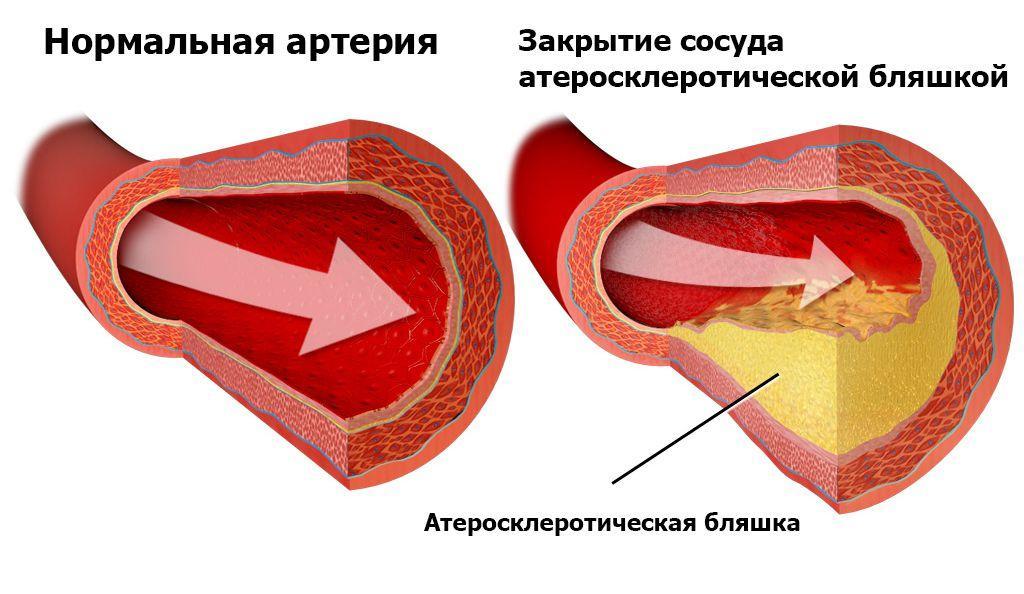
Cardiac ischemia
Respiratory pathology
The frontal left hypochondrium hurts in any pathology of the respiratory organs: pneumonia, pleurisy, pneumonia, bronchitis. At the initial clinical stage, pain is weak, radiating throughout the body - to the chest, back, shoulder and even the right side. But the characteristic signs will be: accompanying pain, fever, feeling of weakness, pain when exhaling in back area (pneumonia) or when inhaling (pleurisy), cough, sweating, confused, too frequent and superficial breath.

Cough with pathologies of the respiratory system
By the way. Respiratory diseases change the patient's appearance. He lies in a forced position, on his left side (so the pain seems weaker), the skin is pale, and the veins are enlarged.
Umbilical hernia
With this pathology, it hurts not immediately under the rib in depth, but in front closer to the waist. The pains pulling downwards, quite intense, almost constant. They can continue even if the patient is in a supine position, calming down a little only when lying on his back.

Umbilical hernia
Gastritis
Here, pulling subcostal pain is necessarily accompanied by a feeling that the stomach is swelling from the inside, it is bursting. Pain is accompanied by heartburn immediately after eating and belching some time later. There is also a feeling of heaviness in the epigastrium, there may be an urge to vomit. In this case, a bad smell comes from the mouth, and the patient may feel an unpleasant taste in the mouth.

Endoscopic picture

Clinical gastritis syndromes

Classification of gastritis

Pathogenic Helicobacteria
Peptic ulcer
A gastric ulcer is manifested by a pulling pain from the left side, which appears and intensifies after eating. Accompanied by heartburn. Sour-tasting belching is often a symptom. The patient loses weight and almost constantly experiences nausea or vomiting after eating.

Gastritis and its complications

Peptic ulcer
By the way. Duodenal ulcer differs in that pain in the left hypochondrium occurs with this disease not on a full, but on an empty stomach - on an empty stomach. Then, if the patient eats anything, even in small quantities, the pain goes away.
Important! With the perforation of any type of ulcer, the pain takes on a cutting, dagger character. The patient bends in half, the skin turns pale rapidly, loss of consciousness may occur and vomiting of a substance resembling coffee grounds may appear.
Stomach cancer
Pain in the left side under the ribs in an oncological case is constant. They do not depend on the patient's spatial position, food intake, and are not even stopped by drugs (in the last acute stages). At the same time, the patient loses appetite, is disgusted with protein foods, loses weight, and the skin becomes yellowish.

Classification of stomach cancer
Splenomegaly
In pathological conditions of the spleen, the pain is dull in nature, but it is pulsating and is localized strictly under the left rib. The causes of spleen pathologies can be ruptures and injuries, organ enlargement, abscess. Pains are accompanied by fever and weakness, an enlarged liver, migraines and sweating.

Splenomegaly is not a separate disease, but a symptom of a violation of one of the important processes. At the same time, the work of the organ becomes unstable.
Diaphragmatic hernia
Constant discomfort is felt directly under the ribs on the left, in the form of prolonged dull pains. They radiate to the shoulder region, often found in the back (shoot). All this goes away with belching, sometimes accompanied by heartburn. Even with the slightest exertion, the pain can increase significantly. With obesity, the pain is much stronger.

Diaphragmatic hernia
Intercostal neuralgia
With this diagnosis, pain can be localized both in front under the ribs and behind, in depth. The pain is of a different nature (depending on the nature of the neuralgia). It can be dull and aching or sharp and burning. There may be a piercing pain during exhalation, sudden movements, exertion, at any time of the day or night. A feeling of numbness at the pain point occurs after an attack of pain

Intercostal neuralgia is rare and refers to a disease of the nerve connections responsible for the intercostal muscles
Rheumatoid diseases
Rheumatism, radiculitis, osteochondrosis and other connective tissue diseases give episodic pain sensations both behind, under the left ribs, and in front. The pain can be felt around the entire left side, quite strong, severe.

Osteochondrosis
Pancreatitis
With this pathology, the pain is felt constantly, and all the time is strong, with the starting point in the epigastrium. In this case, in parallel, acute pain occurs in the entire left side, radiating to the back and the right side of the abdomen. Because the pancreas is located across the upper abdomen, the pain is often girdle. In combination with nausea and fever containing bile, vomiting is the clinical symptomatology of pancreatitis.

Development of pancreatitis. Stones in the pancreatic ducts
Cholecystitis
Dull constant pain in the left hypochondrium. Localization is spilled, periodically intensified, is present in the background. This may be a symptom of chronic cholecystitis. When the pain becomes cutting, the disease takes on an acute form.

Gallbladder with stones. Calculous cholecystitis
Colitis
With colitis or duodenitis, the left side in front under the lower rib hurts aching and deep. The pain is constant. Additional symptoms are nausea, vomiting, a feeling of heaviness, changes in appetite and food cravings.

Nonspecific ulcerative colitis
What to do with pain in the left side
In most cases, medical advice is required, in some cases - immediate hospitalization, and only in some painful episodes, nothing can be done, it is enough to remove the factor provoking pain.
When you don't need to see a doctor
The mildest episodes that do not require medical attention include:
- sharp physical activity;
- violation of the diet;
- binge eating;
- taking alcohol or certain medications (non-steroids and other drugs).
If you overeat and drank a lot of alcohol at night, abruptly start a workout without a warm-up, jog too fast, and all this (or one thing) caused pain in the left side below the ribs in front, after eliminating the factor that caused the pain, she disappear.

If the pain occurs after overeating, you just need to wait until everything goes away
When to see a doctor
But there are a number of cases when the appearance of pain requires a visit to a doctor.
- If you feel pain often.
- If the painful sensations negatively affect your vital activity, interfere with your full life and work.
- If there is a decrease in appetite and weight.
- With changes in the work of the intestines.
- When the pain is intense, especially at night.
- If there is a history of intestinal inflammatory diseases.
- If you are constantly taking aspirin and non-steroid drugs.
- If you are a woman between the ages of 20 and 40 and have autonomic disorders.

For frequent pain, it is better to visit a doctor.
When urgent care is needed
And finally, a number of cases when immediate medical attention is required. Dagger, sharp, cutting pain - all these epithets describe a sudden, very sharp and piercing pain, not associated with exertion, food intake and other everyday factors. The syndrome, as a rule, is felt suddenly, and is the reason for seeking urgent medical attention.

Cutting pain requires immediate medical attention
Behind this may be one of the many serious diagnoses, failure to provide urgent care for which will cause death.
- Rupture of the renal pelvis.
- Spleen ruptured.
- Perforation of intestinal loops.
- Myocardial infarction.
- Acute pancreatitis.
- Acute cholecystitis.
- Perforated ulcer.
- Exacerbation of gallstone disease.
- Aneurysm.
- Thromboembolism.
Important! If pain in the left side under the ribs in front is felt acutely after a fall, accident, any injury, you must immediately seek medical attention to prevent the development of serious damage, life threatening.
Table. The intensity of the development of pain in various diseases.
| The intensity and nature of the pain | Cause (disease) |
|---|---|
| They arise instantly, the character is painful, intense. | Aneurysm rupture, movement of gallstones or kidney stones, heart attack, ulcer perforation. |
| They arise quickly, in a few minutes, increase, permanent. | Intestinal obstruction (complete), vascular thrombosis, exacerbation of pancreatitis. |
| Gradual onset, intensifying over several hours. | Exacerbation of cholecystitis, appendicitis, diverticulitis. |
| Intermittent pains, intermittent, colicky, prolonged. | Small bowel obstruction, early stage of exacerbation of pancreatitis. |
Ulcer perforation
With the perforation of the ulcer and the stomach, and the duodenum, the pain is felt suddenly, as from a blow with a dagger, but felt initially in the right side of the upper abdomen, and only later captures the left hypochondrium region. In this case, the patient assumes a recumbent position on the left side or back, with the legs bent to the stomach.

Perforated stomach ulcer
Acute cholecystitis
Sharp pain attacks are repeated. The abdominal muscles are tense. Indomitable and repeated vomiting. The body temperature is increased. Rapid pulse. The pain spreads from left to right. Physiological jaundice may occur.

Acute cholecystitis
Acute pancreatitis
An attack can be triggered by eating spicy or fatty foods in excess of the norm. Sharp pains occur on the left side under the ribs and quickly take on a girdle character. Vomiting is intense, with a lot of bile, and difficult to stop. The pain is severe until screaming. The patient cannot find a position to relieve pain. Bloating is observed.

Acute pancreatitis
Movement of stones
Renal or hepatic colic, which accompany the movement of stones, are marked by cramping severe pains of a very acute nature. With a piercing cutting pain that occurs deep in the left hypochondrium, if it is impossible to find a position, weakening pain syndrome, it can be assumed with a high probability of exacerbation of urolithiasis or gallstone disease.

Kidney stones that have moved and blocked ducts
Acute appendicitis
Symptoms may look like a perforated ulcer. Sharp pain occurs in the right side, but radiates to the left hypochondrium. An increase in temperature, a feeling of bloating in the stomach and distention of the intestinal region, tension of the peritoneum, and nausea accompany. Urgent surgical care is needed to prevent rupture of the inflamed appendix.

Acute appendicitis requires mandatory surgical removal
Thromboembolism
Pain in thromboembolism of mesenteric vessels can either be localized in the left iliac region or occur without a specific localization. At the same time, the temperature rises, loose stools are observed, in which there may be blood, the patient is restless, begins to rush, experiences intoxication. The abdomen is swollen, the pulse quickens, atrial fibrillation occurs, and hemorrhagic effusion may occur.

Mesenteric arteries
Abdominal aortic aneurysm
Aneurysm dissection occurs mainly in elderly patients with atherosclerosis. It begins with sudden pain on the left under the rib. In this case, the abdomen is even, not swollen, but the anterior wall of the peritoneum is strongly tense, and upon palpation, a pulsating tumor is felt under it. With an increased heart rate, blood pressure drops. Extremities get cold, heart failure develops.

Abdominal aortic aneurysm and rupture
Dangerous accompanying symptoms
If acute subcostal pain occurs in the front left, which is accompanied by the following concomitant symptoms, urgent surgical intervention may be required.
- Dizziness, severe weakness, apathetic state.
- Bleeding detection.
- Arterial hypotension.
- Feverish condition.
- Tachycardia.
- Incessant vomiting.
- Increasing abdominal pain.
- Increasing bloating.
- No gas evacuation.
- Overstrain of the abdominal muscles.
- Painful bowel movements.
- Fainting on stool.

Severe weakness, dizziness, fainting are very dangerous symptoms
Diagnostic methods
To determine the disease that caused pain in the left precostal space, it is necessary to carry out the following clinical procedures.
- Pregnancy test, to rule out an ectopic, in all women of reproductive age.

HCG blood test
- Analysis of urine.
- Blood test.
- Hepatic tests.

Liver tests
- Ultrasound.
- CT.
- ECG.
- Radiography.
- Fibroesophagogastroduodenoscopy.
- Capsule endoscopy.

Capsule endoscopy
As you know, the human body, with the help of pain, sends a signal to the brain that something is wrong with it. It is with the help of pain that we learn about pathologies or an incipient disease. Even episodic manifestations of pain should not be ignored. Moreover, it is unacceptable to ignore the constants. Pain in the left precostal space is no exception. Tolerate it, or try to remove it with the help of anabolic steroids, without finding out the cause of the occurrence - such behavior can cost the patient's life. What kind of poisoning should not induce artificial vomiting, you can find out from the link.


