Occult blood in feces - causes in an adult, diagnosis and treatment
By analyzing the feces, the doctor can understand a lot about the patient's body. The state of the digestive, excretory and other systems shows, to one degree or another, the state and structure of the stool. If it is homogeneous, without pathological impurities, the system is also free of pathologies. But with the appearance of extraneous structural elements, there is a reason to be wary and look for a disease. One of the alarming symptoms is the detection of occult blood in the analysis of the feces of an adult. Its appearance is not limited to one reason, and almost always indicates a serious pathological process.

Occult blood in the feces - causes in an adult
Content
- 1 Blood in the stool, as a symptom of the disease
-
2 Causes and Effects
- 2.1 Blood in the feces "by gender"
- 2.2 Video: Blood in the feces of a woman, a man, what can it be?
-
3 Laboratory analysis for occult blood in the feces
- 3.1 Reasons for referral for analysis
- 3.2 Preparation and delivery of analysis
- 3.3 Video - In a doctor's dressing gown. Blood in the stool
Blood in the stool, as a symptom of the disease
By itself, the presence of blood does not imply an indication of a specific ailment. Rather, it is a common symptom that can hide many problems. Moreover, even the latent bleeding that arose for a short time, not characterized by abundance, which stopped on its own after some time, does not mean the cessation of the disease.

Stool with blood in an adult can take on a different character
Important! In all cases, when blood is found in the patient's feces, even in a fragmentary version, it is necessary to conduct an examination and establish the cause of its appearance.
It should be noted that not in a hundred percent of cases, blood means a disease of any internal organ. Sometimes it can be irritation of the mucous membrane, and even simple staining of feces consumed the day before. food, which the patient mistook for bloody streaks (a similar effect is given, for example, beet). But still, in most episodes, the actual presence of blood, even in a latent form, in the feces, signals a serious illness, up to malignant tumors of the gastrointestinal system.

You need to understand that blood in the stool is not the disease itself, but its symptom and is very alarming.
By the way. There are two options for detecting blood hidden in the patient's feces. Or he discovers it on his own, and goes to the doctor with this problem. Or, having passed a feces test for something else, he learns from the results that blood has been detected in it in the laboratory.
In the first case, which is observed much less often, in order to begin to pay close attention to the quality of his stool, the patient needs something to induce this. For example, if any symptoms occur (diarrhea, constipation, intestinal pain). In this case, it is possible to detect blood with the naked eye, although it is hidden. In the second case, which is the most common, there are no other symptoms, and the doctor informs the patient about the problem, prescribing additional studies.

Blood from the anus can flow during bowel movements in large quantities or appear a little, drop by drop
Bloody stools are not as common as they might seem. But the likelihood of finding traces of blood hidden in the feces can arise in a patient of any gender and any age.
Causes and Effects
Blood elements can be observed in large or moderate quantities, or it can be released in drops or form streaks. In order to find out the cause of bleeding, it is necessary to pay attention not only to the quantitative indicator of the discharge, but also to their color. It can be bright scarlet, dark, almost black. And, depending on the color, the reason lies in various pathologies.

The appearance of blood in the feces can cause various pathological conditions.
Table. Blood color and related diseases.
| Colour | Probable causes |
|---|---|
| Red regular | Painful formations in the rectum, pathological conditions of the colon. |
| Red dark | Diseases of the stomach. |
| Scarlet | Intestinal pathologies, such as NUC, intestinal diverticulosis, infections. |
| Red bright | Hemorrhoidal formations. |
| Black red | Ulcerative and other lesions of the gastroesophageal tract, pathological processes in the esophagus. |

When an alarming symptom appears, be sure to pay attention to how the blood looks.
Important! The higher the pathological process occurs in the body, the farther the blood source is from the anus, the darker its color.

Bloody impurities can be bright red as well as maroon
Diseases and pathological conditions in which blood discharge is present in the feces may be as follows.
- Stomach ulcer.
- Stomach cancer.
- Duodenal ulcer.
- Bowel cancer;
- Worms.

Classification of helminths
- Esophageal carcinoma.
- Infectious diseases.
- Internal injuries of various parts of the intestine.
- Injury to the mucous membrane of the stomach or esophagus.
- Colon polyps.
- Hemorrhagic syndrome with ruptures in the esophageal-gastric zone.

Stages of development of hemorrhoids
- Scarring of the liver tissue.
- Intestinal tuberculosis.
- Taking medications that reduce blood clotting.
In addition to the likely presence of a disease, blood in the feces is dangerous because its abundant flow can cause anemia, which will require medical intervention and the appointment of iron preparations, or (depending on the degree of hemoglobin drop) transfusion blood.

Causes of blood in the stool
Blood in the feces "by gender"
Fecal bleeding can be sexually distinct. In men, the most common causes are:
- trauma to the rectal area;
- cracks in the rectal cavity;
- hepatic cirrhosis;
- oncopathology.

Hemorrhoids can be distinguished from fissures, usually due to the presence of sagging nodes from the anus
In addition to bleeding, cirrhosis of the liver is accompanied by the following symptoms:
- feeling of constant nausea;
- bitterness that is felt in the mouth;
- itching of the skin;
- intolerance to certain products;
- rosacea (stellate formations of reddened subcutaneous vessels) on the abdomen.

Symptoms of liver cirrhosis in men
For women, all of the listed causes of bleeding are also likely, but specific ones that men do not have are added to them:
- the last stages of pregnancy;
- the presence of varicose veins in the perineal area;
- endometriosis;
- genital oncology.

Endometriosis
Latent bleeding in oncology is one of the most common causes of the phenomenon. The most common is intestinal cancer, but there are other oncopathologies throughout the entire gastrointestinal tract. Their symptoms are as follows:
- rejection of food, aversion to it;
- severe constant fatigue;
- intestinal pain;
- pallor of the skin;
- permanent disorders of the intestinal region;
- increased gas in the intestines;
- heavy stomach;
- the inability to have a full bowel movement.

Gas in the intestines
Sometimes, having found blood elements in the stool, a person is afraid without reason. There are a number of factors that can give feces a color similar to that observed in the presence of blood in it, which are not pathological. The following substances and products are coloring agents:
- beets are all made of it;
- red hot pepper;
- fresh and cooked tomatoes;
- Activated carbon;
- iron preparations.
But in all other cases, having found the elements of bleeding, it is necessary to make an appointment with a doctor who will prescribe a fecal occult blood test.

Fecal occult blood test
Video: Blood in the feces of a woman, a man, what can it be?
Laboratory analysis for occult blood in the feces
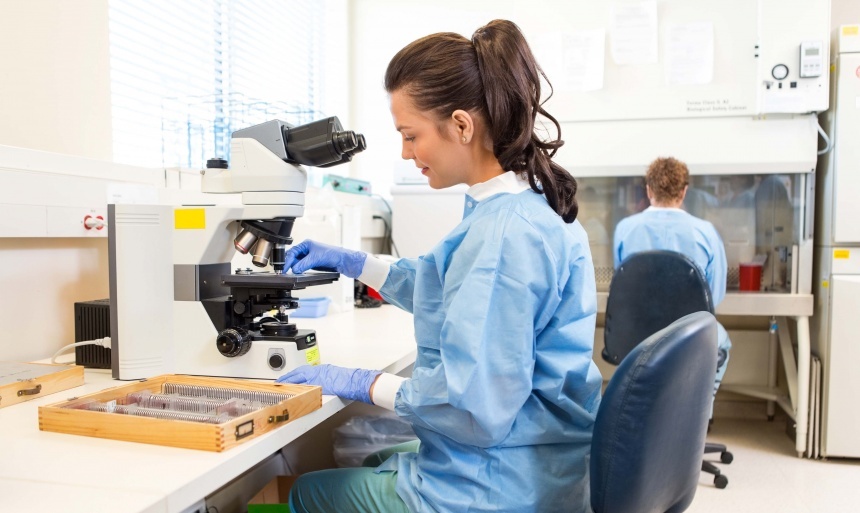
The main method of laboratory diagnostics for suspected bleeding, which is reflected in the feces, is to analyze their contents for occult blood. This allows you to timely identify the most serious diseases in the gastrointestinal tract and other systems.

Detection of blood in the stool in an adult
The fact that blood in feces is a dangerous phenomenon is probably understood by any adult patient. But the problem is that when the bleeding is so obvious that the patient detects it, the disease is already may be far from the first stage, and in this case it is not a question of its timely detection goes.
Important! The sooner hidden bleeding from an internal organ is detected, the more successful the treatment of the pathology that led to this bleeding will be.

Diseases in which blood comes out with feces may have venereal soil
Most of the above diseases at the initial stages do not manifest themselves with noticeable symptoms or obvious bleeding. But small particles of bloody discharge are removed from the body at this time, since blood is already present in the organs, in addition to the blood vessels. To detect it, an analysis is carried out, specifically detecting the presence of occult blood.
By the way. In modern diagnostics, the analysis is taken for preventive purposes by all elderly patients of clinics who have reached the age of fifty, moreover, every year. If the patient belongs to the age group under 50, the analysis can be prescribed according to indications or as part of other diagnostic measures.

Fecal veins can often be seen in humans without causing any discomfort.
Reasons for referral for analysis
Of course, there must be reasons for doctors to start looking for blood elements in a patient's feces. And, although the collection of feces for such an analysis is a common general sample, it is not assigned to everyone. The indications may be existing complaints from the patient.
- Pain present in the abdominal area and having an unexplained etiology.
- Nausea that does not go away for a long time, despite the fact that the patient has no gastrointestinal diseases.

Nausea
- Recurrent vomiting.
- Loose stools that last for more than a few weeks.
- Suspicions of helminthiasis.
- Losing weight for no apparent reason.
- Suspected cirrhosis of the liver.
- The presence of ulcers in the gastrointestinal tract.
- Suspected polyposis.
- Mechanical damage to the digestive mucous membranes.
- The presence of cancer of the gastrointestinal tract in close relatives of the patient.

How does bowel cancer develop?
In addition to laboratory analysis, the doctor can visually examine the patient's anus, prescribe x-rays, biochemistry blood tests, ultrasound diagnostics, kidney tests, urine tests, gastroscopy and colonoscopy, tumor markers.
By the way. If the patient has dyspepsia, bleeding hemorrhoids, menstruation, blood is also present in the urine, and there is periodontal disease in the oral cavity, until the cessation or change of these circumstances, fecal occult blood tests are not are held.

Dyspepsia
Preparation and delivery of analysis
In order for the study to be more effective, it will be necessary to prepare for the analysis of feces for the presence of blood.
- The preparatory process begins a week before delivery. It consists in the abolition of drugs that can change the color of feces and the termination of the use of drugs that change intestinal peristalsis.
- Three days before delivery, meat and fish, offal, tomatoes, broccoli, red sweet and hot peppers, beets, beans, apples, chives and spinach are removed from the diet.
- Products that relax peristalsis (mainly vegetables and fruits) are also excluded at this time.
- Laxatives and mechanical bowel cleansing are prohibited.
- It is not recommended to brush your teeth on the eve of the analysis, so as not to damage the gums, causing fragmentary bleeding - it may end up in the feces.

Brushing your teeth on the eve of the test is not recommended
To collect feces for analysis according to all the rules, you must wait for natural bowel movements, preferably before breakfast, after a hygienic shower. You need to use a sterile container and stick. Take a mass from its different fragments. The total volume is about 20 g. You need to bring the analytical material to the laboratory in three hours (no later), otherwise you will have to store it in the refrigerator until delivery, but no longer than half a day.

For analysis, you should collect feces after spontaneous bowel movements, you should not use an enema or laxative
The research will take six working days. If everything is normal, the result is written negative. This means that the presence of bloody elements within the permissible range, and there is nothing to worry about - there is no disease. If the result is positive, additional studies will be immediately assigned to identify pathology in order to start fighting it as early as possible.