Fibrogastroscopy: what is it? Contraindications and indications for carrying out, preparation and algorithm
Fibrogastroscopy (hereinafter FGS) is today one of the most successful and widespread methods endoscopic examination, which allows not only to assess the condition and health of the patient's stomach, but also his duodenum. The essence of the procedure is that a flexible tube (endoscope), equipped with a light guide and a camera, is inserted through the oral cavity into a person. visually assess the condition of the patient's organs, as well as remove a fragment of the patient's gastric mucosa for its further study for various pathologies.

Fibrogastroscopy of the stomach
Unfortunately, not many patients fully understand the full benefits and mechanism of this study, as a result of which one can often hear a refusal carrying out the procedure, when, like fibrogastroscopy, it is an indispensable assistant in the detection of a wide range of diseases of the gastrointestinal path.
Also, the study allows you to establish an accurate diagnosis as soon as possible, namely:
- various types of gastritis and ulcers;
- erosion that occurs in the mucous walls of the stomach;

Erosion and gastric ulcer
- polyps, tumors, hernias;
- any changes that occur both with the mucous walls of the stomach, and with changes in its volume;
- other pathological processes that can lead to serious complications (latent bleeding, wall perforation).

Perforation of the stomach wall
Content
- 1 Contraindications and indications for the procedure
- 2 Preparing the patient for the procedure
- 3 Algorithm for FGS
-
4 Possible complications after the procedure
- 4.1 Video - Fibrogastroscopy: what is it?
Contraindications and indications for the procedure
The reason for the appointment of the FGS procedure can be various reasons, including the patient's complaints. The latter are often not enough to make the correct diagnosis and, therefore, the correct method. treatment, preparation for operations to remove various types of tumors and polyps, stopping internal bleeding. In addition, an indication for the use of the study is the surgical intervention suffered by the patient. In such cases, FGS is aimed at monitoring the general condition and functions of the operated organs of the gastrointestinal tract or the doctor's understanding of how effectively the conservative method of treatment copes with the disease.

Gastrointestinal tract
If we talk about contraindications for this research method, then various pathological the patient's condition, during which it is more expedient to use alternative diagnostic methods and medical help.
Table. Contraindications and indications for FGS.
| Contraindications | Indications |
|---|---|
| Myocardial infarction and heart defects, stroke. | Prolonged pain in the upper abdomen of various etiologies. |
| Aortic aneurysm. | The presence of various types of gastritis, ulcers or erosions of the mucous membranes of the organ, duodenitis and esophagitis. |
| Hypertensive crisis and the presence of arrhythmias in the patient. | The presence of frequent belching and heartburn after eating. |
| Blood clotting disorder. | Attacks of nausea and vomiting. |
| Inflammatory processes covering the esophagus and the patient's oral cavity. | Sudden loss of appetite and weight loss. |
| Dysphagia (trouble swallowing). | Anemia (for no other reason). |
| Respiratory and cardiovascular failure. | Biopsy |
| Bronchial asthma. | Suspicion of the presence of tumors of various origins, hernias. |
| Various mental disorders. | Gastrointestinal bleeding. |
Preparing the patient for the procedure
In order for the process of carrying out the procedure to be as comfortable and painless as possible, and the attending physician was able to examine the membranes of the organ as best as possible and to make an accurate diagnosis, the patient must strictly adhere to certain preparatory measures, which the medical staff must familiarize him with in advance.
The fundamental rule for performing FGS is to examine the patient strictly on an empty stomach.

The fundamental rule for performing FGS is to examine the patient strictly on an empty stomach.
In cases where the procedure is scheduled in the morning, it is necessary:
- exclude late dinner from your diet, the last meal should be at least 8 hours before the start of the procedure;
- it is necessary to stop drinking tea and coffee, it is allowed to drink only water;
- also stop taking any medications.

Preparation for fibrogastroscopy includes refusal of medications
If the procedure is scheduled for the evening:
- the last meal should also be 8 hours before the start of the study;
- it is necessary to reduce fluid intake, it is allowed to drink only three to four sips at a time;
- a few hours before the procedure, you should also not smoke or use chewing gums.

Do not smoke for several hours before fibrogastroscopy
When performing FGS using general anesthesia, the patient should not have eaten within the past 12 hours.
Important! The day before the study, you must exclude fresh vegetables and chocolate from your diet.
It is forbidden to eat chocolate a day before fibrogastroscopy

General rules include:
- adherence to a diet a few days before the start of the procedure, based on the inclusion of light, low-fat foods rich in proteins in the diet;
- two days before the FGS, it is necessary to completely exclude the intake of alcoholic beverages, spicy and heavy foods, especially dishes containing meat, fish and legumes;

Alcohol consumption is contraindicated two days before fibrogastroscopy
- it is necessary to abandon drugs, in particular, iron-containing agents and activated carbon, which significantly affect the course of the study;
- conducting a control test to identify allergic reactions to local anesthetics;
- before the procedure, you need to take light sedatives (sedatives).

Before fibrogastroscopy, it is shown to use light sedatives.
Reference! In cases where the test for an allergic reaction gave a positive result, then the use of general anesthesia within the framework of this procedure is indicated. In addition, this method completely eliminates painful sensations in the patient.
The general psychological attitude of the person is also important, since the patient's stressful state, fear of the procedure will interfere with the penetration of the probe, creating various obstacles in the form of spasms of the walls of the esophagus, which in some cases can lead to it injuries.

A positive psychological attitude is one of the necessary conditions for a successful fibrogastroscopy
If the patient is shown FGS in combination with a biopsy, which includes FGS with a fine-needle biopsy and subsequent morphological examination of the removed tissue (gastric mucosa), then the preparatory measures are no different from the general research.
It is important to remember that after such a procedure, the patient will feel discomfort in the throat and esophagus, accompanied by dry mouth. After the implementation of the general diagnostic method, the patient is allowed to eat no earlier than an hour later, avoiding rough food, and if we talk about the procedure with a biopsy, then no earlier than four hours after manipulations. It is also worth quitting smoking and foods that stimulate the production of gastric juice.

Biopsy with fibrogastroscopy
Important! It is undesirable to consume water and food immediately after FGS.
Algorithm for FGS
FGS is carried out in a specially equipped room in a hospital or clinic by an endoscopist.

Fibrogastroscopy scheme
The total time for performing FGS is largely determined by the type of diagnosis, the nature of the disease and the patient's condition. If we talk about complex diagnostics, then, as a rule, such a procedure takes no more than 15-20 minutes.
In cases where a biopsy is performed during the manipulation, the time can be increased up to an hour.
Before starting the manipulations, the doctor sets the goals and the general type of research, and also determines the frequency of using such a procedure.

Endoscope - a device for fibrogastroscopy
As a rule, for the diagnosis and detection of various pathological conditions, the FGS procedure is shown once, but if the apparent cause of the disease could not be established, then the procedure will be repeated a year later in preventive purposes.
In some cases, FGS can be performed several times at regular intervals, which due to monitoring the condition of the affected area and control over the effectiveness of the medicinal drugs.

Monitoring
In cases where the patient's risk of developing tumors, progression of erosions or ulcers increases, then this type of endoscopy increases up to 4 times per year.
Reference! For the purpose of general diagnosis and prevention of gastrointestinal diseases, the FGS procedure is indicated no more than once every two years.
The main stages of the FGS implementation:
- the patient takes a position lying on his left side in a specially equipped place;
- in order to avoid the gag reflex, the doctor irrigates the root of the patient's tongue with a local anesthetic, most often "Lidocaine";

- Structural formula of "Lidocaine hydrochloride"

"Lidocaine"
- after 10 minutes, when the visible effect of the anesthetic drug begins to occur, the doctor puts in the mouth patient with a special plastic mouthpiece, which will allow the device to penetrate unhindered and minimize the likelihood of injury;
- then the patient makes several swallowing movements that allow the endoscope to penetrate into the esophagus, and then into the stomach cavity;

The act of swallowing is an element of the fibrogastroscopy procedure
- after the examination, the specialist carefully removes the device and the patient can be free. In cases where the procedure is carried out using general anesthesia, it is necessary to wait until its effect disappears and the patient fully recovers. After FGS, such a patient is left alone under the supervision of medical personnel, and if no complications are found, the patient is discharged on the same day.
Reference! If the patient experiences severe anxiety, which makes it difficult to insert the endoscope into the esophagus, then for such a patient intravenous administration of sedatives is provided, it is also important to adhere to deep calm breathing through the nose.

If the patient is anxious when FGS is performed, then intravenous sedation is indicated.
If the patient has contraindications to the use of FGS, there are other ways to assess the state of his health.
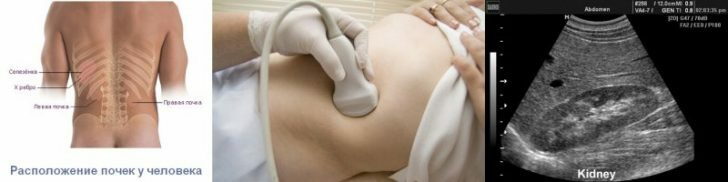
The most popular research method is radiography with the use of a contrast agent, which makes it possible to assess the overall clinical a picture of the disease, to identify the presence of neoplasms, their localization and size, as well as an ultrasound examination (ultrasound), which is carried out using a transducer equipped with an ultrasonic signal, projecting the organ under study onto a special screen to study it a specialist.

Ultrasound of the stomach
However, it should be noted that certain pathological conditions can only be diagnosed exclusively with FGS, and some, in particular, the presence of a hiatus hernia in the patient, exclusively through ultrasound.
The FGS procedure is of particular importance for the diagnosis of neoplasms at the initial stage, in which there are no symptoms.

The FGS procedure is of particular importance for the diagnosis of neoplasms at the initial stage, in which there are no symptoms.
Possible complications after the procedure
Discomfort in the esophagus and throat area is the norm after such a procedure and, as a rule, disappears on its own after a couple of days.
In cases where the patient has an allergic reaction to medications, it is important to take into account his general condition and the degree of its severity. With a strong manifestation of allergy, therapy with special drugs that relieve its symptoms is indicated.

Allergic pimples on the chin
The rarest complications after the study include:
- damage to the mucous membranes of organs, and in an extreme degree - their rupture;
 Rupture of the stomach wall on a computed tomogram
 - the presence of bleeding during an organ injury, material removal, or after removal of polyps or hernia.
As a rule, such conditions are accompanied by the following symptoms and require immediate medical attention:
- acute pain syndrome behind the sternum and abdomen;
- vomiting with blood in it;
- increased body temperature;
- diarrhea.

Diarrhea
If, in the course of the follow-up, the doctor nevertheless recorded pathological changes, then he will definitely indicate them in detail about this in the conclusion that the patient receives after the end of this procedure.
It is important to remember that strict adherence to all the necessary training rules as an FGS is the key to the correct setting diagnosis and further medical measures that will allow the patient to return to his usual rhythm life.