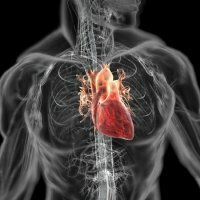
Myocardial infarction at different stages: treatment and outcomes of myocardial infarction

Content:
- Symptoms and Diagnosis
- Acute myocardial infarction
- Outcomes of myocardial infarction
A heart attack is an acute manifestation of cardiac ischemia, which most often affects women. If blood supply to a certain area of the heart muscle is cut off as a result of the destruction of an atherosclerotic plaque, it begins to die off due to a lack of oxygen. This process is myocardial infarction.
Usually the plaque is located in the lumen of the vessel, however, with a certain load on it, it can collapse. Then a thrombus grows in this place, which can completely close the lumen of the vessel.
This can happen intermittently and manifest as pain in the heart. With a rapid blockage, we are already talking about an acute heart attack, in which urgent hospitalization is needed.
There are different causes of a heart attack, but most often a heart attack affects the elderly and those who lead a sedentary lifestyle, are overweight and move a little. At the same time, constant stress and nervous conditions lead to the development of the disease.
Although there are cases when a heart attack is diagnosed in physically strong people even at a young age. Most often, the disease overtakes young people in good physical shape as a result of the abuse of bad habits and constant stressful situations. It should be understood that any stressful situation and nervousness leads to cell death.
The main reasons for the formation of a heart attack are:
- Constant overeating. It is necessary to take food
3–5 once a day in small portions up to 300 grams. - High pressure.
- Passive lifestyle. Every day you need to walk 2 or more km to train muscles and actively contract them.
- Failure to enter the body of animal fats.
- Bad habits: cigarettes, alcohol, drugs and toxic substances.
- High cholesterol, which leads to plaque build-up.
- Diabetes mellitus, due to which oxygen flows through the bloodstream worse than usual.
In people who walk a lot and play sports, a heart attack is practically not diagnosed, and if it does occur, it is as a result of a stressful shock. All these reasons lead to the formation of blood clots and blockage of blood vessels. As a result, oxygenated blood cannot reach the heart. The heart muscle can do without oxygen for no more than 10 seconds, after which a gradual death of the muscle begins.
After a complete blockage, the heart muscle remains viable for about half an hour, after which irreversible processes begin. With angina pectoris and heart attack, pain occurs in the same place, but there are still main differences between these diseases. A heart attack is characterized by sharp prolonged pain, which the patient can feel for up to half an hour, which does not subside even after taking nitroglycerin.
Myocardial infarction: symptoms and diagnosis
 Myocardial infarction has symptoms that are manifested by acute pain in the region of the heart. However, these symptoms usually appear in men, while the situation is different in women.
Symptoms of a heart attack are different, it all depends on the complexity of the case, clinical manifestations, the affected area and other factors. In women and men, the symptoms of the disease are slightly different.
With a sharp pain in the chest, it is not always clear that it is the heart that hurts, since most often the pain manifests itself on the area below the heart muscle during new physical exertion, as well as strong stressful situations and experiences.
Symptoms of myocardial infarction include:
- Sharp chest pains, shifted to the left. The pain can last up to half an hour and sometimes it is so strong that there is simply no strength to endure it. In this case, you need to urgently call an ambulance.
- When taking Nitroglycerin, the pain subsides, but does not completely go away.
- A burning sensation, squeezing in the region of the heart.
- The pain gets worse over time and spreads to the left forearm, neck and even jaw.
One of the terrible forms of ischemia is considered to be an extensive heart attack that affects all muscle tissue of the heart. This causes cell death and damage to the myocardial walls.
A massive heart attack is manifested:
- Sudden pressure in the chest area.
- Shortness of breath and lack of oxygen.
- Numbness of the left side of the body or acute pain radiating to the arm.
- Blue or pale skin.
- Cold sweat on the forehead.
- Nausea, vomiting and abdominal pain.
- Arrhythmia and terrible panic.
- Severe pain and fainting.
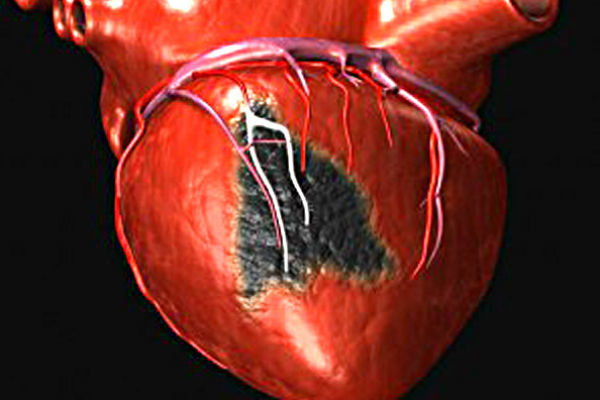 Concomitant diseases such as atherosclerosis, angina pectoris and hypertension can become the reasons for the occurrence of an extensive heart attack. The main risk group includes people with diabetes mellitus and high blood cholesterol, obese and leading an unhealthy lifestyle, age group after 60 years.
Prolonged painful sensations with a burning sensation, which are observed from 30 minutes to 1 hour, should definitely alert the patient, most likely it is a myocardial infarction. These signs indicate complications caused by ischemic heart disease, which provoke the onset of extensive myocardial infarction.
In order to accurately determine the degree of damage and predict the outcome of the disease, a full diagnosis of the patient is carried out in specialized clinics:
- Electrocardiography. An unnatural appearance of T and Q waves is visualized using electrodes placed on the chest, which indicate small and large focal myocardial damage.
- Blood analysis. Indicators: an increase in the level of leukocytes, erythrocyte sedimentation rate, a large amount of the enzyme lactate dehydrogenase.
- Echocardiography, ultrasound echocardiography. Reflects the parameters of the heart, the condition of the walls and blood vessels, valves, determines the presence of blood clots and the quality of blood flow.
- Radiopaque coronography. Internal introduction through the femoral artery of the catheter, which fills the venous vessels with a substance that allows you to determine the localization of narrowing of the lumens and their degree.
Based on empirically obtained data, cardiologists prescribe to the patient or subsequent intensive drug treatment, or a method of surgical intervention with an operation: coronary artery shunting. This method involves the creation of artificial blood flow without affecting the coronary vessel already filled with blood clots and plaques. If an attack finds a sick person at home, immediately call an ambulance.
More about the disease
- Signs in women
- Diet after a heart attack
It is unrealistic to normalize the condition at home with cardiovascular diseases, you can only alleviate and slightly reduce the pain syndrome before the arrival of specialists:
- Put the patient in a horizontal position. Be sure to raise your head. If there is shortness of breath, it is better to sit in a comfortable position, lower your legs down.
- Preparations: Nitroglycerin - 1 tablet under the tongue, dissolve, Aspirin - from 0.5 to 1 tablet to chew.
- Induce a cough. In some cases, it improves coronary blood flow.
- Loosen clothing and provide fresh air.
- Warm hands and palms with a hot compress.
- Try to calm the patient down or give him Valocordin to drink.
- In case of loss of consciousness or cardiac arrest, self-massage the chest and give artificial respiration.
Ambulance doctors conduct an initial examination of the patient, followed by hospitalization for further examination and improvement of the patient's condition.
Acute myocardial infarction and other forms and stages of myocardial infarction
Acute myocardial infarction does not come on suddenly. The heart attack develops gradually, passing through the characteristic stages.
So what are the stages of myocardial infarction:
- Preinfarction - the duration of the first manifestations can range from 2 days to several weeks. Signs resemble angina pectoris.
- The most acute - a state of pain in the chest and shortness of breath is observed 5 hours before the onset of a heart attack. It is characterized depending on the lesion. If insufficient blood circulation occurs in the posterior wall of the myocardium, vomiting, nausea, and, less often, loss of consciousness are manifested. Acute - worsening of the condition can last for about 10 days. During these periods of myocardial infarction, body temperature and blood pressure may rise.
- Subacute - increasing in strength and frequency, attacks of cardiovascular disease are observed within 4 weeks. After this period, there is a temporary improvement in the condition.
- Postinfarction - the period after myocardial infarction is accompanied by chest pain, arrhythmia, angina pectoris, shortness of breath.
To prevent the onset of a critical condition, at the first symptoms of coronary artery disease, an ambulance should be called immediately. It is possible to determine that the patient does not have an intramural myocardial infarction, but an acute myocardial infarction, even before the arrival of doctors. The disease has two distinct forms.
 The first is painful, typical. Signs are sharp sharp pains in the left side of the body, in the area of the scapula. Duration from 30 minutes to a day. The drug Nitroglycerin is useless in this case. Concomitant symptoms: fear, vomiting, sweating, shortness of breath, tachycardia.
The second is atypical. It has several varieties. It is completely asymptomatic or manifests itself in the upper abdomen. Possible violations are observed from the central nervous system: dizziness, loss of consciousness. Sometimes it resembles the onset of an asthmatic attack, which is accompanied by blue skin, lack of inhaled air.
In any case, it is impossible to leave a patient with such complications without the help of specialists. Self-relieving intramural myocardial infarction is possible only for a while.
At any stage of myocardial infarction, adequate treatment is required, the main goal of which is to restore blood circulation to the affected area of the heart and maintain it at the proper level. For the treatment of a heart attack, Aspirin is used, which prevents the formation of blood clots. Plavix and Ticlopidine have the same effect, but are considered more potent than acetylsalicylic acid. Heparin helps to thin the blood and destroys the factors that provoke the formation of blood clots. Also often prescribed Entresto - an innovative development for the treatment of CVS pathologies.
Thrombolytics easily dissolve a blood clot that is already in the vessels. All these funds are prescribed by a doctor for complex treatment.
Coronary artery angioplasty is also commonly used for treatment. But if in the first hour of a heart attack, hagioplasty cannot be done, then it would be preferable to use drug treatment to resolve blood clots and improve blood flow.
If the above methods do not work, then surgical treatment is performed - coronary artery bypass grafting, which will restore blood circulation and save a person's life.
In addition to restoring blood circulation, heart attack treatment is carried out for:
- Reducing the size of the infarction and the load on the myocardium. For this, B-blockers are used.
- Pain relief with the help of nitroglycerin and narco-analgesics.
- Arrhythmia normalization. For an accelerated rhythm, Lidocaine and Amiodarone are used, and for a weak rhythm, Atropine or temporary cardiac stimulation.
- Maintaining normal pressure, respiration, pulse, kidney function.
A heart attack is critical on the first day, then it all depends on how quickly assistance was provided and what was done to improve the patient's condition.
Outcomes of myocardial infarction and its consequences
 The outcomes of myocardial infarction are not always happy. Most often, with extensive and deep damage to the heart muscle, a heart attack gives complications. It is known that a heart attack is a necrosis of a zone of the myocardium, as a result of which muscle tissue becomes connective and loses all its functional abilities. This leads to a narrowing of the wall thickness of the heart and an increase in the left ventricular cavity, followed by a deterioration in contractile function.
After a heart attack, a person may develop arrhythmias. The worst of all is ventricular tachycardia and ventricular fibrillation. In any case, arrhythmia must be treated so as not to trigger the disease.
Heart failure is also on the list of complications and is very often diagnosed with a heart attack. The increased pressure increases the infarction zone due to oxygen starvation of the heart and tension in the left ventricle.
Within a week after a heart attack, mechanical damage to the cardiovascular system may develop, which will require surgical intervention to save a person's life.
A third of patients who have had a heart attack periodically have pain syndrome.
Dressler's syndrome is manifested by inflammatory processes in the heart and lungs. All of these outcomes of myocardial infarction can lead to the death of the patient.
Immediately after a heart attack, the patient is prescribed bed rest to strengthen the scar, after which small physical activity is prescribed. After a heart attack, a person should constantly drink pills to dilate blood vessels and thin the blood, and also not overwork, rest more and get enough sleep.
To prevent a heart attack, you need to get rid of all bad habits, lose extra pounds, establish the right food, move more and not be nervous about trifles, also in order to prevent a heart attack, the doctor may prescribe pills Sorts.
Partial use of site materials (no more than 30% of the content of the article) is allowed only with a hyperlink on www.med88.ru, full use of the article (more than 30% of the article content) is possible only with written permission edition.