Endocarditis: what it is, symptoms and treatment in adults
Content
- What is endocarditis?
- Endocarditis causes
- Provoking risk factors
- Classification
- Symptoms and Signs
- Diagnostics
- Endocarditis treatment
- Prevention and recommendations
- Related Videos
What is endocarditis?
The term "endocarditis" means inflammation of the endocardium, that is, the inner lining of the chambers and valves of the heart.
Endocarditis can be:
- Infectious: bacterial in 90% of cases, mainly due to staphylococci and streptococci, or less often fungal infections;
- Non-infectious.
Therefore, in most cases, endocarditis is behind an infection caused by pathogenic microorganisms that from a specific area of the body (for example, skin, mouth or respiratory tract) reach the heart through blood flow.
The main symptoms of endocarditis are:
- fever;
- heart murmur;
- anemia;
- weight loss;
- reddish spots on the skin;
- systemic embolism.
An echocardiogram to assess valvular disease and blood culture, a test that demonstrates the presence of pathogens in the blood, is important for diagnosis.
Treatment includes antibacterial therapy
over a long period of time with the aim of radical suppression of infection and, less often, surgery if the valve apparatus is inevitably broken.If untreated, endocarditis is fatal in most cases, and even with early treatment in adult subjects with high risk, for example, in older people with concomitant pluripathology or with bacterial infections resistant to conventional antibiotics mortality high.
The prognosis will be worse if the infection affects the aortic valve or if the disease causes complications from the heart, kidneys, brain, or pulmonary system.
Endocarditis causes
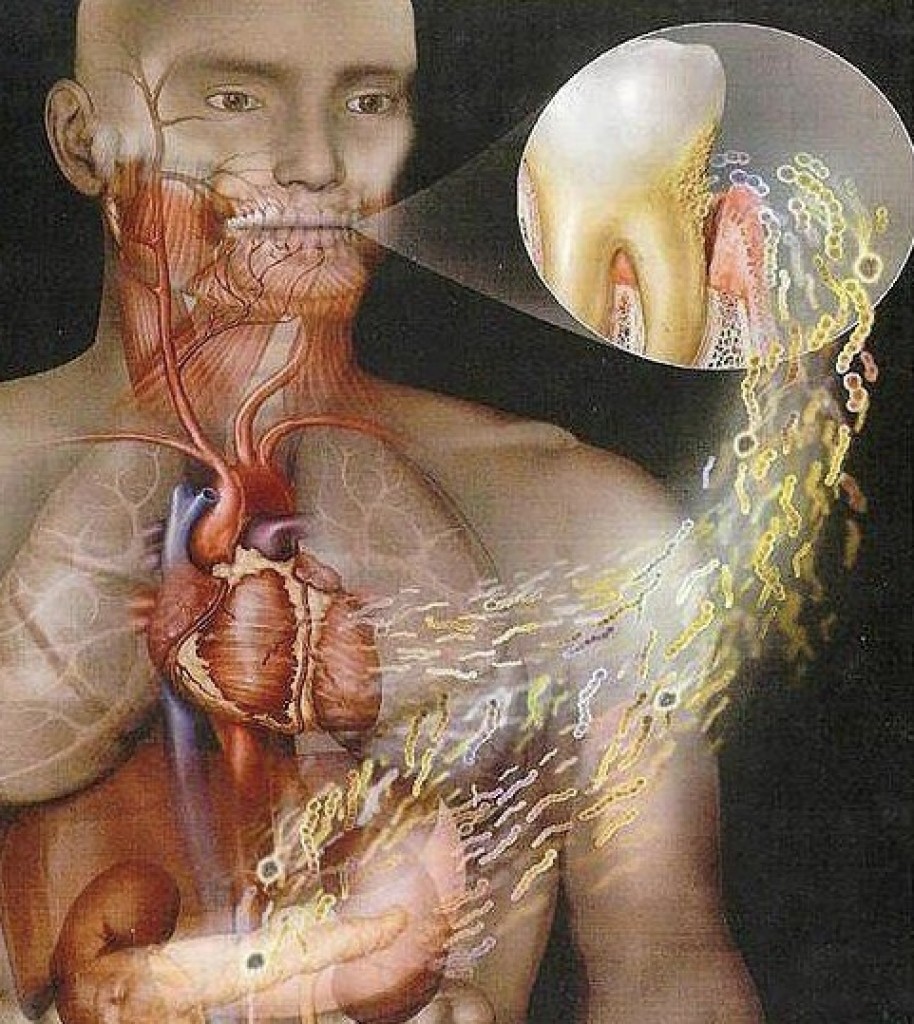
Small clumps of bacteria may form at the site of infection. These bacterial clumps can block blood flow and restrict blood flow to the heart. The heart, which plays the role of a pump in the body, drives and distributes blood throughout the body.
As a result, poor circulation can seriously affect the state of work of other organs, which will lead to their failure.
Microorganisms that cause endocarditis arise from sites of infection, for example:
- skin abscesses;
- during central or peripheral venous catheterization;
- urinary tract;
- wounds, cuts;
- oral cavity.
Especially in predisposed adults, endocarditis is secondary to invasive dental, medical, or surgical procedures.
Read also:Brugada syndrome
In 90% of cases the bacteria involved are staphylococci and streptococci, while 10% are enterobacteria, gram-negative bacteria and microorganisms of the HACEK group.
At the valve level, microorganisms form the so-called "vegetation" of infectious nuclei, which coated with fibrin and platelets, which allows bacteria to protect themselves from the immune system and from antibiotics.
From this vegetation (vegetation), fungal emboli can then separate and cause long-term complications in various organs (skin, eyes, kidneys, lungs, etc.).
Provoking risk factors
Endocarditis is a relatively rare disease in healthy subjects (humans), however, the risk is quite high in specific subjects (especially men) with the following risk factors:
- congenital heart defects (atrial defect, interventricular defect, patent ductus arteriosus);
- the presence of artificial valves or other intracardiac devices (such as pacemakers);
- valvular pathology (prolapse, stenosis, insufficiency);
- the presence of central or peripheral venous catheters;
- immunocompromised subjects (i.e. people with weak immune systems);
- drug addicts who use drugs intravenously;
- sepsis (generalized systemic infection with pathogens in the blood).
Classification
Endocarditis can be divided into 3 forms:
- Subacute endocarditis: It develops insidiously and progresses slowly over several months. The subacute form is primarily caused by Streptococcus Viridans, a green streptococcus (present in the mouth) and Staphylococcus aureus. This type of endocarditis often develops on abnormal valves due to invasive dental or other procedures, or after gastrointestinal or genitourinary infections.
- Spicy endocarditis: a very aggressive form that develops rapidly within a few days. Staphylococcus aureus is the most common etiological agent, and its complications can be quite serious, leading to death.
- Endocarditis prosthetic valves: Occurs in subjects who have undergone valve replacement (especially aortic or mitral), in both mechanical and biological prostheses.
Symptoms and Signs
 Janeway's Sign and Osler's Knots
 Shrapnel hemorrhages
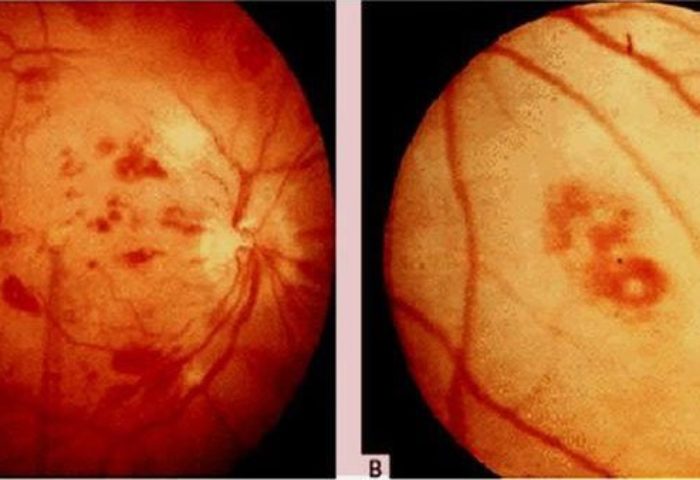 Roth spots
The symptoms of endocarditis can be general in systemic type:
- heat;
- night sweats;
- general malaise with weakness;
- loss of appetite and weight loss;
- arthro-myalgia (joint and muscle pain);
- chills and pallor.
Read also:Doppler ultrasound (USDG, Doppler examination of the vessels of the head and neck)
The most specific and typical symptoms of endocarditis:
- Roth's spots: hemorrhagic retinal lesions caused by embolism originating from infectious vegetative lesions of the heart (see. photo above);
- cutaneous petechiae: small red spots on a large surface of the body;
- Osler's nodules: painful subcutaneous nodules at the tips of the fingers;
- Janeway's signs: hemorrhagic spots on the palms of the hands and on the soles of the feet;
- shrapnel hemorrhages under the nail (see. photo above).
Complications of endocarditis ultimately affect distant organs, including:
-
Central nervous system: a mycotic embolism at this level can cause:
- transient ischemic attack (TIA);
- stroke;
- brain abscess or subarachnoid hemorrhage;
- meningitis.
-
Kiddies:
- pain in the side;
- macroscopic hematuria (discharge blood in urine);
- glomerulonephritis;
- renal abscess.
-
Lung:
- pneumonia;
- empyema of the pleura;
- lung abscess;
- lung infarction;
- pleural pain;
- hemoptysis (the presence of blood in sputum removed with a cough).
-
A heart: Severe valve dysfunction can cause severe and fatal acute decompensation. A person can also have:
- aortitis (infection of an aortic artery);
- cardiac abscess;
- heart rhythm disturbances.
-
Spleen:
- pain in the left side
- splenomegaly (enlargement of the spleen).
Diagnostics
The symptomatology of endocarditis can be quite subtle and nonspecific. Endocarditis should be suspected in patients with fever of unknown origin with heart murmur. The suspicion becomes very high if a history of valvulopathy or other heart defects is reported.
Once endocarditis is suspected, the diagnosis should be confirmed by cardiac ultrasound and blood culture.
Echocardiography allows you to visualize the chambers of the heart and measure the ejection fraction. In this case, it is important to detect the presence of bacterial vegetation and assess the residual function of the heart valves.
Blood culture is a study that consists of taking blood samples from a patient and placing them in a culture of bacteria (at least 3 samples in 24 hours in accordance with febrile peaks). Within a week, the infectious agent responsible for bacteremia and, therefore, endocarditis can be isolated.
Read also:Couperosis on the face: causes and treatment
Endocarditis treatment

Endocarditis is treated with antibiotics or, less commonly, surgery. Antibiotic therapy administered intravenously (after hospitalization) and continues within 2-8 weeks to completely eliminate the infection. At the same time, all devices that may be a route of entry for pathogenic microorganisms, especially venous catheters or foreign materials, must be removed.
Surgery is necessary if there is no adequate response to antibiotic therapy, or if the valves are inevitably damaged due to severe valve failure.
Surgical options can be expected depending on the case:
- rehabilitation of vegetation;
- correction of valves;
- replacement of valves.
Prevention and recommendations
Patients at other risk of endocarditis should be required to undergo antibiotic prophylaxis whenever undergo any invasive procedure, which may involve the entry of pathogens into circulation.
Patients at most at risk:
- artificial heart valve;
- previous picture of endocarditis;
- Congenital heart defect;
- heart or other organ transplant.
The most risky procedures:
- dental in the first place;
- piercings or tattoos;
- associated with the respiratory tract;
- associated with the gastrointestinal tract;
- associated with the genitourinary tract;
- associated with the musculoskeletal system (musculoskeletal system).
notethat not all invasive procedures can lead to endocarditis, for example, in examinations such as bronchoscopy, gastroscopy and colonoscopy modern recommendations usually do not provide for the need for prevention, although, of course, it is recommended to always adhere to the rules and indications received from doctor.
Antibiotic prophylaxis given before risky procedures is considered to be effective prophylaxis for high-risk patients; from a general point of view, it is recommended:
- Treat oral hygiene, periodically undergo scaling and dental control (at the dentist).
- Avoid piercing or tattooing.
- Report every unexplained fever to your doctor.
- Remind any doctor before your procedures that you are at risk.
Be sure to remember, that in the simplest case, the antibiotic of the first choice in the prevention of endocarditis is Amoxicillinto be taken 30-60 minutes before dental procedures.