Burns, burns in the area of the heart: what could it be, causes, treatment
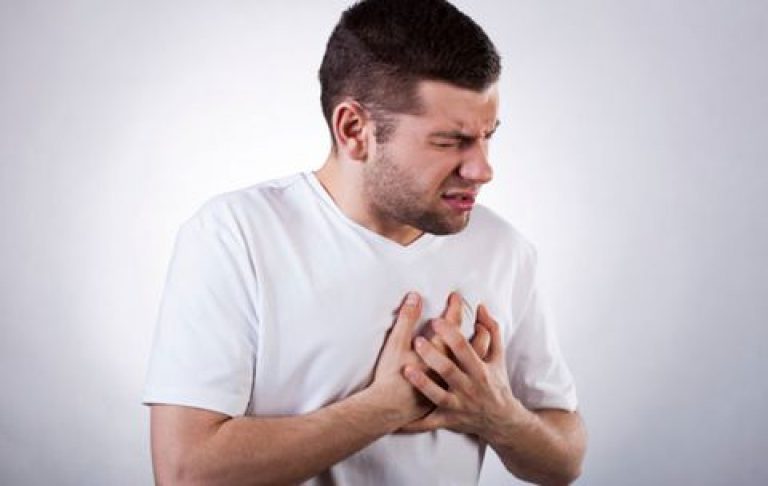
Feeling burning in the chest - This is a common symptom indicating various pathological conditions. Painful sensations can appear both on the left and right sides of the sternum, and in the center.
A burning pain in the chest can be the first sign of cardiovascular pathologies. Not infrequently, this symptom speaks of a malfunction in the work of other internal organs.
Content
- Causes of a burning sensation in the region of the heart
- Additional causes of burning sensation in the heart area
- Diagnostic methods: what examinations do you need to undergo?
- How and how to treat this symptom
- Prevention and recommendations
Causes of a burning sensation in the region of the heart
The main organ located in the sternum is the heart muscle, it is responsible for the circulation of blood throughout the body.
The heart in the chest is located with a slight displacement to the left. Therefore, painful sensations are noted in the middle of the sternum, and not on the left side, as most of those who do not know mistakenly assume.
Main reasons:
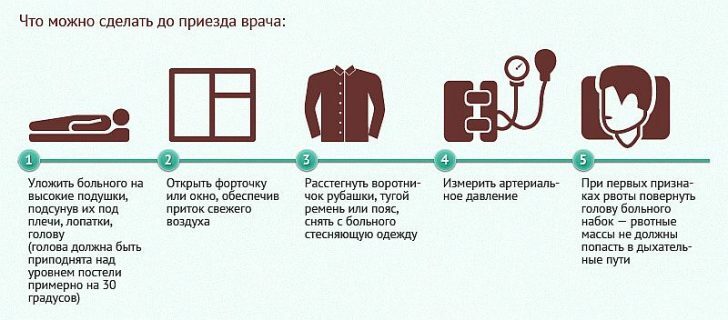
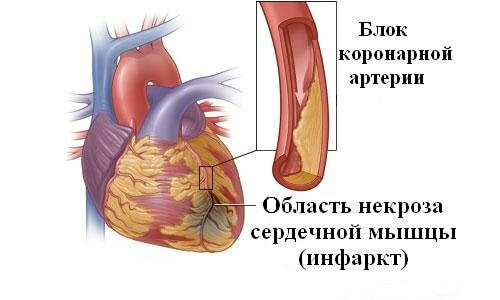
- Heart attack. The presence of this dangerous condition is indicated by an attack of angina pectoris, which does not pass for a long time and is not removed with the help of drugs. The main clinical symptoms that indicate myocardial infarction - it hurts and burns in the area of the heart. In this condition, urgent medical attention is needed, you need to go to an ambulance or take the patient to the hospital yourself.
- Tietze's disease. Pathologies of the thoracic and cartilaginous joints cause redness and swelling of the cartilaginous joints, which are located on the sternum. Burning and painful sensations in the region of the heart occur during the movement of the chest during active physical work. Soreness continues for a long time, disappears after using analgesics.
- Angina pectoris (angina pectoris). Painful sensations and burning in the chest - this may be the first symptom of the development of angina pectoris. The feeling of discomfort and squeezing in the sternum, as a rule, occurs after excessive psychological or physical overexertion, this condition tends to progress and goes away if you calm down or complete the physical work. Most often, the duration of the attack is no more than 15 minutes.
- Myocarditis. The cause of the development of the disease can be damage to the heart muscle, for example, after a bacterial infection, due to an allergic reaction or autoimmune pathologies. If it burns and burns in the region of the heart, then this may indicate the appearance of this pathological condition.
- Aortic aneurysm. The disease is very life-threatening and often fatal. During the appearance of this pathology, a burning sensation in the chest develops unexpectedly and instantly progresses without increasing - pain is given to the limbs, back, peritoneum. The pulse cannot be felt on the radial veins, and the soreness is not stopped even with the help of strong narcotic painkillers. All the symptoms of this disease are quite dangerous, therefore, if a person complains of this condition, an ECG is urgently required.
- Thromboembolism of the lungs. The cause of the development of the disease is vein thrombosis of the lower extremities. The thrombus breaks off from the blood artery and begins to migrate throughout the body. There is a great chance that this condition can provoke a blockage of the artery, which in turn will cause ischemia of the damaged tissue. The main symptomatology, in addition to pain in the region of the heart, which intensifies during breathing, is a cough with the release of blood sputum, dyspnea. Thromboembolism is a medical emergency that can be fatal.
- Shingles. During this skin disease of a viral nature, a rash, itching appears. Before the appearance of a rash on the body, neuralgia symptoms. Most often, with this pathology, a one-sided lesion occurs. A slight burning sensation in the chest appears from other similar viral pathologies. Additionally, there may be weakness, vomiting, headaches.
- Heart defects. During the abnormal structure of the aorta, an overloaded heart begins to beat faster, this is due to an increase in the oxygen demand of the heart muscle. At a certain time, due to active work, a malfunction begins, which is expressed by a burning sensation and pain in the sternum that wears stabbing character, pressure surges also occur, there is high fatigue, swelling of the legs, general weakness.
- Cardioneurosis (heart neurosis). The reason for the development of this disease is constant mental stress and regular stress. Often, the development of pathology is evidenced by painful burning sensations that arise in the right side of the chest, but other unpleasant symptoms may also appear. Soreness during a neurosis of the heart lasts for a rather long time, it is not caused by physical overstrain, but is relieved with the use of sedative drugs.
- Pericarditis. The disease often has an etiology of infectious origin, since the causes of the pathology are harmful bacteria. The inflammatory process of the cardiac membrane also causes a burning sensation in the chest, and a state of fever indicates the appearance of intoxication. From other heart diseases pericarditis differs in that the painful sensations depend on the posture of the body. At the same time, coughing and rapid breathing increases the pain. The doctor listens during auscultation heart murmur.
- Rheumatism. This pathology affects the heart muscle and its membranes, therefore painful sensations and other symptoms are regarded as the initial stage of complications rheumatism.
Read also:Ebstein's anomaly
Additional causes of burning sensation in the heart area
Also, a burning sensation can be provoked by other reasons. The most common ones are as follows:
- strong dry cough;
- excessive loads;
- bruise of the sternum;
- rib fracture;
- stomach ulcer;
- heartburn;
- hernia of the esophagus;
- urolithiasis disease;
- scoliosis;
- inflammatory process in the esophagus;
- myositis;
- meningitis;
- neuralgic diseases.
During heartburn, as a rule, there is a burning sensation and pain in the esophagus. The feeling of discomfort can continue for quite a long time, and is accompanied by belching. You can get rid of this condition by drinking a glass of water and soda. If discomfort in the form of a burning sensation in the esophagus appears regularly, then it is necessary to consult a gastroenterologist.
Among other pathologies of the gastrointestinal tract, the cause of burning is reflux esophagitis - inflammatory process in the esophagus. The disease is expressed by the fact that gastric juice is thrown into the esophagus and begins to eat away at its mucous membrane. The pain is noted below the sternum and lasts for a long time.
Also, a burning sensation is provoked by pathologies of the respiratory system:
- ARVI;
- pneumonia;
- bronchitis;
- bronchial asthma.
Infectious diseases, which are accompanied by an increased cough and an increase in temperature, are the main cause of pain in the region of the heart. Discomfort can be permanent or occur exclusively during coughing, be given in the middle of the sternum, or move in one direction. With pleurisy, painful symptoms in the form of a burning sensation are localized throughout the chest area.
In addition, infectious diseases also include unpleasant symptoms in this area. There may also be fever, discomfort during swallowing, dry cough, burning sensation.
The cause of pain in the heart area can be severe stress and emotional disorders. Often patients note this condition, although their body is physically quite healthy. Moreover, the feeling in the form of a burning sensation is permanent and does not disappear when using any medications or changes in body posture.
Important! These pains in the region of the heart lead to poor appetite, increased fatigue, absent-mindedness. In this case, you need to contact a psychologist.
Diagnostic methods: what examinations do you need to undergo?
Differential diagnosis consists not only in determining the clinical symptoms of the disease, but also in various methods of examination.
Read also:Hypertensive type neurocirculatory dystonia (NCD)
If there is a burning sensation and burns in the region of the heart, then the patient is first sent to an ECG. This survey allows you to exclude coronary syndrome. If the ECG determines the normal state, then the diagnosis is carried out in the other direction.

With symptoms of pain in the heart, the patient should also consult a rheumatologist, gastroenterologist and endocrinologist, women during menopause need to be examined by a gynecologist. The patient is assigned the following examinations:
- ECHO cardiography;
- sternum x-ray;
- MRI;
- blood test.
The examination methods are selected taking into account the specific clinical symptoms of the patient. Therapy is aimed at getting rid of the cause that caused the burning sensation. The most commonly used treatment is symptomatic. If the diagnosis of a heart attack is confirmed, then an urgent hospitalization of the person will be required.
The choice of instrumental diagnostic methods will also depend on the manifestation of the severity of the disease. CT or MRI is performed to accurately determine the disease, if doubts arise after performing other diagnostic methods.
How and how to treat this symptom
Therapy is aimed not at getting rid of unpleasant symptoms, but at treating directly the cause that caused this condition. The treatment regimen is developed by the doctor after the diagnosis:
- During myocarditis and rheumatic diseases, antiviral and antibacterial treatment is prescribed. In addition, antihistamines, immunosuppressive, anti-inflammatory drugs are prescribed.
- Treatment of diseases of the cardiovascular system is carried out in stationary conditions. Symptomatic therapy involves the use of Valocordin and Nitroglycerin.
- During pathologies of the digestive tract, antispasmodic and antacid medications are used. If a burning sensation appears after eating, then antiulcer drugs are prescribed: Famotidine, Omez. These medicines can help relieve symptoms.
- To restore the normal functioning of the heart, cardiotrophic drugs are used: Phosphaden, Carnitine.
- During osteochondrosis use non-steroidal anti-inflammatory drugs: Nimesulide, Meloxicam. To relieve painful sensations, muscle spasm, muscle relaxants are prescribed: Tolperisone, Mydocalm.
- For pathologies of the respiratory system, antibacterial agents are used. To relieve unpleasant symptoms, inhalation treatment with saline is used.
Read also:Syncope (fainting): causes of fainting with high and low pressure, first aid, prevention
If, in addition to pain in the heart area, other symptoms of the disease appear that are not associated with the cardiovascular system, then use the following:
- During osteochondrosis, adherence to the diet is required, physiotherapy is prescribed and medications are used. Also, the patient is advised to choose a certain position in which the pain is not so pronounced.
- For heartburn it is recommended proper nutrition and drug treatment. During an increased level of acidity in the gastrointestinal tract, medications are prescribed that neutralize hydrochloric acid. But from a hernia of the esophagus, you can only get rid of a surgical method.
- During VSD the patient is prescribed sedatives.
- For menopausal women, estrogen-based medications are used.
Self-medication is prohibited, since serious complications can be caused, this will lead to negative consequences.
Prevention and recommendations
If the burning sensation occurs regularly, then you can prevent this condition if you follow certain rules:
- sleep for at least 8 hours;
- exclude fast food, fatty and smoked foods, alcohol from the daily menu. The daily diet must be balanced and fractional with a large amount of fresh fruits, cereals, dairy products;
- follow a healthy lifestyle;
- take walks daily;
- carry out preventive examinations;
- treat various pathologies in time.
Burning sensation in the chest area is a fairly common symptom, indicating malfunctions in the gastrointestinal tract, heart muscle, respiratory organs, and central nervous system. In order for the treatment process to occur much faster, you should not ignore this symptomatology, but urgently consult the appropriate doctor.