Violation of the venous outflow of the brain: symptoms and treatment
Today, not a single person can insure himself against a sudden deterioration in health, the appearance of any diseases of varying severity. It just so happened that the body is vulnerable, and every year of life it becomes more and more sensitive and weaker.
One of the serious and complex diseases is a violation of venous outflow, which can appear in absolutely every person of different age groups.
Brief violations of venous circulation were observed by all, as they can occur in the course of ordinary household activities.

Short-term symptoms appear during a sharp turn of the head, singing, coughing, bowel movements, or during light physical exertion.
Content
- What is this disease?
- The main causes of impaired venous outflow
- Factors that can obstruct blood flow
- Signs and symptom of impaired venous outflow
- Types and stages
- Diagnostics
- Treatment
- Essential drugs to improve blood circulation
- Conclusion and prognosis
- Related Videos
What is this disease?
Impaired venous outflow of the brain is a serious and dangerous problem that can lead to disability and death.
In order to correctly determine the severity of the disease, it is necessary to carefully study the features of the venous vessels, their ability to withstand heavy loads, etc.
Human vessels have several characteristic features:
- The vein wall in the brain does not have a valve apparatus. Due to this structure, blood flows freely in both directions. This can cause various bacteria and infections to quickly spread through the veins and enter the sinuses, pores on the face and eyes.
- Almost all vessels in the brain have their own individual location and are not located next to the arteries
- Venous sinuses act as intermediate collectors for cerebrospinal fluid and blood. These elements are connected by separate branches.
Specialists distinguish two types of veins: superficial and deep. The former are located in the pia mater and are responsible for collecting blood from various parts of the cerebellum and hemispheres.
Deep veins are formed from subcortical nodes and white matter nuclei.
In addition to these types of veins, there are emissary and diploic veins in the brain. They are necessary for the normal flow of a sufficient amount of blood into the sinus system.
The main causes of impaired venous outflow

Deterioration of blood outflow can appear both independently and in conjunction with other brain diseases. It is this factor that is fundamental when choosing a treatment method and its appointment.
Another reason such disorders can be the formation of thrombophlebitis in the brain, the appearance of blood clots in the sinuses, as well as due to congenital anomalies (incorrect size of veins, etc.).
A similar pathology can occur against the background of diseases such as:
- sinusitis;
- meningitis;
- heart failure.
Read also:Atrial fibrillation
Cases of mechanical compression in the cranial cavity:
- swelling of the neck and brain;
- severe head injury;
- severe swelling and displacement of bones;
- thrombosis at the level of the jugular vein;
- at bronchial asthma;
- due to strangulation.
As you know, venous outflow is associated with arterial circulation. For example, due to increased pressure, there may be an increase in the outflow of cerebrospinal fluid inside the skull directly into the sinuses.
To eliminate tension in the venous system, in this case, an antihypertensive treatment complex should be applied.
Besides, strokes can cause severe cerebral edema, which will result in a violation of the outflow of blood in the veins. Hematomas strongly compress the vessels, which leads to a deterioration in the outflow of blood in the areas of hemorrhage.
Factors that can obstruct blood flow
- excessive physical activity;
- frequent being in an inverted position of the body, tilting the head;
- due to constant breath holding (in swimmers, divers, musicians and singers);
- tight collars on clothes;
- the child may have worse venous outflow due to frequent crying;
- in the process of a strong and frequent cough.
Signs and symptom of impaired venous outflow

This disease is common and occurs in people of different age categories.
It is well studied, therefore changes in venous outflow are identified in a timely and quick manner.
The main symptoms include:
- persistent headache;
- frequent vomiting and nausea.
Also, next to these symptoms, there is high fever, slight facial swelling. With severe and advanced brain damage, the patient may fall into a coma.
The process of development of the disease in most cases is accompanied by the presence of:
- noise in the ears and head;
- weakness;
- apathy;
- severe headaches.
Signs of impaired outflow of venous blood of superficial veins is combined with neurological disorders.
There is inflammation, the temperature rises, headaches become more frequent. In some patients, consciousness may be impaired, paralysis of the limbs occurs, and epileptic seizures may appear.
With deep venous thrombosis, patients become more severe. Some go into a coma. There are signs of dysfunction of the subcortical and stem structures. In this case, professional doctors keep the patient under constant observation, monitoring the development of symptoms.
With venous thrombosis, the disease causes swelling of the facial tissue, frequent headaches, fever and impaired consciousness. The main and most obvious symptom violation of the outflow of blood of venous vessels is a change in the color of the cerebrospinal fluid (becomes completely transparent).
There is also sigmoid sinus thrombosis, in which the patient has pus, otitis, swelling of soft tissues, painful sensations when turning the head, bending or chewing. This type of blood outflow disorder is most common.
With infectious thrombosis of the sinuses and veins in the brain, purulent meningitis, brain abscess, encephalitis, etc. can develop. Exactly therefore, when the first signs of the disease appear, you should consult a doctor to identify a violation of the venous outflow.
Read also:Heart diseases
Types and stages
Obstruction of venous outflow can be divided into 2 types:
- 1. Primary form. This type is determined by a noticeable violation of blood circulation in the brain cavity, which appears due to strong changes in venous tone. Such a violation can be the result of a serious head injury, alcohol intoxication, hyperinsolation. Also, the primary form of the disease is caused by hypotonic or hypertensive disease, endocrine system disorders, etc.
- 2. Stagnant form. This type appears when venous outflow is mechanically obstructed. Such changes are critical, as they lead to the destruction of the entire mechanics of the blood circulation process. In this case, surgical intervention and complex treatment are required.
Disease stages:
- Latent. At this stage, the main symptoms practically do not appear and the person may not even suspect that he is developing venous discirculation.
- Cerebral dystonia. At this stage, primary paraclinical disorders and changes begin. A person can continue to live a normal life at a normal pace, but the first symptoms are already noticed.
- Venous encephalopathy. This stage is accompanied by the development of organic microsymptomatics. It is at this stage that a person needs qualified help in order to avoid serious violations.
Diagnostics
In order to identify with high accuracy a violation of the venous outflow of blood, it is necessary to pass several tests and consult a doctor. The patient usually undergoes an MRI.
Only this study provides an accurate and detailed picture of the state of the circulatory system of the brain and the health of blood vessels.
Not every city has an MRI machine, so you should prepare for the fact that this procedure will force you to leave your usual habitat for a while.
Treatment
Often, when such pathologies appear in patients, varicose veins are found. In this case, in parallel with the main treatment, drugs and drugs are prescribed that can thin the blood.
In some cases, mainly in the early stages of the disease, massage is highly effective in patients. It is carried out in the area of the shoulders, neck. It is not worth prescribing such procedures on your own, since they are effective only as prescribed by a doctor after a thorough examination and diagnosis.
In the case of self-treatment with massage, a reverse reaction of the body may appear, and such a procedure will cause serious harm and aggravate the development of the disease.
Quite often, doctors recommend slightly increasing and diversifying physical activity. For example, gymnastics will provide rapid improvement, but it is worth setting the correct dose of exercise. Swimming is also a good way to improve blood flow. Almost all pools have masseurs and trainers who work with people with similar disabilities and diseases.
Read also:Familial hypercholesterolemia
For successful, and most importantly, quick treatment and restoration of venous outflow of blood in the brain, you should exclude bad habits from your life.
These include smoking, excessive consumption of alcoholic beverages, eating fatty and heavy foods, visiting fast food restaurants.
In order to achieve blood thinning, sometimes it is enough to reconsider your diet. For example, in such cases, it is recommended to eat more vegetables, fruits and herbs, more often to drink grape or nettle juice.
According to professional doctors and medical statistics, more than 75% of all diseases, including impaired venous outflow in the brain, are caused by improper diet and lifestyle. As a preventive measure, you need to regularly go in for sports, gymnastics, and visit the pool.
Essential drugs to improve blood circulation
Nowadays, almost any drug can be found in pharmacies. The range of drugs that improve the venous outflow of blood is simply enormous.
Drugs for such purposes are in different price categories, so anyone can afford such drugs. For example, venotonics show positive dynamics.
In total, these are drugs that are prophylactic. They are able to strengthen blood vessels, normalize their permeability, reduce fragility and remove puffiness.
Also, taking venotonics leads to strengthening and improvement of the general venous tone and elimination of inflammation.
Among the most popular and common such drugs are the following:
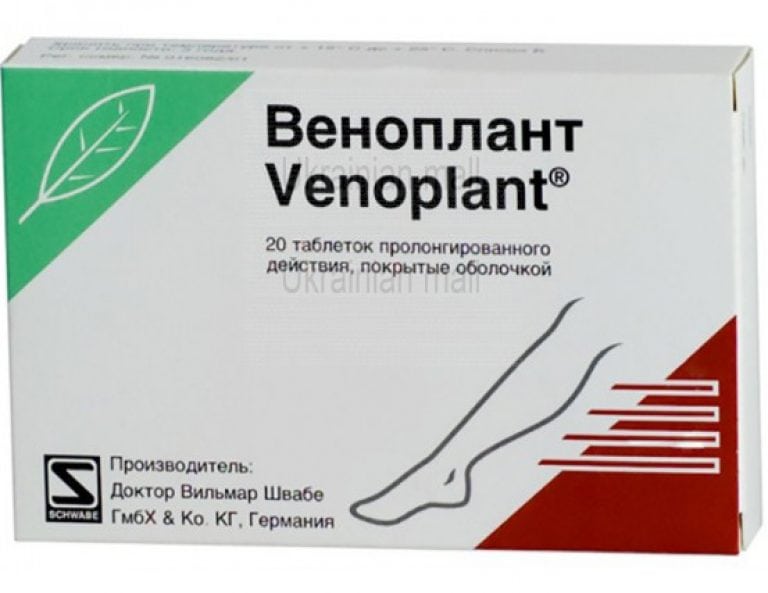
- gel or cream Aescusan, Herbion or Venoplant. These preparations are made on the basis of horse chestnut. Their cost is reasonable and affordable for everyone;
- capsules or gel Antistax. This medicine also contains horse chestnut and grape leaf extract;
- extract-based preparations Gingobiloba (Ginkor fluoride).
Whatever drugs are, drugs should be taken only after a doctor's prescription. Self-treatment can have a detrimental effect on the course of the disease, intensify the symptoms.
Also, self-medication is sometimes simply ineffective due to the incorrect establishment of symptoms.
Conclusion and prognosis
This disease in most cases appears in the fall or spring. First of all, don't panic. In the early stages of the disease, it is quite easy to restore the functionality of the circulatory system.
In some cases, pills and injections help, while in others it is enough to adjust the lifestyle and reduce the level of physical activity.
Despite the fact that in the early stages the venous outflow can be restored on its own, it is impossible to delay the treatment and neglect the doctor's consultation.