Thrombosis of the lower extremities: symptoms, photos and treatment
Deep veins that are located under the muscles can be affected by an acute disease. Yes, that's it thrombosis of the lower extremities, capable of poisoning the life of any person.
The disease manifests itself in the form of the formation of clots, which can reach a size that can completely block the lumen in the vessel.
With a rapid course, the disease leads to disability. If you do not take measures to eliminate the pathology, then everything can end in death.

More than others, the vessels of the lower leg are not able to resist the appearance of such clots. The resulting blood clots try to attach to the vascular wall. The first day they are still very weak and often migrate with the blood flow.

After the clot gains sufficient firmness, its body fits snugly against one of the vein walls. This is where thrombosis occurs. deep veins of the lower extremities.
Simply put, the disease is an inflammatory process in the place where the blood clot formed. After which, due to severe inflammation, additional clots appear. Their localization occurs above the place where the primary phlebolitis is fixed.
The transformation of thrombosis into thrombophlebitis occurs in 7 days.
Content
- Signs and symptoms
- What determines the course of the disease?
- When do you need to visit a specialist?
- Why does thrombophlebitis occur?
- Can deep vein thrombophlebitis be cured?
- Physiotherapy treatment of the disease
- What operations are indicated for thrombosis
- How to eat with thrombosis?
- Diagnosis of thrombophlebitis
- Preventive measures
- What awaits a patient with thrombophlebitis?
Signs and symptoms
The early stages suggest that deep vein thrombosis of the lower extremities occurs without overt symptoms. In every second patient, the disease develops typically, pulmonary thrombosis is considered the first manifestation.
The main symptoms of the manifestation of the disease:
- the body temperature in the area of the affected area is higher than the whole body;
- bursting pain in the area of the affected vein;
- general body temperature can reach 39 degrees;
- below the clot, an impressive edema is determined, there is heaviness in the legs;
- the skin may have a bluish tint with gloss;
- superficial vessels are clearly visible through the skin, since part of the blood from the thrombosed vein is sent to them.
For the first 48 hours, the patient may notice mild pain in the calves, which becomes worse with palpation or movement. At the bottom of the lower leg, slight swelling may be visualized. Other symptoms may be absent altogether and appear only after a few days.
Suspected thrombosis suggests Homans and Lowenberg tests. The patient should bend the foot upward; with such a pathology, pain in the lower leg should be noted. If you squeeze the affected limb with a tonometer, then pain is visualized when value 80/100. The absence of pathology suggests pain if the indicators are almost 2 times higher.
If all the deep veins of the lower extremities have problems, the symptoms worsen. The pain becomes sharp and almost does not subside, the sore leg has an impressive swelling, and the skin turns blue (cyanosis).
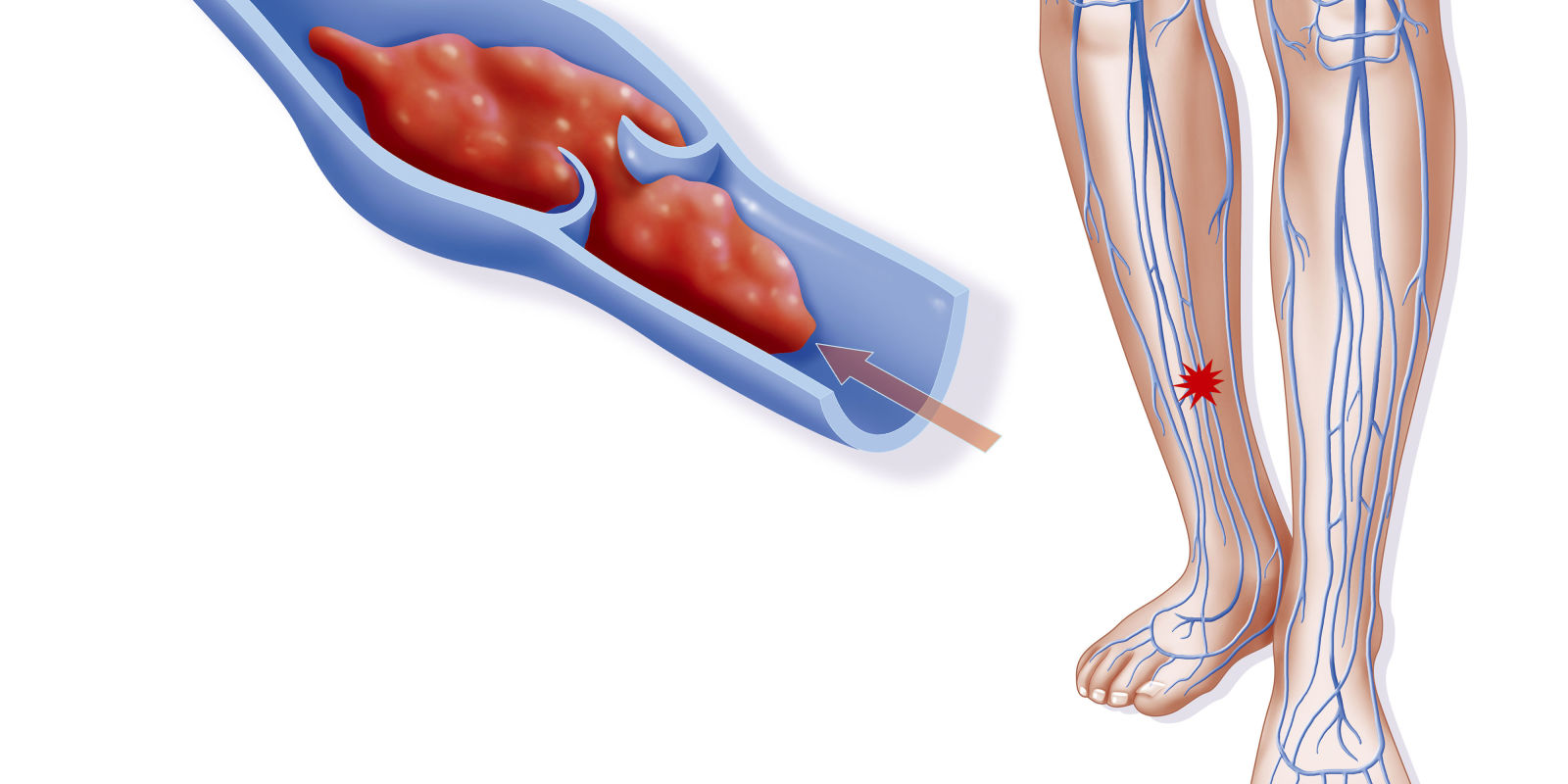
The expression of symptoms usually depends on the localization of the thrombosed area. If the pathology is located in the upper part, then cyanosis, the swelling and soreness will be much stronger. In such a situation, there is a very high risk that the blood clot will come off and lead to the development of PE.
What determines the course of the disease?
Very important localization of phlebolitis, this value has an impact on the further development of thrombosis.
The ileofemoral form involves swelling of the lower limb from the heel to the groin area, while the pain and blue of the skin do not go away.
If the thrombus is located at the bottom of the lower leg, then the patient's pain is mild and brings only slight discomfort. Perhaps their strengthening due to active movements and physical activity.
At first time the skin will differ in gloss and pallor, in the place below the occurrence of thrombosis. After a few days, you can see the protruding superficial veins.
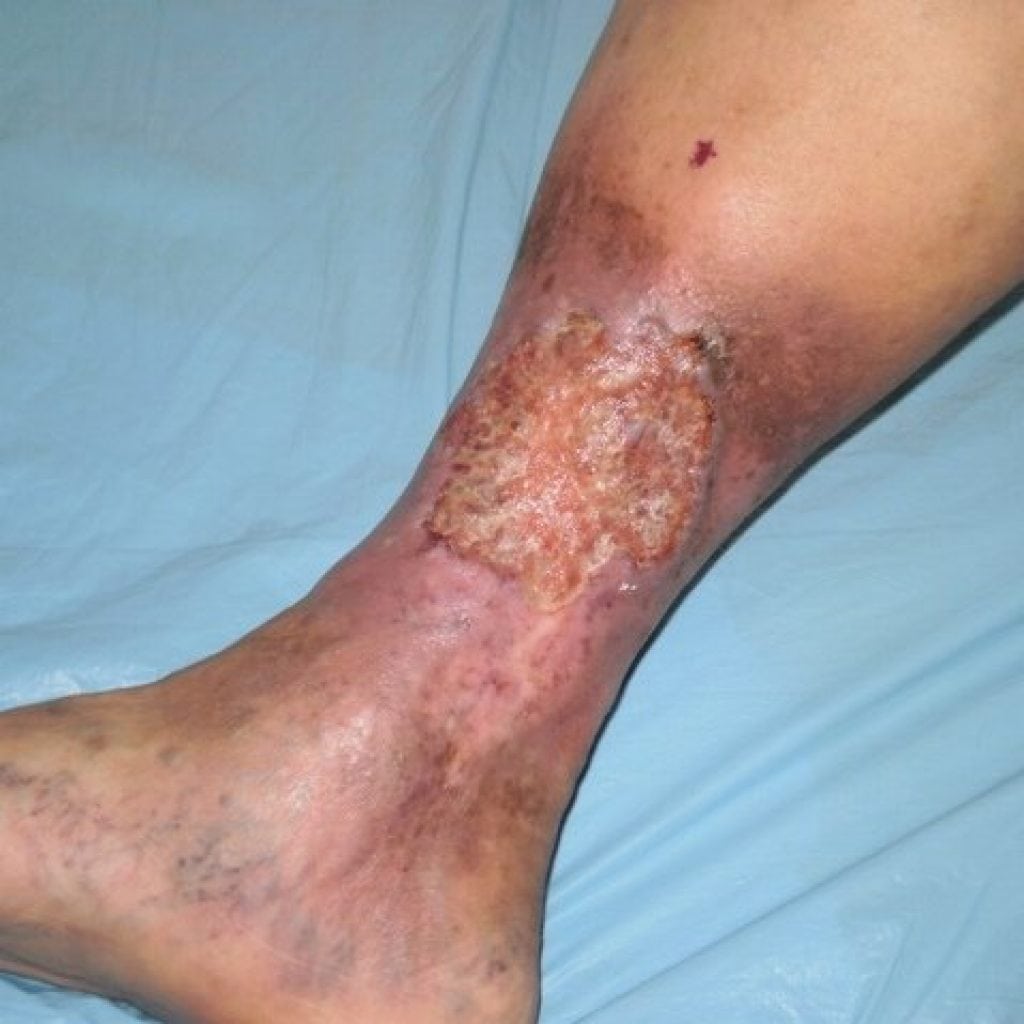
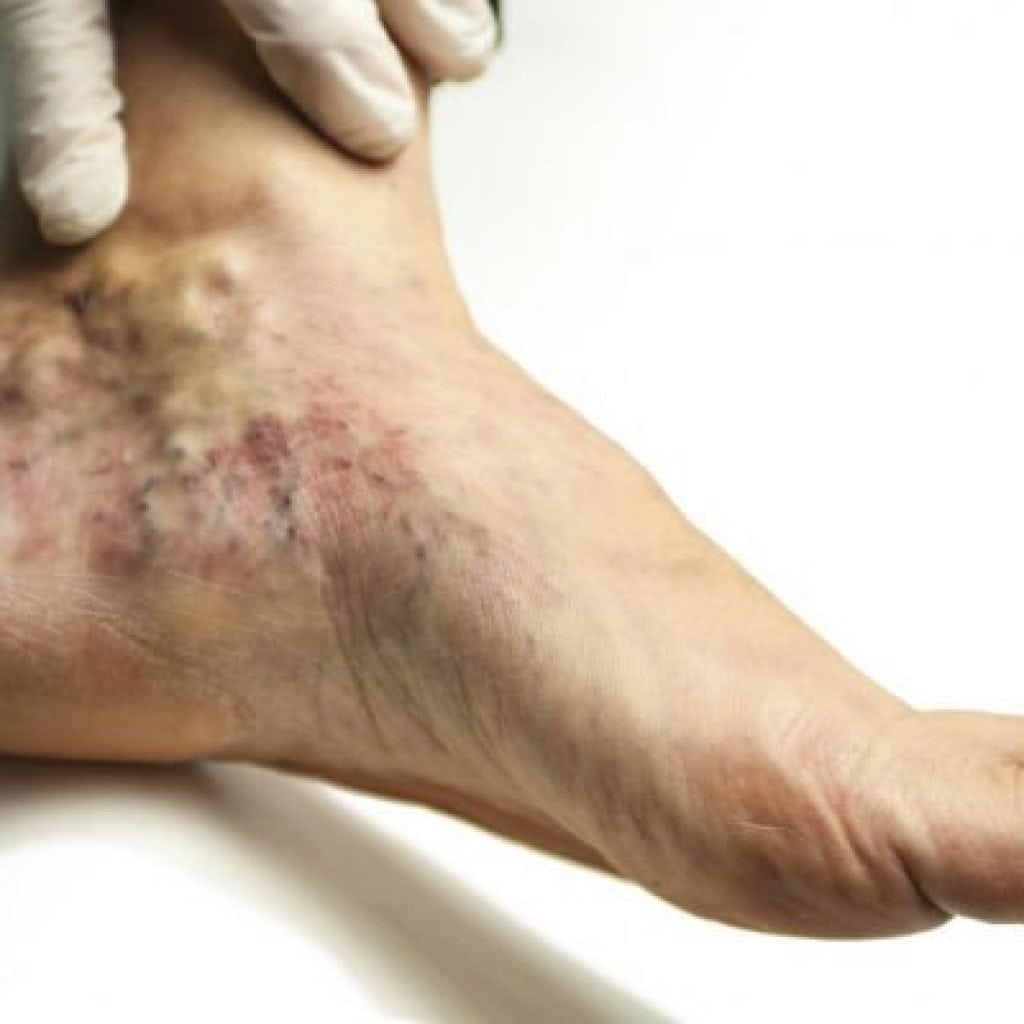
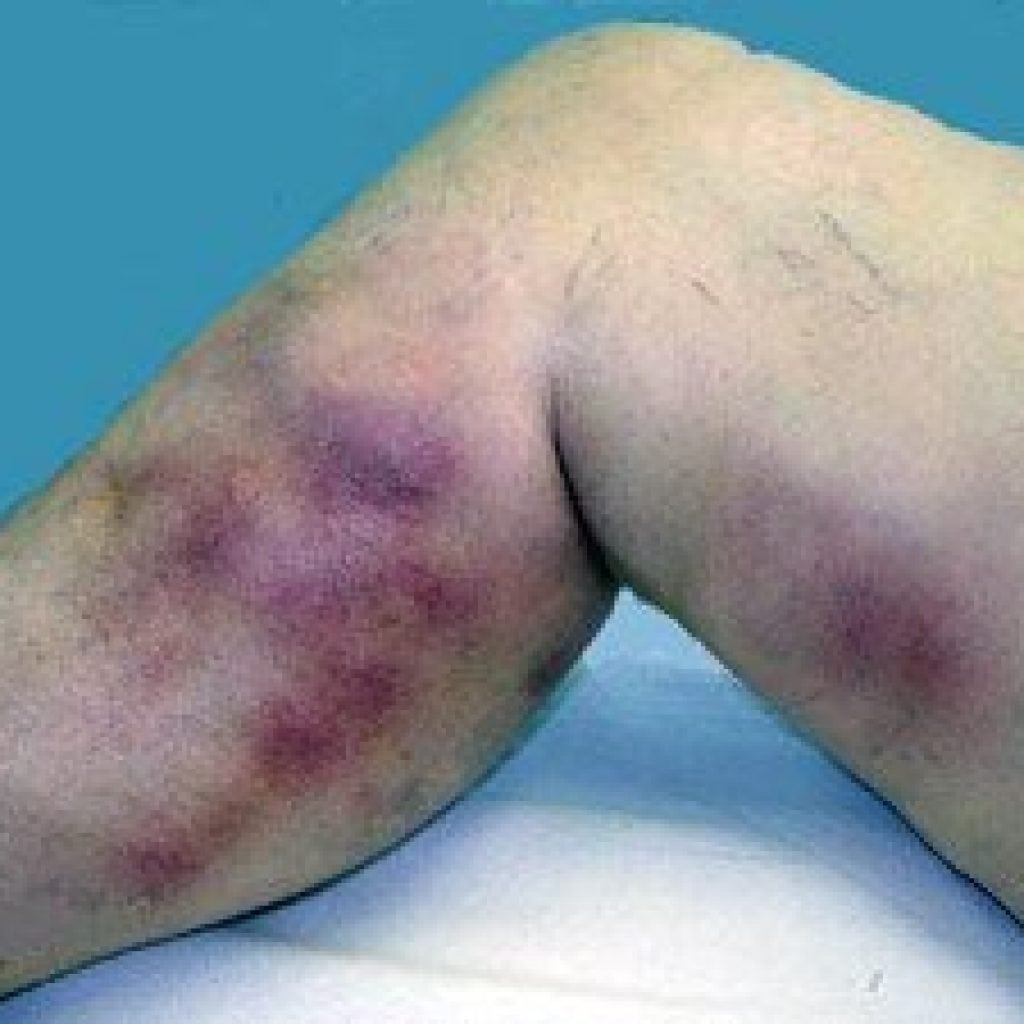
The patient should not ignore the symptoms of an insidious disease, since, in the photo, you can see the consequences. Treatment must be performed in a hospital so that the patient receives a full range of therapeutic therapy.
Read also:Familial hypercholesterolemia
When do you need to visit a specialist?
Thrombosis is classified as a deadly disease that requires mandatory visiting a phlebologist.
Excessively high blood clotting is considered an important factor for urgent medical attention. Moreover, there is no compelling reason for this phenomenon.
Usually alarming pain in the lower limb, a change in the shade of the skin. Cyanosis is not always noted with thrombosis, sometimes the pathology is characterized by excessive pallor at the site of the affected vein.
Why does thrombophlebitis occur?

The disease is referred to as an inflammatory process, which can manifest itself as a complication. varicose veins of the lower extremitiesif not properly treated.
In most cases, thrombosis manifests itself on one side, without affecting the other limb. Inflammation in the problem area occurs precisely due to the formation of phlebolitis.
Factors contributing to the development of thrombosis:
- oncological diseases;
- long bed rest;
- hereditary predisposition;
- high blood clotting;
- constant being in a standing or sitting position;
- old age or overweight;
- period of bearing the child.
Classification according to the form of the course of thrombosis
- Migratory thrombophlebitis. Differs in simultaneous damage to a group of vessels. Inflamed foci occur regularly, but can disappear after a period of time. Moreover, after their resorption, no traces remain from them.
- Acute thrombophlebitis. Able to develop in just a few hours, while all the symptoms will be sharply expressed.
- Chronic thrombophlebitis. The course of the disease is gradual, the development of pathology is almost imperceptible. Exacerbations are rare.
Can deep vein thrombophlebitis be cured?
As soon as the first symptoms of the disease appear, experts suggest the use of therapeutic therapy to eliminate them. Depending on the patient's history, treatment can be conservative or surgical. For the right choice, you will need to get acquainted with the characteristics of the body (below photo and treatment).


Measures to significantly improve the patient's condition:
- The diseased limb should be at rest. It is better that the leg is on a certain elevation in relation to the whole body.
- First aid drugs are considered anticoagulants, they actively fight blood clots, do not allow new blood clots to form. To use such drugs, you need to have hemostasis indicators on hand. Their subsequent control is mandatory. Of the drugs, doctors prefer Warfarin tablets, Fraxiparin and Heparin injections in various forms of release.
- To obtain a high therapeutic effect, it is proposed to use a complex of various drugs. Required to assign patient capsules for pain relief, relieving inflammation, antioxidants, antimicrobial agents, vitamin formulations. Solutions are good for improving the rheological properties of blood.
- The appointment of Pentoxifylline will improve microcirculation.
- Thrombophlebitis of the lower extremities is a complex disease, therefore, to relieve pain and improve the quality of blood clotting, it is not enough to use drugs in the form of an ointment or gel. In addition, pills and injections are always taken.
- After the above manipulations, a new stage of the treatment process takes place. The patient is picked up compression underwear and suggest the presence of active movements in his life. Elastic bandage allows you to relieve puffiness in the problem area and reduce pain. The length is adjusted taking into account the individual characteristics, and the compression is chosen from 23 to 32 mm. rt. st. If the patient has thrombophlebitis in the femoral vein, then they acquire long stockings, they reach the inguinal folds. If it is assumed the constant wearing of such underwear, then the model will not depend on the type of disease. In this case, experts suggest compression-type underwear no higher than the knee joint.
Read also:Symptoms and treatment of cardioneurosis
Such treatment can give good results, the swelling and painful sensations disappear in patients. Physical inactivity always leads to the formation of new blood clots, for this reason the patient is asked to walk more.
If the patient is initially diagnosed with thrombosis of the lower extremities, then he should be on treatment 6 months. Re-manifestation of the disease increases the duration of therapy up to a year. Exacerbation of thrombophlebitis involves hospitalization with bed rest for a duration 10 days.
Physiotherapy treatment of the disease
If the patient does not have individual reactions to leeches, then hirudotherapy copes well with the disease. Already after several sessions, relief of the patient's condition is noted. Of course, professionals are more likely to turn to standard procedures for help.
- magnetotherapy - magnetic fields have a positive effect on the quality of the blood composition;
- electrophoresis - the drug is delivered through the skin using an electric current;
- paraffin applications - have a therapeutic effect if there is a risk of formation trophic ulcer. The acute course of the disease does not imply the use of this therapy;
- UHF - high frequency electric fields have a beneficial effect on the affected area. Stimulation of lymph outflow occurs, blood circulation improves;
What operations are indicated for thrombosis

Provided that conservative therapy did not give a positive result, and the patient has a threat of education embolic complicationsseek help from surgeons.
It is possible to carry out an operation of an open type or endovascular.
- Suturing the lower vein. In the absence of the possibility of filter implantation, the presence of a large number of blood clots or frequent relapses, they resort to this technique. A profile clamp is applied to the area of the pathological site and sewn on. Thus, part of the canal is blocked, only a lumen remains for normal blood flow. Of course, the technique also has a drawback, the outflow of blood mass from the veins of the lower extremities will not be carried out as efficiently.
- Kava filters. These "traps" are set in a vein when blood clots actively move along the vein. The technique has become a salvation for patients who cannot take anticoagulants. When there is no effectiveness from taking medication, the patient is implanted with a filter in the inferior vena cava. Thus, they provide a guarantee against the development of thromboembolism. Most often, the operation is performed through the inferior vena cava, but in the practice of doctors there are cases when the filter was inserted through the superior vein.
- Plication of the inferior vena cava. It involves sewing the wall of the affected vessel with metal staples.
- Thromboectomy. Usually copes well with blood clots in the early stages of thrombosis. If the patient has already developed thrombophlebitis, then such manipulations are prohibited.
- Fogarty catheter. Its installation will allow to remove blood clots, which have not passed a week since their formation. Unsecured clots respond well to this therapy.
After any of the above operations Elastic bandage or compression hosiery is required. It is strictly forbidden to remove them for the first 3 days after surgery. The risk of new clots forming in the affected area is too great.
Despite the many popular advice, you do not need to seek their help! Self-medication with dubious infusions and decoctions can be fatal. Thrombophlebitis should be monitored by a specialist and involves constant monitoring of blood counts.
How to eat with thrombosis?
The effect of treatment will depend on the diet of the patient, since a therapeutic diet is indicated for such patients. Enough fruits and vegetables should be included in the diet. They contain a lot of fiber, and it helps to strengthen the walls of blood vessels.
You should forget about salty and spicy foods, such dishes prevent the natural elimination of fluid from the body. Also, the volume of circulating blood can increase due to junk food, which negatively affects your well-being.
To prevent new clots from forming and help blood thinning, it is important to include in the diet foods that are high in vitamin E. This includes flaxseed oil, fish oil, and seafood. Questions about nutrition and allowed foods should be asked to your doctor, he will give out a memo with tips on a balanced diet.
Read also:Causes of leg swelling in women, men, what to do and how to treat swelling in the legs
Diagnosis of thrombophlebitis

To date, 2 effective methods have been identified for diagnosing the state of blood vessels. Specialists rely on the result of a duplex scan and a blood test for D-dimer.
When the description of a duplex study is not credible, then radiopaque phlebography is to be performed. Also, this technique is referred to if a patient is suspected of having thrombosis above the inguinal fold.
In order for the localization of the thrombus to be accurately determined on the picture, the introduction of contrast through a vein. Such a simple method has more informational content than ultrasound. Special cases involve MRI or CT angiography.
Due to the fact that the manifestation of the disease may be similar to other pathological processes, additional examination is suggested. For example, only the method of differential diagnosis will help to exclude the presence of Baker's cyst, Burger's disease, acute embolism.
Often the soreness of the caviar muscles occurs due to neurological processes in sciatic nerve. Such pain haunts the patient constantly, problems with sensitivity, slight tissue atrophy can be noted.
With tumor processes, arthritis, lymphostasis, myalgia and myositis a similar clinical picture can be noted. For this reason, only a comprehensive examination will help to find the true cause of inflammation and clogged veins.
Preventive measures
After undergoing medical therapy, the patient should not forget about caution. Now he should not wear uncomfortable shoes or clothes that put excessive pressure on the lower limb area. Better to go in for sports, but not power types. It is especially good for overweight patients to take this measure.
The patient must understand that the presence of thrombosis implies a complete rejection of all bad habits. Addictions can lead to dire consequences.
It is noted that it is good to sleep with raised legs, in this position the limbs rest. If there are no contraindications, then it is permissible sometimes to massage the problem area.
From all that has been written, it follows that deep vein thrombosis of the lower extremities does not allow lightheadedness.
Potential complications are too serious to self-medicate. It is important to visit a vascular specialist on time and begin medical therapy. This will help in the future to be an active and cheerful person.
What awaits a patient with thrombophlebitis?
As with any disease, only timely and correct treatment can give favorable prognosis. If the patient did not follow medical therapy after diagnosis, then a fifth of the patients, soon, will receive pulmonary embolism. Unfortunately, in a number of patients in this group, everything ends in death.
Also, untreated thrombosis is insidious, because the next 3 months after such treatment, there is a risk of getting PE. Additional pathology is diagnosed in half of these patients.
Complications of thrombophlebitis include gangrene, heart attack, stroke.
As the patients themselves note, the therapeutic effect reaches its peak if an appeal to a phlebologist was made at an early stage. They do not have time to form multiple clots, which have to be removed radically. But, even neglected cases can end well.
Patients after surgery noted that the rehabilitation period was not long. At the same time, all the problems associated with thrombosis disappeared, and leg diseases for them are a thing of the past.