Acute coronary syndrome: what is it, signs, symptoms, treatment
Content
- What is Acute Coronary Syndrome?
- Epidemiology
- Pathogenesis (mechanism of origin and development of the disease)
- Classification
- Causes and risk factors for acute coronary syndrome
- Symptoms and Signs
- Diagnostics
- Acute Coronary Syndrome Treatment
- Prevention and recommendations
What is Acute Coronary Syndrome?
Acute coronary syndrome (ACS) means a group of clinical manifestations determined by acute myocardial ischemia (ischemic heart disease), that is, a sudden and critical decrease in blood flow in the heart tissue.
The most common cause of this sudden drop in blood flow is rupture or erosion of the “vulnerable” coronary atherosclerotic plaque followed by platelet accumulation and thrombotic overlap followed by a decrease or stopping blood flow.
Epidemiology
Cardiovascular disease is the leading cause of death and morbidity in Western countries; their prevalence is gradually increasing due to the increase in average life expectancy.
It is estimated that in one year more 135,000 people suffered from coronary heart disease and 45,000 of them died from it.
Pathogenesis (mechanism of origin and development of the disease)
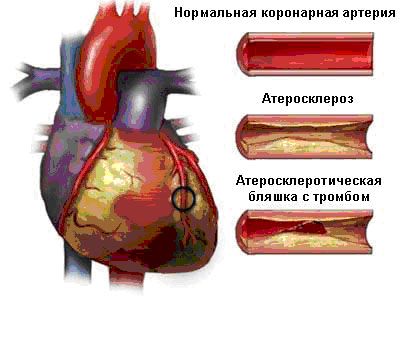
Atherosclerotic coronary artery disease (chronic changes in the coronary arteries) is a progressive process characterized by the appearance of atherosclerotic plaques.
Under normal conditions, the inner surface of the arteries is smooth; when cholesterol is deposited on the inner walls an atherosclerotic plaque formsthat can grow in size over time (a stable plaque).
When the surface of the plaque torn (vulnerable plaque), the blood stream comes into contact with the contents of the plaque itself, triggering the processes coagulation and activation of platelets with the subsequent formation of a thrombus, this causes blockage or subocclusion arteries, obstructing blood flow and thus the supply of oxygen and substrates to the pulverized heart muscle.
When the thrombotic artery is a completely closed epicardial vessel, approximately starts in 15 minutes spicy myocardial infarctionstarting with the endocardium and ending with the epicardium; if platelet phenomena predominate and the artery is partially clogged, then an unstable angina.
The extent of ischemia also depends on the presence or absence of side effects and myocardial oxygen consumption.
Classification
Acute coronary syndromes can be classified according to the degree and duration of stenosis / occlusion, as well as the amount of myocardial tissue that turns into necrosis, in the following clinical pictures:
- Unstable angina: This is acute myocardial ischemia without significant myocardial necrosis.
- Acute myocardial infarction without lifting segment ST (myocardial infarction without elevation ST segment, STEMI): a picture of less severe infarction due to acute myocardial ischemia associated with subendocardial myocardial necrosis; in this case, the indicators of necrosis are higher than normal.
- Acute myocardial infarction with elevation segment ST (elevated myocardial infarction ST segment, STEMI): the most severe picture of a heart attack; it is caused by acute myocardial ischemia associated with full thickness myocardial necrosis, with a significant increase in necrosis rates.
Read also:Pericarditis, what is it, causes, symptoms and treatment in adults
Causes and risk factors for acute coronary syndrome
The main causes and risk factors are:
- Heredity: Having coronary heart disease in a parent or sibling increases the risk of acute coronary syndrome.
- Floor: in men it is more common coronary heart disease, but only in comparison with women of childbearing age do estrogens have a protective effect against this disease; Postmenopausal women, on the other hand, have the same risk as men.
- Age: Acute coronary syndrome usually occurs after 45 years of age.
- Smoking: among heavy smokers (more than 15 cigarettes a day) aged 45 to 54 years, the risk of death from coronary heart disease was estimated three times higher than among nonsmokers; this is due to both direct exposure to smoke itself and a decrease in exercise tolerance.
- Arterial hypertension: Determination of blood pressure equal to or greater than 140 mm Hg. maximum (systolic) pressure and 90 mm Hg. minimum (diastolic) pressure.
- Diabetes.
- Obesity: is a chronic disease characterized by one or more of the following parameters: body mass index - BMI = 30 kg / m² - body weight over 30% compared to ideal weight - plyometric measurement of values above the 95 ° percentile. Central or abdominal obesity is associated with an increased risk of coronary heart disease.
- Hypercholesterolemia: in particular, high levels of low density lipoprotein (LDL), low levels of high density lipoprotein (HDL), and an LDL / HDL ratio> 3.
- Hyperhomocysteinemia: Excessive presence of homocysteine in the blood (normal values: <13 μmol / L) is considered an important and independent risk factor for cardiovascular disease. It is promoted by unhealthy diet: a diet rich in fats.
- Sedentary life: poor physical activity.
- Restless, nervous life.
Symptoms and Signs
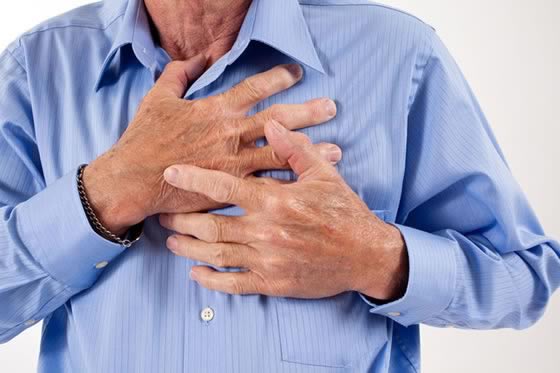
The main symptom of acute coronary syndromes is chest pain. Pain has been reported with depressing and constricting characteristics such as tightness, heaviness, choking, and chest pain.
The most frequently mentioned site is the retrosternal, with an impact on epigastrium, left arm (elbow side), shoulder, neck, jaw, back and right arm.
If the duration of the pain is less than 20 minutesthis is usually unstable angina; if instead the duration of pain symptoms exceeds 20 minutesit is likely that it is a heart attack, that is, myocardial necrosis; if pain continues for several hours with variable intensity, it may be myocardial infarction with wall necrosis (STEMI).
In addition, the patient may complain about shortness of breath (usually associated with heart attack). Neurovegetative symptoms are also associated with pain, such as:
- nausea;
- vomit;
- cold sweating;
- prostration;
- feeling of pain.
Read also:VBN: what is it, causes, symptoms and treatment of the disease
In 30% of cases, especially in diabetics or the elderly, neurovegetative symptoms may be present in the absence of pain. In some cases, acute coronary syndrome is possible without pain: for these patients, the diagnosis is made retrospectively, during instrumental studies such as ECG, scintigraphy or echocardiographythat reveal tissue necrosis.
Diagnostics
The diagnosis of acute coronary syndrome is based on anamnestic collection, symptomatology, presented by the patient, ECG and blood tests for the study of enzymes, indicators necrosis of the heart. These studies are needed to distinguish patients with acute ST-segment elevation myocardial infarction. (STEMI) from patients with acute ST-elevation myocardial infarction (STEMI) and other patients with unstable angina pectoris.
- Symptoms: with the so-called "chest pain assessment" it is possible to assess whether the chest pain is associated or not heart failure, its application includes assigning an assessment to the location, nature, irradiation of pain and any associated symptoms.
- Electrocardiogram (ECG): Plays a fundamental role in the diagnosis of acute coronary syndromes. The ECG allows you to diagnose a heart attack, but also approximately its position and its expansion. Electrocardiogram in STEMI, characterized by an ECG change in transmural infarction, that is, by the entire thickness of the heart muscle, is an elevation of the ST segment> 1 mm with a bulge directed up. The appearance of pathological Q waves. Electrocardiogram for STEMI and unstable angina, a characteristic ECG change, in the case of unstable angina or STEMI, is ST segment subtraction> 1 mm.
-
Blood test. Heart cells (myocytes), when they undergo necrosis, release certain substances (enzymes or proteins), that can be detected and measured in blood, repeated dosage of which can provide fundamental clinical indications. Most used enzymes:
- Troponin (Tn): This is a very sensitive cardiac specific marker. In the case of myocardial infarction, troponin T increases in serum 2–4 hours after the onset of symptoms, with the highest peak at 8–12 hours, remaining high until about 14 days.
- CK-MB creatine kinase: a marker of cardiac necrosis; its values are high approximately 3-8 hours after the onset of pain. It can remain detectable for a long time.
- Lactate dehydrogenase (LDH): useful in the diagnosis of myocardial infarction when the patient reaches late observation, since its maximum peak occurs after 4-5 days, and the value remains high during 15-20 days. Aspartate aminotransferase: peak visible after 36 hours, returns to normal after 5-6 days.
- Myoglobin: This is a very early marker of cardiac necrosis that can be traced several hours after the onset of symptoms, peaking after 4-12 hours and returning to normal after about 24 hours.
Acute Coronary Syndrome Treatment
Treatment of acute coronary syndromes involves the use of numerous medications:
- oxygen injection,
- analgesics,
- platelet anti-platelets,
- anticoagulants,
- beta blockers,
- ACE inhibitors,
- calcium antagonists.
Read also:Sudden cardiac arrest
Patients with full-thickness necrosis myocardial infarction (STEMI) also need to rapidly restore blood flow to the blocked coronary artery: this can be done with fibrinolytic therapy or percutaneous coronary revascularization: by coronary angioplasty, that is, by mechanical recanalization with or without a stent implant of the vessel responsible for the infarction.
Percutaneous transluminal coronary angioplasty (PTCA - percutaneous coronary angioplasty or PCI - percutaneous coronary intervention) is an interventional cardiac procedure that can be used to reanalyze most coronary stenosis.
Angioplasty precedes and is associated with coronary angiography, which allows visualization of the coronary arteries. It involves the use of a thin catheter that is inserted through an artery that reaches the heart. At the tip of the catheter is a balloon (balloon), which is placed (under X-ray control) in the center coronary stenosis and then inflated to compress plaque deposits within the coronary artery, thereby repairing blood flow.
During surgery, coronary stents can be placed, that is, "expandable" tubules in a metal mesh, which are left to hold the artery. Also used are drug stents, which, in addition to being a structural support for the coronary artery, have a drug coating that helps prevent vascular restenosis. A cardiologist will tell you more about these procedures.
Prevention and recommendations
By embarking on a healthy lifestyle, you can make a significant contribution to reducing certain risk factors associated with acute coronary syndromes and associated ischemic heart disease. It is advisable to adhere to the following recommendations:
- quit smoking;
- limit alcohol consumption;
- exercise regularly. To reduce the risk of cardiovascular disease, it is recommended that you take moderate physical activity, such as walking, for at least 30 minutes a day and at least 5 days a week;
- losing weight and maintaining weight. The goal is to achieve a body mass index (BMI) of 18.5 - 24.9 kg / m²;
- Eat a healthy diet: Maintain your intake of fruits and vegetables, avoiding excessive consumption of red meat; in particular, limit the intake of saturated fatty acids and introduce polyunsaturated fatty acids into the diet;
- keep stress in check.
Particular attention should be paid to prevention in patients who are familiar with early coronary artery disease or are suffering from diseases that may be associated with heart problems such as arterial hypertension, hyperlipidemia, diabetes.
It is important to follow the indications and pharmacological therapy suggested by your doctor to reduce the risk of serious complications.