Unstable angina: what is it, symptoms and treatment, causes, prognosis
Content
- What is unstable angina?
- Symptoms of unstable angina
- Cause of unstable angina
- Diagnostics
- ECG and heart enzymes.
- Treatment of unstable angina
- Medications
- Possible invasive intervention.
- Prophylaxis
- Forecast for life
What is unstable angina?
Unstable angina is acute coronary syndromein which the heart does not receive enough blood flow and oxygen, as a result of a blockage in an artery.
Unstable angina causes random or unpredictable chest pain as a result of partial blockage of the artery that supplies the heart. Unlike stable angina, pain or discomfort from unstable angina often occurs during rest, lasts longer, does not weakens with medication and is not associated with any obvious cause, such as exercise or emotional stress.
Diagnosis of unstable angina pectoris, a form of acute coronary syndrome (ACS), is often carried out in the department emergency care and requires identifying a combination of symptoms in a patient, conducting an electrocardiogram (ECG) and analysis blood.
Treatment entails taking medications to relieve chest pain and associated ischemia (when the heart is not getting adequate blood flow). Medications are also given to stop the formation of a blood clot in the affected artery. In some cases, an invasive procedure called stent angioplasty (when a closed artery is opened) is required.
Symptoms of unstable angina

Classic symptoms of angina pectoris include chest pressure or pain, sometimes constricting or "heavy" in nature, often radiating to the jaw or left arm.
Keep in mind, but, that many patients with angina do not have classic symptoms. Their discomfort can be very mild and localized to the back, abdomen, shoulders, or one or both arms. Nausea, dyspnea or just a feeling heartburn may be the only symptom.
Basically, this means that anyone who is middle-aged or older, especially anyone with one or more risk factors for developing coronary heart disease (CAD) should be alert for symptoms that may represent angina pectoris.
In addition, people without any history of coronary artery disease may also develop unstable angina. Unfortunately, these people are at increased risk heart attackbecause they often don't recognize the symptoms as angina pectoris.
As a result, anyone with a history of coronary artery disease should suspect unstable angina if symptoms occur in the following situations:
- at lower levels of physical activity than usual;
- during rest;
- lasts longer than usual, or appears especially at night;
- Symptoms do not improve with nitroglycerin (a medicine that relaxes and dilates the coronary arteries).
An important appeal.
If you think you may have unstable angina, you should see your doctor or emergency department right away.
Cause of unstable angina
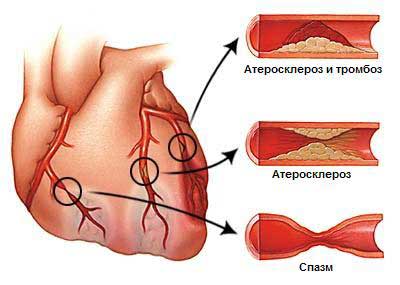
Unstable angina is "unstable" because, as with all forms of acute coronary syndrome (ACS), it is most often caused by actual rupture of plaque in the coronary artery.
Read also:Exertional angina
In unstable angina, the plaque and blood clot, which is almost always associated with a rupture, creates a partial blockage of the artery. This partial blockage can create an occlusion (as the blood clots grow and narrow), causing unpredictable angina that comes and goes unpredictably.
If a clot causes complete blockage in an artery (which it usually does), the heart muscle supplying that affected artery is in serious danger of irreversible damage. In other words, the inevitable risk myocardial infarction (heart attack) is very high in angina pectoris.
Obviously, this condition is rather "unstable" and therefore requires immediate emergency medical attention.
No visible trigger / unpredictable pattern.
Looking deeper into the meaning, unstable angina is considered “unstable” because it no longer follows the predictable patterns typical of “stable angina”.
First, unlike stable angina, symptoms of unstable angina occur in a more random and unpredictable manner. More specifically, while the symptoms of stable angina are usually caused by exertion, fatigue, anger, or other a form of stress, with unstable angina, symptoms can (and often do) occur without any obvious trigger mechanism.
In fact, unstable angina often occurs at rest and can even wake a person up from restful sleep. In addition, with this form of angina, symptoms often persist for more than a few minutes.
To summarize.
Unstable angina is "unstable" because symptoms may occur more frequently than usual, without any discernible trigger, and may persist for a long time.
Diagnostics
Symptoms are critical in the diagnosis of unstable angina or any other form of acute coronary syndrome (ACS).
In particular, if one or more of the following three symptoms are present, the doctor should take it as a strong indication that a particular type of ACS is occurring:
- resting angina, especially if it lasts more than 10 minutes at a time;
- an attack of angina pectoris markedly limits the ability of any physical activity;
- progression of previously stable angina pectoris, with episodes that are more frequent, prolonged, or with less stress than before.
As soon as the doctor suspects ACS, he should immediately get the results of an electrocardiogram (EKG) and blood tests to study heart enzymes.
ECG and heart enzymes.
If a portion of the ECG known as "ST segments" is elevated (indicating that the artery is completely blocked) and heart enzymes enlarged (indicating damage to the heart cell), diagnosed with "extensive" myocardial infarction (also called "MI with elevation segment ST ").
If ST segments are not elevated (indicating that the artery is not completely blocked), but cardiac enzymes are elevated (which indicates the presence of cell damage), a “lesser” myocardial infarction is diagnosed (also called “MI without segment elevation ST ").
Read also:Vasovagal syncope
If the ST segments are not elevated and the enzymes are normal (meaning that the artery is not completely blocked and there is no damage to the cells), unstable angina is diagnosed.
Notably, unstable angina and "STEMI" are similar conditions. In each condition, plaque rupture has occurred in the coronary artery, but the artery is not completely blocked, so at least some blood flow remains.
In both of these conditions, symptoms of unstable angina are present. The only difference is that in non-ST-segment elevation MI, there is enough damage to heart cells to cause an increase in heart enzymes.
Important information.
Because unstable angina and non-ST-segment elevation MI are very similar, treatment is identical.
Treatment of unstable angina
If unstable angina or "non-ST-segment elevation MI" is present, one of two general approaches will be suggested:
- Aggressive drug treatment to stabilize the condition, followed by non-invasive testing.
- Aggressive treatment with drugs to stabilize the condition and early invasive intervention (usually angioplasty and stenting).
Medications
There are three main types of drugs used to treat unstable angina - anti-ischemic drugs, antiplatelet drugs, and anticoagulant drugs.
Anti-ischemic drugs.
Sublingual nitroglycerin, an anti-ischemic agent, is often prescribed to relieve any ischemic chest pain.
For persistent pain, nitroglycerin can be administered intravenously (via a vein), provided that there are no contraindications (for example, low blood pressure). Morphine can also be prescribed for persistent pain.
A beta-blocker, another anti-ischemic drug, will also be prescribed, provided that there are no contraindications such as signs of heart failure.
Note.
A beta blocker can lower a person's blood pressure and heart rate, which, when high, increase the heart's need for oxygen.
Finally, a cholesterol-lowering drug, a statin drug such as atorvastatin or rosuvastatin, will be prescribed.
Note.
Statins have been found to reduce the incidence of heart attacks, death from coronary heart disease, the need for myocardial revascularization, and stroke.
Antiplatelet drugs.
Antiplatelet agents will be prescribed to prevent platelet clumping. These include both aspirin and a P2Y12 platelet receptor blocker — either Plavix (clopidogrel) or brilinita (ticagrelor).
Anticoagulants (blood thinners) like unfractionated heparin (UFH) or lovenox (enoxaparin) may also be prescribed.
Possible invasive intervention.
After stabilization with medication, the cardiologist will decide whether the patient needs an invasive procedure, usually angioplasty with stenting - a procedure (also called percutaneous coronary intervention, or PCI), in which a partially blocked artery is first unblocked with a balloon catheter and then inserted permanently with stent.
Determining whether angioplasty and stenting should be performed is a very important decision. One tool that many cardiologists use to make this decision is called the TIMI (Thrombolysis for Myocardial Infarction) scale.
Read also:Symptoms and treatment of cardioneurosis
TIMI score is based on the following risk factors:
- age 65 or older;
- the presence of at least three risk factors for the development of coronary heart disease (arterial hypertension, diabetes, dyslipidemia, smoking, or a positive family history of early myocardial infarction);
- preliminary blockage of the coronary artery by 50 percent or more;
- at least two episodes of angina in the past 24 hours;
- increased heart enzymes;
- use of aspirin in the past seven days.
TIMI scoring.
Low TIMI (0 to 1) indicates a 4.7% likelihood of an adverse cardiovascular outcome (eg, death, heart attack, or severe ischemia requiring revascularization).
High TIMI score (6 to 7) indicates a 40.9 percent chance of an unfavorable cardiovascular outcome and thus almost always requires early percutaneous coronary intervention.
Prophylaxis
Some studies have shown that making a few lifestyle changes can prevent the blockage from getting worse and even improve it. Lifestyle changes can also help prevent some angina attacks. Recommended:
- lose weight, if any;
- quit smoking;
- exercise regularly;
- drink alcohol only in very moderation;
- Eat a healthy diet high in vegetables, fruits, whole grains, fish, and lean meats.
Doctors also advise keeping other health conditions under control, such as high blood pressure, diabetes, and high cholesterol.
If there are one or more risk factors for heart disease, talk to your doctor about taking aspirin or other medications to prevent a heart attack.
Therapy with aspirin (75 to 325 mg per day) or drugs such as clopidogrel, ticagrelor, or prasugrel can help prevent heart attacks in some people. The use of aspirin and other blood thinners is recommended if the benefits may outweigh the risk of side effects.
Forecast for life
Unstable angina is a sign of more severe heart disease.
How good the forecast will be depends on many factors, including:
- how many and which arteries in the heart are blocked, and how severe the blockage is;
- whether you have ever had a heart attack;
- how well the heart muscle pumps blood into the body.
Heart rhythm disturbances and heart attacks can lead to sudden cardiac death.
If you experience new or worsening chest pains that do not go away with rest or medication, you should go to the emergency room right away. Even if the pain is not related to the heart, it doesn't matter. It is much better to be careful and safe than to risk your life.