Strabismus: what is it, causes, symptoms, treatment, complications
Content
- What is strabismus?
- Visual system
- Causes of strabismus
- Classification
- Strabismus symptoms
- Effect of strabismus on visual ability
- Diagnostics
- Strabismus treatment
- Surgery
What is strabismus?
Strabismus is a fairly common defect characterized by a lack of alignment between the two visual axes of the eyes. Clinically, one of the two eyes appears to be deviated from the other, which instead maintains the correct position; less often, both eyes appear to be oriented in different directions.
Strabismus can affect both children and adults:
- In children it occurs in about 2% of cases and usually appears early (before 5 years of age), usually due to heredity or the presence of uncorrected refractive vision problems. Up to 6 months of a child's life, strabismus is normal, after which, in case of persistence, it becomes necessary to consult a doctor for the correct diagnosis and correction; even if a small patient does not complain of visual impairment, a squint eye may eventually develop into "lazy eye».
- In adults and the elderly this defect is usually associated with latent decompensated strabismus or paralysis of the oculomotor muscle as a result of inflammation, trauma, or nerve damage. The patient shows diplopia, that is, he double vision.
Visual system
It is often thought that strabismus is only an aesthetic problem: in fact, it is not! For example, parents go to the doctor, thinking that it will be unpleasant to look at the child's crooked eyes, and ignore an important point:
a crooked eye is an eye that does not see well.
Our vision depends on proper alignment of the eyeballs and on the good functioning of two visual systems that interact with each other: the motor system and the sensory system.
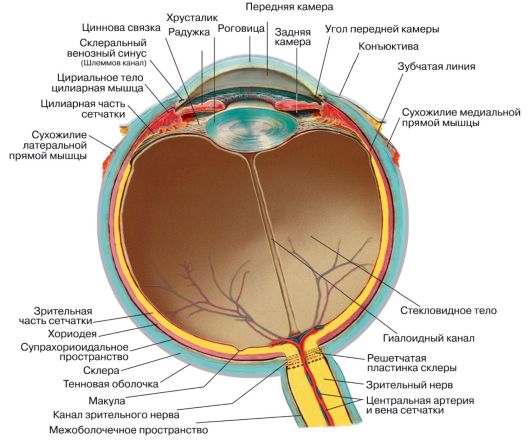
Our eyes move in all directions thanks to the presence of 6 muscles in each eye:
- 4 rectus muscles,
- 2 oblique muscles,
which allows us to move them:
- above (superior rectus muscle),
- below (lower rectus muscle),
- sideways (internal and external muscles of the rectus muscle)
- and obliquely (upper and lower oblique muscles).
When we observe an object, the eyes move together in the direction in which the object is. The muscles in one eye act as antagonists to the muscles in the contralateral eye: for example, if we turn our gaze to the left, the external rectus muscle of the left eye and the internal rectus muscle of the right eye moving together.
However, without a sensory system, the correct position of the eyes cannot be guaranteed, as well as the focusing of the image, which occurs in that part of the eye called the fovea of the retina. In fact, we see through a complex mechanism that includes:
- retina and retinal fossa;
- optic nerves;
- optical chiasm;
- optical radiation;
- visual nerve pathways;
- the occipital lobe of the brain.
What we observe in our environment from a light stimulus becomes an electrical impulse and eventually turns into an image.
You may ask how it is possible that when observing an object with two eyes, this information reaches the brain in the form of one image, and not, for example, two images. The ability to see one image with two eyes is called binocular vision and is explained as follows: if our eyes are straight, both observing (or rather fixing) an object at the same point, called the "fixation point" (or for being more technical, visual axes, then there are imaginary lines that connect the pits of the retina of each eye with the object that we observe, converge in approximately the same point of the object). Single binocular vision is maintained at any viewing position.
Read also:Redness of the eyes: causes and treatment
Thus, each eye is stimulated during observation at the corresponding points of the retina, which allows the brain to merge two images from each eye into one image. In fact, the points of the retina, which the image we observe falls into, do not quite correspond to two eyes, and there is a small degree of discrepancy, and it is thanks to this small discrepancy that we can not only see object, but also see it in three dimensions (stereopsis).
Thanks to this, people with direct eyes can observe the object and correctly see its shape, position, color and depth.
Causes of strabismus
Strabismus can be caused by various reasons and factors that depend on the person's age.
In adults, the causes of strabismus are:
- head injury;
- vascular diseases;
- infections;
- degenerative diseases of the nervous system;
- stroke;
- brain tumors;
- thyroid disease (Graves disease);
- decompensated diabetes;
- myasthenia gravis;
- eye diseases (cataract, ptosis ..).
In a child, the causes of strabismus are:
- refractive visual impairment (myopia, hyperopia, astigmatism);
- amblyopia;
- Down syndrome.
Less often:
- retinoblastoma;
- congenital cataract;
- neurological damage to the fetus;
- premature birth of the mother;
- hydrocephalus;
- cerebral paralysis.
Classification
Strabismus can be classified based on some characteristics, such as:
-
Frequency:
- Intermittentif it appears occasionally depending on the position of the gaze.
- Constant, that is, it is always present regardless of where the gaze is directed.
-
Age of onset:
- Congenitalif present at birth or develops at an early age.
- Acquiredif the disease appears in adulthood or in the elderly.
-
Place of origin:
- Unilateralif it only affects one eye.
- Bilateralif it affects both eyes.
-
Pathogenetic mechanism:
-
Conjugate squint, more often in children: the eye muscles are functioning, but normal binocular vision is altered due to a deficit in the balance between the sensory and muscular systems. The brain can still maintain its picture fusion ability, and the eye can only deviate under certain conditions (latent squint). If the brain's ability to fusion is interrupted, the eye will always look askew wherever you look (obvious squint). There are 3 types of concomitant strabismus: accommodative, tonic and mixed.
- With accommodative strabismus, a change in the convergence / accommodation ratio of the eyes is observed, as usually due to uncorrected refractive visual impairments (such as hyperopia) in favor of accommodation.
- In tonic strabismus, a change in the convergence / accommodation relationship promotes convergence.
- With mixed strabismus, both accommodative and tonic components coexist.
- Paralytic strabismus, common in adults and the elderly: due to paralysis of the ocular muscle, due to various reasons, there is a deviation of the eye depending on position of the gaze, that is, relative to which eye movement is no longer allowed, since the muscle that created mobility is now paralyzed.
-
Conjugate squint, more often in children: the eye muscles are functioning, but normal binocular vision is altered due to a deficit in the balance between the sensory and muscular systems. The brain can still maintain its picture fusion ability, and the eye can only deviate under certain conditions (latent squint). If the brain's ability to fusion is interrupted, the eye will always look askew wherever you look (obvious squint). There are 3 types of concomitant strabismus: accommodative, tonic and mixed.
-
Direction of deviation of the eye:
- Convergent (or esotropia), if the eye is directed inward, towards the nose.
- Divergent (or exotropia), if the eye is deflected outward, towards the temples.
- Vertical (less common) if the eye looks up (hypertropia) or down (hypotropia).
Read also:Glaucoma symptoms and treatment
Strabismus symptoms
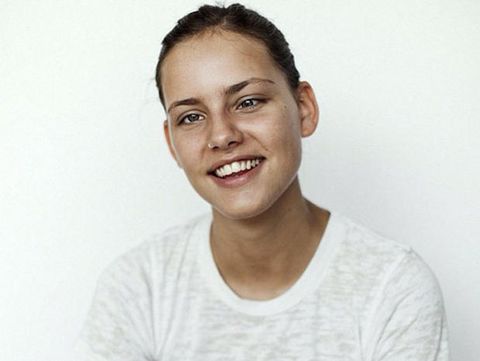
Infantile strabismus usually appears before the age of five.
In forms of pronounced strabismus, parents usually first notice that their child has a deviation in the position of one eye from the other. In milder forms of strabismus, the defect can be detected by an ophthalmologist during examination. In very young children, squint can be detected when, by moving an object in front of him, a person realizes that he cannot follow him with both eyes.
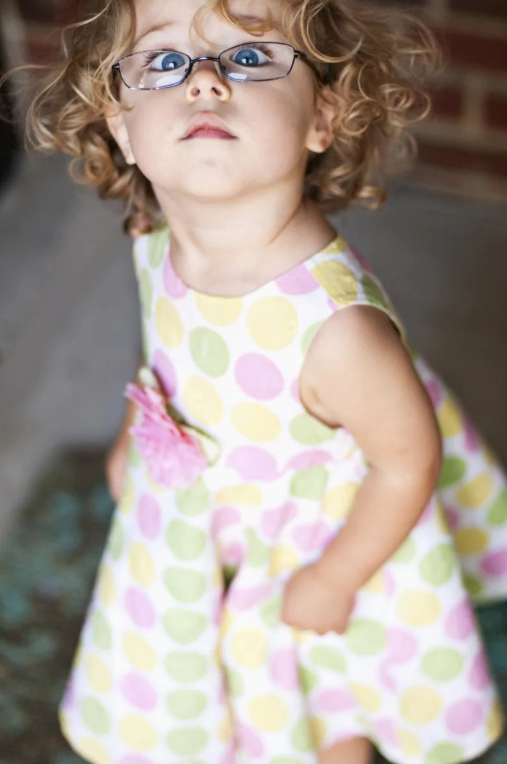
Children, as a rule, do not complain of visual impairments due to the compensatory mechanisms of the brain (suppression of the image transmitted by the deviated eye). However, in some cases, the child may develop some symptoms due to overuse of the healthy eye compared to the squint, for example:
- frequent headaches;
- slight irritation (photophobia);
- the habit of squinting or tilting your head to the side when reading or looking at something;
- feeling tired eyes.
In adults, the symptoms of strabismus are:
- diplopia (double vision);
- blur or contrast of images;
- loss of depth of observed objects;
- difficulty reading;
- tired eyes;
- dizziness;
- disorientation in space.
In very rare cases, sudden behavioral changes may occur that cannot be justified in any other way, or frequent and severe headaches, which should always be referred to a doctor in order to rule out serious causes of strabismus (especially in the forms of recent start).
Effect of strabismus on visual ability
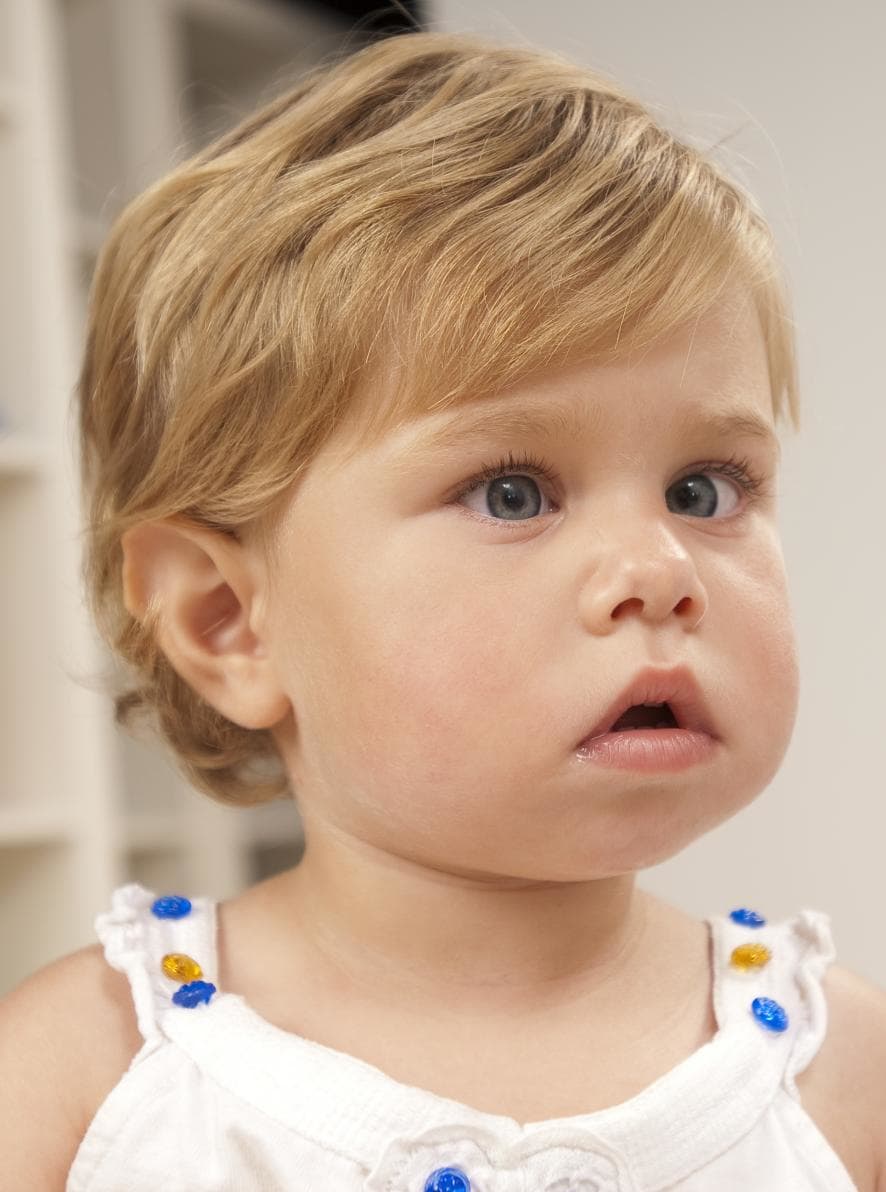
If the eyes are not aligned, the deviated eye transmits an image to the brain that is distinct from the image of the other eye, since the stimulated points of the retina of both fossae (healthy and cross-eyed) no longer correspond to each friend.
In this case, the brain will not be able to properly merge the two visual images, and a person with strabismus will develop diplopia. It is more common in adults and the elderly.
In children, on the other hand, the brain, not yet accustomed to using images from both eyes, can spontaneously suppress the image transmitted by the squint the eye, and this is the reason why diplopia does not appear in them: if, however, this suppression is neglected for a long time rejected the eye (weaker and underutilized) does not develop or loses visual acuity until it develops into amblyopia, which can become irreversible problem.
Diagnostics
The doctor who assesses the presence of strabismus is an ophthalmologist.
The medical examination begins with the collection of the patient's medical history and includes:
- date of onset and frequency of eye deviations;
- the presence or absence of diplopia;
- the presence of amblyopia;
- annotation of any prenatal, perinatal and postnatal pathologies;
- acquaintance with strabismus (were there other cases of strabismus in the family?);
- whether there was surgery on the extraocular muscles. If so, why?
- the presence of genetic diseases;
- the presence of other pathologies.
Read also:Corneal edema
In children, strabismus may be associated with one or more of the following conditions that the doctor should evaluate at the time of diagnosis:
- premature birth;
- low birth weight;
- Down syndrome;
- developmental delays;
- craniofacial syndromes;
- fetal alcohol syndrome;
- unilateral eye disease;
- cerebral paralysis.
At this stage, we move on to the actual eye examination, in which the specialist first observes any malformations and / or abnormal head postures. Then examine the eyes, evaluating, in particular:
- how well the patient sees;
- alignment of visual axes;
- eye mobility and eye muscle function;
- possible presence nystagmus;
- sensory state;
- any refractive defects (myopia, hyperopia, astigmatism);
- fundus (retina and optic nerve).
Strabismus treatment
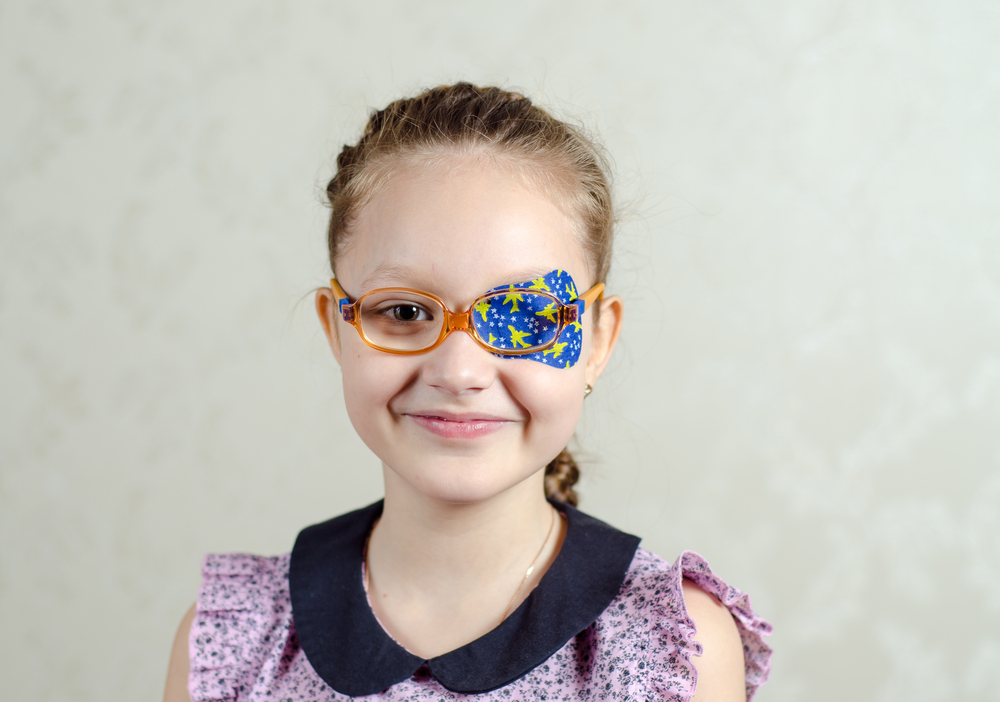
Strabismus treatment is directed to:
- to correct the defect that caused the squint (if possible);
- so that a person can see well with both eyes;
- to align the eyeballs.
In children, strabismus should be treated as early as possible so that amblyopia does not become permanent; therapy includes wearing a bandage on a healthy eye patient to induce lazy eye work harder, hoping in this way to improve vision and therefore align the eye.
Corrective lenses are prescribed in cases of strabismus due to a refractive error or paralytic strabismus. Thus, it is possible to obtain a complete or partial correction of strabismus.
Some eye exercises can be recommended to improve the functionality of the eye muscles and stimulate the brain and eyes.
In the presence of systemic diseases (such as diabetes mellitus) as possible causes of strabismus, adequate medical treatment of the latter is necessary. In these cases, spontaneous resolution of strabismus can occur in less than a year.
Surgery
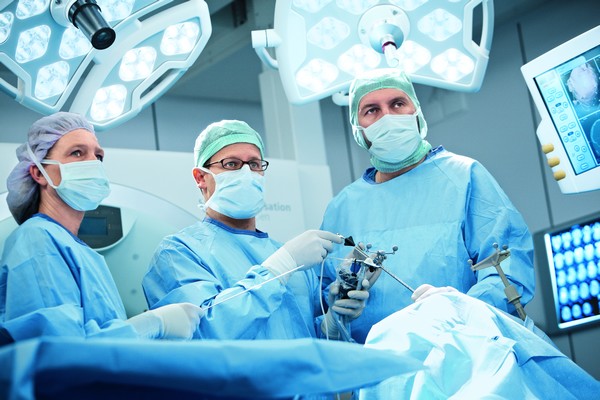
Surgical treatment is rarely prescribed, as a rule, the operation is limited to cases of strabismus with persistent ocular abnormality and / or if other treatments have not produced encouraging result.
For example, a surgeon may weaken over-working eye muscles or strengthen those that are not working well. The results of this intervention are generally good.
Children under the age of 2-3 years are not allowed to operate.
Currently, one of the most practical interventions for strabismus is minimally invasive surgery: the surgeon creates a small hole in the conjunctiva of the eye and performs plastic surgery, that is, shortens the eye muscle, folding it back onto myself. This alters the force with which the muscles move the eyeballs and align the visual axes. This surgical technique minimizes the most common post-operative abnormalities such as redness, inflammation and pain in the eyes, shortening the recovery time, which with traditional surgery is about 1-2 weeks.
Before performing surgical treatment, the patient (or the parents of the small patient) should be are informed about the possible side effects and complications associated with surgical therapy, For example:
- pain;
- redness of the eyes;
- swelling of the eyelids;
- diplopia;
- decreased vision;
- infections;
- eye bleeding;
- abrasion of the cornea;
- retinal detachment;
- anesthetic complications.