Hyperopic astigmatism: what is it, symptoms, treatment
Content
- What is Hyperopic Astigmatism?
- Causes of hyperopic astigmatism
- Classification
- Degrees of development of hyperopic astigmatism
- Symptoms of hyperopic astigmatism
- Diagnostics
- Treatment of hyperopic astigmatism
- Surgical intervention
- Additional activities
- Complications of hyperopic astigmatism
- Prevention of hyperopic astigmatism
What is Hyperopic Astigmatism?
Hyperopic astigmatism is an eye disease (a) characterized by an uneven thickness of the cornea of the eye, provoked by pathological reasons. In this condition of the eyeball, the image is transmitted to the retina in a distorted form. Because of this, the patient observes a blurry and indistinct picture of the surrounding reality.
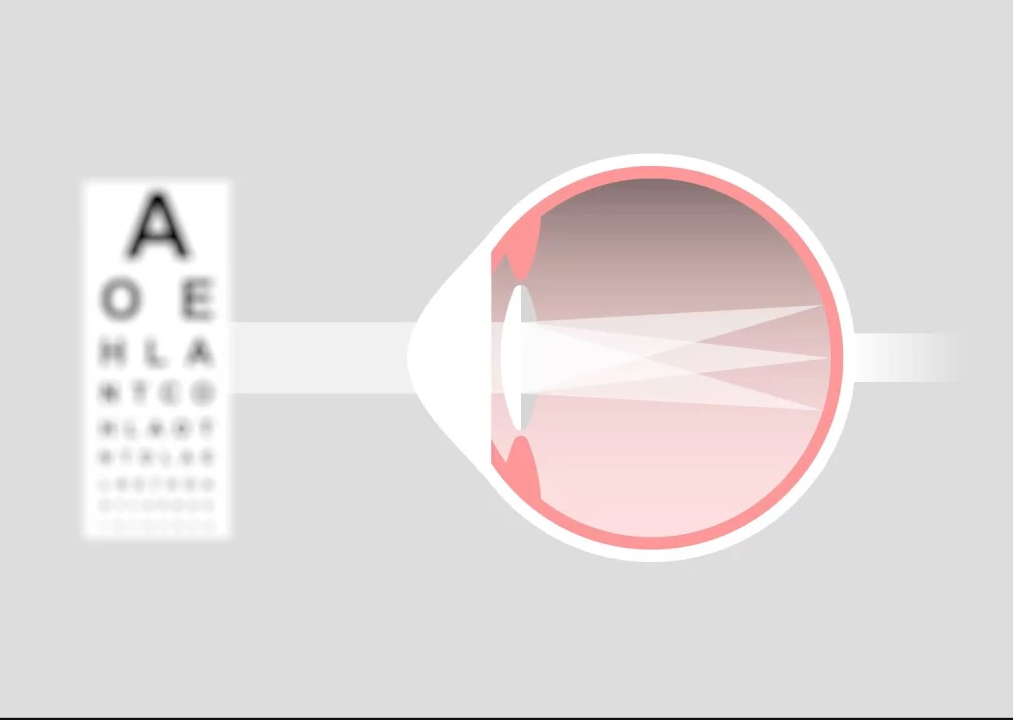
Dysfunction of high-quality vision is caused by focusing the light beam passing through the eye not at one point, as it should be, but at several. A feature of hyperopic astigmatism is the location of the focal point outside the retina, behind it.
Causes of hyperopic astigmatism
Often, diseases of both eyes are diagnosed in children. Almost all babies have this pathology from the moment of birth. Such a defect is provoked by the abnormal development of the apple of the eye.
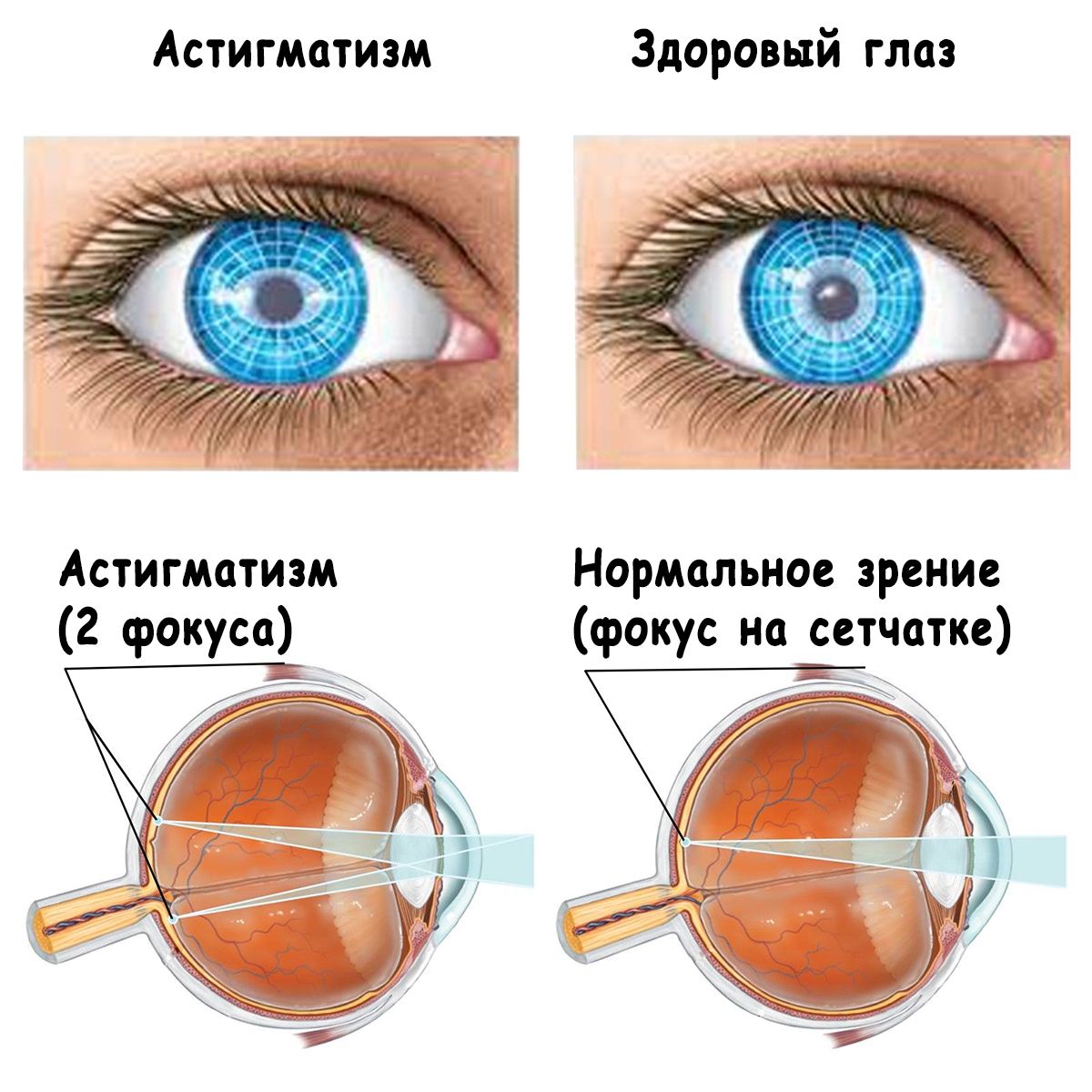
Therefore, the child begins to form astigmatism: the lens or cornea is slightly curved. These structures of the eye ensure the correct refraction of light. Due to their deformation, the image seen by the child is not focused on the retina.
The characteristic reasons for the development of congenital pathology are as follows:
- heredity;
- exposure to the fetus of harmful factors;
- complicated pregnancy;
- premature birth.
In adults, the disease develops due to eye injuries, which cause deformation of the lens or curvature of the cornea. Often farsighted astigmatism is a consequence of surgery to remove cataracts, other surgical interventions concerning the anterior part of the eyeball.
This is due to the need to perform incisions during surgery directly in the cornea. After the edges sometimes do not heal properly, causing astigmatism.
A healthy eye is characterized by uniform refraction of light rays and their concentration directly on the retina. Therefore, a person is able to see the clearest possible outline of objects.
When the lens or cornea is deformed, light rays are irregularly refracted, which is why they are focused behind the retinal layer.
Classification
As already discussed, the disease happens congenital or acquired. For the first case, a hereditary cause is characteristic, the ailment is present in one of the relatives, it develops after childbirth.
With regard to acquired astigmatism, the matter is more complicated, since pathology is provoked by improper scarring of the tissue in the cornea after surgery or due to injury.
Several options for the development of pathology have been studied. Physicians classify them according to the type of refraction change in a pair of mutually perpendicular eye meridians:
- Simple hyperopic astigmatism. The disease is manifested by the presence of hyperopia in any of the main meridians. At the same time, the other meridian provides normal refraction.
- Complex hyperopic astigmatism. This is a violation of refraction in both meridians. One of them provides a farsighted type of vision, and the second may be characterized by myopia or also farsightedness.
Read also:Allergic conjunctivitis
There are also straight or back astigmatism. In the first case, the vertical meridian refracts the rays with greater force than the horizontal one. Because of this, vertical lines are perceived more clearly by a person. This option is more common.
Astigmatism of the opposite type is a disease in which the horizontal meridian refracts the rays better. This option is rare, it causes significant discomfort, because the world around us is oriented precisely vertically.
Degrees of development of hyperopic astigmatism
Doctors distinguish different degrees of development of hyperopic astigmatism. This index allows you to determine the value of the refraction of the rays.
Traditionally, ophthalmologists distinguish the following degrees of the disease:
- Weak degree - the most common variant of the disease. He responds well to conservative therapy.
- Moderate hyperopia - less common dysfunction.
- High-grade hyperopia develops due to serious pathologies in the cornea.
The higher the degree of the disease is diagnosed, the more difficult the treatment will be. As soon as the first symptoms of the problem are identified, you should immediately visit an ophthalmologist. The specialist will perform a series of diagnostic examinations, based on which he will prescribe an adequate therapeutic course.
The patient is obliged to scrupulously follow the recommendations of doctors to ensure the restoration of vision.
Symptoms of hyperopic astigmatism

It is much easier to detect hyperopic astigmatism already in adolescence than in younger children. The kid is not always able to understand that there are visual problems, so he rarely complains to his parents about this. And adults themselves are not always able to determine the presence of such a disorder in children.
Astigmatism is characterized by the following symptoms:
- distorted perception of objects of the surrounding world;
- ghosting, the appearance of a misty haze before the eyes;
- rapid eye fatigue;
- irritation eyes, their redness;
- recurrent headaches;
- the presence of discomfort in the bridge of the nose and around the eyebrows.
It is much more difficult to identify astigmatism in children than in adults. The child is not always able to notice the development of strange symptoms, he perceives the environment as he sees. To suspect a problem, parents are required to monitor the child.
Read also:Pterygium
If he has a visual defect, the baby moves books away from his eyes, looking for a comfortable reading position for a long time. It is difficult for him to distinguish between tiny details and small objects.
At the same time, the child may not feel very well with pathology, which often provokes unpleasant symptoms that worsen the baby's condition. Children have a headache, vision clarity disappears, pain syndrome develops in the eyes.
If you do not visit an ophthalmologist in a timely manner, the ailment can cause rapid fatigue of the organ of vision, provoke strabismus.
Diagnostics
To identify the disease, the patient is prescribed the following clinical studies:
- Ultrasound of the eyeball;
- visometry, which determines visual acuity;
- skiascopy;
- biomicroscopy;
- refractometry;
- ophthalmoscopy.
In more complex cases, computed tomography (CT) is prescribed. To identify pathology at home, you can use schematic tests.
Treatment of hyperopic astigmatism
Based on the examination data, the degree of damage and the individual characteristics of the body, the doctor chooses an effective treatment for hyperopic astigmatism.
If the disease is detected at the very beginning of development, when the problem is mild, the patient is prescribed vision correction. For this purpose, glasses or contact lenses are used. These methods help to correct vision, as well as restore its sharpness.
The ophthalmologist will tell you how to use this device correctly. To restore vision, doctors recommend astigmatic lenses.
They are of two types:
- tough;
- flexible.
Lenses are negative or positive. The correct design of these funds helps to change the direction of light, which focuses in the required areas of the eyeball. Through this change, the error in the visual organ is corrected. Glasses are prescribed for childhood illness.
The constant wearing of these lenses helps to avoid strabismus. All of these treatments are effective in correcting visual acuity. For this reason, such therapeutic options are resorted to in the early stages of the development of pathology.
Surgical intervention
In more severe cases, as well as in order to completely get rid of farsighted astigmatism, prompt action is required to correct the shape of the cornea. Such operations are performed by doctors specializing in microsurgery.
The most effective methods of influencing the cornea are recognized:
- Laser thermokeratoplasty.
- Laser keratomileusis.
With the help of these measures, it is possible to change not only the shape of the cornea, making it convex-flat in the central part, but also to restore visual acuity faster. Sometimes this treatment is not possible.
Read also:Corneal edema
In such cases, other methods are used:
- keratoplasty;
- removal of the lens.
Surgical intervention is indicated for patients who have reached the age of 18. But there are cases when laser exposure is also prescribed for small patients.
Additional activities
Additional health-improving measures to restore vision include:
- training of the eye muscles;
- massage;
- proper nutrition;
- swimming.
Young children are very often prescribed special gymnastics for astigmatism. This complex includes the following exercises:
- Focusing the gaze into the distance and fixing the vision on any one object located at a distance of 30 cm.
- Exercise figure eight. The child needs to make a movement resembling an eight with the pupils of his open eyes.
- Alternately close one of the organs of vision, while fixing the gaze on any nearby object.
- Gymnastics with the index finger. The child should gaze intently at his own index finger, gradually moving it towards the nose.
- Closed eyes should be massaged with thumbs.
Complications of hyperopic astigmatism
Hyperopic astigmatism in children often causes the development of strabismus. Such a negative change appears against the background of the difference in refractive power, which is more than 1.5 diopters. It develops simultaneously in the right and left eyes.
If this pathology is not treated, then after reaching the age of 10, the child will have strabismus.
Such changes cause discomfort in a teenager, being a cosmetic defect that can cause psychological problems.
Regular examination of the child by an ophthalmologist will avoid this phenomenon. The main task of parents is to comply with all the recommendations of the ophthalmologist.
Prevention of hyperopic astigmatism
In most cases, hyperopic astigmatism in children is a birth defect. For this reason, the prevention of pathology should be carried out from an early age.
For this purpose it is necessary:
- Perform special eye exercises to help strengthen the eye muscles. These are glances in different directions and circular movements of the eyeballs, slow blinking.
- Choose the correct lighting mode for the work area.
- Go in for sports (jogging and swimming).
- Arrange hardening procedures.
- Provide a balanced diet.
- Massage the eyelids.