Chronic tonsillitis in a child: symptoms and treatment, causes
Content
- What is chronic tonsillitis?
- What are the causes of the development of chronic tonsillitis in children
- Symptoms of chronic tonsillitis in a child
- When to see a doctor
- Why is the chronic form of tonsillitis dangerous for children?
- Medical treatment of chronic tonsillitis in children
- Operative methods of treatment
- Traditional medicine treatments for chronic tonsillitis
- Herbal teas
- Gargling with home remedies
- Home inhalation
- Preventive measures for chronic tonsillitis in children
What is chronic tonsillitis?
In a normal state, the lymphoid tissue of the tonsils acts as a barrier against microorganisms, preventing them from entering the body.
The chronic type of tonsillitis, in fact, makes the tonsils infectious foci, allowing viruses and infections to spread throughout the body.
Let's take a closer look at what are the causes of tonsillitis, its symptoms and treatment in children.
What are the causes of the development of chronic tonsillitis in children
Usually, chronic tonsillitis in a child occurs after acute inflammation of the tonsils.
As a rule, this can be preceded by angina and other viral and infectious diseases, accompanied by inflammation of the mucous membrane.
The pathogenesis of chronic inflammatory processes in the tonsils are:
- pyogenic streptococcus;
- coli influenza;
- Pneumococcus;
- staphylococcus aureus.
To bring the pathogenic microflora into an active state are capable of:
- hypothermia;
- infectious diseases;
- decreased immune defense;
- stress.
All this can provoke an exacerbation of chronic tonsillitis.
Not often, but you can find this disease in children who have never had a sore throat. In this situation, the provoking factor are diseases, against the background of which inflammation of the tonsils occurs, namely:
- sinusitis;
- inflammation of the adenoids;
- scarlet fever;
- measles;
- diphtheria.
Symptoms of chronic tonsillitis in a child

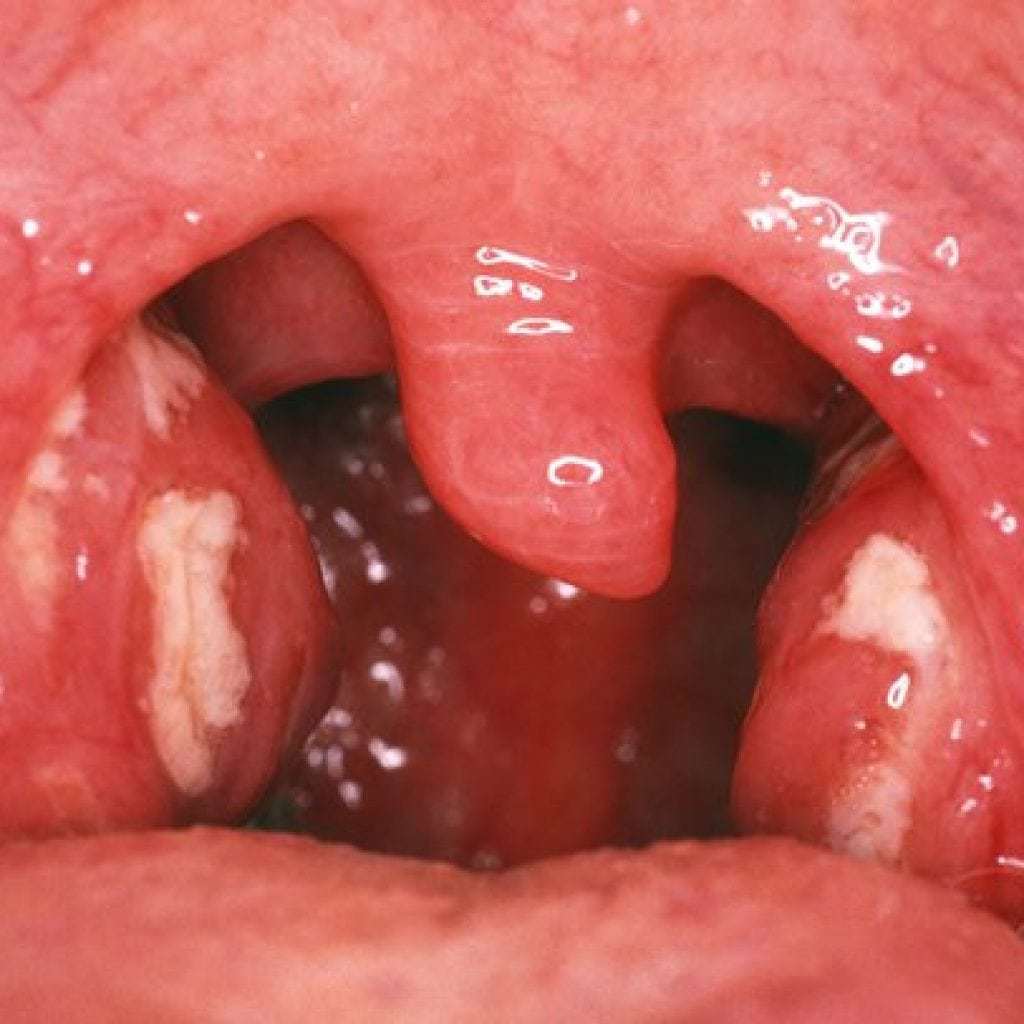
Chronic tonsillitis in a child manifests itself as follows:
- Purulent plugs are formed in the gaps, which include mucus, desquamated epithelium and microbes. They lead to inflammation in the amygdala (see. photo above), irritatingly affect the ends of the processes of nerve fibers, which causes:
- tickling and sore throat;
- cough;
- shortness of breath;
- pain in the ears.
- If you press on the tonsils, then pus will come out of the lacunae.
- Bad breath or halitosis.
- Adhesions are formed between the tissues of the tonsils and the palatine arches.
- The submandibular lymph nodes are enlarged, they become denser and become more sensitive when palpated.
- Palatine arches redden noticeably.
- The body temperature rises to 37.5 degrees and is kept at this level for a long time.
When the disease worsens, the child becomes fatigued, he becomes moody and irritable, complains of a headache.
When to see a doctor

In some cases, chronic tonsillitis can cause the throat to swell severely, making it difficult to breathe. If this happens, seek immediate medical attention.
If you experience any of the following symptoms, see your doctor.
- fever, temperature 103 ° F (39.5 ° C);
- muscle weakness;
- stiffness and stiffness of the neck;
- sore throat that does not go away for 2 days.
Why is the chronic form of tonsillitis dangerous for children?
This disease not only adversely affects the body's immunity, but also leads to the following complications:
- rheumatism, with the development of heart defects and joint damage;
- diseases of the genitourinary system;
- otitis with hearing impairment;
- pneumonia.
- post-streptococcal glomerulonephritis;
- obstructive sleep apnea may begin;
- rheumatic fever;
- provokes the occurrence of hyperthyroidism.
Read also:Heiloschisis (cleft palate, cleft lip): what is it, causes, symptoms, photos of children before and after surgery
If left untreated for a long time, tonsillitis leads to autoimmune diseases, in which the production of antibodies begins to fight the cells of their own body (in simple words: immunity goes crazy and destroys healthy cells of the body, causing terrible diseases).
Therefore, you need to monitor and monitor your health. It is necessary to consult an otolaryngologist in time and start treatment.
Medical treatment of chronic tonsillitis in children
For relax sore throatyou can use over-the-counter pain relievers such as acetaminophen and ibuprofen. Remember to check with your doctor before giving medicines to children.
If an exacerbation of the chronic form of tonsillitis occurs, prescription strong analgesics, anti-inflammatory and antibacterial agents are used. The following medications and procedures may also be prescribed:
- antibiotics (it is taken into account which of them the pathogen is sensitive to, which is revealed during the study of a bacteriological smear);
- Read: new generation broad-spectrum antibiotics list.
- bacteriophages, applied topically (bacteriophages are viruses used to fight bacteria such as streptococci and staphylococci; it is very important to use this type of treatment for the chronic form of the disease, if antibacterial agents are not able to cope with the pathogen);
- antimicrobial drugs for children, available in the form of absorbable tablets;
- homeopathic remedies that can be used for treatment of acute tonsillitis and in the role of a preventive measure (a specific medication and a suitable dosage is prescribed only by a pediatric homeopathic doctor);
- irrigate the tonsils or caress the throat with compounds that disinfect it (for example, with a solution of soda);
- physiotherapy (ultrasound therapy, quartzization).
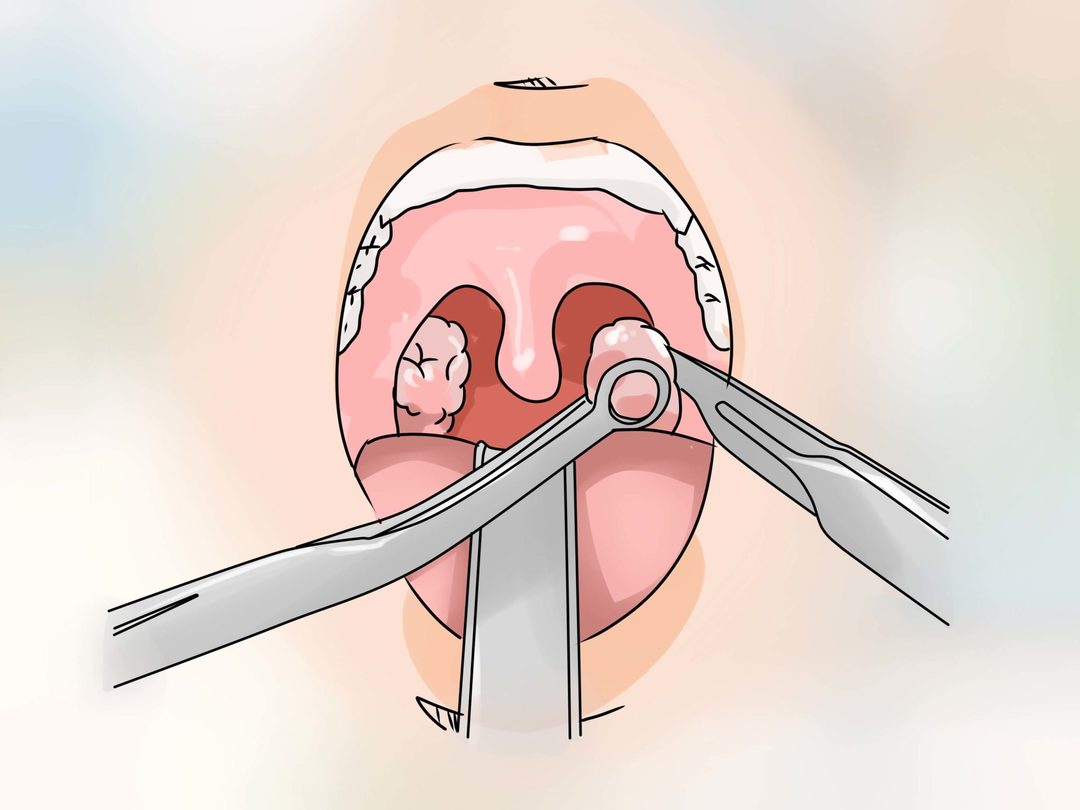
If we talk about an operative method of treatment, then the tonsils are removed only in those situations when they are no longer able to perform their protective functions and it will also not be possible to restore them. When infected, they bring only harm to the child's body, and removing the tonsils is all that can be done.
Operative methods of treatment
Surgical intervention is indicated in the following cases:
- inflammatory processes in the oropharynx with the release of pus;
- due to tonsillitis, the rest of the organs were affected;
- tonsillogenic sepsis;
- there is no reaction from the drug therapy, as indicated by the frequent exacerbations of tonsillitis (the doctor will especially insist on the operation if the disease manifests itself more than four times in year).
Previously, tonsils were removed with a scalpel - the painful method was accompanied by significant blood loss. Now, new modern technologies are being used, so you can get rid of tonsils with the help of laser radiation.
Laser removal has the following positive qualities against the background of other methods of surgical intervention:
- the method is highly accurate and less traumatic;
- it is possible to remove not all of the tonsil, but only a part of it, which does not fulfill its functional task;
- blood loss during surgery is minimal due to cauterization of blood vessels;
- complications are unlikely;
- the recovery period after surgery is less than usual;
- the risk of disease recurrence is minimal.
Read also:Autism spectrum disorder
The operation with the help of laser radiation is performed under general anesthesia so that the child is not nervous or stressed, and the surgeon has the opportunity to perform an accurate removal of the tonsil. Its duration is no more than 45 minutes. When the child wakes up, an ice bottle should be attached to his neck.
After this procedure, you need to take analgesics and antibacterial drugs, which will act as a preventive measure to reduce the risk of complications. For several days, the child can only be fed with liquid food and ice cream (everything hot is temporarily prohibited).
There are other ways to combat tonsillitis - cryodestruction and ultrasound therapy. However, among them, laser removal is the most gentle. The choice of how the surgical treatment of chronic tonsillitis in children will be carried out is decided only by doctors. They are based in their decision on the density of the scar and overgrown connective tissues and depending on how much they have grown together with the tissues of the oropharynx.
Contraindications for surgical treatment are:
- acute inflammation (in this case, you can remove the tonsils only three weeks after recovery);
- blood disease, violation of its coagulability;
- diabetes;
- pulmonary tuberculosis;
- expansion of the lumen of the blood vessels of the oropharynx and other pathological vascular conditions.
Traditional medicine treatments for chronic tonsillitis

In folk medicine for the treatment of childhood tonsillitis at home usually use:
- inhalation with a nebulizer and the usual steam from herbal infusions;
- herbal teas;
- gargling with solutions.
It should be noted right away that it is best to buy ready-made fees, since they take into account the interaction with each other of the medicinal herbs that are part of the composition.
Herbal teas
The herbal formulations on the basis of which teas are prepared can have different effects on the body. For example:
- herbal tea with anti-inflammatory effect: you need to mix in equal amounts currant leaves, St. John's wort, thyme, coltsfoot, saber roots and peony, dill, chamomile and calendula flowers, palyny, sage, then pour 200 ml. boiling water. Insist 4 hours, bring to a boil, filter and give the sick child 50 ml-100 ml twice a day;
- herbal tea that strengthens the body's immune defenses: mix the same quantities of rose hips, horsetail, calamus and licorice root, boulush, St. John's wort and wild rosemary, after which they take one teaspoon of the resulting composition and add to a glass with boiling water; you can take instead of regular tea.
In the role of a general strengthening agent, the following mixture is prepared: beet juice, freshly squeezed lemon and rosehip syrup mix in a ratio of 5: 1: 3 and leave in a cold place for a day, take a couple of teaspoons three times after a meal in a day.
Gargling with home remedies
To caress your throat, it is recommended to use the following formulations:
- add one teaspoon of salt and five drops of iodine solution to a glass of warm water (provided that the child there will be no allergic reaction to this component), then stir and rinse every 3 hours;
- chop two large garlic cloves, squeeze the juice and add to a glass of hot milk. Then let it cool and rinse the throat 2 times a day.
Read also:Ehlers-Danlos Syndrome
Home inhalation
They proved to be excellent in the treatment of tonsillitis by inhalation. For them, they usually use:
- eucalyptus tincture: 1 tablespoon of the product must be added to a liter of boiling water, then cover with a towel on top and breathe in steam for about 15 minutes.
- sage tea: Add 1 tablespoon of the composition to a glass of boiling water, wait until the mixture is infused for 20 minutes, and then add to a liter of boiling water, cover with a towel and inhale the vapors.
Preventive measures for chronic tonsillitis in children
If a child has been diagnosed with chronic tonsillitis, it is necessary to undergo a course of preventive measures at least twice a year aimed at reducing the risk of an exacerbation of the disease. Therapy is prescribed only by an otolaryngologist, and he also monitors the implementation of recommendations for a month.
- For prevention, Bicillin is often prescribed, as well as the use of antiseptic solutions suitable for gargling twice a day.
- The passage of physiotherapy, namely, quartzization of the general and local types, allows you to improve the body's immune defenses, blood circulation and lymph flow.
- An excellent result can be obtained if, with tonsillitis, wash the lacunae of the tonsils:
- saline;
- furacilin solution;
- Rivanola.
Also, it is very important to comply with the following preventive measures:
- keep your mouth clean (rinse your mouth after eating);
- undergo treatment at the dentist on time if problems with teeth or gums are detected;
- keep the room clean;
- exclude hypothermia of the child;
- short walks in the fresh air every day are necessary;
- observe the daytime regimen, allocate enough time for sleep;
- provide good nutrition;
- to harden the child's body and tonsils (drink small amounts of cool drinks, with the exception of periods of exacerbation of the disease);
- massage the tonsils, gently stroking from the lower jaw to the collarbones, before the child goes outside.
A long stay on the seashore has a good effect on the well-being of the child.
In conclusion, it should be noted that chronic tonsillitis manifests itself as not very pronounced symptoms, so that parents often cannot identify the disease in a child.
Since this disease can complicate his whole future life and adversely affect his health, it is necessary to undergo routine examinations by an otolaryngologist for the timely diagnosis of pathology.
This will allow you to quickly proceed to treatment and minimize the possible consequences of childhood tonsillitis. If you still carry out preventive measures, then you can not be afraid of complications of the disease. With a five-year absence of cases of exacerbation of tonsillitis, it is possible to state with confidence that the child has been completely cured.