Hydrocephalus of the brain in children: causes, consequences and therapy
Dropsy (edema, excess fluid accumulation), or, as it is often called in the medical literature, cerebral hydrocephalus in children is one of the most common pathologies of newborns.
The disease can be expressed in varying degrees, but its essence remains unchanged: due to a violation of the outflow and accumulation of cerebrospinal fluid (cerebrospinal fluid) various structures of the central nervous system are squeezed, which can cause developmental disorders of the baby and even lethal outcome.
What are the reasons for excess fluid accumulation? How is this dangerous pathology treated? You will find the answers in this article.
Content
- A bit of anatomy
- For what reasons does hydrocephalus develop?
- Varieties of hydrocephalus
- Hydrocephalus symptoms
- Diagnostics
- Treatment
- Emergency surgery for dropsy of the brain
- What drugs are indicated for hydrocephalus?
- The consequences of hydrocephalus
- Prevention measures
- Related Videos
A bit of anatomy

The brain and spinal cord are constantly bathed in a fluid called cerebrospinal fluid.
Thanks to the cerebrospinal fluid, the brain is protected from all kinds of damage:
- the liquid creates a kind of "safety cushion",
- shock absorbing.
This is not the only function of the cerebrospinal fluid:
- it also delivers nutrients to the tissues,
- supports microenvironment,
- contributing to the normal functioning of the organ of thought, etc.
- The cerebrospinal fluid is produced from the blood.
In a healthy adult, the volume of cerebrospinal fluid is about 150 ml, in a newborn - 50 ml.
Normally, the cerebrospinal fluid is in a state of constant circulation: cerebrospinal fluid is produced and absorbed in such a way that its total volume remains unchanged.
In some cases, the fluid stagnates, accumulating in the ventricles of the brain or under its membranes. It is the violation of circulation that causes the development of hydrocephalus.
In this case, both an increase in the volume of produced cerebrospinal fluid and a violation of the process of its absorption can cause pathology.
For what reasons does hydrocephalus develop?

Three processes lead to the accumulation of excess cerebrospinal fluid:
- the production of an excess amount of cerebrospinal fluid;
- violations of the process of absorption of cerebrospinal fluid;
- disorders associated with disorders of the circulation of cerebrospinal fluid.
Pathology can be based on either one of the listed mechanisms, or several at once.
Dropsy can develop not only in children, but also in adults. In the first case, they talk about the congenital form of dropsy, in the second - about the acquired one.
The main causes of congenital dropsy of the brain are:
- congenital pathologies of the circulation of cerebrospinal fluid;
- some congenital diseases in the central part of the nervous system (for example, Chiari syndrome, in which the structures of the brain exit into the foramen magnum);
- infection of the fetus with infectious diseases, for example, rubella or toxoplasmosis, during intrauterine development;
- Rh-conflict between the maternal organism and the fetus. In this case, the so-called "immune" hydrocephalus develops;
- the mother has severe chronic diseases, for example, diabetes mellitus;
- transfusion syndrome when carrying multiple pregnancies (blood from one child flows into the circulatory system of another);
- malformations of the placenta;
- birth trauma.
Hydrocephalus can develop due to the presence of at least one of the factors listed above. However, quite often doctors fail to determine what became a provoking factor for the development of dropsy of the brain in a newborn.
Acquired cerebral hydrocephalus in children develops as a result of inflammatory diseases of the central nervous system, for example:
- meningitis,
- traumatic injury
- hematomas,
- the presence of a benign or malignant neoplasm.
Varieties of hydrocephalus

There are several classifications of hydrocephalus.
The first is based on the location of the accumulated fluid:
- internal. The fluid accumulates mainly in the cerebral ventricles;
- external, or external. CSF accumulates in the subarachnoid space, that is, between the brain and the walls of the skull;
- general, otherwise called mixed form. With this form of pathology, cerebrospinal fluid is distributed throughout the entire organ of thinking, that is, it accumulates in the ventricles and in the subarachnoid space. With a mixed form, the tissues of the organ of thinking are gradually replaced by cerebrospinal fluid, which is fraught with the development of serious mental and physical abnormalities.
Read also:Streptoderma in children: symptoms, home treatment
According to the mechanism of development of pathology, there are:
- open, or communicating form, in which communication is maintained between the subarachnoid space and the ventricles of the brain;
- closed form. With this type of hydrocephalus, the normal communication between the ventricles and the subarachnoid space is impaired. This form of pathology is considered the most dangerous: without immediate surgical intervention, the baby may die;
- hypersecretory form. In this case, the pathology develops due to the excess volume of produced cerebrospinal fluid.
By the level of intracranial pressure, the following are distinguished:
- hypertensive form, accompanied by an increase intracranial pressure;
- normotensive, proceeding without an increase in intracranial pressure. Usually, the absence of an increase in intracranial pressure is observed in the early stages of the development of the disease;
- hypotensive form, in which the intracranial pressure in the baby decreases. This form of dropsy is extremely rare.
Hydrocephalus symptoms
In children under one year old, dropsy manifests itself as follows:
- decreased muscle tone. In rare cases, on the contrary, there is an increased tone and seizures;
- the baby's head grows too quickly and does not correspond to age norms and body size;
- the skin on the head is thin and shiny;
- the forehead is strongly pushed forward;
- the fontanelle is enlarged, slightly protrudes above the surface of the skull due to the pressure of the cerebrospinal fluid;
- the baby often throws his head back;
- the eyeballs move downward. This symptom is called "the symptom of the setting sun";
- strabismus;
- the baby is slowly gaining weight and lagging behind in development from peers. For example, he begins to sit, crawl and stand much later;
- hands and feet may tremble;
- veins on the forehead and scalp protrude strongly;
- the baby often cries and has trouble sleeping (often wakes up, cannot sleep, etc.);
- the baby is indifferent to the environment, does not respond to parental voices and toys.
Often, babies with hydrocephalus have a headache due to increased intracranial pressure. This is manifested by frequent strong crying and putting pens on the head.
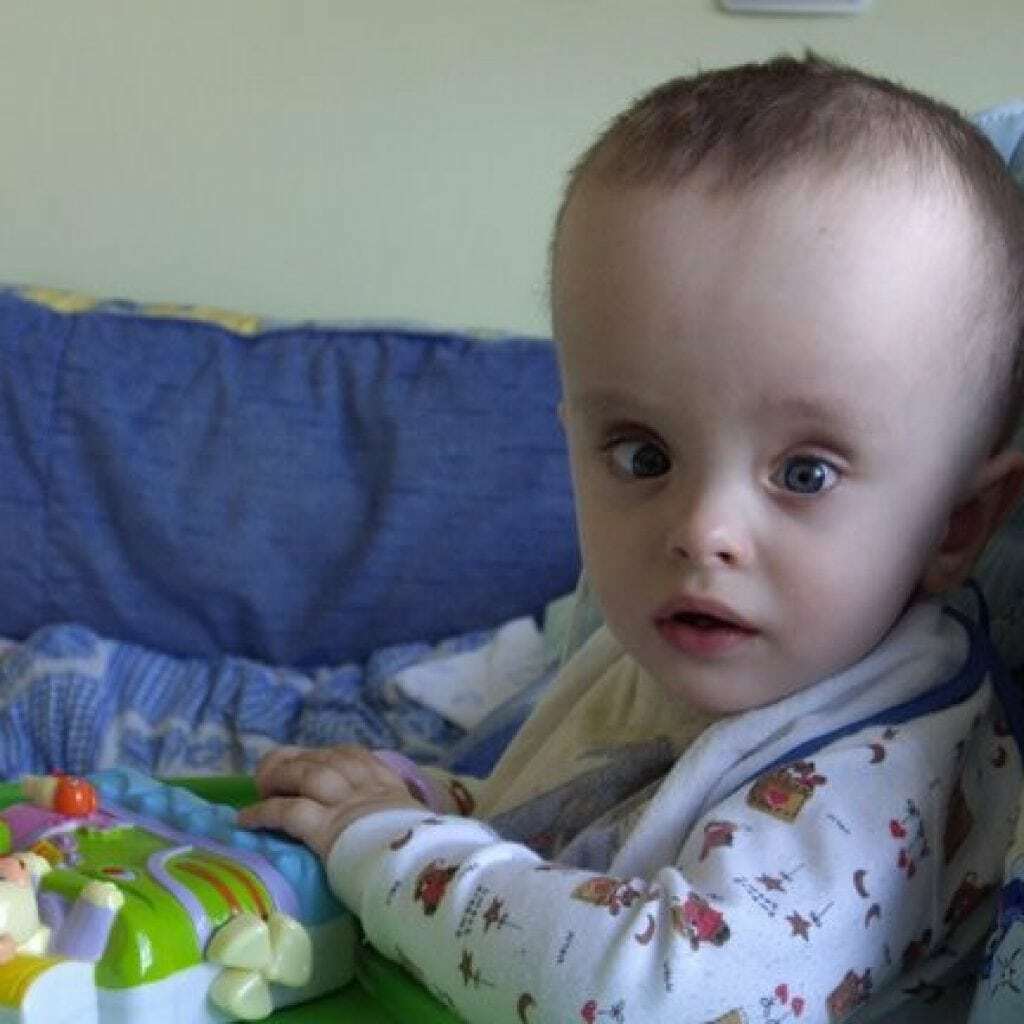

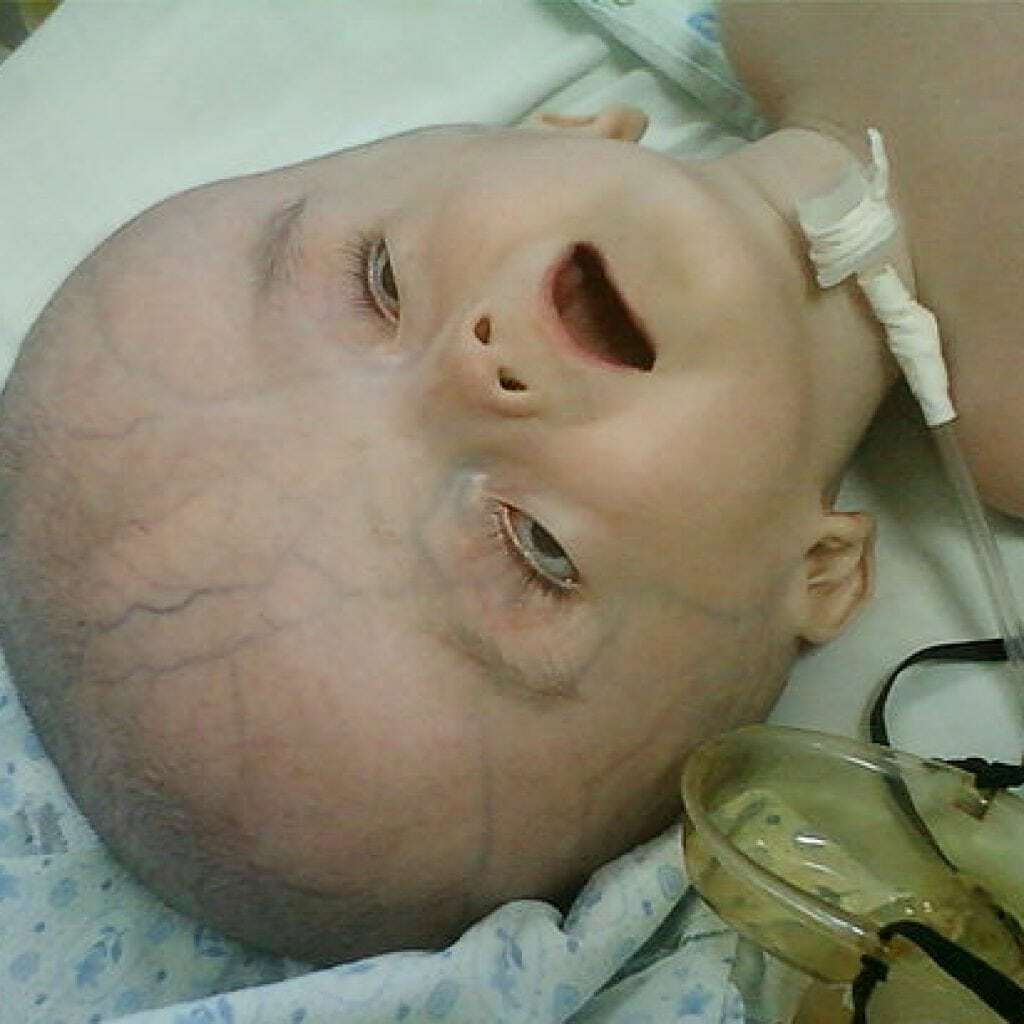



Usually, in children under one year old, the symptoms of dropsy appear quite brightly (see photo above): the pediatrician quickly notices the pathology and prescribes the necessary treatment.
In children who have reached one year of age, the following are added to the listed symptoms:
- the child often vomits and vomits. Nausea and vomiting worse in the morning;
- muscles are very tense, cramps are often observed;
- sometimes the kid falls into fainting. Fainting is often observed after a seizure;
- the fontanelle does not overgrow, on the contrary, due to the pressure of the cerebrospinal fluid and the growth of the skull, it increases in size;
- on the forehead and face of the baby, you can see a network of thin veins;
- the child has difficulty walking. In severe cases, the baby is unable to walk due to too much head weight;
- the child cannot control the process of urination;
- decreased visual acuity up to complete blindness.
In the event that the baby is not prescribed treatment, the disease progresses: both physical and mental manifestations increase.
In advanced cases, children with dropsy of the brain have severe mental retardation due to atrophy of the tissues of the organ of thought. Therefore, it is very important to quickly identify the pathology and start treatment.
Diagnostics

Sometimes an excess accumulation of fluid in the brain is detected in the prenatal period during an ultrasound examination. However, dropsy is more often diagnosed after the birth of a newborn in the hospital or shortly after discharge.
One should not think that dropsy of the brain in babies is always "noticeable with the naked eye": its symptoms are typical for many pathologies, and the baby still cannot tell about his feelings. Therefore, the first manifestations are not always recognized.
In order to start treatment on time, it is important for parents to contact a good diagnostician when they find the first signs of a baby with dropsy of the brain.
Most often, the following methods are used to diagnose hydrocephalus:
- neurosonography. This examination in infants is done through the fontanelle. In modern hospitals, neurosonography is a mandatory study that is carried out in the second month of a baby's life;
- MRI and CT. Thanks to these modern methods, it is possible to obtain a fairly complete picture of the development and structure of the main organ of the infant's central nervous system. Unlike neurosonography, MRI and CT scans in infants should be performed under general anesthesia: otherwise, it will not be possible to ensure the immobility of the baby;
- craniography, that is, an examination of the size of the baby's head;
- lumbar puncture, which makes it possible to assess intracranial pressure;
- EEG (electroencephalography), which allows you to obtain additional data on the state of the baby.
Read also:Rickets in infants: causes, symptoms and treatment
It is important to remember that the earlier the treatment of hydrocephalus is started, the less consequences the pathology will have in the future. The prognosis depends not only on the nature of the course, but also on the neglect of the disease!
Treatment
Unfortunately, there are no conservative treatments for dropsy. The drugs can only relieve the baby of painful symptoms and stop the further development of the disease.
Surgical treatment is considered the most effective method. Only an experienced surgeon can perform the operation.

The main goal of surgery is to drain the cerebrospinal fluid from the ventricles of the brain and the subarachnoid space.
There are two main methods used for this:
- shunting;
- endoscopic surgery.
Most often, bypass surgery is used to treat dropsy. The essence of the operation is that special catheters made of medical silicone are implanted into the skin.
With the help of catheters, fluid is diverted from the main organ of the central nervous system.
CSF can be drained into the abdominal cavity, where it is absorbed by the intestines, or into the atrium.
Unfortunately, bypass surgery can cause a number of serious complications that occur in about half of the operated children.
In some cases, a shunt replacement is required, which becomes the reason for the appointment of a second operation. For this reason, endoscopic operations are increasingly being performed, during which, through small the incisions are inserted with an endoscope, with the help of which the excess cerebrospinal fluid is removed from the small organ of thinking the patient.
With the help of an endoscope, the surgeon creates a pathway for the outflow of the Livcore, as a result of which the patient's condition is normalized. With this operation, there is no need to implant a catheter, which makes it much easier to transfer than bypass surgery.
The main advantages of endoscopic surgery include the following:
- the possibility of restoring the natural outflow of cerebrospinal fluid;
- possible complications are minimized;
- as practice shows, endoscopic operations help the baby to quickly get rid of unpleasant symptoms;
- the recovery period after endoscopic surgery is minimal.
Unfortunately, endoscopic intervention is possible in about 10% of children with hydrocephalus: in some forms of pathology, the operation will be ineffective.
Emergency surgery for dropsy of the brain
With hydrocephalus, a dangerous condition can occur, in which, due to a significant accumulation of cerebrospinal fluid, intracranial pressure sharply increases.
As a result, tissues in the central nervous system are wedged into the opening that connects the spine and skull. In this case, the oblong part of the central part of the nervous system, which is responsible for the respiratory function, can be squeezed. This is fraught with respiratory arrest and death.
In a similar situation, a hole is punctured in the skull, into which a catheter is inserted to drain the cerebrospinal fluid. The liquid flows through the catheter into a special container.
Such an operation is an emergency measure aimed at saving the baby's life. After the operation, the patient should be under constant medical supervision.
What drugs are indicated for hydrocephalus?

Typically, the following drugs are recommended for patients with hydrocephalus:
- Diacarb and Furosemidethat reduce the secretion of cerebrospinal fluid and reduce intracranial pressure;
- Mannitol and Glycerinreducing the amount of fluid in the body;
- potassium preparations that strengthen blood vessels;
- fortifying drugs, for example, vitamin complexes and immunostimulants.
Read also:What time do the first teeth erupt in babies and which ones, how to help the baby
It should be remembered that the operation can be abandoned only if the disease does not progress for a long time.
In this case, patients are prescribed a long-term drug called Diakarb, which reduces the production of cerebrospinal fluid.
Even if the dropsy does not progress, the patient still needs to be under constant supervision of a neurologist and regularly do ultrasound of the head, CT and MRI, as well as measure the volume of the head.
The consequences of hydrocephalus
In the early stages, it is much easier to cure hydrocephalus and avoid its dangerous consequences than in the neglected ones.
It should be remembered that many patients who underwent surgery at an early age lead a normal life.



Unfortunately, dropsy leads to the fact that the blood supply to the tissues of the main organ of the central nervous system is disrupted. The result of this process is irreversible tissue atrophy (see. photo above).
If therapy was not started on time, the following consequences are possible:
- mental retardation: from difficulties with speech and problems with concentration of attention to profound mental retardation;
- intense headaches caused by increased intracranial pressure;
- development of cerebral palsy or epilepsy;
- sleep disorders;
- development autism spectrum disorders;
- syndrome attention deficit with hyperactivity;
- increased level of aggression;
- dislocation syndrome, which develops due to compression of the tissues of the central nervous system. With dislocation syndrome, the patient loses consciousness, in severe cases - falls into a coma.
Psychologists have found that children who have not been provided with the necessary treatment, in adulthood, often suffer from depression, have problems in relationships with others, are withdrawn and even cruel.
Prevention measures
During pregnancy, a woman should regularly undergo ultrasound. It is advisable to treat infectious diseases before pregnancy.
Also, during the planning period, a woman must undergo an examination for toxoplasmosis, herpes and rubella.
When carrying a baby, it is important to give up bad habits, eat well, regularly attend antenatal clinics and carefully follow all the recommendations of the attending physician.
In no case should you drink medications without first consulting your doctor: some drugs are prohibited for pregnant women, as they provoke the development of various pathologies in the fetus.
Of course, these measures will not help to fully insure against the development of hydrocephalus in an infant, however, they reduce the risk of pathology to a minimum.
After the birth of a baby, children who are at risk deserve special attention:
- born prematurely;
- those born to mothers with chronic diseases;
- children with malformations of the nervous system and with birth trauma;
- children who have had meningitis.
Often, dropsy in young children develops as a result of traumatic brain injury. Therefore, parents should;
- use special child seats;
- walk with your baby in specially equipped safe areas;
- make the house safe for the baby: buy corner pads, remove heavy objects from the reach, etc .;
- When playing sports, the child should wear head protection, such as a helmet.
Problems in violation of the normal development of the organ of thinking in children is a dangerous phenomenon that requires immediate treatment and constant medical supervision. The symptoms of pathology should not be ignored: the earlier therapy is started, the less the organ of thinking will be injured by the increased pressure of the cerebrospinal fluid.