Stomatitis in children: home treatment quickly and effectively
Stomatitis is a condition characterized by inflammation (lesions) along the lining of the cheeks, lips, tongue, gums, and palate. Treatment of stomatitis for children often depends on the reasons that caused it in the child. However, there are several proven, quickly applicable methods. home treatment conditions of stomatitis in children.
Stomatitis does not pose a danger to others, in most cases it is not contagious.
Content
- The main causes of the development of the disease
- Types of stomatitis
- Stomatitis symptoms
- Development stages:
- Diagnostics, treatment
- Home remedies for stomatitis in children
- Pharmaceutical mouthwash
- Herbal medicine for stomatitis
- Ulcerative stomatitis treatment at home
The main causes of the development of the disease
The defeat of the oral mucosa is a common disease associated with the appearance of ulcers in the oral mucosa. The reasons for the development of the disease are not precisely determined, but most often this is due the response of the immune system to various stimuli.
Immunity triggers when molecules are detected in the human body that cannot be identified. In this case, the lymphatic system directs lymphocytes to destroy unfamiliar objects.
This is happening with tissue rejection during organ transplantation. The attack of lymphocytes on unfamiliar molecules provokes the formation of ulcers on the oral mucosa.
Some of the common causes of illness, especially in the child population:
- disturbances in the work of the gastrointestinal tract (inflammation of the gastric mucosa, inflammation of the colon (colitis));
- infestation with parasites;
- allergy to food and drugs;
- lack of vitamins, especially vitamin B, folate, vitamin C, and iron;
- malnutrition is known to also lead to ulcerative stomatitis in children;
- viral diseases, especially herpetic stomatitis, are often observed in children;
- Injuries to the mouth can also lead to childhood stomatitis (trauma caused by poorly fitted braces is one of the most common causes);
- kidney disorders.
Poor oral hygiene and a weakened immune system are considered the most common causes of pediatric stomatitis.
Types of stomatitis
Allergic stomatitis - The disease is characterized by a negative allergic reaction to contact with materials from which fillings, prostheses, and crowns are made. An allergic rash in the mouth does not always appear immediately, sometimes it takes a while before the immune reaction manifests itself. An allergic look is provoked by prolonged use of drugs (antibacterial). Chronic diseases and immunodeficiency provoke the development of stomatitis.

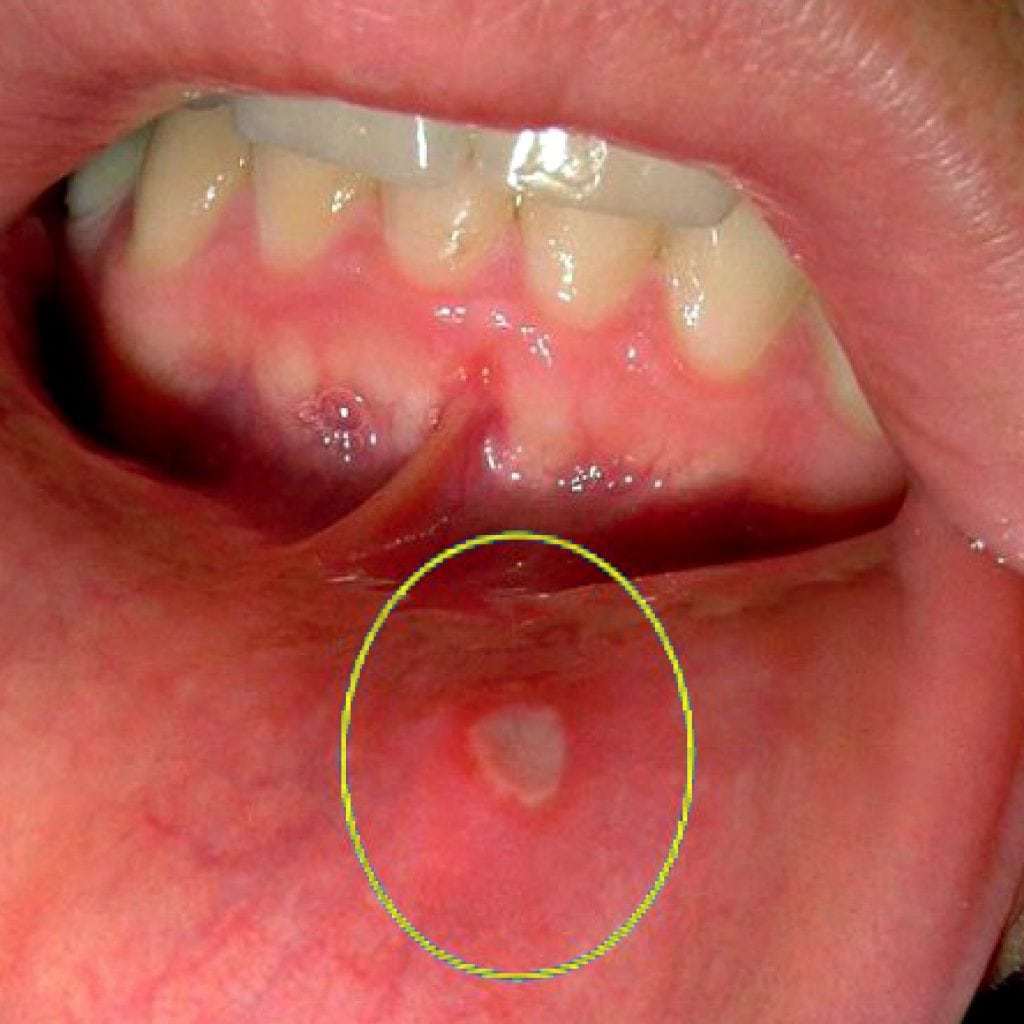
Aphthous stomatitis - The disease is characterized by the appearance of small ulcers in the mouth (aphthae). The disease manifests itself independently and as a complication in acute viral or bacterial infections (stomach diseases, flu). The aphthous form is more often observed in older children aged 10-19 years.
Read also:Dandy Walker Syndrome in Children: Causes, Symptoms and Treatment

Vesicular stomatitis - The causative agent of an acute viral disease is an RNA virus or vesilovirus. It is characterized by redness of the mouth, sometimes the pharynx. Bubbles with liquid form on the surface of the mucous membrane. The disease is contagious, so care must be taken.
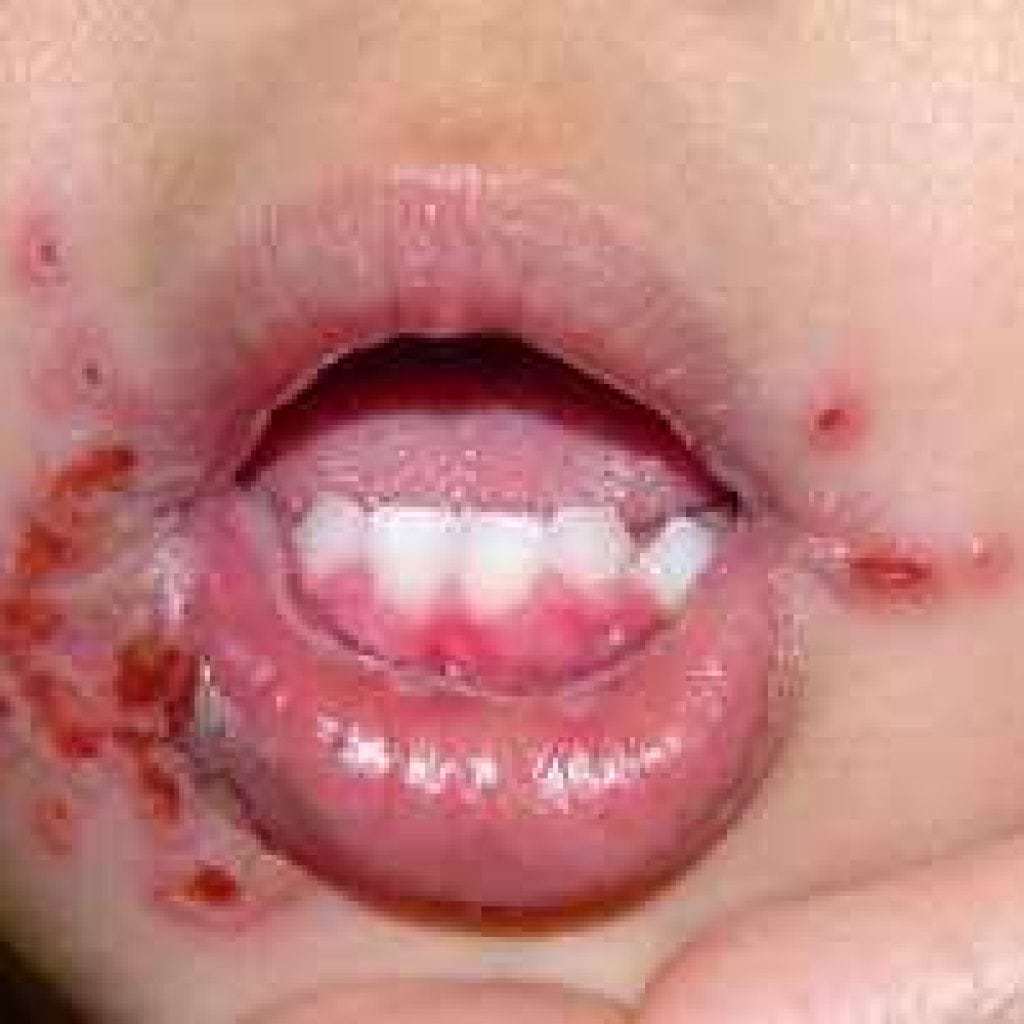
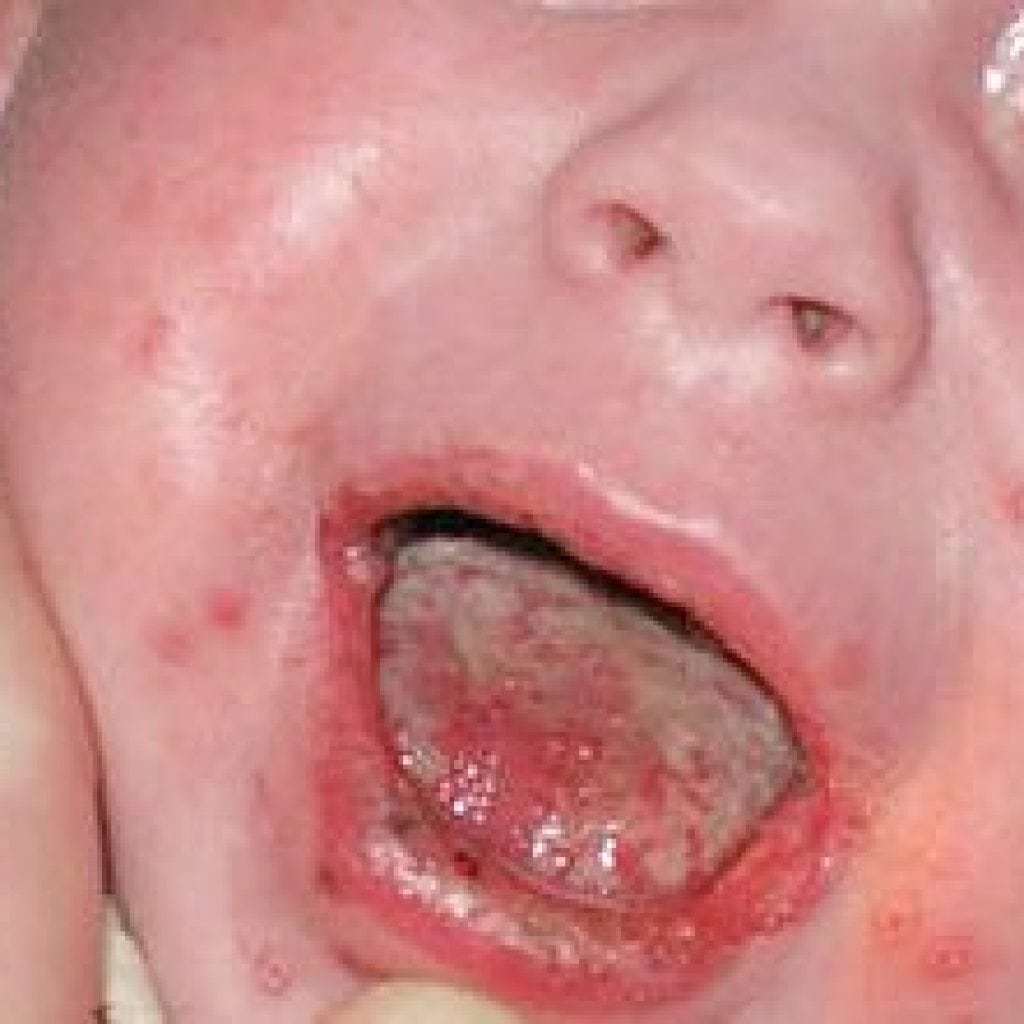
Herpetic stomatitis - The causes of the onset of the disease are bacterial in nature. Pathogens of streptococci and staphylococci, contributing to the onset of the disease, as well as past infections and injuries of the oral cavity. With herpes the disease is characteristic formation of vesicles on the tongue and palate. Subsequently, pustules and erosion are formed.
Catarrhal stomatitis - The main cause of the disease is non-compliance with simple hygiene rules. There are no formations in the oral cavity, a general inflamed condition of the mucous membrane, soreness and swelling is characteristic. The most common type of stomatitis.

Traumatic stomatitis - The disease occurs when various injuries of a chemical, physical or mechanical nature appear. It develops as a result of internal damage to the oral cavity. The disease is often accompanied by bacterial and fungal infections.
Ulcerative stomatitis - With the disease, there is focal damage to the mucous membrane with obvious redness and the formation of ulcers. The most severe illness. It develops as an independent or secondary disease of internal pathologies, as well as as a complication of the catarrhal type of the disease. Recurrent (recurring) mouth ulcers are relatively common in children. Various epidemiological reports suggest that primary herpes infection is one of the most common causes of ulcerative stomatitis in children, especially in the age group from 6 months to 5 years old.


Stomatitis symptoms

With the disease in the early stages, redness, slight swelling, and burning appear (see photo above). Later, on the tongue, inside the cheeks and lips, round or oval sores are formed, covered with a thin film of gray or white. The ulcers are surrounded with a reddish border, the surrounding tissue looks quite healthy. When eating, discomfort and soreness are felt, it becomes difficult to move the tongue and lips.
Multiple appearances of ulcers are possible, located at a distance from each other. In case of close location of ulcers they merge. The manifestation of the disease is possible several times a year (relapses), in which case the disease can be defined as chronic.
There is a more severe form of the disease with the formation of large and deep ulcers (aphthous). The disease is accompanied by:
- smell from the mouth,
- increased salivation,
- increased sensitivity of the tongue.
Read also:Rickets in infants: causes, symptoms and treatment
It is difficult to treat this form of the disease, healed ulcers form scars.
Sometimes the disease is accompanied by additional symptoms of infection of the mucous membranes of the nose or eyes. In this case, the cause may be autoimmune disorders. If the appearance of ulcers is associated with a disorder of the digestive tract, then this is a manifestation of a chronic gastrointestinal disease.
Development stages:
- redness and slight inflammation of the tongue and gums - initial stage;
- white plaque covers the oral cavity in the area of the palate, tongue, inside the cheeks, the appearance of "arrivals" is possible (plaque is easily removed);
- the formation of ulcers and wounds in the places of plaque.
Diagnostics, treatment
The disease is diagnosed by taking anamnesis and preliminary examination.
The shape, color and location of ulcers, as well as the general condition and presence of accompanying diseases, allow diagnosing the severity of the disease and prescribing treatment.
Depending on the shape diseases are prescribed antibiotics, hormonal drugs, soda mouthwash. Particular attention is paid to adherence to a special diet.
Home remedies for stomatitis in children

Let's try to help you and answer the question of how to treat stomatitis in children in the mouth. The most effective and time-tested method is rinsing with various solutions.
The principle of rinsing with stomatitis is to remove food debris from the oral cavity. Particles of products not only irritate the mucous membrane, injuring it. They are foci for the development of a secondary (bacterial) infection.
Simultaneously with hygienic purposes, rinsing has a therapeutic function. Finished pharmaceutical medicines for oral cavity sanitation or traditional medicines prepared in at home, significantly alleviate the symptoms of stomatitis: reduce pain syndrome, prevent the spread of rashes during mouth.
Pharmaceutical mouthwash
- Stomatofit - a plant-based anti-inflammatory agent (sage, chamomile, oak bark), reduces inflammation, accelerates the recovery of the mucous membrane. Essential oils that are part of the drug have pronounced antibacterial properties.
- Chlorophyllipt - a plant-based drug (eucalyptus and myrtle), has antibacterial activity against a wide range of pathogenic microorganisms, increases the flow of oxygen to cells, has an analgesic action.
- Romazulan - concentrated chamomile infusion. It is an antimicrobial, anti-inflammatory agent that improves tissue repair.
- Miramistin and Chlorhexidine - bactericidal, antiseptic agents, kill bacteria of all groups, including antibiotic-resistant microorganisms. The drugs activate the immune abilities of cells, accelerate the healing of the mucous membrane.
Important note! Often for the treatment of pediatric stomatitis, solutions are used prepared on the basis of drugs - dyes: fucorcin, methylene blue (blue), brilliant green (brilliant green). However, medical science claims that using dyes to rinse the mouth or treat mucosal rashes has no proven efficacy. Moreover, if the dye is alcohol-based, then its use not only increases the pain, but also lengthens the healing time.
Herbal medicine for stomatitis
To rinse the mouth with stomatitis, decoctions, infusions and solutions made from medicinal herbs or herbal preparations are used.
Read also:Symptoms and treatment of laryngitis in children
For decoctions use:
- chamomile,
- flax seeds,
- oak bark,
- lingonberry leaves,
- burdock root or elecampane.
Cooking method:chop the grass, pour boiling water over and keep on fire for 10 minutes. Then remove from heat, cool, drain. Store the finished broth in the refrigerator for three days.
To prepare the infusion, the chopped herb is placed in a container with a tight lid, poured with boiling water and insisted. The infusion is used to prepare a solution (water or alcohol). Infusions are prepared from the following medicinal herbs:
- calendula;
- St. John's wort;
- sage;
- anise fruits;
- yarrow.
Rinsing the mouth with stomatitis facilitates the course of the disease, stops the inflammatory process, and prevents the development of possible complications.
Ulcerative stomatitis treatment at home
Treatment of ulcerative stomatitis in children depends on the causes of the damage to the oral mucosa. Some of the common home therapies include:
- Oral hygiene plays an important role in preventing disease recurrence. Brushing your teeth 2 times a day and brushing your tongue regularly are very important to maintain maximum oral health.
- Increase your intake of vitamins and minerals. Topical application of vitamin B powder to ulcers in the mouth can speed up the healing process.
- Topical application of turmeric powder to ulcers instantly prevents secondary infection and also helps reduce pain and inflammation.
- Gargle with warm salt water. Warm water helps improve blood circulation in the mouth and speed up healing, while salt has a calming effect and relieves inflammation.
If these simple folk remedies do not help, we advise you to see your doctor immediately. It is possible that the cause of stomatitis is diseases of the gastrointestinal tract, such as gastritis, stomach ulcer, inflammatory disease of the duodenum, colitis.