Rett syndrome in children, what is it, photos, symptoms and signs
Content
- What is Rett Syndrome?
- Causes of the syndrome
- Rett syndrome symptoms
- Stages of the disease
- Diagnostics
- Treatment
- Rehabilitation measures for Rett syndrome.
- Nutrition
- Life forecast
- Related Videos
What is Rett Syndrome?
Rett syndrome – is a hereditary disease of neuropsychiatric origin. It develops mainly in girls and leads to the development of mental retardation.
This syndrome was first described by a neurologist from Austria Andreas Rhett.
The peculiarities of the pathology are that the child develops well up to 18 months, but then the child acquired, early, skills begin to disappear: speech, motor activity, subject-role the game.
Monotonous hand movements appear that do not pursue any goal. Often the child rubs and breaks them.
Andreas Rett examined two girls in whom he noted a regressive type of neuropsychiatric disorder, manifested by hand movements resembling washing.
Causes of the syndrome
The reasons for the occurrence are still being studied. A special role is given to genetic predisposition, as well as mutations in the genome associated with the X chromosome.
Mutation in the gene encoding methyl-CpG-binding glycoprotein. leads to a violation of the correct development of the activity of the brain in the embryonic period of development.
If the gene is not changed, then the brain and its parts develop without pathology. If a mutation occurs, the X chromosome is damaged. Since women have two, one X chromosome is normal, and the other is defective.
With one normal X chromosome, girls manage to be born. Since boys have a set of chromosomes consisting of X and Y chromosomes, their birth with Rett syndrome is theoretically impossible. They die in the prenatal period. But there are exceptions.
With polysomy of XXY chromosomes, the birth of boys is possible (Klinefelter's syndrome).
Rett syndrome symptoms



After birth, a child is no different from his peers during the first months of his life.
Doctors cannot suspect symptoms and identify pathological changes, characteristic of the syndrome Retta.
The head circumference is correct.
The only sign of pathology may be decreased and lethargy muscle tone. Body temperature (low, 35 degrees), pale skin and high humidity of the palms may also change.
By the age of 5-6 months, a lag in the physical development of the child begins to appear. He does not crawl, he cannot roll over on his back or on his side.
In most cases, at an older age, the child cannot keep his body upright and sit.
Pathohomonic (distinctive) signs of Rett syndrome:
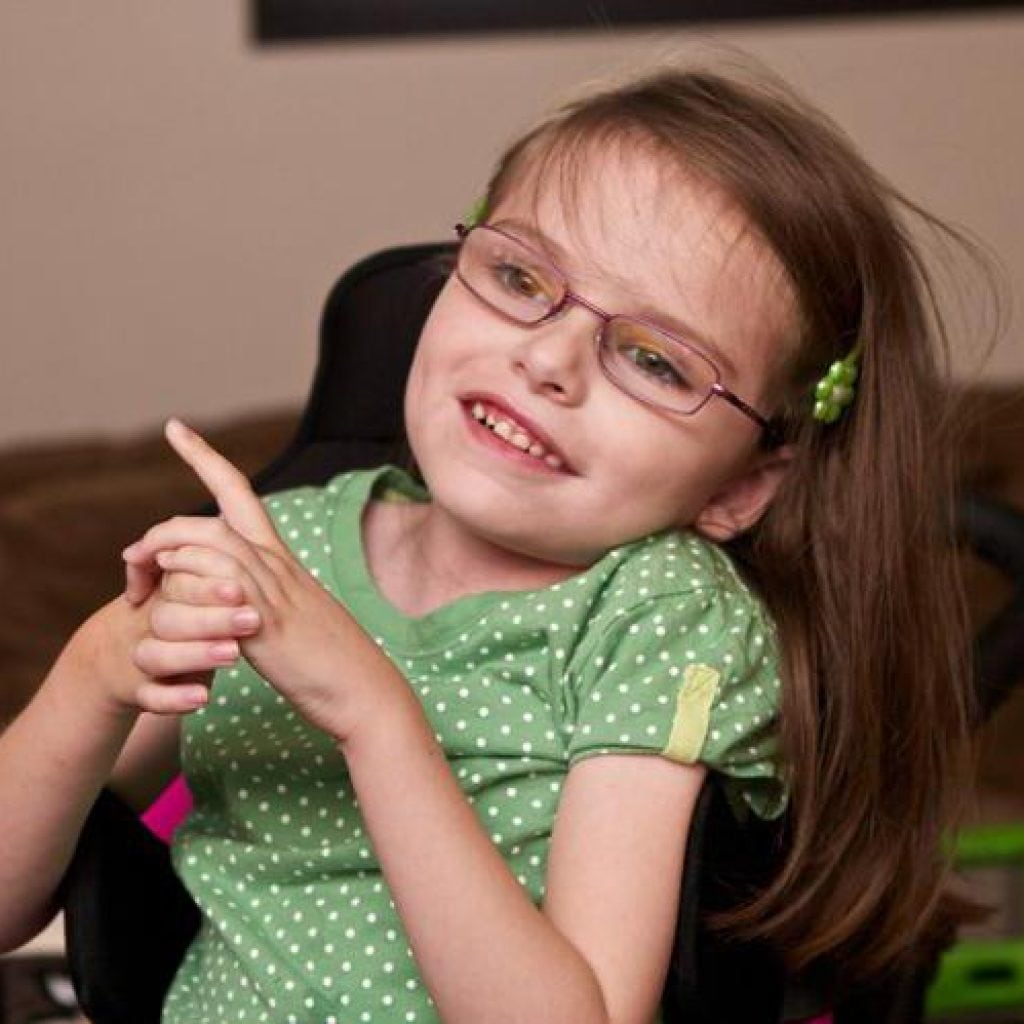
- specific motor techniques of the hands (see. photo above). Children with this syndrome cannot hold various objects in their hands. They show the same stereotypical movements, reminiscent of finger busting or hand claps at the level of the chest. Children sometimes hit themselves with pens on various parts of the body.
- development of mental retardation, there is no desire to learn something new. Children under 1 year old can learn to walk, speak, recognize others (parents), but during a certain period of time they lose these abilities.
- decrease in the size of the brain and head circumference.
- the development of seizures resembling epileptic seizures.
- curvature of the spine due to a violation of the spinal segment leading to muscular dystonia;
- speech impairment;
- slow growth;
- development of pathologies of the cardiovascular system, digestive tract, etc.;
- breathing disorder, at night or during the day during sleep, there may be periods of lack of breathing;
- while eating with food, children can swallow air, provoking regurgitation.
Read also:Down syndrome: what does the extra chromosome carry?
Stages of the disease
There are 4 stages of the disease:
- First stage develops at the beginning of the fourth month of life and can last up to two years. There are deviations in the physical development of the child, there is no interest in what is happening, apathy, delayed head growth, weight gain, low muscle tone and lethargy.
- Second stage develops by the year of life, when the child crawls, turns over, walks, speaks. Within a year, these acquired skills disappear. He does not remember how to talk, walk, etc. The child has stereotypical hand movements, reminiscent of washing under the tap, breathing problems during rest and not only, coordination disorder movements. A convulsive syndrome similar to an epileptic seizure also occurs. Treatment of an epileptic seizure does not clear up the seizures.
- Third stage more often observed at the end of the second beginning of the third year. This stage is also called stabilization. At this stage, the development of the brain regresses, that is, mental retardation develops, the number of epileptimorphic seizures decreases. The child can be in one position for a long time (is "in himself"), but there is no anxiety and screams.
- Stage four is the most severe, develops by about 5-10 years and is characterized by irreversible degenerative processes in the central and peripheral nervous systems, as well as in the joints and spinal column. Curvature of the spine develops, leading to 3-4 degrees scoliosis. Characterized by cachexia (weight loss of the child), muscle hypotension, reduction in the size of the brain, pain in joints and muscles. Epileptic seizures are very rare.
The course of the disease is based on an early diagnosis. The earlier the diagnosis was made, medical and preventive measures were taken, the more favorable the course of the disease. In different children, the course of pathology occurs in different ways. If the diagnosis was made at a later date, there is a high risk of developing severe complications that interfere with the normal life of a sick child.
Diagnostics
Diagnosis of the disease is based on the collection of anamnesis (history) of the disease, the patient's life, genetic changes in the genealogical tree, that is, the presence of this pathology in the family / relatives.
Read also:Dandy Walker Syndrome in Children: Causes, Symptoms and Treatment
The main research method is genetic analysis, which indicates a defective X chromosome and with the help of this analysis, Rett disease is confirmed.
Instrumental methods of studying the brain are carried out:
- CT scan: with its help, brain structures and pathological disorders are analyzed. Identify extrapyramidal disorders (impaired coordination of movements, speech impairment, etc.). And there are also signs of a lack of brain development.
- Electroencephalography: examine the structures of the brain, determining bioelectric activity. The slowed background rhythm confirms the presence of an X chromosome mutation.
With Rett syndrome, additional research methods are carried out that can confirm or deny pathologies of other organs and systems at different stages of the disease:
- Electrocardiography, echocardiography indicate a pathology of the heart. May be arrhythmia, rapid pulse and chronic heart failure in large or small circles of blood circulation.
- Abdominal ultrasound indicate the pathology of the digestive tract, liver and bile ducts. Less often, pathologies of the urinary system are detected.
- Electroneuromyography: with its help, the conduction of impulses through the nerve endings of muscles, joints, etc.
The diagnosis at the initial stages is based on the clinical manifestations of the disease. The more pronounced the clinical signs at the age of the inappropriate stage, the shorter the child's life span.
Differential diagnosis of Rett syndrome in children should be carried out with autistic. That Rett syndrome and autism have the same clinical manifestations.
Autism - a degenerative disorder of the nervous system that develops when the formation of the head is disturbed brain and manifested by a lack of communication, limited interests and stereotypical repetitive actions.
| Sign | Rett syndrome in children | Autism |
| Disorder of physical development with a pronounced clinic, age - 1 year. | Practically not detected | Often expressed |
| Stereotyped motor abilities | Monotonous repetitions of hand movements reminiscent of washing within 1 belt. | Varied, multifaceted hand movements with different areas. |
| Identical movements with objects | Absent | Present. For example: flicking a pen, opening / closing a book, etc. |
| Impaired coordination (damage to the cerebellum and brainstem) | Progressive character, up to immobility. | The movements resemble mannered, but there is no pathology of the cerebellum. |
| Epileptymorphic seizures | Frequent repetitions depending on the stage. | Rarely or absent altogether. |
| Breathing disorder | Apnea (lack of breathing) at night or during the day. | None. |
| Impaired bone growth of the upper and lower extremities, head | There is. | Does not arise |
Treatment

Treatment for Rett syndrome is based on symptomatic treatment.
It is impossible to eliminate the cause of the development of the disease and its further progression, but it can be slowed down.
Rett syndrome treatment includes: drug therapy, preventive and therapeutic physical education.
- With a therapeutic purpose, for the relief of epileptimorphic seizures, use anticonvulsants (Difenin, Diazepam, Clonazepam, Carbamazepine).
- To regulate biological rhythms (day / night) use Melatonin.
Read also:Ehlers-Danlos Syndrome

Preventive measures are aimed at eliminating venous stasis in the vessels of small and large circles of blood circulation, prevention of the development of acute heart failure, the development of edema lungs, stroke, subarachnoid hemorrhage.
- To improve cerebral circulation and blood circulation of blood vessels of all organs and systems, use: Felodipine, Sermion, Instenon.
- To prevent blood clots, use antiplatelet agents (Aspirin) and anticoagulants (Heparin).
- To improve brain activity, use nootropic drugs: Piracetam, Nootropil, Pantogam, Actovegin.
- Means for the stable functioning of the abdominal organs: heart, liver and etc.
- Homeopathic remedies are used to combat mental retardation (only by doctor's prescription).
Rehabilitation measures for Rett syndrome.

Taking medications must be combined with remedial physical culture (exercise therapy) and other methods of rehabilitation.
Exercise therapy allows you to improve the child's posture and prevent the development of spinal curvature or the progression of scoliosis.
With the help of exercise therapy, you can teach a child to move around. Exercise therapy must be combined with the techniques of a chiropractor and therapeutic massage.
Music therapy according to the Tomatis scheme is most effective in Rett syndrome. Specially created music, listened to by children, leads to an improvement in the child's psycho-emotional indicators.
They begin to come into contact with children and adults. On the positive side, music therapy can be done at home.
In order for the child to adapt to the environment, you can use:
- art therapy: creative activities in a group or separately at home with music, painting, etc.;
- hippotherapy: horseback riding;
- hydrorehabilitation: treatment with "water", for example: mineral baths, hydromassage, etc .;
- dolphin therapy: swimming in pools with dolphins;
- special classes with dogs / cats.
It is also necessary to consult speech therapists, psychologists who are able to help the child "find himself", make contacts with adults, get out of the depressive syndrome.
Nutrition
With this pathology, nutritional therapy should be observed.
A diet high in fat + vitamins and fiber.
It is necessary to feed the child with high-calorie foods and special substances to increase body weight. A meal should be taken every 3 hours.
In the case of malnutrition, cachexia (sudden weight loss) develops.
Life forecast
How long do children with Rett syndrome live?
The life expectancy of such children with timely diagnosis, correct drug and preventive therapy is quite high. Girls live to be 30-40 years old. Boys, unfortunately, are at best up to 1-2 years old.
Children die in 4 stages, with the development of severe complications: cerebral edema, heart failure, intestinal necrosis, pathology of the digestive tract, dysfunctional pathologies of the structures of the head brain.