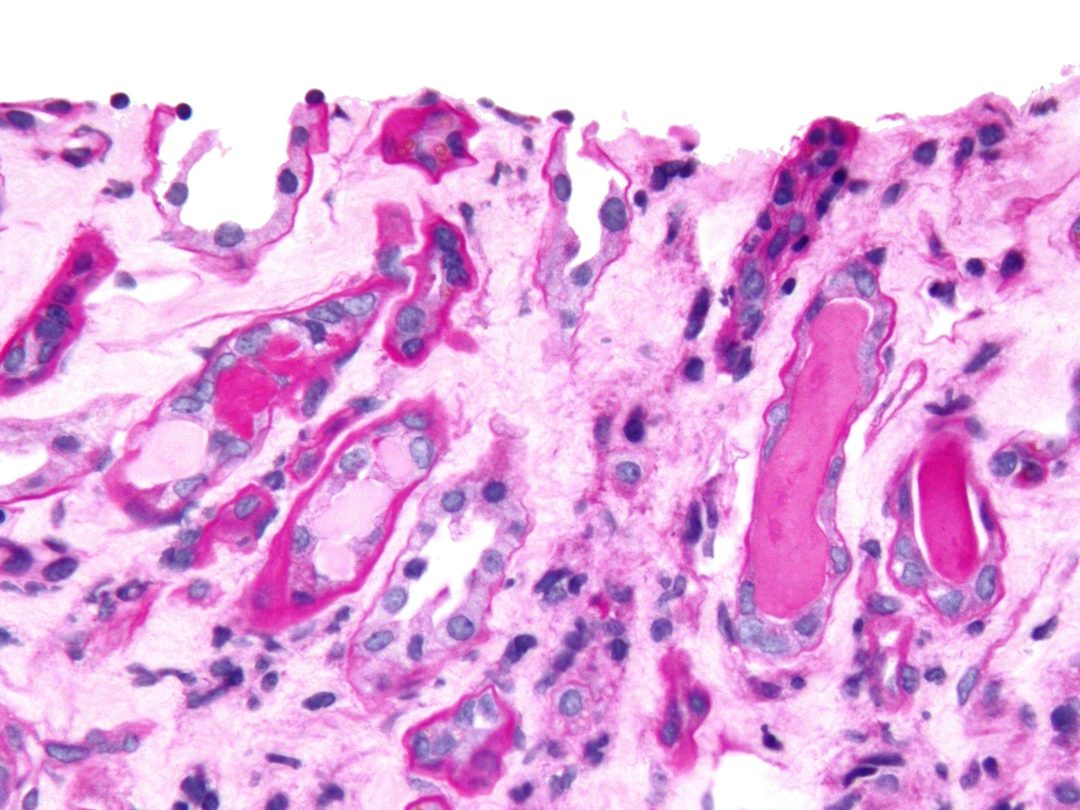
Rheumatism: causes, symptoms and treatment in adults and children
What is rheumatism?
Many people ask this question. Rheumatism (Sokolsky-Buyo disease) - This is a recurrent inflammation of the connective tissue, which often occurs due to the presence of beta-hemolytic streptococci (pyogenic streptococci) in the body.
The etiology of rheumatism includes various infectious diseases, which are accompanied by severe complications and lesions of the connective tissue of most body systems.
The inflammatory process of the connective tissue, which forms various kinds of tendons, cardiac valves and ligaments are caused not by pyogenic streptococci, but by pathological reactions of the immune systems. Subsequently, aseptic immune inflammation develops.
Content
- Causes of rheumatism
- Provoking factors for the development of rheumatism
- Symptoms of rheumatism
- Classification of rheumatism
- Diagnosis of rheumatism
- Treatment of rheumatism
- Medication for rheumatism
- Surgical intervention
- Additional treatments for rheumatism
- Food
- Folk remedies
- Exercises
- Prevention of rheumatism
- Rheumatism prognosis
- Related Videos
Causes of rheumatism
The development of rheumatism begins a few weeks after the entry into the body of an infection that is caused by beta-hemolytic streptococci of the second type. The causes of rheumatism include:
- young age of the patient. More often adolescents are susceptible to rheumatism, and this disease is less common in adults and young children;
- unfavorable social conditions (unsanitary conditions, etc.);
- severe hypothermia;
- improper diet (lack of useful vitamins and minerals in the diet);
- various allergic reactions;
- heredity;
- weak immunity.
Provoking factors for the development of rheumatism

In addition to the causes of rheumatism, there are certain factors that provoke the development of inflammation. Some infectious diseases can cause inflammation:
- acute otitis media - inflammation of the tissues of the mastoid process, auditory tube and tympanic cavity;
- angina or chronic tonsillitis - an acute infectious disease that affects the tonsils. The causative agents of the disease are viruses, fungi, bacteria, etc .;
- scarlet fever - an infectious disease caused by the bacterium Streptococcus pyogenes (group A hemolytic streptococcus). It manifests itself as a rash on the skin, severe intoxication, fever, redness of the throat, tongue, etc.;
- childbirth fever is a common name for several diseases caused by infection during childbirth;
- group A beta-hemolytic streptococci;
- erysipelas - chronic, infectious and often relapsing disease. The cause is group A beta-hemolytic streptococcus. It is manifested by redness of the skin, more often on the face or lower leg.
According to statistics, 97% of patients who have had streptococcal infection develop immunity, but other people a protective reaction may not form and subsequently infection appears as a complication in the form of rheumatic attacks.
Symptoms of rheumatism
The symptomatology of the disease is polymorphic and depends on the activity of inflammation, the degree of its severity, and involvement in the process of the work of internal organs. The symptoms of rheumatism are directly related to streptococcal infection. The development of the inflammatory process lasts for two weeks.
The main symptoms of rheumatism are as follows:
- low-grade fever (up to 39 ° C) often occurs with acute rheumatic fever in children;
- fatigue, weakness;
- headaches that turn into migraines;
- excessive sweating.
Also, in addition to the classic symptoms of rheumatism, some manifestations may appear. These include:
-
arthralgia - painful sensations in large or medium joints. Arthralgia happens:
- multiple;
- symmetrical;
- volatile.

The symptoms of arthralgia are as follows:
- swelling;
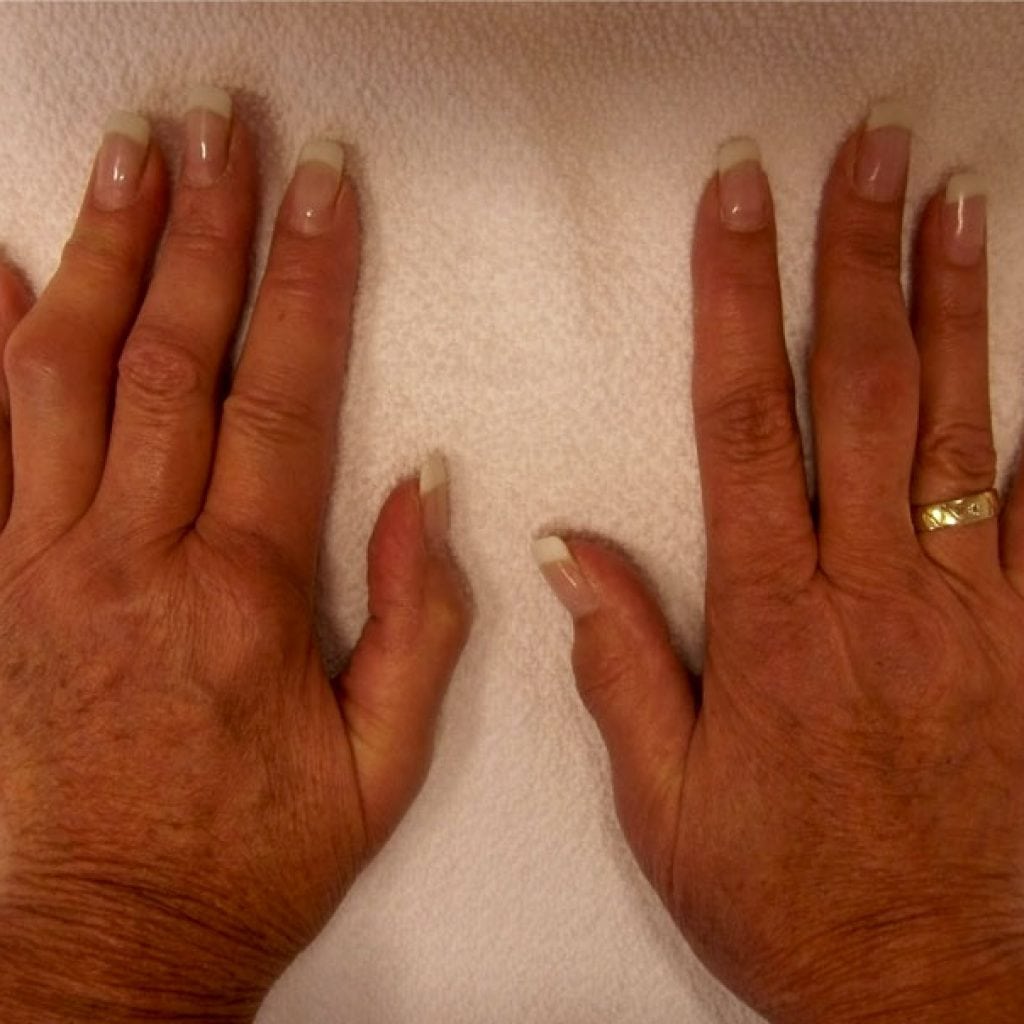
- redness of the skin (see photo above);
- high body temperature;
- severe limitation of movement of the affected joints.
- rheumatic arthritis- one of the most common systemic inflammatory manifestations of joint rheumatism. Usually refers to the manifestations of rheumatism of the hands, but at the same time it has a benign character. After a few days, the pain subsides, but minor discomfort can persist for a long time;
- rheumatic carditis - manifestation of active rheumatism, leading to the development of organic heart disease. Violation of the heart is observed in adults (80%). With rheumatic carditis, an inflammatory process develops in all membranes of the heart;
Symptoms of rheumatic carditis include
- pain in the region of the heart;
- heart palpitations;
- violation of the heartbeat;
- strong dyspnea;
- general malaise, fatigue and lethargy.
Often with rheumatic heart disease, the endocardium, myocardium and pericardium are simultaneously affected.
Isolation of the affected myocardium (myocarditis). In any case, the myocardium is involved in the inflammatory process.
Read also:Gout (gouty arthritis)
With rheumatism, damage to the central nervous system is possible. In this case, a peculiar symptom is rheumatic chorea - a rare disorder of motor function, due to rheumatic fever. Acute rheumatic fever can cause complications in children. With rheumatic chorea, hyperkinesis occurs - muscle weakness, mental instability, impulsive twitching of some muscles.
Much less often, skin lesions appear:
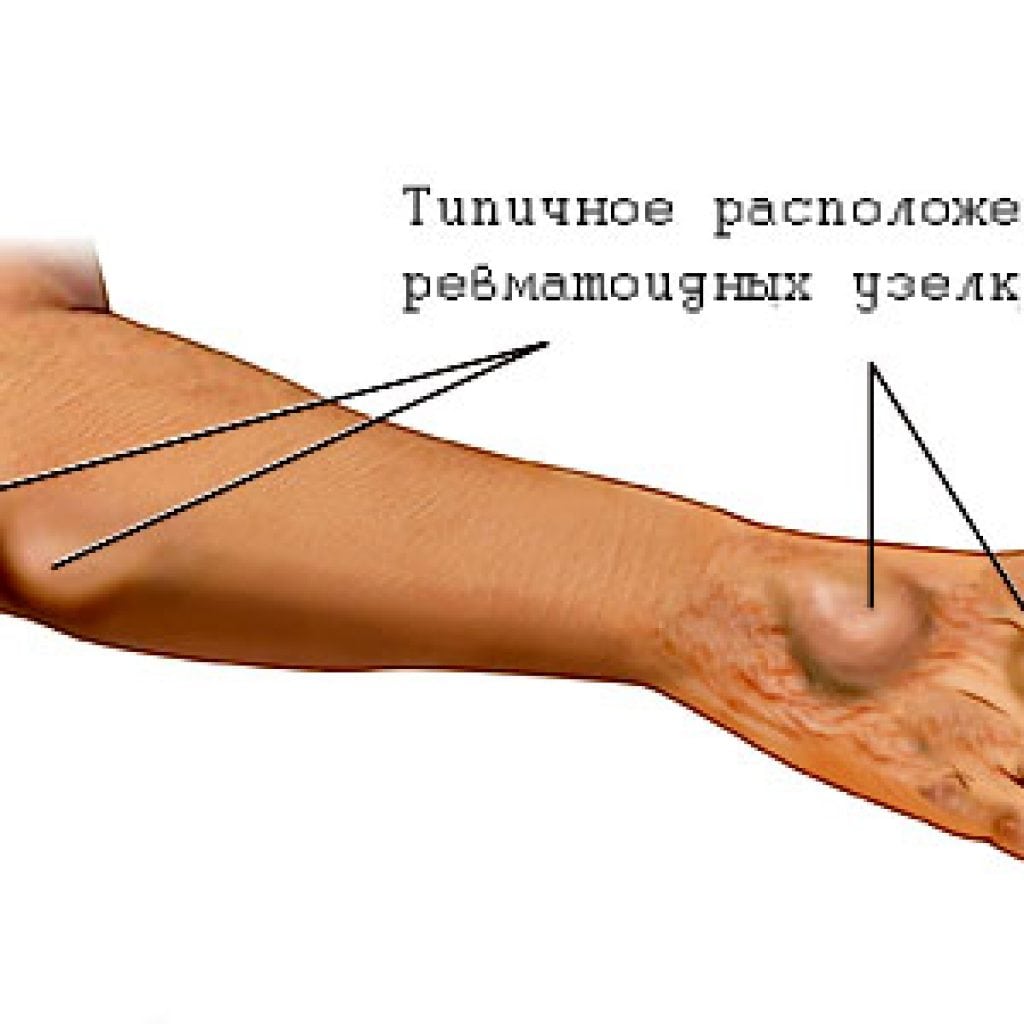
- subcutaneous rheumatic nodules - dense to the touch, painless, round in shape and inactive neoplasms. They can be both single and multiple, localized in large or medium joints with rheumatism of the legs;
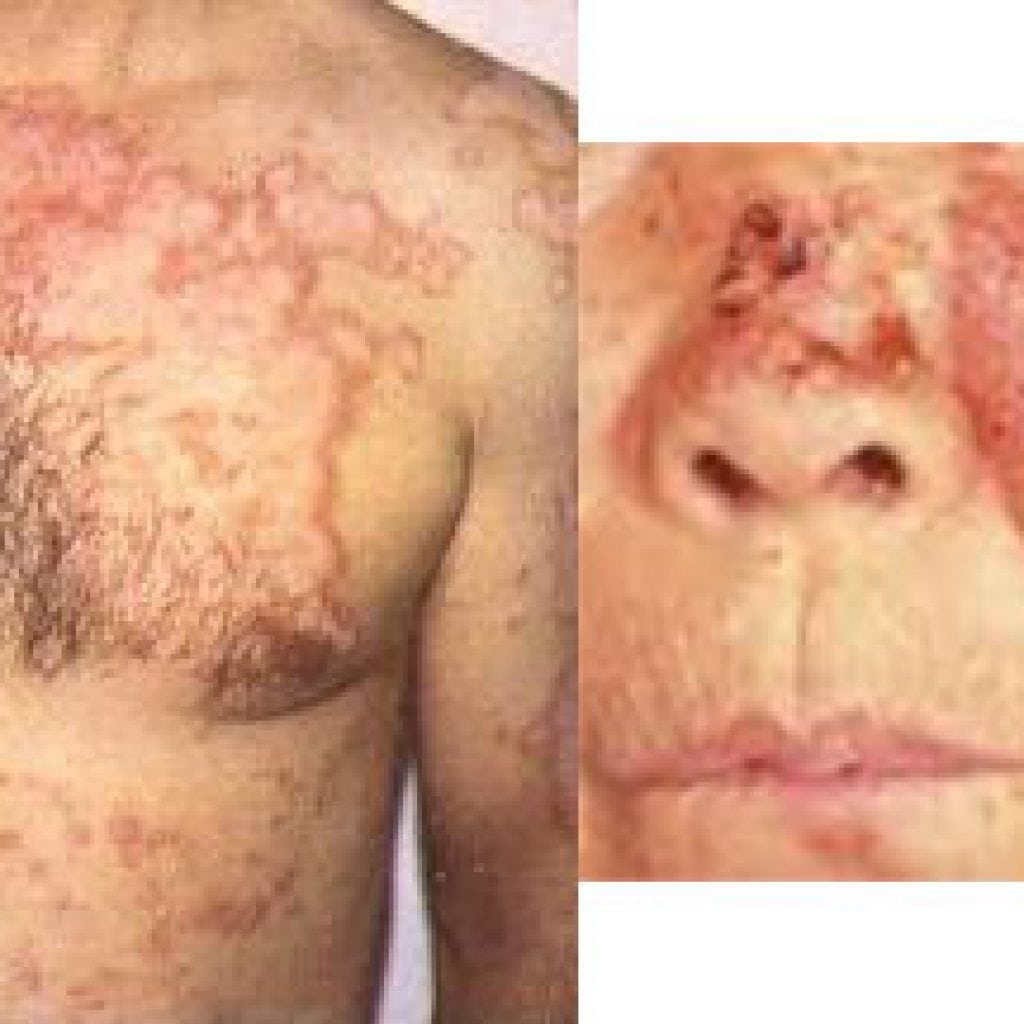
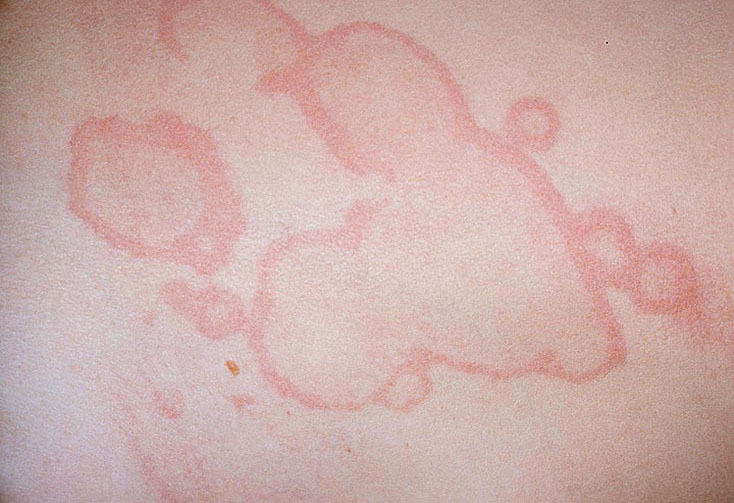
- ring-shaped erythema is an infectious and allergic disease. Ring-shaped erythema occurs in 12% of patients with rheumatism and is manifested by an annular rash - a light pink ring-shaped rash.
With rheumatism, damage to the lungs, abdominal cavity, kidneys and extremities (legs and arms) is not excluded. But today, damage to internal organs is rare. Rheumatic lesions of organs and extremities have their own clinical picture:
- lung damage. The course passes in the form of pleurisy, diffuse carditis and rheumatic pneumonia;
- kidney damage. During the analysis, protein, erythrocytes are observed in the patient's urine, which indicates nephritis - a group of inflammatory kidney diseases with different clinical and pathomorphological specifics with different etiopathogenesis;
- damage to the abdominal organs is characterized by the development of abdominal pain syndrome. The syndrome manifests itself:
- acute pain in the abdomen
- frequent gagging
- acute rheumatic fever in children and severe tension of the muscular system of the abdominal cavity.
Recurrentrheumatic attacks occur due to hypothermia, various infections and physical stress. The course of the process is due to the symptoms of heart lesions.
- Rheumatism of the legs. It develops due to streptococcal infection and is a complication that affects the lower extremities. The joints are affected, the amount of intra-articular fluid increases. Loss of motor activity may occur if rheumatism of the legs is not treated;
- rheumatism of the hands. It is manifested by swelling of the fingers, redness and a noticeable increase in temperature over the sore joint. To make sure of the rheumatism of the hands, it is necessary to bend and straighten the fingers. If it is hard to do such an exercise and soreness appears, then this is a sign of rheumatism.
Classification of rheumatism
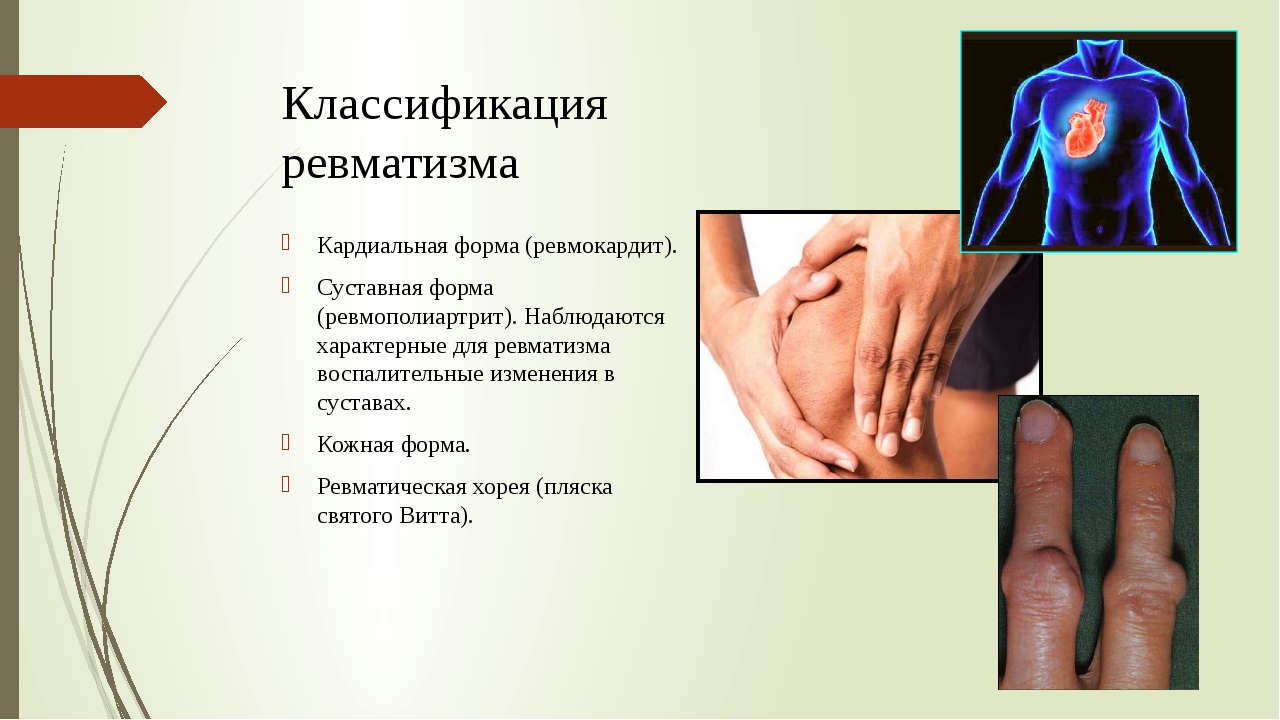
Rheumatism is a disease with a complex pathogenesis. In addition to various symptoms, rheumatism is divided into phases, stages of connective tissue damage and the degree of dynamism of the inflammatory process. Rheumatism is divided into two phases: active and inactive. They are determined after studying all the symptoms and the results of laboratory tests.
-
Active phase. Initially, the patient begins a rheumatic attack and can be both primary (first appeared) and secondary (relapses of the disease). Primary rheumatism in children is more common than in adults. The classic sign of rheumatism in the first phase is body temperature, which is why the phase is also called rheumatic fever. The clinical manifestations of rheumatism in the first phase include:
- rheumatic heart disease;
- rheumatic arthritis;
- rheumatic chorea.
In addition to the above manifestations, in the first phase, there are changes in the laboratory blood test. Sharp the level of neutrophils increases, much erythrocyte sedimentation rate increases, high levels of C-reactive protein, streptococcal antibodies and serum immunoglobulins.
Depending on the severity of the inflammatory process first phase divided into 3 degrees of dynamism:
- Minimum. The first degree has a favorable course. Clinical symptoms are mild, possibly the development of small chorea or protracted latent rheumatic heart disease. In this case, the motor function is not disturbed, and the body temperature rises slightly or remains within the normal range. On the electrocardiogram, any changes are subtle;
- Moderate. The second degree is characterized by moderately pronounced symptoms. Usually it is chorea, moderate polyarthritis, mild symptoms of rheumatic carditis with minor circulatory failure. Skin rashes are possible. Internal organs are not affected. A laboratory blood test reveals a high erythrocyte sedimentation rate (20 to 40 mm), slight leukocytosis, streptococcal antibodies doubled;
- Maximum. Signs of rheumatism at the maximum degree are considered severe. The active phase of the 3rd degree often occurs during the first rheumatic attack. The body temperature reaches 40 ° C, accompanied by pronounced signs of rheumatic heart disease, the presence of exudate in the inflamed focus and impaired blood flow. Internal organs and joints are damaged, severe skin rashes and rheumatic pains appear. The erythrocyte sedimentation rate is more than 40 mm, neutrophilic leukocytosis is observed (the reaction of white cells in the blood on various inflammatory processes), streptococcal antibodies are exceeded and a high level of C-reactive squirrel.
Read also:Ankylosing spondylitis in women: symptoms, prognosis for life, treatment
Inactive phase, also called remission of the disease. When signs of rheumatism do not appear within 1 year, only then can we talk about remission. At this time, the patient's condition is satisfactory, signs of rheumatism of the joints do not appear, the work of the heart is not disturbed and no complaints are received. The blood counts are completely normal. Today, many experts argue that absent relapses within five years give a chance for a favorable prognosis of rheumatism.
In addition to the phases of the disease, there are stages of changes in connective tissue. There are 4 stages of change:
- Mucoid swelling stage. Puffiness and branching of connective tissue fibers appear. The fibers accumulate acidic mucopolysaccharides, which have osmotic properties, which attract a lot of water. Locally, mucoid swelling is located in the membranes of the heart and is considered a reversible process;
- Fibrinoid swelling stage. At the end of this stage, the changes acquire an irreversible process, as a result of which necrosis (death of tissues in the body) develops. Before this, the fibers are completely destroyed, followed by the release of fibrinogen and the transformation of the lesion focus into a structureless area with fibrinoid masses. The result of this pathological process is fibrinoid necrosis of the connective tissue;
- Granulomatosis. This stage is characterized by the formation of a granuloma with a necrotic center in the focus. Around the granuloma, the accumulation of large cells begins - mast cells, fibroblasts and lymphocytes. The main place where granulomas form is myocardium, cardiac valves and joints;
- Sclerotic stage. At the last stage of changes in connective tissue, the inflammatory process ends. Affected cells are replaced by scar tissue with a complete loss of functioning.
Diagnosis of rheumatism
Diagnosis of rheumatism is based on confirmation of the presence of streptococcal infection in the body, as well as on the study of large and small manifestations of the disease. Major manifestations are: rheumatic arthritis, chorea, carditis, rheumatic nodules and erythema. Minor manifestations are divided into:
- clinical (arthralgia, fever, etc.);
- laboratory (C-reactive protein positive, high erythrocyte sedimentation rate, leukocytosis).
Instrumental diagnostics are also used (electrocardiography, radiography, ultrasound examination of the heart).
Supporting evidence that streptococcal infection is the cause of the inflammatory process is: high titers streptococcal antibodies, bacteriological culture from the throat of beta-hemolytic streptococci of the second type and recently transferred infectious diseases.
Thanks to the X-ray of the lungs, it is possible to determine a decrease in the ability to contract the myocardium, an increase in the size of the heart and a change in its shadow. An ultrasound examination is also carried out, with its help, defects are detected.
Treatment of rheumatism

In the active phase of rheumatism, urgent hospitalization of the patient is necessary. The diagnosis and treatment of rheumatism is carried out by a rheumatologist and a cardiologist. To eliminate the alleged infectious foci, antibacterial and instrumental methods of treatment are used.
Medication for rheumatism
For the treatment of rheumatism, various agents of different types, groups and classes are used. Preparations for the treatment and prevention of rheumatism are as follows:
- hyposensitizing (astemizole, peritol, trexil, fenistil);
- hormonal corticosteroids (cortomycetin, prednisone, kenacort, kenalog);
- non-steroidal anti-inflammatory drugs (denebol, diclofenac, arthrum, ketanol, novigan);
- immunosuppressants (apremilast, leflunomide, pirfenidone, teriflunomide);
- gamma globulins (special injections that stimulate special protective functions of the body);
- anti-inflammatory drugs (brufen, indomethacin, voltaren, amidopyrine).
As auxiliary medicines for rheumatism of the joints, antibiotics from the penicillin series are prescribed. To prevent possible relapses of rheumatism in the fall and spring, a 1-month prophylactic course is carried out with the help of non-steroidal anti-inflammatory drugs.
The combination of medicines and other pharmacological agents depends on the severity of the disease and the involvement of internal organs in the inflammatory process. In case of persistent rheumatism of the joints, intra-articular injections are used. Symptoms and treatment are closely related, since it is impossible to prescribe effective therapy without studying the symptoms.
Read also:Epicondylitis
Surgical intervention
For the operation, the patient's complaints are a decisive factor, especially with regard to various functional disorders and painful sensations. Very often, conservative methods do not give the expected result, and in this case, only surgical intervention will help.
All inflammatory-rheumatic diseases primarily affect the tendons, joints and cervical spine. Before planning and starting an operation, the surgeon shows the patient the upcoming picture of the surgical intervention, warns of the possible risk and subsequent prognosis.
Additional treatments for rheumatism
In addition to drug therapy and surgery, there are many alternative treatments for rheumatism. But it is worth remembering that the choice of methods must be approached carefully and carefully.
Food
Rheumatics need to balance their diet to maximize protein and minimize carbohydrates. It is better to eat food in portions and in small quantities, six times a day.
Useful products for rheumatism include:
- Fermented milk products contain calcium salts, which have an anti-inflammatory effect;
- Vegetables and fruits. These products have a high content of vitamin P, which is responsible for the normalization of the capillaries and general cleansing of the body. Also, other vitamins exclude the development of vitamin deficiency, which is one of the causes of rheumatism. Magnesium and potassium salts help regulate metabolism;
- Olive oil, nuts and avocados are rich in vitamin E, which is responsible for the movement of the affected joints;
- Chicken eggs, brewer's yeast, and fish oil contain selenium to relieve pain. Eggs contain sulfur, which contributes to the integrity of cell membranes;
- Fish (mainly mackerel, sardines, salmon) are beneficial because they contain omega-3 acid, which relieves inflammation;
- Liquid. A rheumatic person should drink about 1 liter of liquid per day, it can be tea, plain water or juice.
Folk remedies
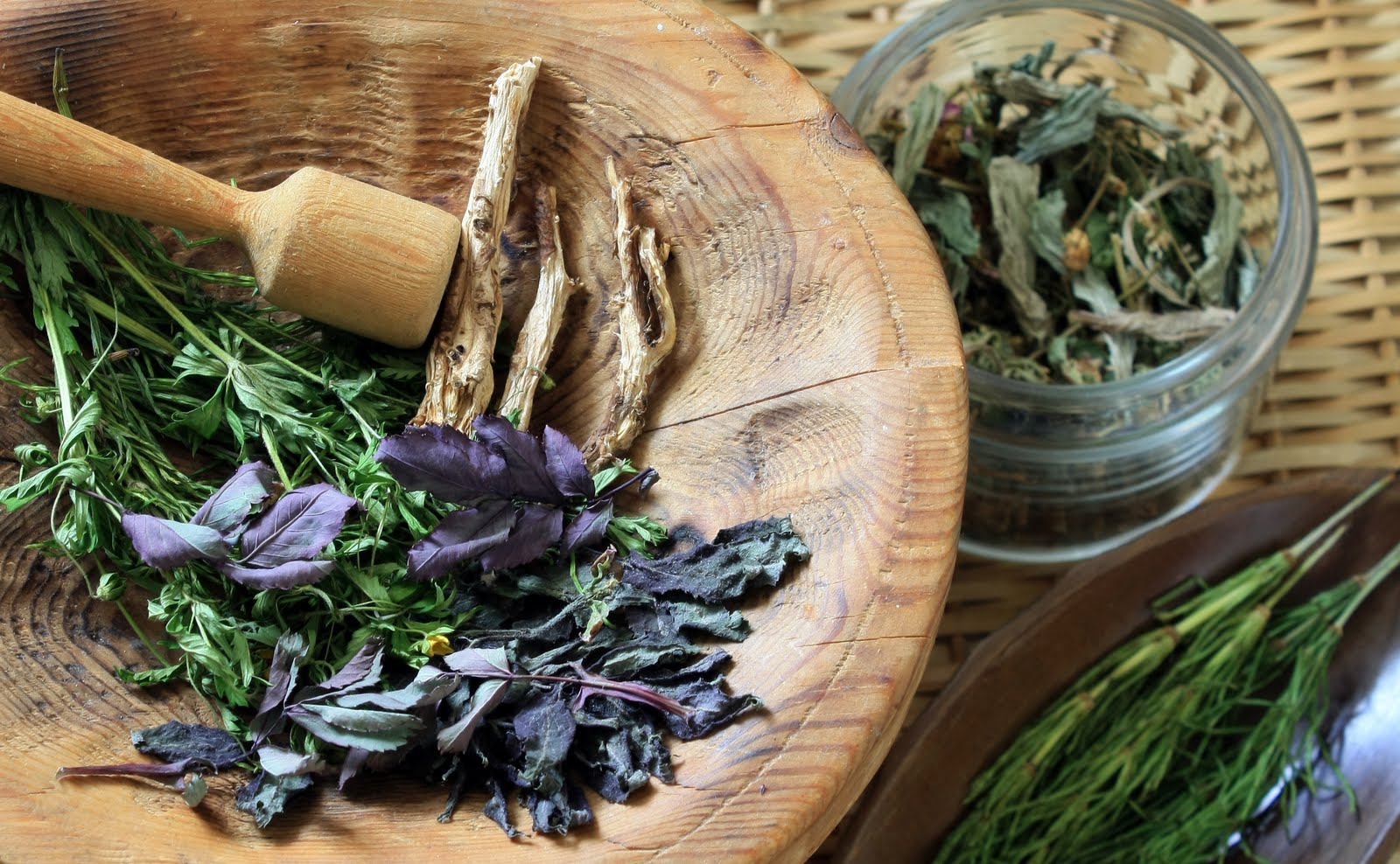
Various decoctions, compresses, mixtures, etc. can help in the treatment of rheumatism. Traditional medicine includes:
- Onion broth is useful. 3 small onions per liter of water, cook for about 25 minutes. Take in the morning and evening on an empty stomach;
- Raw potato compress. It is necessary to peel the potatoes, knead them into gruel, put them on a cloth and apply them to the sore spot overnight. During this time, the patient should be warm;
- Fresh onion compress. Grind the onion to a gruel, apply to sore joints 3 times a day for 15 minutes;
- Aspen tar and vodka. Dilute 5 drops of tar with 50 ml of vodka (50%), take every day for a month at night;
- Peeled potato juice. Take a tablespoon before meals. Potato juice effectively cleanses the body. The course of treatment should be at least four weeks;
- Lingonberry leaf tincture. Pour a tablespoon of chopped leaves with 200 ml of boiling water, leave to infuse for 30 minutes. Take 1 tablespoon three times a day.
Exercises
In order to expand the motor regime, it is necessary to engage in cycling, walking and swimming more often. This is especially useful for rheumatism of the legs.
Physical therapy must be strictly observed, a set of exercises will help improve blood circulation and prevent the formation of rheumatic nodules. Movements must be performed with a moderate amplitude. Simulations of exercises, games and play tasks are also useful, especially useful for rheumatism in children.
Prevention of rheumatism
As a preventive measure, people suffering from rheumatism are advised to consult a specialist in a timely manner in order to avoid complications. It is necessary to strictly adhere to diet, medication, adherence to bed rest and exercise complexes.
Rheumatism prognosis
Rheumatism. What is it and how to treat it, the doctor will tell you. With timely treatment of the disease, the prognosis is favorable. But it is worth remembering that due to non-compliance with the recommendations, relapses of rheumatism are possible.