Juvenile idiopathic arthritis (JIA) in children: symptoms, treatment
Content
- What is juvenile idiopathic arthritis?
- Classification
- Juvenile idiopathic arthritis symptoms
- Complications of JIA
- Diagnostics
- Juvenile idiopathic arthritis treatment
- Forecast
What is juvenile idiopathic arthritis?
Juvenile idiopathic arthritis Is a group of related childhood illnesses that begin by age 16 and include persistent or recurrent joint inflammation.
Juvenile idiopathic arthritis (JIA) is a group of rare diseases characterized by joint inflammation (arthritis). JIA can also affect other organs or connective tissue. Despite the fact that JIA is different from rheumatoid arthritis in adults, these diseases have similarities.
The cause of JIA is unknown. Although JIA is not hereditary, hereditary factors can increase the chances of it developing.
Some forms of juvenile idiopathic arthritis can cause fever, rashes, and swollen lymph nodes, and can affect the heart. The diagnosis is made on the basis of the child's symptoms and physical examination, since there is no single definitive laboratory test to diagnose this disease.
Classification
There are several forms of JIA. While each shape has different characteristics, they have similar characteristics. The JIA form is determined based on the results of a medical examination and laboratory tests. The following forms of JIA are possible:
- Oligoarticular JIA;
- Polyarticular JIA (with negative or positive rheumatoid factor);
- Enthesitis-related arthritis;
- Psoriatic JIA;
- Undifferentiated JIA;
- Systemic JIA.
A child may have one form of the disease at the time of diagnosis, but sometimes it develops into a different form as the disease progresses.
Oligoarticular JIA is the most common form and usually occurs in young girls. In this form, during the first 6 months of the disease, four or fewer joints are affected ("oligo" means "little"). The most commonly affected joint is the knee.
Polyarticular JIA is the second most common form and occurs in late childhood. In this form of the disease, five or more joints are affected (poly means many). This form is divided into two types: rheumatoid factor negative and rheumatoid factor positive.
Rheumatoid factor Is an antibody in the blood. Its high levels may appear in patients with rheumatoid arthritis, but may also occur in patients with other autoimmune diseases (For example, systemic lupus erythematosus, polymyositis, or systemic sclerosis). Children with positive rheumatoid factor have rheumatoid factor antibodies in their blood.
The rheumatoid factor positive type usually occurs in adolescent girls and is similar to rheumatoid arthritis in adults. In both types, arthritis can affect the same joint on both sides of the body (for example, both knees or two arms) and often affects the small joints of the hands and feet.
Read also:Vasculitis (angiitis): what is it, causes, symptoms (photo), types of angiitis, treatment
Enthesitis-related arthritis implies the simultaneous presence of arthritis and enthesitis (painful inflammation at the site of attachment of tendons and ligaments to the bone). It is most common in older boys who also develop symptoms in the spine (spondyloarthritis), in particular ankylosing spondylitis or reactive arthritis. Arthritis usually affects the joints of the lower body.
Psoriatic JIA usually occurs in young girls, but can also develop in older men and women (equally). Patients may have a skin disorder psoriasis or there is a family history of psoriasis in a parent or sibling.
Undifferentiated JIA is diagnosed if the disease does not meet the criteria for any other form or meets the criteria for more than one form.
Systemic JIA (Still's disease) includes the presence of arthritis along with extra-articular manifestations in the form of fever, rash, swollen lymph nodes, and inflammation around the heart and lungs.
Juvenile idiopathic arthritis symptoms
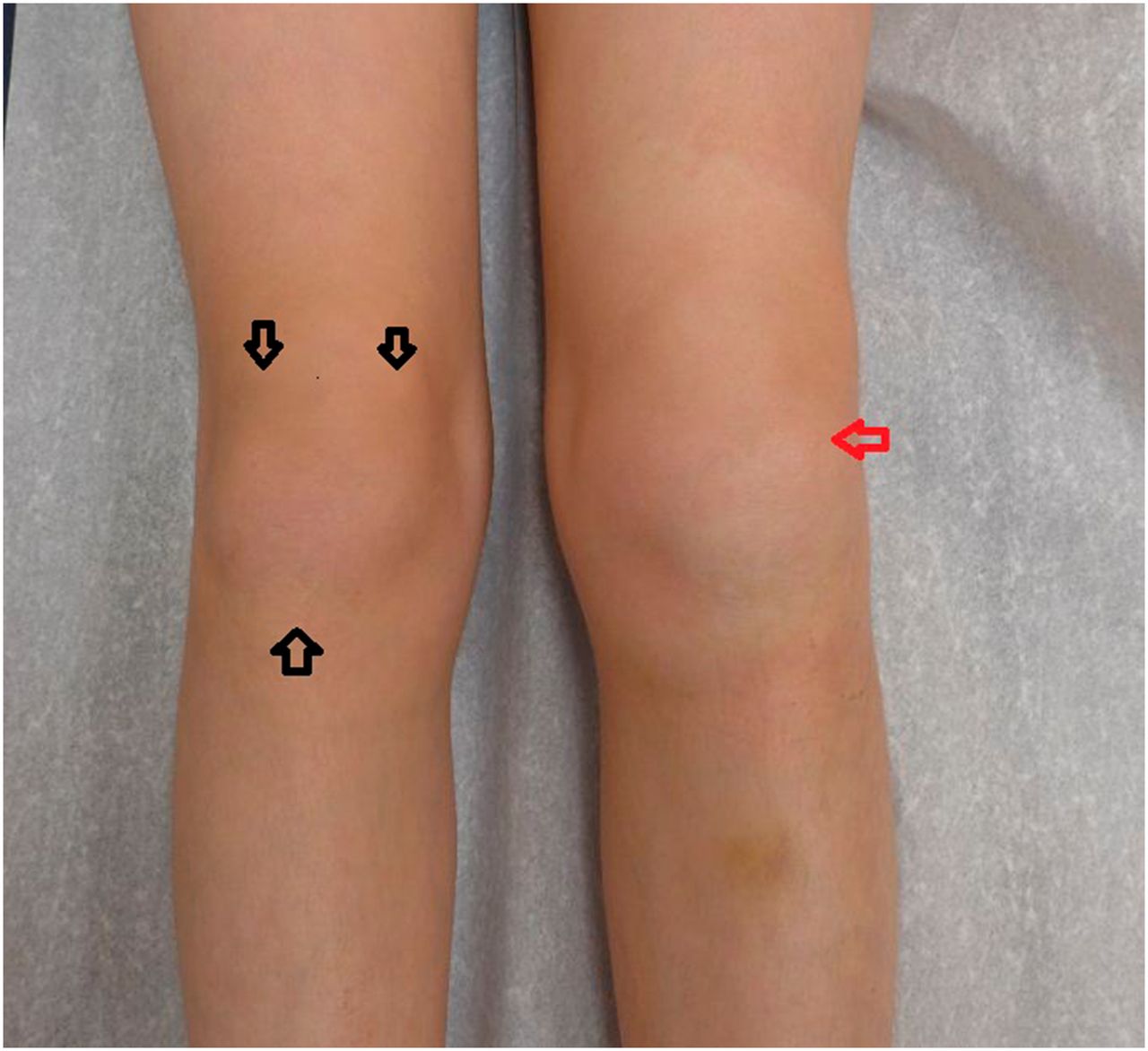
Juvenile idiopathic arthritis (JIA) causes symptoms in the joints and sometimes in the eyes and / or skin.
Joint symptoms appear with any type of JIA. On awakening, the child may feel stiffness in the joints. The joints are often swollen and hot to the touch. Joint pain develops later, but the pain may be less severe than would be expected given the size of the swelling. The pain may increase with movement in the joint. Children may be reluctant to walk or limp. If left untreated, joint pain can persist for many years. However, some children have no pain.
Enthesitis can cause soreness in the pelvis, femur, spine, kneecap, lower leg just below the knee, Achilles tendon, and the sole of the foot.
Inflammation of the eyes occurs with any type of JIA, but most often with oligoarticular JIA, and less often with systemic JIA. The inflammation usually affects the iris of the eye (iridocyclitis). Iridocyclitis in JIA usually causes no symptoms (no pain or redness), but sometimes results in blurred vision and irregular pupils. However, if left untreated, iridocyclitis can lead to scarring, cataracts, glaucoma, and permanent vision loss. Rarely, children with enthesitis-associated arthritis develop eye redness, pain, and sensitivity to light.
Skin abnormalities found mainly in psoriatic and systemic JIA. Children with psoriatic JIA may develop rough, psoriasis-like scabs on the skin, swelling of the fingers and toes, and indentations in the nails. Children with systemic JIA sometimes develop a short-term rash in the form of flat pink or orange-pink spots with a clear center - mainly on the trunk and upper legs or arms. The rash occurs for several hours (often in the evening and is accompanied by a rise in temperature) and does not always appear in the same place.
Read also:Gout (gouty arthritis)
Systemic JIA causes fever and inflammation not only in the joints. Children with systemic JIA usually have a fever and a rash that often precedes joint pain and swelling. The temperature rises and falls, usually for at least 2 weeks. Temperatures are usually highest in the afternoon or evening (often up to 39 ° C and above) and then quickly return to normal. A child with a fever may feel tired and irritable. The liver, spleen, and lymph nodes may become enlarged. Sometimes inflammation develops in the membranes surrounding the heart (pericarditis) or lungs (pleurisy), causing chest pain. This inflammation can cause fluid to build up around the heart, lungs, and other organs.
Complications of JIA
Any type of JIA can interfere with normal physical growth. Deformation of the joints may develop without treatment. If JIA interferes with the growth of the jaw, it can lead to the formation of a small chin (micrognathia). Long-term (chronic) joint inflammation can eventually lead to deformity or irreversible damage to the affected joint.
Diagnostics
A doctor diagnoses JIA based on the symptoms and results of the physical examination.
There is no single definitive laboratory test for JIA, but some blood tests help differentiate one form of the disease from another. Blood tests are performed to detect rheumatoid factor, antinuclear antibodies, anti-cyclic citrullinated peptide antibodies, and a corresponding antigen called HLA-B27, which is present in some people with rheumatoid arthritis and is associated with autoimmune diseases. However, many children with JIA have no rheumatoid factor or antinuclear antibodies in their blood.
Children with JIA who have antinuclear antibodies in their blood are at a higher risk of developing iridocyclitis. Children should be examined for iridocyclitis by an ophthalmologist (ophthalmologist) several times a year, regardless of the presence of symptoms, as iridocyclitis may not cause any symptoms, even if the inflammation of the eye has already begun. Children with oligoarticular or polyarticular JIA who have antinuclear antibodies in their blood should have an eye exam every 3 months. Children with oligoarticular or polyarticular JIA who do not have antinuclear antibodies in their blood should have an eye exam every 6 months. Children with systemic JIA should have an eye exam once a year.
X-rays may be taken to detect characteristic changes in bones and joints.
Read also:X-linked myopathy with excessive autophagy
Juvenile idiopathic arthritis treatment
Different forms of juvenile idiopathic arthritis (JIA) are treated in a similar manner, and to reduce the severity of pain and inflammation, the same drugs are used as for the treatment of arthritis in adults. Typically used to relieve symptoms non-steroidal anti-inflammatory drugs (NSAIDs) and are most effective for enthesitis-associated arthritis. However, while NSAIDs may help relieve symptoms, they do not stop the progression of joint disease.
Some antirheumatic drugs, the so-called basic antirheumatic drugs Disease-modifying PDBIs can slow the progression of JIA and significantly improve outcomes. DMARDs include methotrexate, etanercept, adalimumab, and infliximab (tumor necrosis factor alpha-protein inhibitors, involved in inflammation), as well as anakinra and canakinumab (inhibitors of interleukin-1, a protein involved in inflammation). Side effects of methotrexate include decreased production of white blood cells, red blood cells, and platelets (bone depression). brain) and the toxic effect on the liver, therefore, children taking this drug should be tested regularly blood. Toclizumab (an interleukin-6 inhibitor) is prescribed for children with polyarticular or systemic JIA. Sometimes, especially in children with spondyloarthritis, another DMARD (sulfasalazine) is used. Systemic JIA often responds well to treatment with drugs that block the effects of interleukin-1.
Doctors may enter corticosteroids directly into the affected joint or joints. Doctors try to avoid the use of systemic corticosteroids (eg, oral use prednisolone), but these drugs may be necessary in children with severe systemic JIA. If necessary, treatment with corticosteroids, to reduce the likelihood of long-term complications, which include growth retardation, osteoporosis (brittle bones) cataract and osteonecrosis (bone death), the lowest possible dose is used.
Iridocyclitis is initially treated with corticosteroid eye drops, which suppress inflammation. If this treatment fails, methotrexate is often used and, if necessary, a drug that blocks the effects of tumor necrosis factor. Eye drops dilate the pupil, thus helping to prevent permanent damage to the eye. If the eye has been damaged, surgery may be needed.
As with rheumatoid arthritis in adults, non-drug therapy is also used in children. For example, physical therapy and flexibility exercises help maintain joint strength and function.
Forecast
During treatment, 50-70% of children have asymptomatic periods (remission). The prognosis in children with polyarticular JIA with positive rheumatoid factor is less favorable. With early treatment, most children are able to lead a normal life.