Peyronie's disease: photo, what it looks like, symptoms and treatment in men
Fibroplastic induration of the penis or Peyronie's disease Is a disease characterized by a change in the structure of the genital organ (penis) due to the formation of fibrous plaques in the cavernous body of the male genital organ.
In this case, the urethra is not involved in the process, and the functions of urination are not disturbed.
The disease is quite rare, but recently the incidence has increased.
The disease got its name in honor of its researcher - the French surgeon F. Peyronie, who examined such patients as early as the 18th century. The most susceptible to this disease are middle-aged and elderly men (30-65 years old).
Content
- Causes of Peyronie's disease
- Provoking factors
- Symptoms
- Types and stages of the disease
- Diagnostics
- Peyronie's disease treatment
- Shock wave therapy
- Drug treatment
- Surgery
- Traditional methods of treatment
- Food
- Herbs
- Hirudotherapy
- Prophylaxis
- Forecast
- Related Videos
Causes of Peyronie's disease
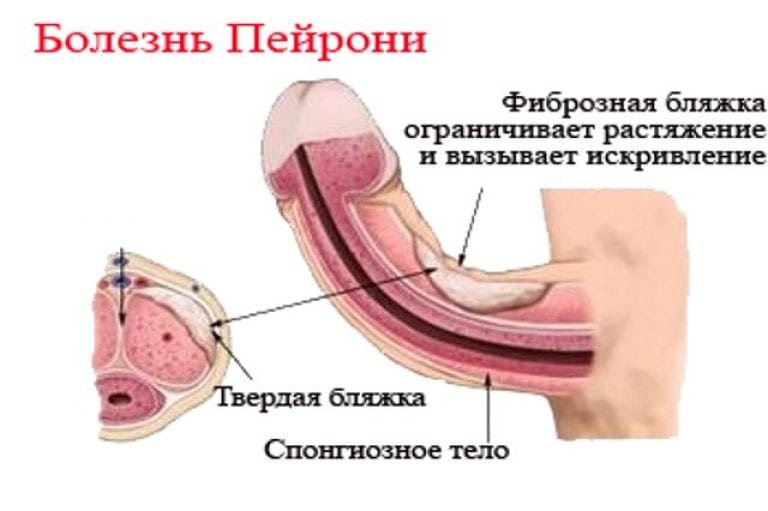
The specific causes of the onset of the disease have not been identified.
Experts believe that Peyronie's disease is acquired as a result of regular microtraumas.
Against this background, microcracks appear in the cavernous body of the penis, which eventually turn into scars.
With constant injury, the inflammatory process begins and fibroblasts (cells of the body's connective tissue) are included in the work.
Plaques appear in the tissues, which, becoming hard, lead to deformation of the penis.
It is possible that the disease is endocrine in nature. Peyronie's disease is also hereditary, but in most cases it is acquired.
Provoking factors
It is believed that there are a number of factors that can trigger the acquisition of the disease in men:
- diabetes;
- high blood pressure;
- violation of metabolic - fatty processes;
- diseases of the cardiovascular system;
- smoking;
- excessive alcohol consumption;
- trauma to the penis;
- gout;
- deficiency of calcium and vitamin E;
- reception of funds to combat impotence for a long time;
- physiologically short urethra.
In most of the patients, Dupuytren's contracture is diagnosed - a fibrous change in the palmar aponeurosis, leading to a change in the working capacity of the palm and fingers.
What speaks of a violation of collagen production. Also, fibroplastic induration of the penis is hereditary.
Symptoms
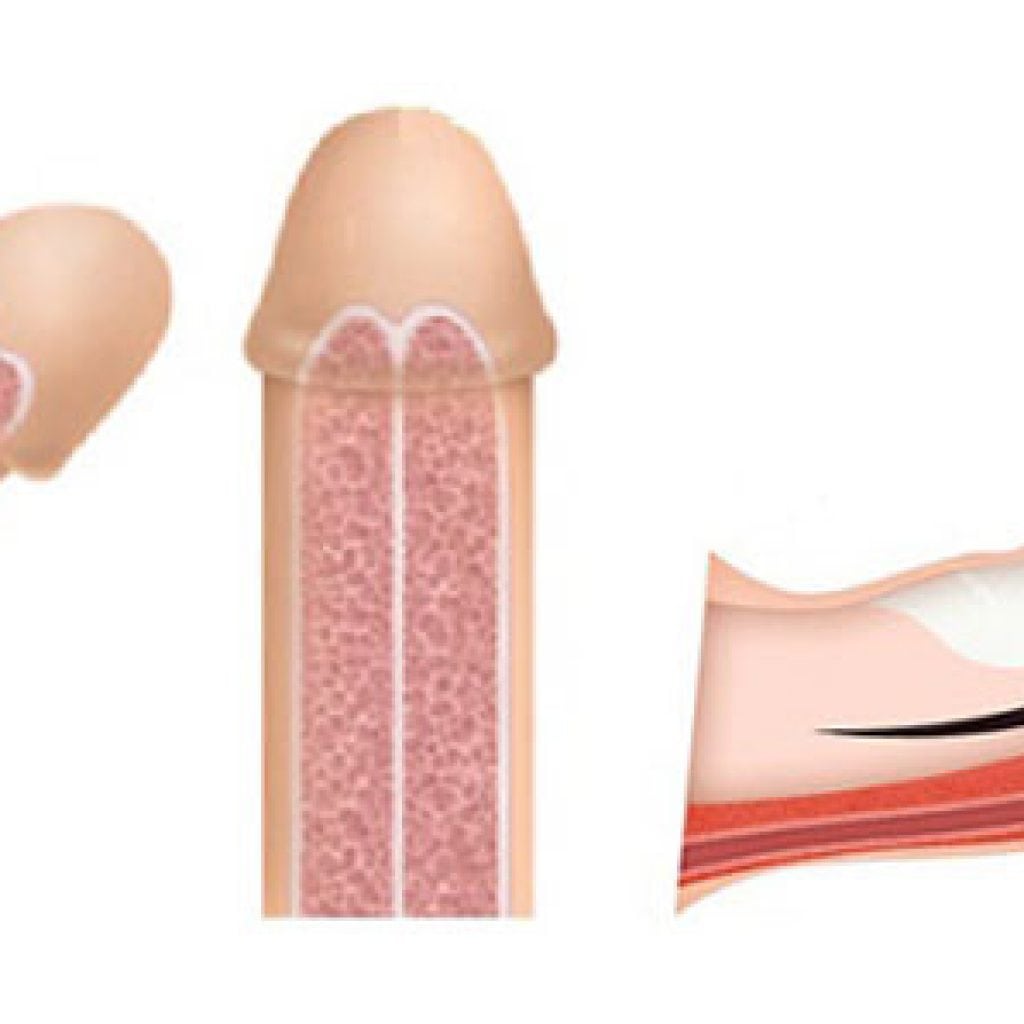

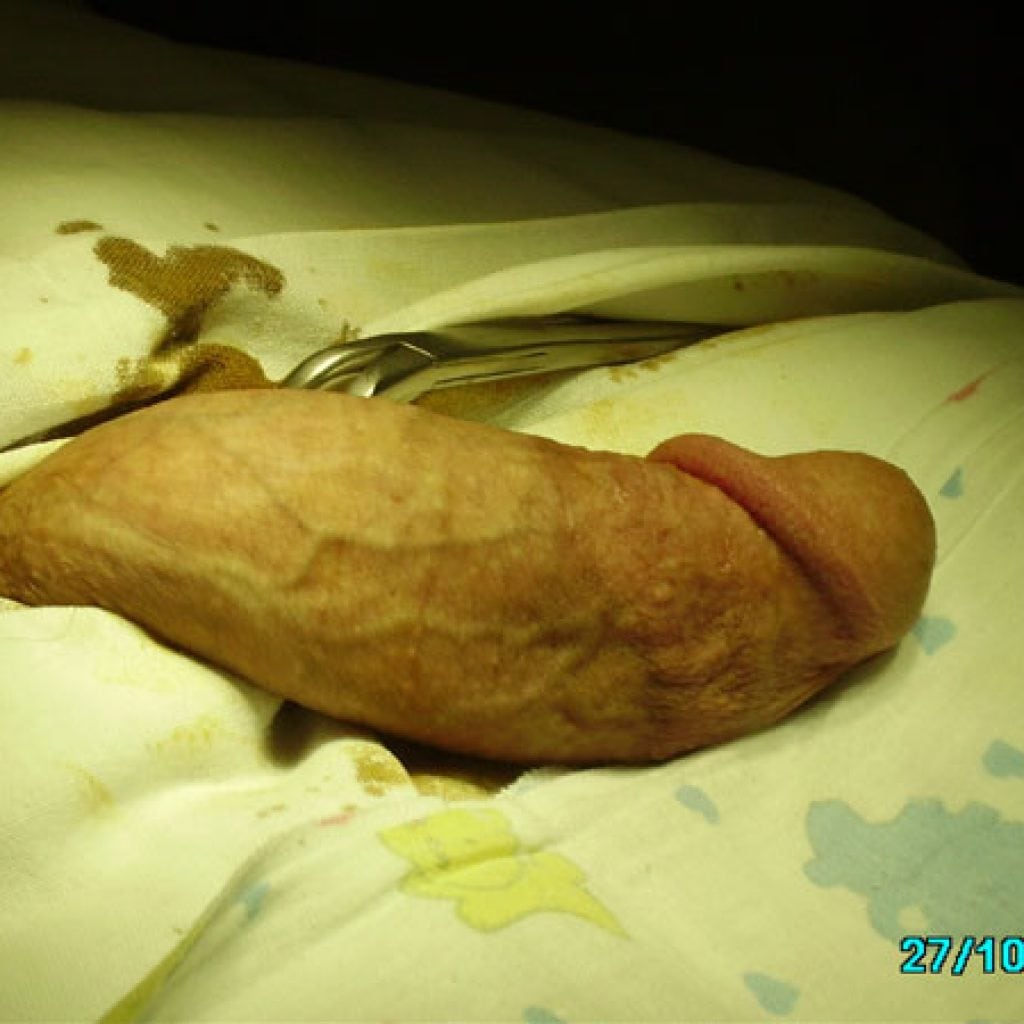
Symptoms of Peyronie's disease include:
- pain syndrome during sexual intercourse and at rest;
- deformation of the structure of the male genital organ in any direction (as it looks, see. photo above);
- the occurrence of seals;
- drop in the level of erection - during arousal, the penis has a shorter length and density.
Types and stages of the disease
According to the type of changes in the location of the penis, it is divided into:
- dorsal - upward direction of the penis;
- ventral - the male genital organ is curved downward;
- lateral - the penis is tilted to the side.
Read also:The main symptoms and methods of treatment of urolithiasis in men
The disease has 2 stages:
- 1. the appearance of plaques in the cavernous body of the penis, the duration of the process takes 6-18 months;
- 2. the stage of manifestation of the disease, symptoms occur.
Based on the stage of the disease, the disease is divided into:
- pain stage - men experience severe pain during rest and erection. Sometimes there is no pain syndrome, but the reason for going to the doctor is the appearance of plaques, which are clearly felt.
- functional stage - not only pain is noted, but also the impossibility of sexual intercourse.
Diagnostics
Basically, it is possible to establish the presence of the disease when visiting a urologist. It is enough for a specialist to conduct a visual examination and palpation, since the plaques are quite well felt on the back of the penis.
Although it is better if the patient brings a photo of the penis during an erection, this will allow you to see the curvature of the penis. But to identify the causes and the final diagnosis, the following activities are carried out:
- a complete history of the patient is collected, namely, the past diseases, including those of close relatives, in order to exclude the hereditary factor;
- ultrasound diagnostics is performed to assess the compaction;
- MRI is the most reliable way to accurately identify Peyronie's disease;
- cavernosography - used to assess the state of the cavernous body of the penis;
- X-ray - helps to identify fibrous plaques and their location.
When making a diagnosis, it is important to differentiate the disease from cancer, tuberculosis and syphilis.
Peyronie's disease treatment
Peyronie's disease is slow enough that there are different types of treatment.
If the disease is detected at an early stage, drug therapy is usually prescribed and a wait-and-see approach is followed.
The patient is under the supervision of a specialist throughout the year. If tactics and treatment are unsuccessful, then they resort to surgery.
In more than half of the cases, medications cause regression of pathology.
Some patients are helped by an extender, a device for aligning the penis.
In addition, conservative treatment is used, which involves taking and injecting drugs at home. This helps to avoid the formation of fibrous plaques. Taking medications is able to normalize metabolism, increase the level of vitamins and collagen.
One course lasts 1-3 months, then the examination follows and the course is repeated.
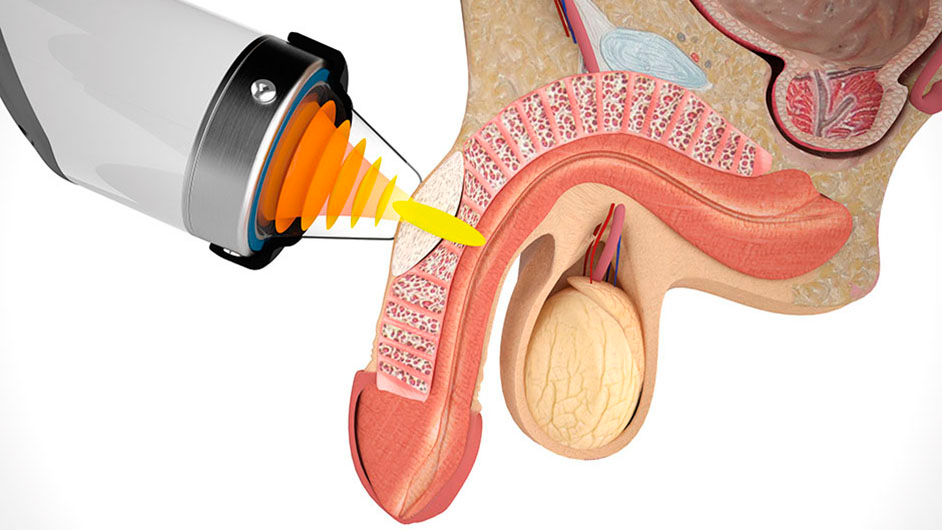
Shock wave therapy
This therapy involves the destruction of fibrous plaques by exposing them to low-intensity waves. The result appears after 5-8 procedures in the form of no pain, alignment of the penis.
Drug treatment
- vitamin E and calcium to make up for their lack;
- non-steroidal and pain relievers, such as Ibuprofen, Ketonal to eliminate inflammation and pain;
- steroid hormones from the corticosteroid subclass, for example Prednisolone;
- cytotoxic drugs, for example Cyclophosphamide to stop cell proliferation;
- injections into the corpus cavernosum with Lidase, Collagenase to normalize cell division (drugs enter the focal zone and slow down the appearance of fibrous plaques);
- a drug Pentoxifylline - improves blood circulation;
- electrophoresis with drugs Interferon, Trypsin, Lidase to reduce inflammation and decrease the activity of collagen cells.
Read also:How thrush manifests itself in men: symptoms, photos, methods of treatment
Surgery
Surgery is performed only in the event of a fibrous plaque, deformity of the penis by more than 45 degrees, or serious problems with sexual activity.
Types of operations performed to treat the disease:
- Operation Nesbit. During the operation, folds are superimposed on the opposite side of the penis, which helps to correct the deformity of the penis, but the organ loses its former size. During the operation, fibrous plaques and lumps are removed. With severe deformation, an ellipse excision is performed on the penis shell, while sutures made of non-absorbable material are applied on the opposite side.
- Plastic surgery. After removing the plaque, the defect is eliminated by suturing pieces of skin from the testicles or from another place, as well as the bovine pericardium. Thus, it is possible to avoid a decrease in the size of the penis.
- Falloprosthetics. A patient with serious erectile dysfunction is shown the insertion of a special prosthesis.
IMPORTANT! During treatment, sexual intercourse should be excluded, because as a result of this, regular microtraumas may appear.
Traditional methods of treatment

It is strictly forbidden to postpone a visit to a specialist and self-medicate. Such methods not only do not help to cure diseases, but can also aggravate the course of the disease. But using drugs and methods of treatment recommended by a doctor, it is possible to use folk recipes to replenish the deficiency of certain vitamins and minerals.
Food
It is necessary to eat foods rich in vitamin E, calcium and collagen.
A high content of vitamin E is found in all types of nuts, potatoes, spinach, lettuce.
It is important to take into account that this vitamin breaks down in direct sunlight, therefore sunburn should be excluded in case of Peyronie's disease.
Calcium is found in foods such as milk, herbs, fish, cottage cheese and others.
It is necessary to have in the diet and products containing collagen, for example, meat, fish, gelatin, red vegetables and fruits, as well as citrus fruits. Collagen is a protein essential for the health of the connective tissue of the body.
Herbs
Collection can be used. In equal shares, you will need:
- burdock root,
- oregano herb,
- primrose herb,
- initial letter,
- sage,
- toadflax.
Pour 2 tablespoons of the collection with 2 cups of boiling water overnight. Drink 100 ml 4 times a day. The course is 21 days.
Read also:Symptoms and treatment of acute cystitis in women
Chestnut kernels contain many vitamins and minerals, so a decoction of them is very useful.
This will require 20 grams of well-crushed chestnut kernels, pour 1 cup boiling water. Then simmer over moderate heat for 15 minutes. Let the broth cool and then strain. Divide into equal parts and drink throughout the day. The course is 1 month. To add a pleasant taste, you can add 1 spoonful of honey.
You can also take baths with sage. Required 3 packs of sage. Pour them into a bucket, pour boiling water over and leave for 30 minutes. Then the infusion must be filtered and poured into the bath. It is recommended to sit in the bathroom for 15 minutes. The procedure is best done at night.
Hirudotherapy
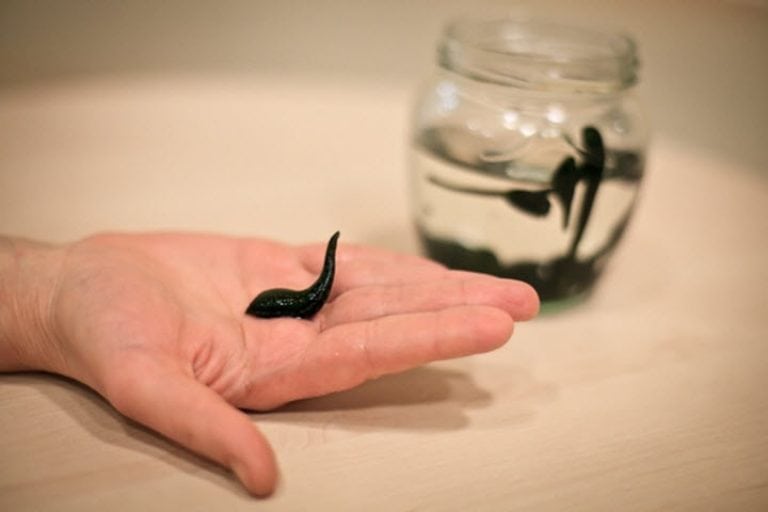
Leeches are known for their help in the treatment of various diseases.
Their saliva contains many biologically useful substances that have a positive effect on the body. They are also found in dried leeches.
To prepare a medicinal ointment you will need:
- a quarter cup of ground dried leeches;
- 2 teaspoons of Dimexide;
- One-third tube of heparin ointment;
- 1 glass of honey.
Mix everything thoroughly. The ointment should be applied to the penis after showering. After the ointment is completely consumed, a break is required for 2 weeks, then the course is repeated.
Prophylaxis
In order to avoid the occurrence of this disease, you should adhere to the recommendations:
- adhere to a healthy lifestyle.
- avoid injury to the penis of any nature.
- live a moderate and not rough sex life.
- adhere to proper nutrition, in order to avoid vitamin deficiencies.
- timely take tests to detect diabetes mellitus.
- control pressure.
- do not self-diagnose and self-medicate.
And most importantly, in case of any concerns and violations, contact specialists. Only they will help to correctly diagnose and choose the right treatment tactics.
Forecast
If Peyronie's disease is not treated, complications will lead to impotence and infertility. On this basis, various kinds of mental disorders can develop, since a man will not be able to lead a normal sex life.
Due to the presence of such a disease, a man often experiences misunderstanding on the part of his wife, which leads to a negative situation in the family.
With timely diagnosis and proper treatment, the disease is corrected and even cured completely. A man can live a fulfilling life.
But there are cases when not only drug treatment, but even surgery is powerless, since Peyronie's disease is prone to relapse.