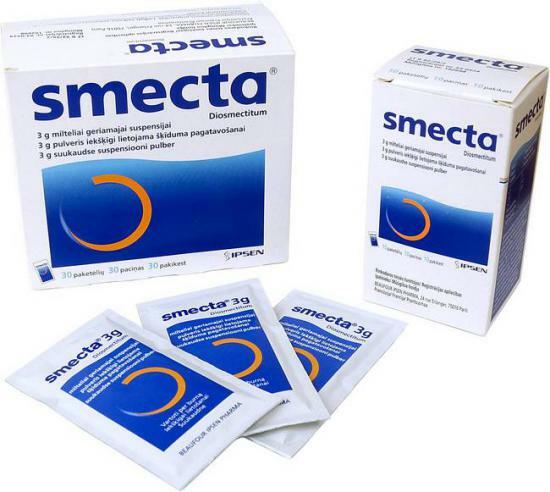
Sorbents for allergies: instructions, indications for use
Content
- The mechanism of action of sorbents
- Indications for use
- Contraindications
- Recommended sorbents for allergies
- Classification
- Instructions
- Reviews
Sorbents are drugs that selectively absorb negative substances from the body with different densities. Sorbents for allergies are active in the acute stage of the disease. In addition, in the intervals between exacerbations, therapy with the inclusion of enterosorbents should be used.

In addition to using these drugs for allergic manifestations, they can be used for various toxic infections. Interaction with probiotics allows you to quickly remove the manifestations of dysbiosis.
The mechanism of action of sorbents
Due to the violation of the barrier function in the patient's body, he is not able to independently cope with foreign proteins. For this reason, antigens are activated with their increased release. As a result, the excretion of such active substances as serotonin, histamine and acetylcholine is enhanced.
These substances accumulate in the body, provoking a toxic reaction called endotoxicosis. Endotoxicosis provokes tissue oxygen starvation, impaired metabolism, malfunctioning of the kidneys and liver.
Due to the mechanism of pathogenesis, sorbents are recommended to be used from the very onset of allergy disease.
Sorbents have a therapeutic effect due to the active absorption of allergens from the gastrointestinal tract and their subsequent removal from the body. In addition, they prevent the reverse absorption of metabolic products.
Indications for use
Sorbents can be prescribed in the following cases:
- reduced functional load on organs that detoxify the liver, kidneys, etc .;
- correction of dysbacteriosis, stimulation of regeneration processes;
- atopic dermatitis, urticaria;
- allergic reactions of any type;

- acquired foci of infections, liver diseases, bile ducts;
- bronchial asthma, impaired metabolism.
In addition, the drugs are effective in unfavorable environmental conditions.
Contraindications
Like all medications, sorbents are contraindicated for the following symptoms:
- the development of erosive gastritis;
- gastric ulcer, as well as duodenal ulcer;
- intestinal atony with reduced peristalsis;
- frequent constipation. When prescribing enterosorbents, the patient needs to remember that it is important to drink at least 2 liters of fluid per day, as well as to eat the fiber contained in vegetables and fruits. This will help relieve constipation.
Additionally, in the treatment of allergies, vitamin prophylaxis can be prescribed. Reception of sorbents should be carried out at the first symptoms of the disease.
Recommended sorbents for allergies
- Activated carbon, Anthralen;
- Enterosgel, Karbolong;

- Sorbex, Multisorb;
- Karbolen, Sorbolong, Atoxil.
In addition, it is permissible to use biological additives with similar properties, which include cellulose in tablets, extralact.
The duration of treatment depends on the general condition of the patient and the presence of concomitant diseases.
Classification
Sorbents can be classified according to several indicators:
- dosage form - The drug is available in tablets, granules, powders, suspensions, capsules;
- chemical composition - sorbents can be represented by silica gel, food fiber, alumogel, inorganic sorbents, mixed types of drugs, zeolites;
- sorption - represented by an ion-exchange process that acts in a complex and has catalytic properties;
- selectivity - there are three types of adsorbents: polyfunctional, biselective, non-selective. A specific type of drug is prescribed to the patient based on a specific situation.
Instructions
Sorbents for allergies are recommended to be used in the first few hours after the development of allergic symptoms.
- The dose of the drug directly depends on the patient's body weight and is calculated in a ratio of 0.2 g. up to 1 gr. per kilogram of weight. This formula is intended for a daily intake, divided into several doses (3-4) during this time;
- the duration of the treatment course to relieve allergy symptoms can be up to a week. However, if necessary, it may be extended up to 14 days;
- in the last two days of using sorbents, their amount should be gradually reduced, halving from the original;
- in case of acute allergic symptoms, accompanied by unbearable itching, hyperemia of the skin with peeling, an increased dose of sorbents is used. This allows you to quickly neutralize the symptoms of the disease and stop various complications;
- the calculation of the shock dose is carried out according to a similar scheme, however, there is one condition: the duration of the application of the shock dosage should not exceed three days. After that, the drugs are used in the usual therapeutic dosage.
It is important to note that sorbents are very often used as prophylactic agents to prevent the development of allergies. This use helps to lengthen the time of remission.
For preventive purposes, the sorbent is taken according to the following principle:
- you need to take the medicine 2 hours after eating;
- taking the drug should be carried out in the morning and evening;
- the calculation is made in the ratio of 0.2-0.5 grams per one kg of the patient's weight;
- The full dose must be taken once a day;
- prevention lasts from 7 to 10 days.
The prophylaxis course for allergy sufferers is carried out at least once a month - in the first three months after an exacerbation. Subsequently, prevention is carried out at least once every 3 months.
The total duration of preventive therapy can be up to one year, but the frequency of drug use depends on the complexity of the pathological course, as well as concomitant diseases.
Despite the rather rare complications with the use of enterosorbents, there are patients who are hypersensitive to the components of the drug. Therefore, self-treatment is strictly prohibited. Special care and attention should be given to the treatment of these drugs in childhood.
Reviews
Currently, there is a wide range of such drugs, but they should be chosen carefully. Many patients who actively use sorbents for the treatment of allergies and other diseases note that their prolonged use can lead to hypovitaminosis. In addition, frequent constipation is noted, as well as a disruption in the work of the digestive system.

The most positive reviews refer to the use of Enterosgel and Lactofiltrum. While taking sorbents, patients are forced to use laxative rectal suppositories. Their action softens the side effect of sorbents. Candles are allowed for use during pregnancy and breastfeeding of the baby. Enterosorbents have shown good efficiency in the elimination of toxins in childhood.
Patients note that sorbents are best used in complex treatment to relieve allergic symptoms. In order for the stool to normalize, doctors recommend drinking a large amount of liquid: at least 1.5 liters of drinking clean water, not taking into account other liquids.
Important! Any medications can cause rejection of the body. The development of such a reaction to the intake of sorbents cannot be ruled out. Therefore, the independent use of drugs, an increase or decrease in the prescribed dosage, is strictly prohibited. Any medications can only be prescribed by a highly qualified specialist, based on the general condition of the patient.