Where is the colon
The gastrointestinal tract consists of many sections, each of which performs its own function. When diagnosing diseases of the digestive system, it is not enough to be guided by the nature of the symptoms; you also need to know where each department is located. Taking into account such knowledge, it is possible to quickly identify possible disturbances in the functioning of the body and predict a successful and appropriate treatment for a particular patient.
Where is the colon
Content
- 1 The colon and its divisions
-
2 The reasons for the development of diseases of the colon
- 2.1 Video - Colon Anatomy
-
3 Hirschsprung's disease and its manifestation
- 3.1 Symptoms
- 3.2 Treatment
-
4 Nonspecific ulcerative colitis
- 4.1 Symptoms
- 4.2 Treatment
-
5 Diverticulosis and diverticula
- 5.1 Symptoms
- 5.2 Treatment
-
6 Crohn's disease and its symptoms
- 6.1 Symptoms
- 6.2 Treatment
-
7 Polyps and their symptoms
- 7.1 Symptoms
- 7.2 Treatment
The colon and its divisions
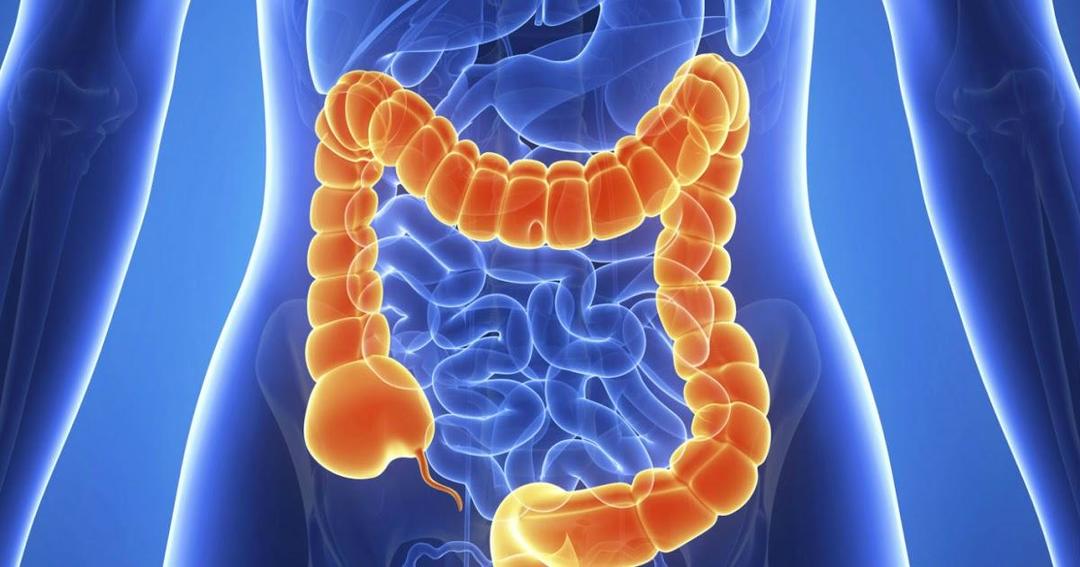
The colon is the main section of the large intestine. It begins in the region of the cecum and divides into its own parts. The cecum and the colon are connected by the Buzi sphincter, which ensures the movement of products from one part to another part of the gastrointestinal tract.
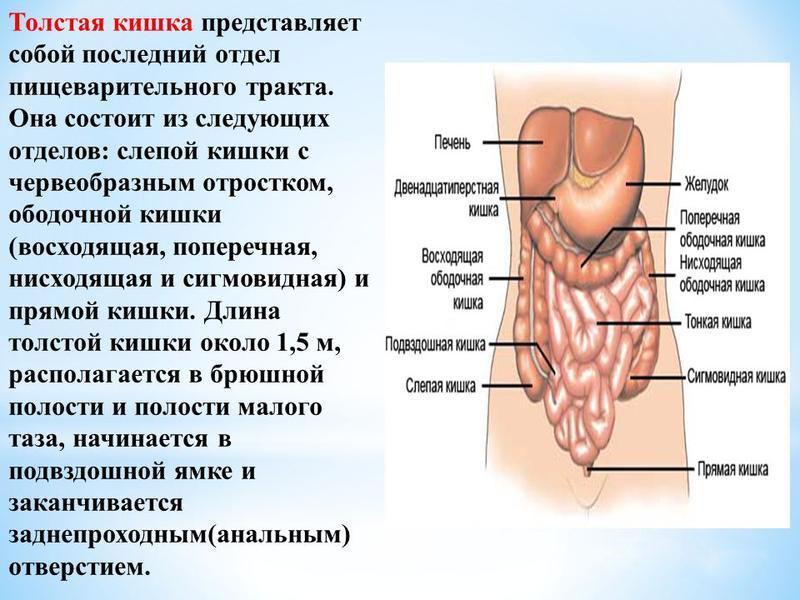
Colon structure
On average, the described section of the intestine has a length of one and a half meters, and the diameter of the intestines can vary taking into account the characteristics of the patient and is 5-8 cm. Since the colon belongs to the largest parts of the large intestine, a large number of sections are distinguished in it - ascending, transverse, descending and sigmoid.
The first part is not involved in the process of digestion and breakdown of food, but it is in the ascending intestine that the main absorption of water and other fluids occurs. Liquid stool also passes through it, which gradually turns into solid feces. The department itself is located on the back wall of the abdomen on the right side. The length of the ascending part varies from patient to patient and can be 12-20 cm.
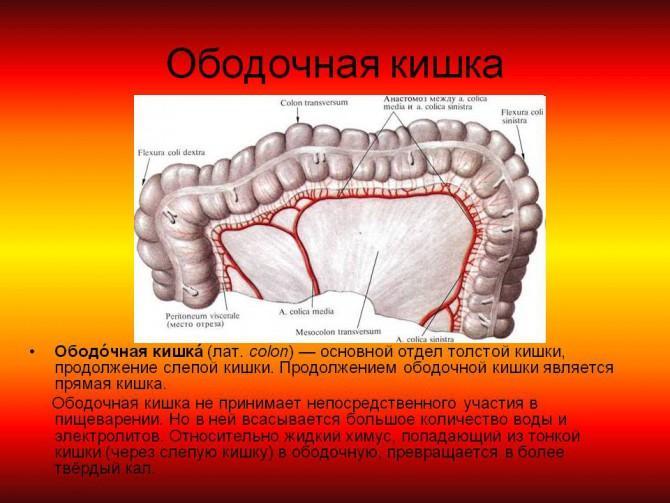
What is the colon
Attention! Connects the colon to the transverse multiple ribbons of the colon. In the front of the abdomen there is a free tape, the omental tape is slightly displaced back, and the mesenteric tape is closer to the posterior wall of the peritoneum. The latter forms a bend and passes into the transverse intestine in the region of the right rib.
The length of the transverse intestine is half a meter. For this department of character, there is a separate mesentery that connects to the mesenteric tape. Gradually, this part passes into the descending intestine, due to which an acute angular transition is formed. This part is fixed with the help of the phrenic-colonic intestinal ligament. The descending section has a length of 20-22 cm, the diameter is noticeably smaller than that of the previous two intestines.
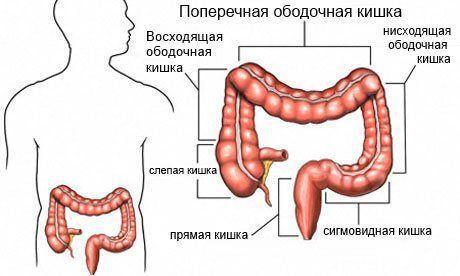
Divisions of the human colon
The sigmoid colon is located on the left side in the ileum. Gradually moves to the small pelvis and goes into the rectum in the region of the sacrum. The average size of the sigmoid colon is 55 cm, but there have been cases when this department significantly exceeded or did not reach the average normal values.
Attention! This section is the last in the colon. Additionally, it has two more loops that are located directly on the iliac and psoas muscles. This will help ensure a more coordinated system and reduce the likelihood of problems with bowel cleansing.
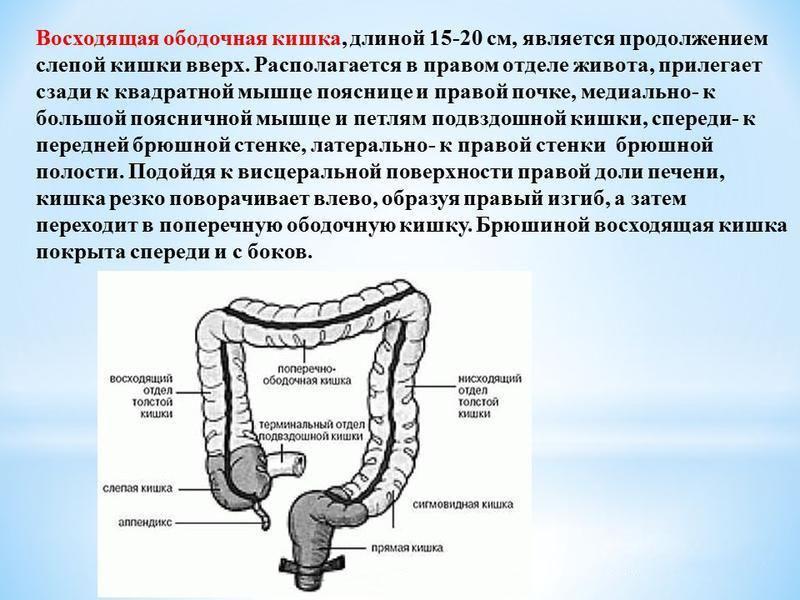
Ascending colon
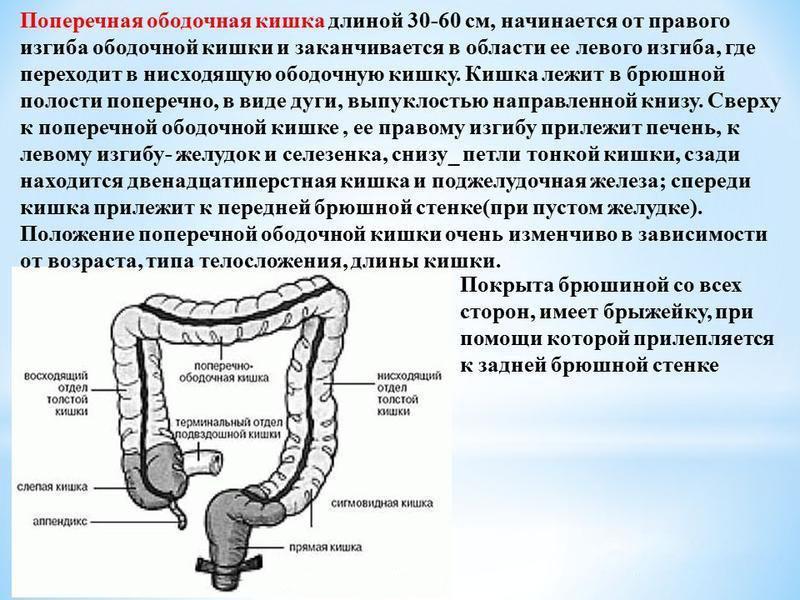
Transverse colon
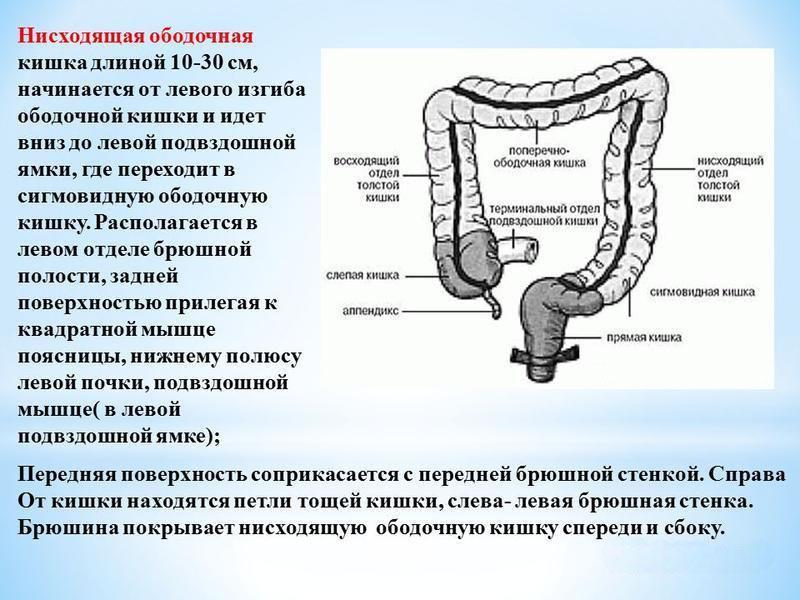
Descending colon
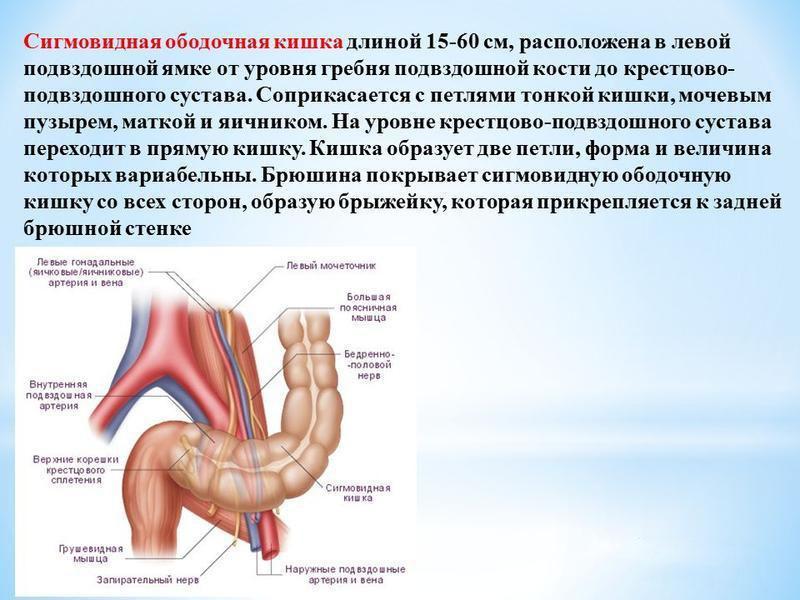
Sigmoid colon
The reasons for the development of diseases of the colon
In order to prevent the pathology of this part of the gastrointestinal tract, you should know what they may be associated with:
- an insufficiently mobile lifestyle, while such a condition is especially dangerous when it is associated with improper nutrition;
- frequent consumption of fatty foods;
- frequent constipation or diarrhea, which can be caused by infection, viruses and other pathogens;
- atonic constipation in patients over 65 years of age;
- the accumulation of a large number of toxic substances, most often when using low-quality products and frequent constipation;
- the need for constant intake of various medications;
- frequent use of unjustified dietary supplements and laxatives.
Attention! These reasons can cause many different pathologies of the colon from inflammation to severe oncological processes. Each of the disorders has its own symptoms and can lead to similar problems in other parts of the gastrointestinal tract.
Video - Colon Anatomy
Hirschsprung's disease and its manifestation
Symptoms
Pathology refers to hereditary pathologies. The main manifestations of this problem in the colon are persistent constipation, increased gas production and bloating. Constipation can last from several days to several months and begin to manifest itself from the first days of a child's life, sometimes from 3-5 years. It is often not possible to get rid of constipation even with the help of enema. This condition can also be followed by severe diarrhea, which can lead to severe dehydration and exhaustion.
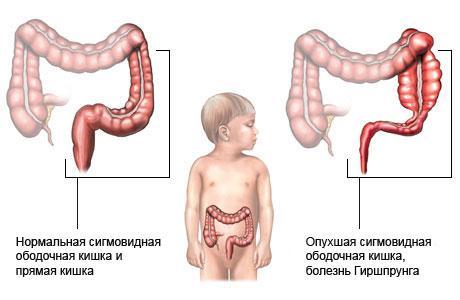
Hirschsprung's disease in children
Treatment
To completely get rid of such a problem, mandatory surgical intervention is required. It consists in the complete removal of the aganglionic site and the extension of the length of the intestinal parts.
Attention! Such surgical interventions are recommended to be performed at the earliest opportunity. If you postpone the operation, the child will constantly suffer from a lack of vitamins and poisoning of the body.
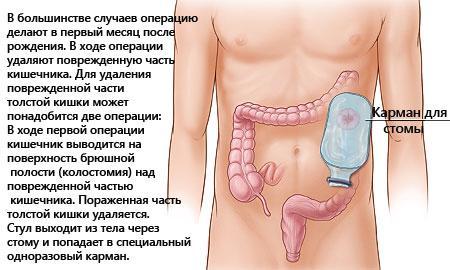
Surgery for Hirschsprung's disease
Nonspecific ulcerative colitis
Symptoms
It belongs to one of the most frequently reported diseases. Refers to chronic processes. The disease manifests itself in a large number of ulcers on the mucous membrane. Infections and immune processes in the body can provoke such a violation. The disease manifests itself as constant diarrhea, while blood, purulent masses, mucus can be released with feces. Severe pains must be registered. Also, the patient has a decrease in the level of hemoglobin, severe weakness and abnormalities in the liver.
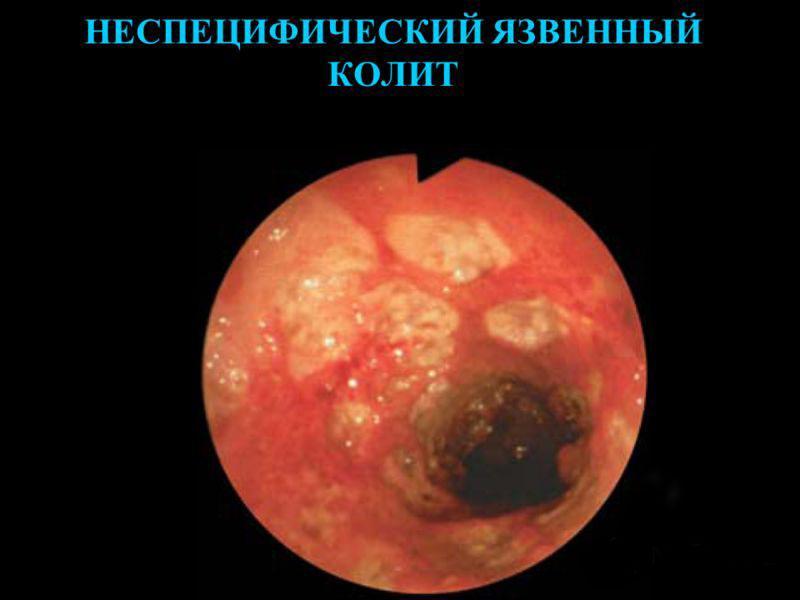
Nonspecific ulcerative colitis
Treatment
| A drug | Image | Dose | Reception feature |
|---|---|---|---|
| Sulfasalazine |  |
From 0.5 g 4 times a day, gradually the amount increases to 4 tablets also 4 times a day | Only after eating, drink with 5% sodium bicarbonate solution |
| Mesalazine |  |
0.5 g every 6-8 hours | Without features |
| Prednisolone |  |
20 mg morning and evening, gradually the dose can be increased | Inserted through a catheter that is inserted into the rectum |
| Atropine sulfate |  |
0.5 ml in the morning or every 12 hours | Injected strictly subcutaneously |
| St. John's wort enema |  |
1 hour l. raw materials for 200 ml of warm water | Without features |
Attention! The course of treatment is individual for each patient. If it was not possible to stabilize the patient with conservative methods or there is a serious exacerbation of the condition with severe bleeding, an operation is required. Its outcome depends on the degree of damage to the mucous tissue and the extent of the ulcerative neoplasms.
Diverticulosis and diverticula
Symptoms
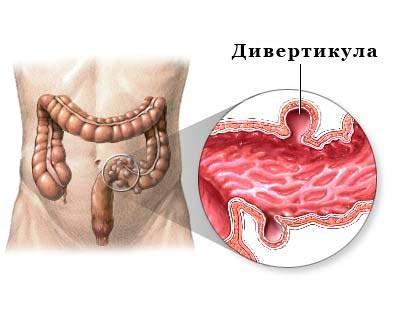
Diverticulum in the intestine
Also, quite common pathologies of the colon. The disease is characterized by the formation of special sacs directly on the intestinal mucosa. Diverticulosis and diverticula differ in the number of neoplasms. In the first case, the pathology is massive. Almost 100% of the disease is congenital. But sometimes a similar process occurs due to deformation of the muscular membrane or damage to the department by infection. Due to the constant accumulation of feces in the sacs, a strong inflammatory process occurs. It forms vomiting, nausea, and severe abdominal pain.
Treatment
| A drug | Image | Dose | Duration of the course |
|---|---|---|---|
| Cefoxitin |  |
2 g every six hours | Up to 10 days |
| Mesalazine |  |
400 mg twice a day | Up to 8 weeks |
| Suprastin |  |
1 tablet 2-3 times a day | Individually |
| Normase |  |
15-45 ml daily in the morning for the first three days, then 10-30 ml daily in the morning | Individually |
| No-Shpa |  |
40-80 mg up to three times a day | Usually up to seven days |
| Meteospasmil |  |
One capsule up to four times before meals | 7-14 days |
Attention! If drug treatment has not yielded the desired result, surgery is performed. It prevents recurrence of diverticulosis again. In this case, an urgent operation is mandatory if there is a risk of bleeding and rupture of the sac.
Crohn's disease and its symptoms
Symptoms
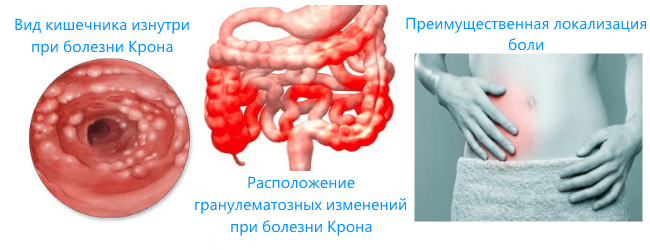
Crohn's disease and its localization
A rather serious illness, which manifests itself through the formation of a large number of ulcers on the mucous membrane. These ulcerative neoplasms can develop into fistulas that extend into the pelvic organs. Additionally, the disease manifests itself as severe diarrhea, the patient is exhausted, vomiting opens. Crohn's disease also affects the eyes and joints. In the feces, blood streaks are noted, the body temperature rises. In many patients, body temperature rises significantly.
Treatment
| A drug | Image | Dose | A course of treatment |
|---|---|---|---|
| Sulfasalazine |  |
Reception begins with 500 mg up to four times, gradually increasing the dose to 1.5 g | Up to several months |
| Prednisolone |  |
20 mg morning and evening, gradually the dose can be increased | Inserted through a catheter that is inserted into the rectum |
| Ciprofloxacin |  |
500 mg twice a day | Individually |
| Linex |  |
2 capsules three times a day | Individually |
| Loperamide |  |
1-2 capsules after each loose stool | No more than a week, other schemes are possible only with the permission of a doctor |
Attention! All fistulas and ulcerative neoplasms that constantly bleed require mandatory surgical treatment. In the absence of medical assistance, the patient's life is in real danger.
Polyps and their symptoms
Symptoms
With such a lesion, numerous polyps appear on the walls of the colon, in some cases they are single. Polyps range in size from 5-20 mm. Polyps differ in that they have a wide base, with which they begin to hang down into the intestinal lumen.
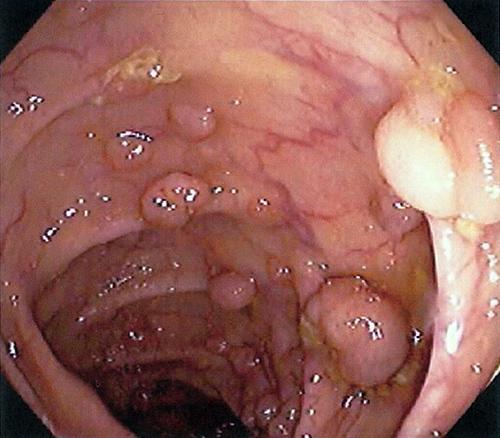
Multiple intestinal polyps
Treatment
Polyps in this part of the intestine are treated only with surgery. Additionally, it is recommended to take cytostatics and radiation therapy. Polyps begin to show themselves only if they grow significantly and begin to affect the vessels. Because of this, the patient begins to feel pain, problems with stool may appear.
Attention! Polyps are a very dangerous disease that can lead to cancerous growths. In this case, the patient's life is in real danger.

Endoscopic removal of intestinal polyps
The colon is an important part of the human body. You should pay attention to any discomfort that manifests itself in the area of this part of the digestive tract. With a quick response to possible violations and a timely diagnosis, in most cases, the patient can be returned to a full life with a minimum number of dietary restrictions.