Pain in the solar plexus, radiating to the back: causes and symptoms
Probably, each of us at least once in our life, for one reason or another, felt unpleasant sensations in the area of the sun. plexus - a point located in the area of the upper abdominal cavity, in which a huge number of nerves. It got its name precisely because of its external resemblance to the sun, as it looks like a ball with many nerves-rays emanating from it. However, sometimes pains not only arise in the solar plexus, but also radiate to the back, increasing the discomfort. In this article, we will discuss what the pain in the solar plexus, radiating to the back, signals, and how to eliminate it.

Pain in the solar plexus radiating to the back
Content
-
1 Causes of pain
- 1.1 Physical overstrain
- 1.2 Trauma
- 1.3 Solar plexus neuritis
- 1.4 Neuralgia
- 1.5 Solarite
- 1.6 Disorders of the organs of the gastrointestinal tract
- 1.7 Diseases of the lungs and respiratory tract
- 1.8 Diseases of the cardiological category
- 2 Generalization of information
-
3 Let's summarize
- 3.1 Video - pain in the solar plexus
Causes of pain
As with other negative conditions occurring with the human body, the causes of pain sensations in the solar plexus region, spreading into the back, can be hidden in a variety of problems.

What provokes the development of these painful sensations?
The sought-after problems, in turn, can be very dangerous, and therefore it is not worth delaying the visit to the doctor at the next unpleasant "injection" in the upper part of the peritoneum. In this section of the article, we will consider the possible variants of diseases that can provoke the onset of unpleasant sensations in the solar plexus, radiating to the back.
Physical overstrain
One of the most common, and at the same time safe, causes of pain in this area of the human body is physical overstrain. It happens when a person involved in sports distributes the load incorrectly, for example:
- when he runs for a very long time at a fast pace;
- lifts weights that are too heavy for him in the gym, etc.

Physical activity can be accompanied by pain in the solar plexus
In this case, when the body realizes that the limit of its capabilities has been reached, you begin to feel a tingling sensation in the solar plexus. If the overload of the body happened unacceptably heavy, the tingling sensations turn into quite tangible injections, the pain from which radiates to the back. Of course, in such a state, a person is no longer able to continue sports activities, and stops.
Despite the fact that nothing will happen to you from one overload, you should not force the sun plexus experience such sensations over and over again, since sooner or later it can develop into violation.

All experts are of the same opinion that correctly designed sports training has a positive effect on the whole body and health.
To prevent this from happening, observe the following precautions:
- learn the correct technique for performing the exercises that make up the complex of your classes, and follow it;
- give up painful movements if you cannot perform them without the desired sensations.
Trauma
Problems with the occurrence of pain in the plexus can lie not only in the internal processes of the body, but also in the external influence on this segment of our body. So, severe pain radiating to the back may appear after:
- blows to the plexus area;
- belt pressure on high-waisted trousers;
- long sleep on a foreign object, etc.

Even a light blow to the solar plexus area can result in long-term pain.
Unfortunately, such accidental damage usually cannot be avoided, but if the force of pressure or impact was moderate, after a while the discomfort will end. Proceed with caution.
Solar plexus neuritis
The disease in question implies an inflammatory process that affects the tissues of the solar plexus. The reasons for the onset of such a disease may be different. So, for example, in a healthy person, neuritis is often provoked by the wrong approach to a person's motor activity:
- the patient moves too little due to a predominantly sedentary lifestyle;
- the patient moves too much and regularly overexerts himself during exercise.

Diabetes symptoms
In addition, various diseases can also affect the development of inflammation in the tissues of the solar plexus, for example:
- infectious diseases of the digestive system;
- diabetes;
- endocrine system diseases;
- a hernia pressing on a bundle of nerves and other pathologies.
In addition, various unhealthy habits can cause the manifestation of solar plexus neuritis in any person, for example:
- wearing clothes that are not suitable for the weather, as a result of which a cold occurs;
- drinking alcohol in an amount leading to severe intoxication.
Neuritis can also develop after undergoing any operations carried out with errors, which, as a result, led to the development of the inflammatory process.

Neuritis - a disease of the nerve tissue located in the plexus, can cause severe discomfort
With neuritis affecting the solar plexus, pain sensations are clearly transmitted not only to the back, but can also spread throughout the peritoneal region. The nature of the unpleasant "pricks" is more scalding than cutting.
Nerve tissues can undergo structural changes, losing the ability to perform their intended functions. In addition, it is not easy to endure the pain, as it seems really unpleasant. That is why you cannot delay, you need to urgently seek help from a specialist.
Pain characteristic of the disease in question can occur unexpectedly, usually accompanying:
- various stressful situations;
- carelessly committed high-intensity movements.

Avoid stress
Some attacks of solaritis are so strong that the patient bends over from the pain, and at the same time suffocates, as if someone very carelessly hit the solar plexus with a fist.
Neuralgia
Neuralgia occurs when, under the influence of any external factors, the nerve nodes and tissues located in the area that we call the solar plexus are irritated. However, this painful condition is typical not only for these nerve tissues, but also for any others located inside our body.

Solar plexus neuralgia is a common disease in people experiencing constant emotional stress
Pain with neuralgia is paroxysmal. If you press lightly on the upper abdomen, you will most likely feel the strongest painful response in the back area. Patients whose solar plexus is affected by the neuralgic process try carefully:
- move;
- go to bed;
- sit down, etc.
Solarite
If the pains felt in the area of the plexus and back, the patient is constantly tormented, while relief almost never comes, most likely his nerve tissues were struck by the solarium. As you can understand, the name solarite comes from the English word "solar" - solar. It is used specifically to describe the pathology of nerve tissue located in the area of interest to us.

Tanning pains are palpable and cause serious concern to the patient
The disease in question usually proceeds in a chronic form, however, sometimes the pain turns into acute and paroxysmal. Symptoms accompanying the solarium are as follows:
- severe pain of a dull, oppressive nature, concentrating in the sternum, heart, solar plexus and back;
- paroxysmal solaritis is accompanied by an unexpected and sharp manifestation of pain syndrome;
- in the plexus area, the pain burns rather than presses;
- sometimes there is irritation of organs nearby in relation to the plexus, for example, the intestines are irritated, as a result of which flatulence and bloating occur.
Sometimes the inflamed plexus also provokes dyspeptic disorders, for example:
- violation of acts of defecation;
- vomiting;
- regurgitation;
- heartburn etc.

How does heartburn occur?
As you could already understand, solarium is not a pleasant disease. Even though it does not require an immediate ambulance call, the disease itself is still dangerous, especially considering how it affects other parts of our body.
Disorders of the organs of the gastrointestinal tract
It may not provoke painful sensations in the solar plexus area, which, to top it all off, radiate to the back. only various diseases of the nerve tissues, but also disturbances in the functioning of any elements of the digestive system organism.

Disorders in the work of the digestive tract can give pain to the solar plexus and back
1. So, it is not problems with the solar plexus directly that can transmit pain to the area of interest to us, but stomach diseases, for example, such as:
- peptic ulcer;
- malignant neoplasms;
- gastritis etc.
In this case, the pain that bothers the patient will appear in the patient after the meal. At the same time, the comfort of the patient and the accompanying symptoms of diseases, such as:
- long-lasting heaviness in the abdomen;
- bloating and flatulence of such force that it is sometimes embarrassing to go out;
- dyspeptic disorders in the form of diarrhea, constipation or vomiting.

What does a stomach ulcer look like?
In addition, difficulty sleeping, lethargy, fatigue and a feeling of loss of body control are also added to the symptoms listed above. In fact, it is, therefore, you should see a doctor as soon as possible in order to prevent the spread of the disease.
2. Pathological processes occurring inside the duodenum. These can be:
- infectious diseases of various etiologies;
- cancerous processes;
- polyposis;
- peptic ulcer etc.
In this situation, the pain will torment the patient not after eating, but, on the contrary, in between meals.

Duodenal ulcer
The hungrier the person, the stronger the pain syndrome will manifest itself, simultaneously spreading to the chest with the peritoneum, and to the back area. In addition, disturbances in the work of the intestines are accompanied:
- nausea;
- vomiting;
- other dyspeptic disorders associated with stool.
3. Impaired functioning of the pancreas, which is responsible for the production and delivery of digestive enzymes to the gastrointestinal tract that help to process the food you eat. Inflammation of the gland (pancreatitis) can proceed in the following stages:
- sharp;
- chronic.

First aid for pancreatitis
In each case, the manifestation of the disease will be different. So, in acute pancreatitis, the gland digests itself, as it produces an excess amount of enzymes. In the chronic form of the disease, the digestive juices, on the contrary, are produced in insufficient quantities.

Pancreatic disease is one of the causes of pain in the area of interest to us in the human body.
In addition, in addition to inflammation in the pancreas, oncology, various infections and diseases of other etiologies can develop. Additional symptoms associated with diseases of the pancreas and pain in the solar plexus area will be as follows:
- nausea;
- vomit;
- breathing problems;
- increased body temperature;
- fever.
4. Helminthic invasion is another reason for pain in the solar plexus region. As you know, settling inside our organs, the worms begin to multiply and carry on vital activity, leaving the products of its course in our body. As a result, painful sensations inside the solar plexus may occur, which also extend to the back. The insidiousness of this pathology lies in the fact that people are not inclined to betray its serious importance, and to consult a doctor.

Groups of worms - parasites
In fact, as practice shows, it is very difficult to recover from the invasion on your own, without knowing the schemes of using drugs that have a real effect. As a result, the growth of worms only progresses, along with it, the corresponding consequences, including pain in the plexus, become more noticeable.
Diseases of the lungs and respiratory tract
Painful sensations in the area of interest to us can also manifest itself during various disease-causing processes inside the lungs, bronchi, trachea, etc. Usually, an unpleasant feeling occurs when a person:
- coughs;
- sneezes;
- takes a breath, etc.
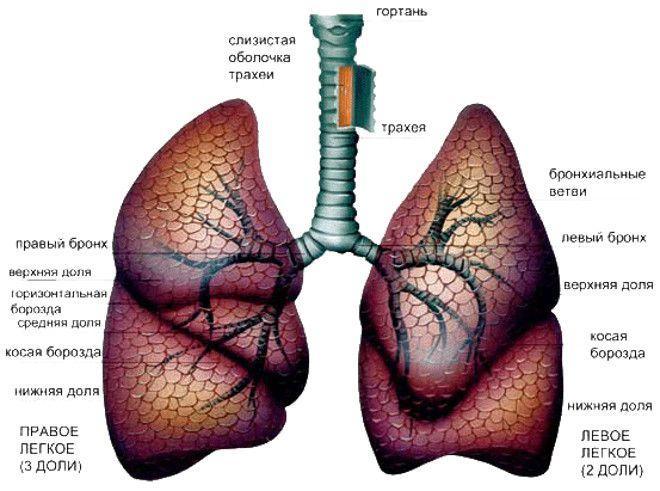
Right and left lung
Along with the pain radiating from the sternum to the back, a person may experience the following unpleasant symptoms accompanying respiratory diseases:
- persistent cough;
- shortness of breath;
- temperature and the like.
Diseases of the cardiological category
Painful sensations radiating from a point in the upper abdomen to the back can be caused by heart disease. So, unpleasant injections and burning sensation are often felt when approaching:
- ischemic disorders;
- myocardial infarction.

Heart diseases very often cause the development of pain in the solar plexus and back.
In addition, heart failure is, in principle, characterized by pain in the target area. Soreness is usually located in the sternum, however, it can also be given:
- lower to the plexus of nerves;
- as well as in the back;
- in the limbs located in the upper part of the human body.
The unpleasant feeling may be accompanied by heavy breathing, excessive sweating, and the like.
Attention! If you know that your heart is suffering from some kind of disease, or you have already suffered attacks associated with disruption of the work of this organ body, and you feel a sharp pain in the chest, passing into the back and solar plexus, immediately call an ambulance.
1. So, ischemic disease implies a deterioration in the circulation of the main biological fluid of the human body, passing through the heart muscle. The fact is that the flow of arterial blood is reduced due to the formation of seals inside the arteries themselves.
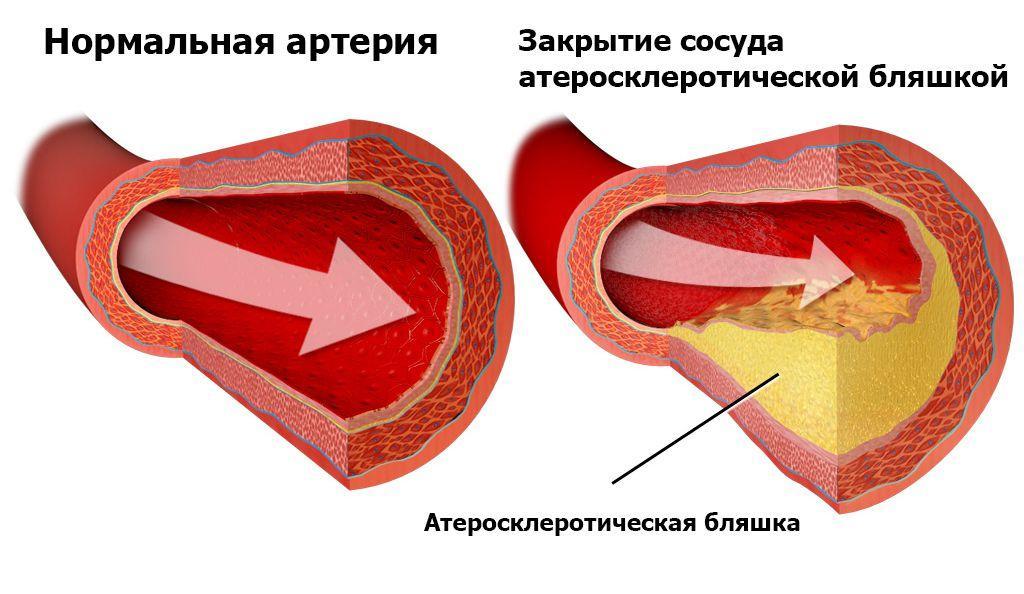
Cardiac ischemia
As we remember, blood carries through our body and gives to each organ that enter the body:
- nutrients (from consumed food, for example);
- oxygen (supplied by breathing).
If not enough blood enters the heart, the muscle tissue of the organ begins to suffer, respectively, from:
- oxygen deficiency;
- banal starvation (yes, she needs to eat too).
As a result, various disorders in the work of the heart develop, which most dangerously affect the life and health of a person. In this case, the type of pain can be defined as:
- colicky;
- scalding.
Patients suffering from ischemic heart disease often feel as if someone's invisible hand is squeezing their organ with all its strength, and does not want to let go.

Heart disease begins to suffer at an older age, but in some cases, young organisms are also susceptible to heart disease.
Attacks that occur to patients usually do not last long, but their strength is so great that nervous tension in anticipation of the next seizure seriously worsen the patient's condition. At the same time, sensations during attacks are not localized directly in the chest, they radiate:
- into the solar plexus;
- in the back area.
An attack, after which the sternum and a point in the area above the abdominal cavity suddenly contract from severe pain, is usually triggered by stress:
- mental nature;
- physical.
Very important! As soon as you understand that the pain is most likely caused by an ischemic attack, immediately sit down or stand upright (it is not recommended to lie down), having first called an ambulance. Try to eliminate all stress-forming factors so as not to aggravate the situation. You must also take nitroglycerin.
Additionally, during an attack, you may have:
- back pain;
- dizzy;
- increased sweating;
- there is nausea and vomiting;
- difficulty breathing.
Some people even faint, however, you can try to control this condition with an effort of will, since if you are at home alone (or alone), you need to call an ambulance yourself.
2. Another dangerous diagnosis that provokes the onset of pain in the heart, which means the solar plexus and back, is heart failure. The sought-after diagnosis implies the difficulty of the heart in performing the functions intended for it by nature.
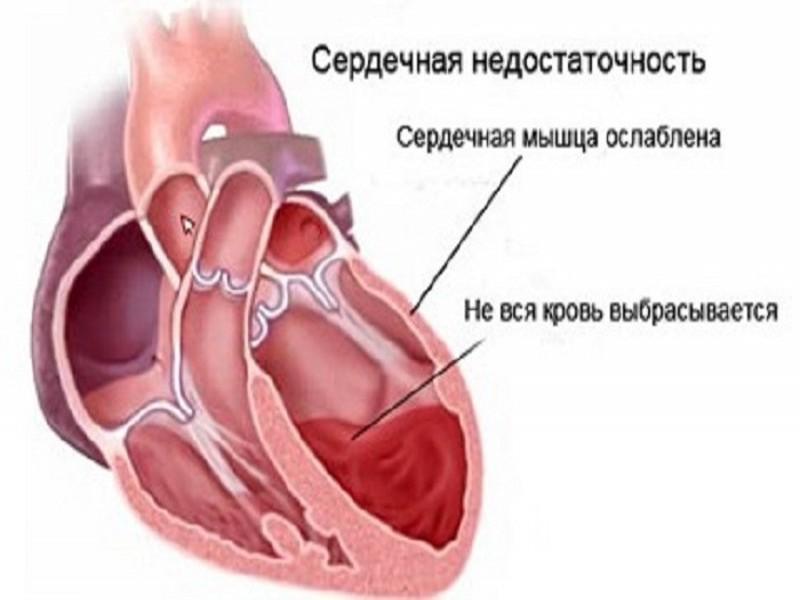
Heart failure
In fact, heart failure is understood as a state of acute or chronic form, in which the myocardium has lost some of its intensity. own contractile ability, which ultimately provoked the development of various stagnant phenomena within the following circles circulation:
- small;
- big.
The disease is accompanied by the following manifestations:
- pain in the solar plexus, radiating to the back;
- shortness of breath even at rest;
- difficulty breathing with an absolutely insignificant load (for example, when climbing one or two steps);
- high degree of fatigue;
- swelling of tissues;
- blue discoloration of the nail plates and a triangle in the nasolabial region.
The acute form of the disease is fraught with a huge number of life-threatening consequences, for example:
- the development of pulmonary edema;
- manifestation of shock of a cardiogenic nature;
- hypoxia of various organs of the human body.
The mortality rate in heart failure is quite high, since the contractile function of the heart muscle has decreased, the heart can no longer exercise satisfaction the needs of the body.

To keep the heart healthy, you need to undergo regular examinations.
It should be noted that heart failure itself is not a separate disease, on the contrary, it usually becomes a consequence of other pathological processes developing in the cardiovascular system, For example:
- ischemic disease;
- arterial hypertension;
- valvular heart disease;
- cardiomyopathy and similar processes.
Not only does the pain syndrome usually affect the areas of interest to us in the anterior and posterior projection of the body, the discomfort usually also extends to:
- lower limbs;
- chest.
Important! The heart itself usually does not hurt in case of insufficiency, which is why citizens ignorant of medicine sometimes do not suspect that they have heart problems.
Along with the pain syndrome, the following symptoms appear:
- severe weakness;
- apathy;
- arrhythmia;
- fainting is possible;
- the skin turns pale;
- breathing is intermittent;
- paroxysmal cough.
If you do not want your condition to worsen, you should seriously attend to treatment, and also reduce stress and stress to the maximum.
3. Myocardial infarction is a disease of the heart system, in which one should fear for the patient's life, which provokes the appearance of pain in the solar plexus region, and their transition to the back. In myocardial infarction, the heart muscle is affected due to the formation of the so-called thrombosis - blockage of an artery with an atherosclerotic plaque.

Early symptoms of myocardial infarction
The affected part of the muscle after the formation of thrombosis begins to undergo necrotic processes half an hour after the cessation of blood circulation.
Myocardial infarction pain can extend not only to the solar plexus and back, but also to:
- left hand;
- shoulder on the left side;
- half of the neck, located in the same part of the body as the arm and shoulder;
- into the space between the shoulder blades.
Usually attacks are also accompanied by a strong fear of the patient, literally paralyzing him. Of course, the danger of a heart attack is quite real, and there is something to be afraid of, however, if you hesitate, you can wait for the most unpleasant consequences.
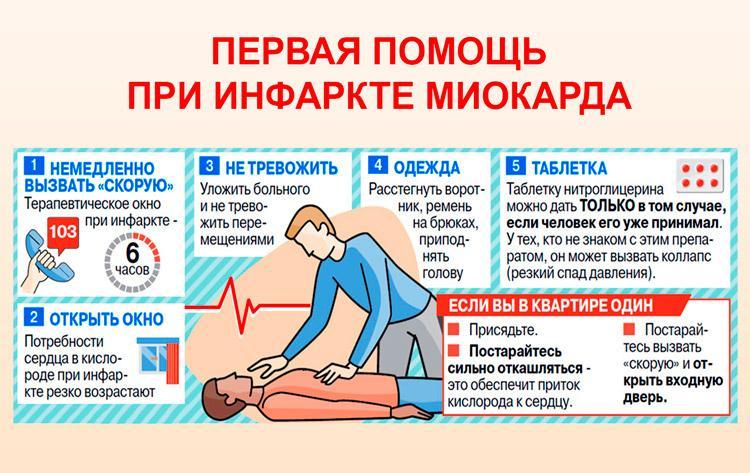
First aid for myocardial infarction
An attack of heart pain can occur even without obvious reasons, while the patient was in a state of complete rest. The duration of the unpleasant condition may vary:
- the minimum period is usually around 15 minutes;
- the maximum duration is several hours.
Note! If you understand that you have a heart attack, fight the urge to lie down and do nothing. Call an ambulance urgently.
Start taking nitroglycerin tablets as follows:
- inside, half a milligram;
- every 15 minutes.

Solar plexus pain may be heart disease
To avoid an unnecessarily sharp drop in blood pressure, it is best not to take nitroglycerin more than three times. In addition, to enhance the effect of this medication, you can additionally drink an acetylsalicylic acid tablet, which will improve blood circulation and make it more fluid, relieving your condition and reducing pain in the solar plexus, radiating to back.
Generalization of information
Let's list the main nature of the reasons that affect the occurrence of pain in the solar plexus.
Table 1. Causes of pain in the solar plexus, radiating to the back
| External influence on the solar plexus area | The causes of pain lie in the internal pathologies of the body. |
|---|---|
| • overvoltage due to the use of overly heavy sports equipment; • long run at a fast pace; • incorrect technique of performing sports exercises; • sedentary lifestyle, lack of physical activity; • a blow to the solar plexus; • pressure of a belt or other piece of clothing on the desired area; • falling onto a foreign object; • sleeping on a solid object in the solar plexus area. |
• solarium; • neuralgia; • diseases of any organ of the gastrointestinal tract (for example, intestines, stomach, pancreas); • diseases of the lungs and respiratory tract; • pathology of segments of the cardiovascular system. |

If you experience discomfort, do not panic and go to the doctor.
The diseases listed in the article are not all pathological processes that can cause discomfort and pain in the solar plexus. Unfortunately, a person cannot establish the origin of this discomfort at home, and therefore cannot eliminate it. In any case, you will need to see a doctor.
Let's summarize
As you can see, completely different diseases or traumatic influences can cause the formation of pain in the solar plexus area. This pain is difficult to bear, especially given the fact that it usually radiates to the back. The pills are of little help in such situations.

In most cases, the only way to relieve pain can be elimination of a pathology that is harmful to your health.
In fact, the only thing that can alleviate the suffering of the patient is to eliminate the cause that influenced the formation of the discomfort. In other words, you need to cure the disease that led to unpleasant pressure or cuts in the chest and back, thus waiting for relief.
Note! Self-medication in such a situation is extremely dangerous, since on your own at home, without having the appropriate education, you are unlikely to be able to guess the pathology that struck you correctly. As a result, taking any medication can only aggravate the pain syndrome, but not alleviate it.
In addition, taking too many pain medications and ignoring the problem can also lead to tragic consequences. Do not turn away from yourself, take care of your health, because you are responsible for what it will be.