Throwing bile into the stomach: symptoms, causes, treatment, diet, advice for gastroenterology treatment, diet
The secret produced by the liver is considered an indispensable part of digestion. It is a kind of toggle switch that switches the process of food processing from gastric to intestinal. With optimal functioning of the body, this fluid does not reach the epigastrium, but exceptions to the rules occur. The throwing of bile into the stomach, the symptoms and causes of the formation of pathology will be discussed further.

Throwing bile into the stomach symptoms
Content
- 1 Bile functions
-
2 Bile formation process
- 2.1 Features of the formation of hepatic secretions
-
3 Reasons for the throwing of bile into the stomach
- 3.1 Symptoms and possible consequences of the throwing of bile into the stomach
-
4 Diagnostics and treatment
- 4.1 Therapeutic diet
- 4.2 Video - Bile in the stomach: causes of abandonment, symptoms, treatment
Bile functions
Bile is a fluid secreted by the liver that is necessary for the digestion of food in the intestines. It enters this organ through the biliary tract.

Bile is an essential element of food processing
Anatomically, bile belongs to the liver. However, before it travels to the intestines, it accumulates in the gallbladder. Hippocrates at one time noted the huge role that this organ plays in the life of the body. In some teachings, it is considered the starting point from which to begin wellness activities. The purpose of the gallbladder is to:
- Providing the duodenum with the required amount of secretion.
- Making a significant contribution to metabolic processes.
- The formation of a fluid that is part of the articular membranes.

Bile is produced by the liver
In the standard mode, this element enters the gallbladder and starts the digestion of the products that have entered the esophagus. However, in some situations, bile "gets lost" and goes directly to the stomach. Experts do not consider a failure in the mechanism of food processing to be an independent disease. The pathological process is considered a symptom of diseases of the digestive tract.

The structure of the digestive tract
In the human body, this fluid is responsible for the following tasks:
- leveling the organic element pepsin, which is part of the gastric juice;
- revitalization of peristalsis;
- assistance in the production of micelles;
- preventing bacteria and proteins from sticking together;
- the formation of feces;
- activation of the synthesis of intestinal hormones and mucus;
- emulsification of fats;
- intestinal antiseptic.
However, the main function of bile is to stimulate the transition of the digestive process from the stomach to the intestines.

Gallbladder stones
The composition of this liquid is quite diverse, and any changes in the balance of the components can lead to the occurrence of ailments, including the formation gallstones.
Bile formation process
The gallbladder serves as a container that provides the duodenum with the necessary amount of secretion for processing food. The formation of bile is a constant process influenced by external and internal stimuli.

Bile is almost 70% formed from acids, which makes it dangerous for the gastric mucosa
Features of the formation of hepatic secretions
- The duration of the undeveloped stage is from 3 to 12 minutes. At the end of the meal, the rate of production of this element increases. The formation of bile is due to the acidity of the "filling" of the stomach, the period of its presence in this organ, as well as the production of hormones responsible for the activation of bile formation.
- The next stage is bile excretion. It takes 3 to 6 hours. With the help of special fibers, the motility of the bladder and the ducts adjacent to it is activated, stimulating the relaxation of the sphincter of Oddi. Thanks to this, further advancement of bile is carried out.
- When the body is not busy processing food, bile enters the gallbladder and accumulates there until the next digestive cycle.
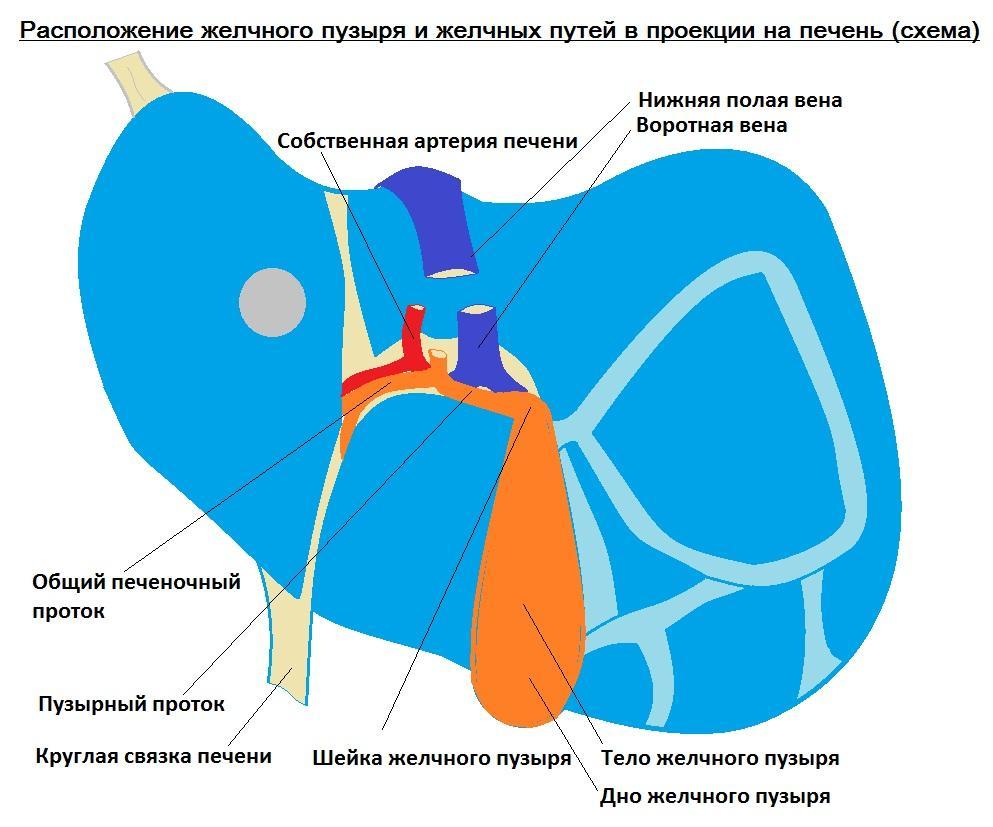
Bile is collected in the bile ducts of the liver, and from there, through the common bile duct, it enters the gallbladder and duodenum.
The process of bile formation is carried out constantly. The passage of secretion into the duodenum is discrete, only during the digestive process.
Reasons for the throwing of bile into the stomach
According to the design of nature and evolutionary mechanisms, the passage of food through the body is carried out only along one established course - from top to bottom. This rule does not fall under a unique protective reaction - vomiting, which makes it possible to get rid of toxic substances.

Accumulating in the gallbladder, the secret enters the intestines
The danger of finding bile in the stomach cavity is caused by the possibility of deformation of its walls.
The scheme for transporting food is as follows: oral cavity → esophagus → stomach → duodenum 12 → other parts of the intestine. The sphincter prevents the food bolus from returning in the opposite direction. It is a kind of castle that allows food to pass unilaterally.
If bile is in the stomach, then the work of the sphincter located between this organ and the intestine is disrupted. Pathological processes occurring in it lead to a weakening of muscle tone, leading to the passage of secretions in an undesirable direction.

There are a number of diseases associated with bile production
In addition, such a pathology may be due to the following reasons:
- liver diseases;
- congenital physiological abnormalities and acquired injuries;
- spasms of the gallbladder;
- the presence of hernias and tumors;
- gallstone disease;
- excessive intake of muscle relaxants or antispasmodics.
You can find more information on liver disease in our article.
Pregnant women are at risk. In the process of development, the fetus exerts pressure on the duodenum, which provokes the reflux of bile in the wrong place. During surgical interventions, there is a risk of injury to the sphincter muscles, which is fraught with a reverse movement of the digestive fluid. This is especially true for patients who have undergone gallbladder surgery.

The sphincter of healthy people who are not susceptible to diseases of the gastrointestinal tract can also malfunction
Factors contributing to the weakening of the natural valve:
- regular overeating;
- sleeping on the left side with a full stomach;
- violation of the meal schedule;
- increased physical activity after a meal;
- simultaneous intake of carbonated water and a large amount of food;
- tobacco smoking;
- excess weight exceeding the permissible norm by 20 kg;
- constant use of smoked and fried foods.

Unauthorized throwing of bile is fraught with severe burns of the mucous membrane
If the ingress of bile into the stomach occurs as a result of the listed factors, the root cause should be eliminated in a timely manner. In this situation, you can exclude the passage of drug therapy.
Symptoms and possible consequences of the throwing of bile into the stomach
With the well-coordinated work of the gastrointestinal tract, the liquid produced by the liver does not reach the stomach. Entering the intestines, bile neutralizes the destructive effects of stomach acid and is involved in the breakdown of fats. However, being in the stomach, it turns from a creative element into a destructive one, capable of causing the development of gastritis or erosion.

The release of bile into the stomach - symptoms
If the secret has passed into the epigastrium in a large volume, there is a risk of injury to the walls of the esophagus. As a result of exposure to the acids that make up this fluid, the tone of the sphincter that protects the alimentary tube decreases.
Table 1. Symptoms of bile reflux
| Symptom | Description |
|---|---|
| Aching abdominal pain | Lack of clear localization of painful sensations. |
| Belching | Bile provokes the formation of foul-smelling gases in the stomach, which leave the body through the oral cavity. If physiological fluid comes out at the same time as the gas bubbles, the belching takes on a bitter aftertaste. |
| Heartburn | With excessive release, the secretion from the stomach enters the esophagus, provoking irritation of its walls and heartburn. The burning sensation is not associated with meals. |
| Distension in the abdomen | Caused by the pressure exerted by the hepatic fluid on the digestive tract. |
| Yellowish coating on the tongue | It occurs due to the ingress of fluid from the stomach into the oral cavity. |
| Vomiting of bile | When fluid overflows, the contents of the stomach are expelled. |
Also, this process is accompanied by:
- physical weakness and constant fatigue
- increased gas formation;
- a feeling of heaviness in the epigastric zone;
- bloating;
- swelling;
- excessive sweating;
- fever after eating;
- constant feeling of thirst.

Weakness and dizziness
If bile is in the stomach for a long period, a similar situation can be fraught with the following diseases:
- Barrett's esophagus - precancerous stage of the lower part of the esophagus;
- reflux gastritis - the release of the contents of the duodenum into the stomach;
- gastroesophageal reflux disease - the regular release of stomach contents into the esophagus, which causes injury to its walls.

Barrett's esophagus: symptoms
Note! In such situations, surgical intervention is necessary.
Diagnostics and treatment
Despite the many progressive methods of research, an accurate history and a thorough examination of the abdominal cavity are considered leading for the detection of bile in the stomach.

Timely diagnosis of diseases will help protect the digestive system from unwanted pathologies
For this purpose, the following methods are used:
- liver function tests;
- magnetic resonance cholangiography to detect stones;
- duodenal intubation;
- Ultrasound;
- cholescintigraphy;
- fibrogastroduodenoscopy.
Every year the diagnostic potential increases, and specialists are given the opportunity to timely identify pathology.

Treatment of gastric bile reflux focuses on normalizing bile flow
Table 2. Treatment regimen
| Name | Characteristic |
|---|---|
| Non-selective blockers | Relieve muscle tension. |
| Myotropic antispasmodics | Restore the outflow of bile. |
| Antispasmodics | Normalize the pressure in the gallbladder. |
| Choleretics | Improves the motor functions of the bladder. |
The primary measure for this pathology is the appointment of drugs, the action of which is aimed at improving the motor processes of the gastrointestinal tract.
Table 3. Preparations for improving the motor processes of the gastrointestinal tract
| A drug | Description |
|---|---|
Motilium
|
Stimulates peristalsis. It has an excellent antiemetic effect. |
Itomed
|
Accelerates the movement of food throughout the digestive tract. |
Cerucal
|
Supports the organs of the digestive tract in good shape. |

If drug therapy is necessary, it is better to entrust the selection of a drug to a specialist.
Much importance in therapy is given to "Motilium". This tool has the ability to accelerate the excretion of feces, improves peristalsis and gallbladder function, which is beneficial for the body with an excess of bile. The medication is available in several variations, including a suspension suitable for treating young children.
The wrong flow of bile should be dealt with in a complex manner. An important factor is the use of funds, the action of which is aimed at regulating the level of acidity.
Table 4. Means for regulating the level of acidity
| A drug | Additional properties |
|---|---|
Phosphalugel
|
Neutralizes the action of acid, envelops the walls of the stomach, protecting against irritation. |
Maalox
|
It has carminative and choleretic properties. |
Gastal
|
Strengthens the regenerative processes in the gastric mucosa. |

Medicines do not solve the problem, but they help fight it.
In therapy, the use of proton pump inhibitors is very important. Medicines can reduce the pathological activity of cells and reduce the production of hydrochloric acid. This has a positive effect on sphincter motility, which prevents bile flow. For this purpose, the following means are used.
Table 5. Proton pump inhibitors
| A drug | Description |
|---|---|
Dexilant
|
Reduces the secretion of the gastric glands. It has an anti-ulcer effect. |
Lansoprazole
|
Blocks the formation of hydrochloric acid in the final stage. |
Nexium
|
An antiulcer that reduces the production of hydrochloric acid. |
Therapeutic diet
Compliance with medical nutrition plays a huge role in preventing bile flow. It significantly eases the unpleasant manifestations of diseases, accompanied by the penetration of secretions into the stomach.

Nutritional health is an important factor on the path to recovery.
The principle of nutritional therapy is split meals. Food should be taken in small portions 5 times a day. The daily diet must be eliminated from the following components:
- fried, fatty and salted foods;
- smoked meats;
- hot spices;
- alcoholic and carbonated drinks.
It is desirable to reduce the consumption of vegetable oils and broths cooked using fatty meats.
Fruits and vegetables should be washed before eating.
To optimize the activity of the intestines and gallbladder, patients need to introduce the following foods into the diet:
- bran;
- dried apricots;
- bell pepper;
- pears;
- carrot;
- prunes;
- honey;
- zucchini;
- pumpkin;
- watermelon

Be sure to see a doctor
It should not be forgotten that the presence of a secretion in the stomach is considered a symptom, not a disease. Therapy should focus on eliminating the factors that caused bile flow. If it is not possible to completely stop the annoying symptoms, apply a treatment aimed at a change in the patient's lifestyle in a positive direction and a decrease in clinical manifestations diseases.