Symptoms of esophageal disease: treatment, a little about prevention and signs indicating an ailment
The esophagus is located between the stomach and the mouth. This body takes part in food processing. Its function is to push food into the stomach as needed. Diseases of this organ receive little attention, but they often lead to complications if they are not treated in time.

The esophagus in a huge number of people has diseases
Content
- 1 What diseases of the esophagus are most common
- 2 Esophagitis or inflammation in the esophageal tube
- 3 Esophageal ulcer
- 4 Esophageal tube injury
- 5 GERD (gastroesophageal reflux disease)
- 6 Achalasia
- 7 Neoplasms
- 8 Diaphragmatic hernia
- 9 Esophageal anomalies (congenital and acquired)
- 10 General symptoms indicating a malfunction of the esophagus
-
11 Treatment of various diseases of the esophagus
- 11.1 Video - Symptoms of esophageal disease: treatment
What diseases of the esophagus are most common
Almost all diseases of the esophagus are accompanied by a difficult passage of food from the mouth to the stomach. A person periodically regurgitates, suffers from heartburn, has difficulty swallowing, often dull or cramping pain in the chest area is added to these symptoms, radiating to the lower jaw or neck.

Diseases of the esophagus
Here are the main diseases of the esophagus:
- esophagitis;
- ulcer;
- injuries, burns and other injuries;
- GERD or gastroesophageal reflux disease;
- achalasia;
- vascular diseases (angioma, varicose veins);
- neoplasms (malignant and benign);
- hernia of the opening of the diaphragm;
- congenital anomalies (diverticulum, esophageal stenosis or narrowing of the lumen, fistulas, short or no esophagus, doubling of the esophagus).
Esophagitis or inflammation in the esophageal tube
This condition is accompanied by severe burning pain in the chest area (behind the ribs). Swallowing is difficult, the patient suffers from severe heartburn, he has profuse drooling. If the treatment of esophagitis is not started in time, the inflammation moves from the inner wall to deeper layers.

Esophagitis
The disease develops after injuries, due to ingestion of gastric juice on the esophageal mucosa, after eating spicy or very hot food.
According to the form of inflammation, several types of esophagitis are distinguished:
- chronic - develops against the background of prolonged use of alcohol or spicy foods. It can be polypous, idiopathic ulcerous (similar in symptoms to ulcerative colitis) and peptic (another name is reflux esophagitis);
- acute - a pronounced inflammation of the esophagus wall, develops against the background of burns or injuries, the patient may have a fever, belching, discomfort in the neck.

Classification of esophagitis by the form of its course
Acute esophagitis is divided into types:
- hemorrhagic - with this esophagitis hemorrhages occur in the esophageal mucosa;
- erosive - ulcers and erosion form on the wall of the esophageal tube;
- edematous and catarrhal - the mucous membrane of the esophageal tube swells and turns red;
- phlegmonous - the wall is damaged by a foreign body;
- necrotic - develops against the background of severe infections, characterized by tissue death.

Classification of acute esophagitis
Also, esophagitis is subdivided according to the clarification of the nature of development:
- clarified nature;
- unexplained nature (presumably esophagitis). This category includes eosinophilic esophagitis, in which the number of eosinophils in the esophageal mucosa increases. This species develops against the background of autoimmune diseases.
Esophageal ulcer
This disease develops due to the effect of gastric juice on the mucous membrane of the esophageal tube. Ulcers form on the walls, the patient feels severe pain behind the ribs during or after eating. The ulcer is often accompanied by heartburn, nausea, and even vomiting.

Ulceration of the esophagus as a result of esophagitis
Reference! The disease develops for many reasons: neoplasms, previous illnesses (flu, syphilis, herpes, HIV, tuberculosis, etc.), trauma, taking toxic medications, constant vomiting.
Esophageal tube injury
Mechanical stress and damage lead to the formation of hematomas, deep wounds and abrasions of the esophageal walls. This condition is accompanied by severe pain when swallowing, bleeding, hemoptysis, and a depressed general condition. Small objects trapped in the esophagus (fish bones, etc.) can cause injury.

Damage to the esophagus
A burn of the esophageal mucosa can be chemical (when exposed to acids or toxic drugs) or thermal (when very hot food or liquid is consumed). The patient experiences severe pain in the chest area, cannot swallow food, the body temperature rises, and intoxication develops.
GERD (gastroesophageal reflux disease)
With this ailment, food periodically enters the esophageal tube from the stomach due to the weakness of the lower sphincter (this is the result frequent eating of spicy foods, alcoholic beverages and coffee) or against the background of certain diseases (stomach ulcer, hernia of the diaphragm and etc.).

Gastroesophageal reflux disease
GERD (gastroesophageal reflux disease) can be extraesophageal or esophageal. In the first case, the following symptoms are observed: belching, vomiting, frequent hiccups, heartburn, difficult and painful passage of food through the esophagus, discomfort in the chest area.
In the second case, the patient often suffers from respiratory diseases, more than others are prone to caries and stomatitis, he has anemia, pain in the area of the heart muscle.
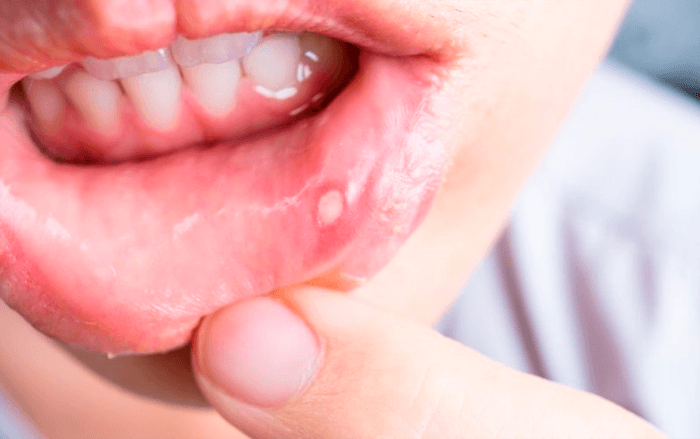
Stomatitis
Achalasia
Achalasia is also called megaesophagus. With this disease, the lower esophageal sphincter does not open enough, which leads to stagnation of food in the esophageal tube. Currently, the exact reasons for the development of achalasia have not been established.
The main symptoms are:
- dysphagia or difficulty passing food through the esophagus;
- chest pain;
- frequent regurgitation;
- a feeling of fullness may appear behind the breastbone.

Stages of cardia achalasia
Neoplasms
A benign tumor called leiomyoma can form in the esophageal tube. In this case, it becomes difficult for a person to swallow food. The development of a neoplasm may be accompanied by salivation, belching, mild chest pain. The patient loses appetite and loses weight.
Malignant neoplasms of the esophagus include lymphoma and carcinoma. The development of a cancerous tumor is accompanied by the following symptoms: depression, decreased appetite (sometimes to a complete disgust for food), rapid exhaustion, anemia. With the growth of the neoplasm, a burning pain appears behind the sternum, the timbre of the voice may change.

Esophageal carcinoma
The disintegration of a malignant tumor leads to complications. Severe esophageal bleeding develops, while the patient vomits with scarlet blood, clots are present in it. The faeces turn black. The formation of an opening in the esophagus leads to difficulty breathing and intoxication. In case of complications, the patient is immediately hospitalized.
Diaphragmatic hernia
With this ailment, the distal part of the esophageal tube is displaced into the chest cavity, using the diaphragmatic opening for this. In this case, the contents of the stomach enter the esophagus, which leads to heartburn. This condition occurs due to the weakening of the ligaments.

Hernia of the esophageal opening of the diaphragm (HH)
Reference! From the age of 50, the risk of developing a hernia increases to 50%. The ligamentous apparatus can weaken due to pregnancy, flatulence, after a long cough. Often, a hernia develops against the background of stomach ulcers, pancreatitis and other diseases of the gastrointestinal tract.
Esophageal anomalies (congenital and acquired)
Congenital anomalies include a diverticulum of the esophagus (occurs most often), a shortened esophagus or its absence, esophageal stenosis, doubling of the esophagus, etc.
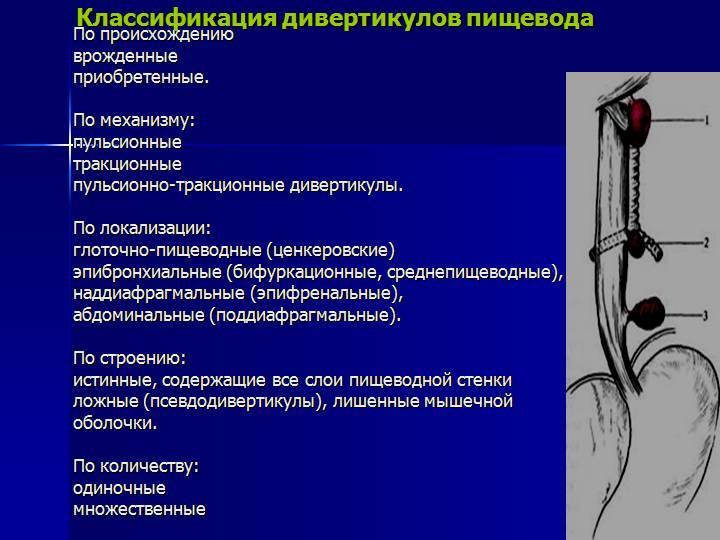
Classification of esophageal diverticula
With a diverticulum, the wall of the esophagus protrudes; it is more common in people over the age of 50. The disease is characterized by difficulty swallowing, constant regurgitation, nausea. The patient has a sore throat, which is why he constantly coughs. Increased salivation is sometimes observed.
Esophageal stenosis is a narrowing of the canal in this organ. This condition can be acquired or congenital. Young children with this condition often regurgitate milk, and adults have difficulty swallowing and increased salivation.
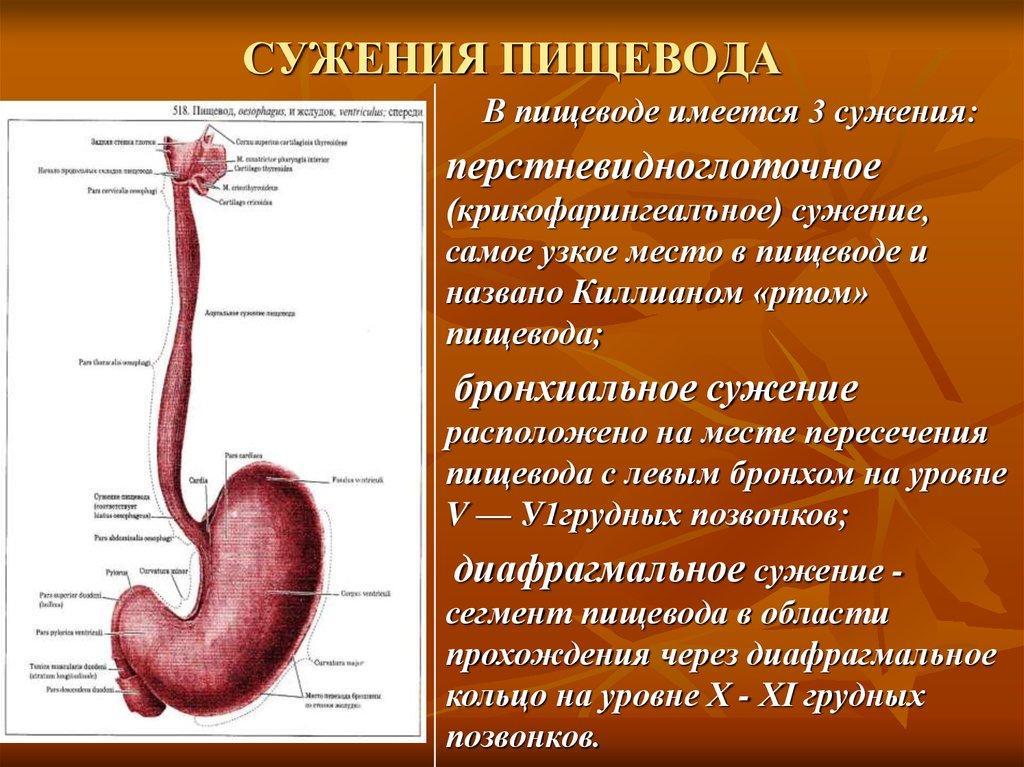
Types of esophageal stenosis
General symptoms indicating a malfunction of the esophagus
All diseases of the esophagus are accompanied by the following symptoms:
| Symptom name | Description |
|---|---|
 Odinophagy |
This is the name for painful swallowing of food. Odinophagia is observed with injuries of the esophageal mucosa. It often accompanies esophagitis, malignant tumors, chemical burns and ulcers. |
 Heartburn |
It occurs as a result of the throwing of the acidic contents of the stomach into the esophagus. Heartburn increases with physical exertion or in a supine position. |
 Dysphagia |
This condition is characterized by difficulty in swallowing. It can get worse after eating foods that are high in fiber. Interestingly, liquid food is more difficult to pass through the esophageal tube in dysphagia than solid food. |
 Regurgitation of the contents of the esophagus (movement of food in the opposite direction to normal, initiated by peristalsis of the esophagus) |
In this state, food flows uncontrollably from the esophagus into the oral cavity, but the diaphragm does not contract. It is almost always accompanied by heartburn. With this type of regurgitation, the contents of the stomach can enter the airways, and this leads to severe coughing, suffocation and the formation of aspiration pneumonia. |
Treatment of various diseases of the esophagus
Treatment tactics depend on the type of esophageal pathology:
- in chronic esophagitis, fasting is initially prescribed, the duration of which is 2 days. After that, the patient is assigned a special diet, it is recommended to drink cool drinks. The main goal of treatment is pain relief and relief. Severe spasms are relieved with novocaine blockades. Sometimes novocaine is replaced with antispasmodics;

"Novocaine"
- with achalasia, an operation is recommended, during which the muscles of the problematic sphincter are dissected. Also, cardiodilation is prescribed, in which the sphincter is expanded using a special balloon. Drug therapy is also used;

Cardiodilation
- patients suffering from reflux esophagitis are prescribed antacids, for example, "Maalox" or "Phosphalugel". The drug "Cisapride" helps to improve the motility of the esophagus. If treatment with medicines did not give the desired effect, the patient is referred for an operation, during which reflux is eliminated;

"Maalox"
- with a diaphragmatic hernia, treatment is aimed at reducing reflux. Surgical intervention is indicated if medication does not bring the desired result;

Reflux
- with a diverticulum, the patient is prescribed a special diet. Food must be liquid, and water must be drunk after every meal. Endoprosthetics is used for esophageal stenosis;

With diverticulum, food should be liquid.
- benign neoplasms are removed surgically. If the tumor is malignant, the oncologist makes the decision about the operation. In this case, the patient is prescribed chemotherapy courses.

Operation on the esophagus for its cancer
Most diseases of the esophagus can be avoided if you follow the correct diet, give up alcohol and smoking, do not drink a lot of coffee and strong tea. If you develop symptoms such as heartburn, belching, and chest discomfort, seek the advice of a gastroenterologist.