Progeria (premature aging syndrome): what it is, symptoms, causes, treatment
Content
- general information
- Signs and symptoms of progeria
- Causes of Progeria
- Affected populations
- Diagnostics
- Treatment of progeria
- Forecast
general information
Progeria, or Hutchinson-Guildford syndrome or premature aging syndromeis a congenital, rare, fatal genetic disorder with striking features reminiscent of premature aging.
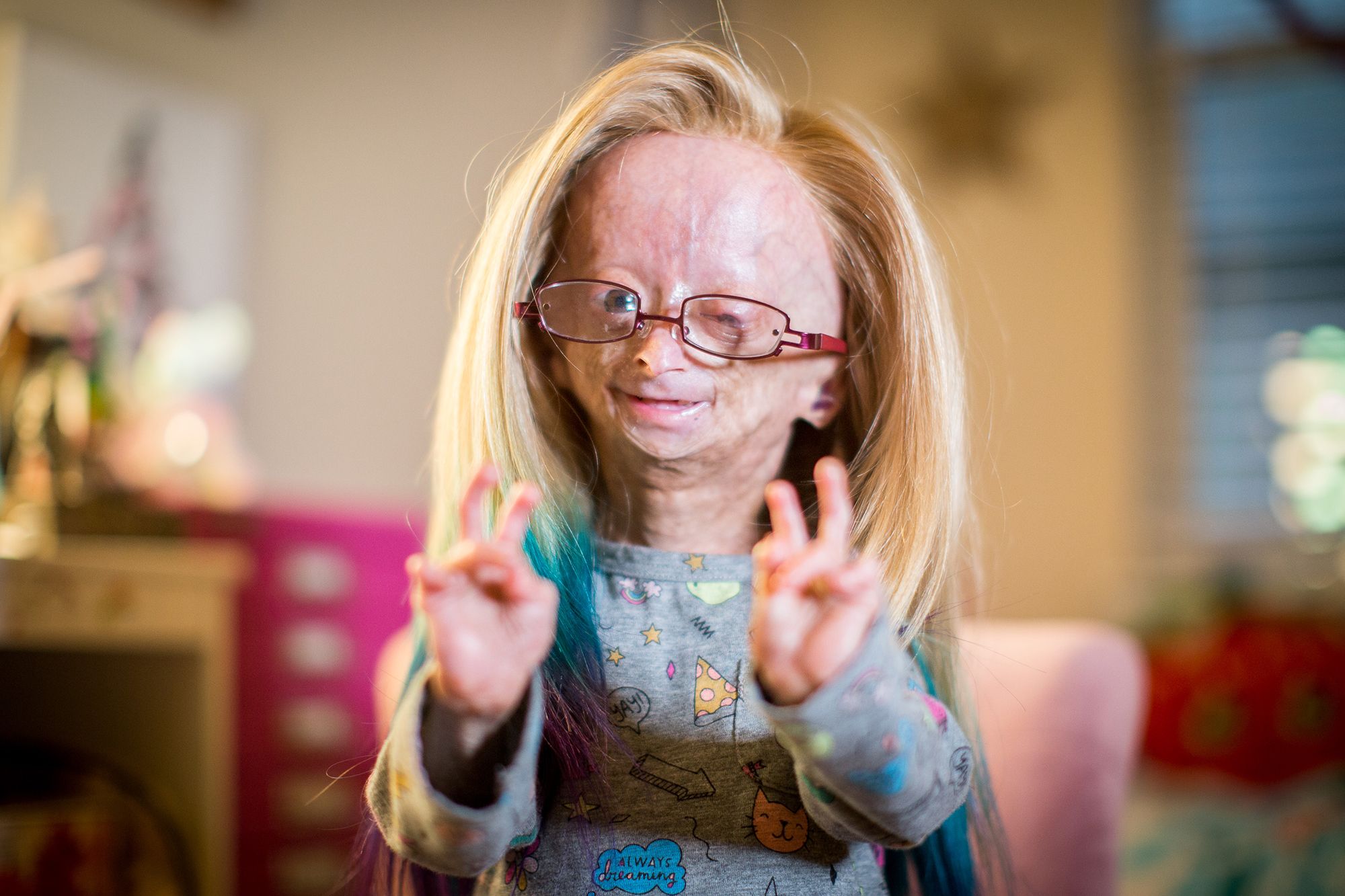
Children with Progeria usually look normal in early childhood. Around 9 to 24 months of age, affected children develop deep stunted growth, resulting in short stature and low weight. They also develop changes in facial features, characterized by:
- a disproportionately small face compared to the head;
- underdeveloped jaw (micrognathia);
- malformations and crowding of teeth;
- expressive eyes;
- small nose;
- thin blue around the mouth.
In addition, by the second year of life in people with premature aging syndrome, hair on the head, eyebrows and eyelashes fall out (alopecia) and the hair on the head may be noticeably small, white, or light. Additional characteristic features include generalized atherosclerosis, cardiovascular disease, and
stroke, hip dislocations, unusually visible scalp veins, loss of a layer of fat under the skin (subcutaneous adipose tissue), nail defects, joint stiffness, skeletal defects and / or other disorders.According to reports in the medical literature, people with Hutchinson-Guildford syndrome develop premature, widespread thickening and loss of elasticity in arterial walls (atherosclerosis), leading to life-threatening complications in childhood, adolescence, or early adulthood age.
Children with Progeria die of heart disease (atherosclerosis) at an average age of 14 years with a range of 8 to 21 years. As with anyone with cardiovascular disease,
Premature aging syndrome is caused by a mutation in the LMNA or lamin A gene. Lamin A protein is a scaffold that holds the cell nucleus together. Scientists believe that a defective lamin A protein makes the nucleus unstable. This cellular instability appears to lead to the premature aging process in progeria.
Signs and symptoms of progeria
Newborns with Hutchinson-Guildford syndrome may have some suspicious signs present at birth, such as:
- unusually tight, shiny, hard (ie, "scleroderma-like") skin over the buttocks, upper legs, and lower abdomen;
- bluish discoloration of the skin and mucous membranes in the midface (mid-facial cyanosis);
- "Sculpted" nose.
Deep progressive stunted growth usually appears around 24 months of age, resulting in short stature and low weight.
According to reports in the medical literature, children as young as 10 tend to be close to the height of the average three-year-old.
By the second year of life, underdevelopment (hypoplasia) of the bones of the face and lower jaw (micrognathia) is also observed. The face appears disproportionately small compared to the head, and the bones at the front and sides of the skull are unusually prominent (frontal and parietal bulges).
Affected children usually have additional facial features, including:
- small, thin, potentially pointed nose;
- unusually noticeable eyes;
- small ears with missing lobes;
- thin lips.
Dental abnormalities may also be present, such as:
- delayed eruption of primary (milk) and secondary (permanent) teeth;
- malformed, small, discolored teeth;
- unusually high frequency caries.
In addition, the abnormal smallness of the jaw can lead to crowding of the teeth.
In children with Premature Aging Syndrome, scalp hair is usually lost by about two years of age. The hair on the head can be fine, white or light, in some cases it can persist throughout life. In addition, eyebrows and eyelashes can also be lost in early childhood.

Hutchinson-Guildford syndrome is also characterized by severe skin disorders. As discussed above, newborns with this disorder may have “scleroderma-like” skin changes on the buttocks, thighs, and lower abdomen. In addition, starting from infancy, there is a gradual, almost complete loss of subcutaneous adipose tissue, and veins in certain areas of the body, especially above the scalp and thighs, become abnormal noticeable.
In sick children, the skin takes on an abnormally aged appearance with unusually thin, dry, wrinkled and / or unusually shiny and taut areas. In addition, sun-exposed areas of the skin may develop as we age. brownish skin patches. Sick children usually have defects of nailseg yellowish, thin, brittle, curved nails, or none at all.
Children with Progeria also have characteristic skeletal defects. These may include delayed closure of the "soft spot" in the anterior part of the skull (anterior fontanelle), an abnormally thin "domed" parts of the skull and / or the absence of certain air-filled cavities within the skull opening into the nose (paranasal or frontal sinuses). In many cases, children also have:
- short, thin collarbones;
- narrow shoulders;
- thin ribs;
- a narrow or "pear-shaped" chest with a protruding belly.
In addition, the long bones of the arms and legs can appear unusually thin and fragile and are prone to fractures, especially the bones of the upper arms (humerus).
Many children with skeletal disorders develop degenerative changes (osteolysis) that can affect:
- clavicle;
- the bones at the ends of the fingers (terminal phalanges), which make the fingers look unusually short and "tapered";
- hip joint (acetabulum).
Degenerative changes in the hip joint can lead to deformity of the hip jointin which there is an abnormal increase in the angle of the hip bone, hip pain and hip dislocation.
In addition, many sick children gradually develop around certain joints (hands, feet, knees, elbows and spine) abnormal fibrous tissue (periarticular fibrosis), causing unusual bulge, stiffness, and limited movement of the affected joints.
Due to knee stiffness, progressive hip deformity, and other associated musculoskeletal disorders children with the disorder usually have a characteristic, widespread horse stance and shuffle gait. Progeria is also associated with general loss of bone density (osteoporosis), a condition causing or contributing to recurrent fractures after minor trauma.
Additional symptoms and signs associated with Hutchinson-Guildford syndrome may include:
- high-pitched voice that stands out;
- no breast or nipple;
- lack of puberty;
- hearing impairment and other disorders.
According to reports in the medical literature, affected children under 5 years of age may develop widespread thickening and loss of elasticity of the arterial walls (atherosclerosis). Such changes may be most evident in certain blood vessels, such as arteries, transporting oxygen-rich blood to the heart muscle (coronary arteries) and the main artery of the body (aorta).
Additional signs may include enlargement of the heart (cardiomegaly) and abnormal heart murmur. During childhood or adolescence, progressive arteriosclerosis can lead to:
- periodic chest pain due to insufficient supply of oxygen to the heart muscle;
- obstruction of blood flow in the blood vessels of the brain (cerebrovascular occlusion);
- progressive inability of the heart to pump blood efficiently to the lungs and the rest of the body (heart failure);
- localized death of a part of the heart muscle caused by the cessation of its blood supply (myocardial infarction or heart attack).
Causes of Progeria
Scientists have found that the cause of progeria is a one-letter error in the gene on chromosome 1, which codes for lamin A, a protein that is a key component of the membrane surrounding the nucleus cells. The abnormal lamin A protein produced in the syndrome is called progerin.
Progeria is not usually inherited. Changes in genes are almost always random and extremely rare. Children with other types of progeroid syndromes who do not have Hutchinson-Guildford syndrome may have inherited conditions.
However, progeria is caused by a sporadic autosomal dominant mutation - sporadic because it is new change in the gene, and dominant, because for the syndrome to occur, only one copy needs to be changed gene. For parents who have never had a child with Progeria, the chances of having a child with the disease are 1 in 4-8 million. But for parents who already have a child with Progeria, the chances of re-birth of a child with the disease are much higher - about 2-3%. It is associated with a condition called mosaicism, where a parent has a genetic disease mutation in a small portion of their cells, but is not sick.
The specific underlying cause of accelerated aging associated with Hutchinson-Guildford syndrome is not yet known. Many scientists speculate that the abnormal aging process is due to cumulative damage to cells as a result of ongoing chemical (metabolic) processes in the cells of the body.
According to this theory, during chemical reactions, certain compounds called free radicals are formed in the body. It is believed that the increasing accumulation of free radicals in the tissues of the body will eventually leads to damage and disruption of the functioning of cells, which ultimately leads to aging. Certain enzymes (known as antioxidants) are believed to play a role in curbing the aging process by helping to eliminate harmful free radicals.
Enzymes are proteins made by cells that speed up the rate of chemical reactions in the body. Some scientists point out that decreased activity of certain enzymes may play a role in accelerated aging in people with Hutchinson-Guildford syndrome.
In one study, skin cells (fibroblasts) obtained from people with progeria were compared to skin cells from people without the disease. In fibroblasts of patients with progeria, the levels of activity of some primary antioxidant enzymes (for example, glutathione peroxidase [GPx], catalase [CAT]) were significantly lower than levels present in healthy fibroblasts.
Studies have shown that progerin is produced at much lower levels in healthy people, and usually accumulates in the coronary arteries during life as we age. This finding supports the possibility that progerin is a risk factor for atherosclerosis in the world's population. overall, and deserves study as a potential new branch to help predict the risk of cardiovascular disease.
Thus, scientists have confirmed the link between normal aging, heart disease and progeria, so finding a cure will help not only sick children, but possibly those who suffer from heart attacks, strokes and other aging-related states.
Affected populations
Progeria is a rare disease that affects men and women alike, and all races. This disorder was originally described in the medical literature in 1886. (Jonathan Hutchinson) and 1897 (Hastings Guildford). The prevalence of the syndrome is approximately 1 in 18 million, so at any given time in the world, approximately 350-400 children are living with Progeria.
Diagnostics
Progeria is usually diagnosed during the second year of life or later, when progeroid signs become noticeable. Diagnosis is based on careful clinical assessment, characteristic physical findings, patient history, and diagnostic genetic testing.
In rarer cases, the disease may be suspected at birth based on recognition certain suspicious data (for example, "scleroderm-like" skin over the buttocks, thighs, lower part of the abdomen; cyanosis of the middle part of the face; "Sculpted" nose).
Specialized tests may be done to confirm or identify certain skeletal abnormalities potentially associated with the disorder. In addition, careful monitoring may also be performed to assess concomitant cardiovascular disorders and to determine appropriate disease management. assessment of the condition of the heart and ongoing monitoring (for example, clinical examinations, x-rays, specialized examinations hearts).
Treatment of progeria
In September 2012, the results of the first ever clinical trial of drugs for children with progeria showed that that Lonafarnib, a type of farnesyltransferase inhibitor originally developed for the treatment of cancer, has been shown to be effective in treating Progeria. Each child showed one of four improvements:
- weight gain;
- improving hearing;
- improving bone structure;
- increasing the flexibility of blood vessels.
Apart from Lonafarnib, who has not yet been approved by the FDA and therefore only available for clinical trials, treatment for Premature Aging Syndrome focuses on the specific symptoms that each has person. Treatment of disorders may require the coordinated efforts of a team of professionals who may require systematic and comprehensive planning of treatment for a sick child. Such specialists can be:
- pediatricians;
- doctors who diagnose and treat disorders of the skeleton, muscles, joints and other related tissues (orthopedists);
- doctors who diagnose and treat abnormalities of the heart and blood vessels (cardiologists);
- physiotherapists and other health professionals.
Special treatments for people with the syndrome are symptomatic and supportive. For example, in patients with bouts of chest pain due to insufficient oxygen supply to the heart muscle (anginal seizures) treatment may include the use of certain medications to help minimize these symptoms.
Forecast
The average life expectancy for people with Progeria is 14 years, although some people live over the age of 20. Progeria is a fatal syndrome.
People with the disease are at increased risk of many diseases (dislocations, fractures, heart disease, stroke, etc.). Children with progeria very often develop atherosclerosis and narrowed arteries. Most sick children end up dying of heart disease.