
Hyperacusis: what is it, causes, symptoms, treatment
Content
- What is hyperacusis?
- Prevalence
- What are the consequences of hyperacusis?
- Sound tolerance
- Types of altered sound tolerance
- Causes of hyperacusis
- Diagnostics
- Hyperacusis treatment
- Ear protection
What is hyperacusis?
Term hyperacusisis usually applied to people who experience the sounds of everyday life as compulsively loud, uncomfortable, and sometimes painful. Some people notice an increase in their sensitivity to certain sounds after a difficult life event, such as bereavement. However, many people do not have a clear cause of hyperacusis.
Hyperacusis affects people in different ways. For some people, this is a minor annoyance, but for other people it is really difficult to live. Some people with hyperacusis withdraw from social and professional activities and become isolated; this can exacerbate the problem as they become fearful and anxious. Therapy often involves addressing these fears and anxieties.
Hyperacusis therapy also includes treating any medical conditions associated with this disorder using sound therapy.
Prevalence
There is very little reliable information on the number of people with problematic hyperacusis. Internet research has shown that this figure may be as high as 9% of the adult population, but most experts working in the field believe that this is too much. A more conservative estimate suggests that about 2% of the adult population has some degree of hyperacusis. The number of people who are seriously affected by the disorder is a small fraction of this total.
What are the consequences of hyperacusis?
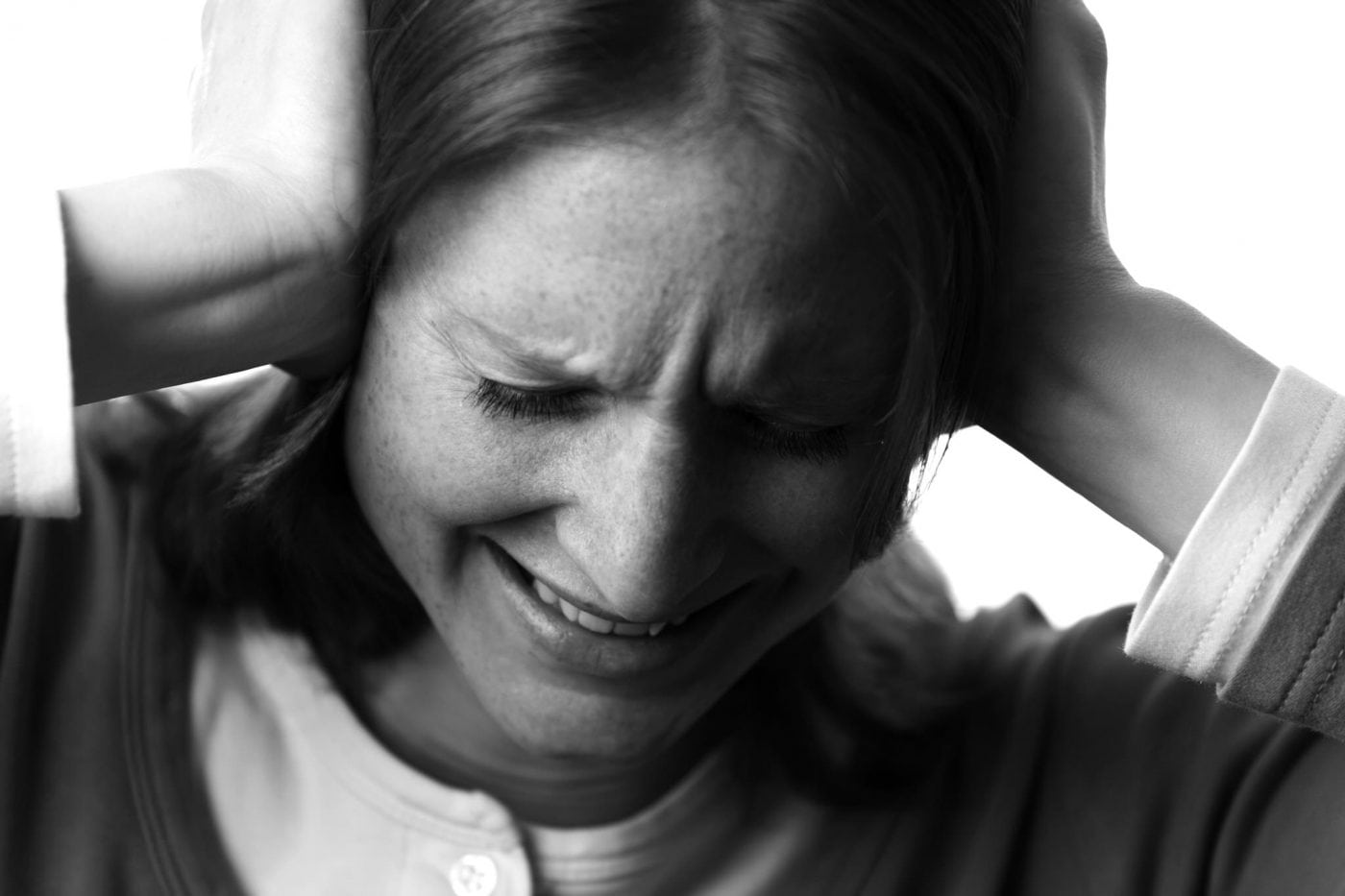
Some people say they feel more sensitive to sound, but this doesn't affect their daily life too much. Other people report that sounds interfere with their focus and feel tension or even anger. Some people with hyperacusis are so afraid of sounds that they give up normal daily activities and try to avoid sounds altogether, which can lead to the fact that the auditory system becomes even more sensitive.
Sound tolerance
The human hearing system has an extraordinary range: we can hear tiny sounds such as light rustling leaves, and yet we can still tolerate extremely loud sounds, such as loud music in a club. There is a sound level that will physically hurt everyone. This occurs at a level of approximately 120 dB (the volume of a jet taking off). However, we usually reach the point where we feel that the sound is too loud long before we reach the pain threshold. This point of maximum comfortable volume varies from person to person, and also depends on the person's mood and the context of the sound.
You may have noticed that some sounds, like the radio in the background, will be very pleasant one day, but the same sound will be quite intrusive another day. This decrease in tolerance is especially likely if the person is tired or stressed.
Besides the most comfortable sound level, most people have noticed that there are certain sounds that they find unpleasant, regardless of the volume of the sound. Think of the sound of nails scraping on a board, water dripping, or a pen banging on a table. These are all normal variations of sound intolerance. However, there are some people whose ability to tolerate sound changes so much that it can affect their ability to live a normal life.
Types of altered sound tolerance
The vocabulary around hearing hypersensitivity is confusing. The word "hyperacusis" is often used to refer to all types of altered sound tolerance. This describes the experience of some people for whom even rather modest environmental sounds seem loud, intrusive and sometimes painful.
If the sensitivity is specific to a particular sound or sounds, and people feel disgust or anxiety associated with those sounds, then the term “phonophobia " (acoustic phobia). New word, misophonywas coined to describe the intense dislike or even disgust that some people with hyperacusis have towards a particular sound. Sounds are often played by other people, such as when someone is chewing.
Causes of hyperacusis
There are several conditions in which hyperacusis is a symptom, so it is important to get a medical opinion. Medical conditions that are sometimes associated with altered sound tolerance include
- migraine;
- post-concussion syndrome;
- post-traumatic syndrome;
- Lyme disease;
- Williams syndrome;
- Bell's palsy.
People who find it difficult to process sensory information (for example, people with autism spectrum disorders) may also experience hyperacusis. Sometimes people get frustrated after certain types of ear surgery.
Exposure to sudden loud noise can sometimes cause hyperacusis. For some, the negative life event appears to be related to the onset of the disorder, but for many people there is no clear cause.
There are several theories about the mechanisms underlying hyperacusis. What they have in common is that the disorder is usually associated with increased sensitivity (or increased hearing) in the central auditory system (the auditory pathways in the brain). This sensitivity can be influenced by mood.
Is there a connection between hyperacusis and tinnitus?
Quite a few people are experiencing noise in ears also have hyperacusis, and looking at the numbers in reverse, most people with significant hyperacusis also have tinnitus. There are also quite a few people who have one condition and not another. Just because people have one of the states does not mean that they will have another.
Diagnostics
Since significant hyperacusis in adults is an uncommon condition, most general practitioners will have little understanding of it. Formal investigation of the disease is carried out by an otorhinolaryngologist (ENT doctor) or an audio-vestibular therapy doctor.
The professional will tell you about your sound tolerance problems and will want to know when and how it started. They will ask about other illnesses or circumstances at the time it started. You can expect questions about how you are coping on a day-to-day basis, as well as how things have changed since it started. Usually asked about hearing loss, exposure to noise and tinnitus.
The ears will also be examined and auditory examinations will most likely be done. Some doctors may request other special examinations (CT, MRI, etc.), and they will be explained to you during the examination.
Hyperacusis treatment
For most people, hyperacusis does not cause problems, and after explaining the disorder, the person can calmly manage the condition. For some, however, this is not the case and may be targeted for hyperacusis therapy. It is usually done in an otorhinolaryngology clinic, and the person is usually also treated with people who are experiencing tinnitus. If hyperacusis is a symptom of a specific medical condition, that condition will be treated in parallel.
The doctor you visit for therapy will want to find out how hyperacusis affects you and should take some time determining what you can do differently to try to reduce the impact of the disorder on your daily life life.
Because many people with hyperacusis are limited in sound, most therapists find it important to slowly and carefully return sound to a person's life so that he can resume daily activities that avoided. It is called sound therapy, and you may be prompted to use an audio frequency generating device. The most commonly used sound is white noise, which essentially sounds like "shhh".
An alternative approach is to use cognitive behavioral therapy (CBT). The idea behind CBT is to understand what is helpful and / or not helpful in daily life when it comes to hyperacusis. Then, work with your therapist to find more beneficial ways to manage the disorder, thereby reducing its impact on daily life.
Ear protection
One thing people with altered sound tolerance have in common is that they try to avoid loud sounds. While this may seem like a common precaution, it can be counterproductive and can make a person even more sensitive to sound. When people avoid sound, their surroundings become quieter and the auditory system becomes more sensitive to sound due to its absence.
Ear protectors should not be used for daily activities. Although it is understandable that people may want to use earplugs or headphones when performing everyday activities such as cleaning the dishwasher or driving a car will not help you learn how to manage hyperacusis in the long run. Of course, it's wise to use hearing protection when you're doing something really noisy.
If hearing protectors are currently used in everyday situations, it is important to discuss strategies to reduce their use with a professional.


