Psoriasis on the head: how to treat with medicines and folk remedies

Content:
- Classification and varieties
- Inpatient treatment
- Treatment with folk methods
Psoriasis is a chronic disease of the upper layers of cells of the epidermis, which is accompanied by the presence of dead skin scales. The most common ailment is psoriasis on the head. The disease is accompanied by the presence of large or small formations in the scalp.
Quite often, the lesion is localized in one place. Late treatment can aggravate the situation.
This type of ailment is not transmitted to others. A person suffering from such a disease is safe for society.
Factors for the development of psoriasis
The main reason for the appearance of skin defects lies in the impaired metabolism.
As already noted, the disease is not infectious, therefore the patient is not able to harm the health of the people around him. The presence of psoriasis in a person indicates the inability of the body to respond normally to the presence of various kinds of stimuli. As a result, excessive cell division occurs. According to statistics, the normal process of cell division is about 30 days.
During this period, the upper layer of the epidermis is gradually replaced by new ones. At psoriasis you can observe the excessive growth of new cells, which begin to overlay the old ones. The division period is reduced by 4 days. As a result, small scaly lesions appear on the surface of the scalp.
In most cases, they present as mild inflammation accompanied by itching. In the process of exfoliation of the old layer of the epidermis, pink spots of various shapes are formed on the surface of the skin. Gradually, they begin to be covered with new formations of skin cells.
Scientists have found a number of reasons that can also provoke a failure in normal metabolism, these include:
- The presence of bad habits. Excessive abuse of alcohol and tobacco products provoke significant changes in the entire body. In the presence of psoriasis on the head, toxic substances that make up alcohol and cigarettes adversely affect the course of the disease.
- Wrong food. The patient's diet contains many products with a large amount of food additives and carcinogens. Bad food can be the initial stage of psoriasis.
- Mechanical damage to the hairline. With repeated injuries, dandruff may appear. The bacteria on the comb can penetrate the affected area of the scalp, thereby triggering the disease mechanism.
- Gastrointestinal problems.
- Unstable temperature conditions. This problem manifests itself during the period of seasonal changes in weather conditions.
- Long-term medication intake.
- Failure of the endocrine system.
- Genetic predisposition of the organism.
In the presence of the main signs of psoriasis on the head, it is recommended to seek the help of a professional dermatologist. He will select the appropriate treatment to prevent the emergence of new lesions. Scalp psoriasis in most cases occurs in people who have reached the age of
Symptoms
At the first stages of the course of psoriasis, the patient does not feel any changes. The disease progresses slowly and without discomfort. On visual examination, in rare cases, the doctor observes the presence of dandruff in an insignificant amount. With a more complex course of psoriasis of the scalp, the patient experiences severe itching and burning in the back of the head, forehead and ears. Plaques with dry scaly elements form on the affected areas.
Microcracks begin to form on the skin, through which the infection enters the body. At the site of peeling, dry parts of the skin begin to grow rapidly. Under mechanical stress, these plaques begin to flake off, leaving red spots. In this case, the patient needs to choose the appropriate medication to prevent the progression of the disease.
The main places of localization
Today, psoriasis on the head is a fairly common type of disease that occurs in every fourth patient. Untimely started treatment is the main reason for the spread of the disease throughout the body. The disease can take several forms, each accompanied by new health problems.
The main locations for psoriasis of the scalp are:
-
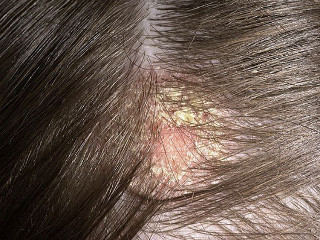 skin around the ears, back of the head, the area behind the auricle;
 - area of the frontal lobe, parietal area;
- the posterior region of the cervical spine;
- parting area of hair growth.
The disease has two forms of its course: mild and severe.
During the initial stage, the patient does not experience any unpleasant sensations. The main symptom is the persistent presence of dandruff, which appears two days after shampooing. With a severe form of the disease, the patient has psycho-emotional discomfort, a constant burning sensation and itching on the affected area of the skin.
Scalp psoriasis: classification and varieties
Psoriasis on the head has several stages of the course of the disease.
Dermatologists divide scalp psoriasis into the following stages:
- Initial. It is the presence of small pink papules that rise slightly above the skin. The patient may feel mild itching in the area of the affected area. With mechanical action, small fragments of dead skin cells are exfoliated.
- Progressive. The presence of new lesions is noted here. The patient begins to experience severe discomfort, which is accompanied by the presence of constant itching and severe peeling. Papules gradually spread peripherally from each other.
- Stationary. In the presence of this stage, most of the scalp is affected by lesions. Old areas do not disappear, but, on the contrary, begin to progress with greater force.
- Regressive. It is characterized by the presence of a large number of white circles in the affected area. The skin begins to dry out a lot. A large number of scaly formations are present on the surface of the papules.
A severe course of the disease can cause the death of hair follicles, which provokes premature baldness of certain areas of the head. Scaly areas gradually thicken due to dead skin cells. On visual inspection, light-colored growths are observed on the surface of the hairline. Men are exempt from military service, as moral and physical stress provokes a severe course of the disease.
Classification and varieties
In medicine, there are two groups of scalp psoriasis. Each of them has a complex of varieties that describe all the characteristic diseases accompanied by the presence of similar symptoms. These include the pustular type.
It includes several groups:
- generalized form;
- palmoplantar;
- annular.
A non-pustular type, in turn, is divided into:
- the traditional form of the disease;
- psoriatic.
Each type and subgroup has similar symptoms, but different rates of disease progression. With the pustular type of the disease, the patient has a progressive nature of the spread of foci that need good medical treatment. In the presence of a non-pustular type, the skin is less susceptible to attack by new formations.
The course of psoriasis in childhood
 In young children, scalp psoriasis in the initial stage is often compared with an allergic reaction - there is a slight redness on the surface of the skin with elements of peeling. In most cases, the affected area is compared to diaper rash, candidiasis and eczema.
The course of the disease occurs in slow motion. Often the initial impetus for the appearance of defects in the scalp is various drugs that contain aggressive components. The child should be treated under the guidance of an experienced dermatologist.
The initial stage of therapy is a strict diet. Citrus fruits, all kinds of dyes, fatty foods, carcinogens are completely excluded from the diet. Medication is prescribed to prevent the spread of the affected areas. Mostly prescribed lotions, sprays, shampoos based on medicinal components. This therapy helps to restore hair follicles, preventing their death.
Important
Correctly selected course of therapeutic measures significantly mitigates the course of the disease.
For each child, a basic diet is selected, which can exclude the rapid spread of inflamed areas. In addition to proper nutrition and drug therapy, the patient is prescribed a course of physiotherapy, which contributes to the rapid regeneration of the affected cells of the epidermis.
How to treat psoriasis on the head in the hospital and at home
 All drugs for psoriasis are usually divided into two categories: external and internal. Using them, you can forget about the disease forever. As a rule, the use of external medicines is far from always possible due to the constant growth of hair, therefore, special balms and shampoos come to replace various ointments.
Not everyone knows how to treat psoriasis on the head, especially when faced with the disease for the first time. But most of the internal drugs are hormonal.
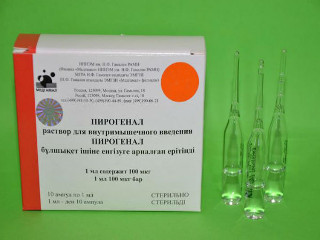
In the case of drug treatment, various medications with a fortifying and sedative effect are often used. These can be such well-known vitamin complexes as Pyrogenal or Picaminlon, which are based on folic and niacin. Treatment of the disease in a hospital is mainly carried out in cases where psoriasis is severe or moderate. Specific treatment methods and drugs are prescribed based on the stage of the disease: stationary, progressive or regressing.
At the stage when treatment in the clinic is necessary, patients no longer have time to hesitate, active measures begin to relieve inflammation and disinfect.
In addition to the standard set of injections and a wide variety of tablets, external agents such as lotions and ointments are used. After the disease passes into the next stage - the time of regression, the patient is already discharged for further treatment at home. The course of treatment usually takes two weeks. And the doctor will have to tell about how to treat psoriasis on the head at home when he is discharged from the hospital.
Home treatment
To date, there are still no drugs that would help to permanently get rid of a disease such as psoriasis. The main goal of home treatment is primarily to control its development.
An increase in the time interval of the remission stage occurs through the use of the listed funds:
- Special shampoos.
- Healing ointments.
- Infusions of various herbs.
- Baths with the addition of herbal infusions.
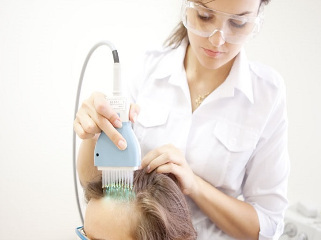
- UV irradiation.
In the case of home treatment, it is important to know a few rules that must be followed:
- All prescribed medications will need to be taken regularly.
- In the absence of a pronounced severity of symptoms, it is enough to use products containing aloe vera. Only in the case of a severe course of the disease, it is necessary to switch to the use of any hormonal drugs.
- Using the prescribed creams, it will be possible to maintain a normal level of skin moisture.
- In the case of the appointment of sunbathing and the recently popular uv therapy procedure, it is imperative to strictly follow the schedule that was proposed by the doctor.
- To get rid of various manifestations of the disease, it is advisable to use the most common means. Most doctors agree: use several different ointments and drugs at the same time undesirable, since it will be impossible to determine how effective a particular remedy was specifically for you.
- Take a break during treatment. At the same time, the average break time between courses varies from several weeks to six months.
- If psoriasis is noticed in a child, then it is necessary to pay attention to the factors that provoked the disease in order to exclude them as soon as possible. In this case, it is usually sufficient to follow a diet.
How to cure psoriasis on the head with folk methods
 You can try to cure the disease using various folk remedies. Of course, using only them alone, it is unlikely that it will be possible to achieve stunning results, since psoriasis on the head can be cured only with complex treatment.
Folk remedies help to alleviate the situation well and at the same time act as additional therapy. Celandine is a plant on the basis of which the funds are used in the case of a wide variety of infectious and inflammatory skin diseases.
It has already been proven many times that in the case of psoriasis treatment, it can also have a positive effect on the skin. Take the simplest alcoholic tincture of the plant and rub the scalp with it. After that, it is advisable to rinse the hair a little with chamomile infusion. If during the use of the product discomfort occurs, it is necessary to stop using it. Despite the fact that there are a huge number of masks today, it is necessary to use them carefully in treatment, since they cause allergic reactions.
One of the most popular recipes for a mask that you can cook yourself is the following: mix the egg white with with a small spoonful of honey and apply the resulting mixture directly to the hair, while rubbing it into the scalp with light massaging movements. Wash off the mask after 30 minutes.
Various masks based on oils are quite effective. You can take an essential oil such as rosemary or tea tree and add a small spoonful of almonds / coconut to it. The resulting mixture must be applied to the hair and kept for at least two hours. Rinse off such a mask with a special therapeutic shampoo.
It is worth noting that you will have to soap your hair more than once. Onion compresses are often used against the disease. They are very easy to do. It is only necessary to cut a little of the fruit to a state of porridge and apply directly to the scalp with massaging movements. Such a compress is washed off after two hours.
For maximum effect, this procedure must be repeated at least three times a week. This drug has only one, but rather serious drawback, which is a strong odor, which is unlikely to get rid of on the same day when the compress was applied.
Therapeutic diet
One of the most important conditions for effective psoriasis treatment is strict adherence to a specially designed diet.
Its essence lies in the exclusion of a number of products from the diet:
- Coffee.
- Various citrus fruits.
- Alcoholic drinks.
- Fruits, vegetables, but only red.
- Carbonated drinks.
- Spicy dishes.
- Any confectionery that contains chocolate.
- Products that contain food colors or any flavorings, preservatives.
Also, for strict adherence to the diet, it is necessary to reduce the consumption of eggs and sugar in any form to a minimum. After the symptoms have partially disappeared, it will be possible to reuse foods from the prohibited list in food. However, you need to monitor what kind of reaction the body will have. As soon as symptoms appear again, the product will need to be eliminated from your diet.
Hair care rules
It is necessary to comb your hair very carefully and only after it is completely dry. After washing your hair, rinse it with boiled water with lemon juice. And if there are a lot of plaques on the head, you can use soap every two months to wash your hair.
Partial use of site materials (no more than 30% of the content of the article) is allowed only with a hyperlink on www.med88.ru, full use of the article (more than 30% of the article content) is possible only with written permission edition.