Premature babies: causes, symptoms, treatment, prognosis, prevention
Content
- general information
- Causes and risk factors
- Signs and symptoms
- Complications
- Diagnostics
- Treatment of premature babies
- Forecast
- Prophylaxis
general information
Premature baby Is a child born before the 37th week of pregnancy. Depending on the length of time the babies are born, premature babies have underdeveloped organs that may not be able to function outside the uterus.
- Previous premature birth, multiple births, poor nutrition during pregnancy, late nursing during pregnancy, use assisted reproductive technologies (such as in vitro fertilization) and high blood pressure can increase the risk of premature childbirth.
- Because many organs are underdeveloped, premature babies may have trouble breathing and sucking, and are prone to brain haemorrhage, infections, and other problems.
- The most premature and youngest newborns are at a much higher risk of problems, including developmental problems.
- Although some premature babies grow up with persistent problems, most of the surviving babies are normal.
- Early medical care during pregnancy can reduce the risk of preterm birth.
- Premature labor can sometimes be delayed for a short period by taking medications to slow or stop the contractions.
- If the baby is expected to be born much earlier than due date, doctors may give the mother injections a corticosteroid to speed up lung development in the fetus and prevent cerebral hemorrhage (intraventricular hemorrhage).
Under the concept gestational age understand the life span of the fetus. Gestational age is the number of weeks between the first day of the mother's last menstrual cycle until the day of birth. This time is usually adjusted based on other information received by doctors, including results. ultrasound examinations in early pregnancy, which provide additional information about gestational age. The baby is considered ready for birth (estimated due date) after 40 weeks of pregnancy.
Newborns are classified by gestational age as premature if they are born before 37 weeks of gestation. Premature babies are further classified as:
- extremely premature: those born before the 28th week of pregnancy;
- very premature: those born between the 28th and 32nd weeks of pregnancy;
- moderately premature: those born between the 32nd and 34th week of pregnancy;
- prematurely born late in pregnancy: those born between the 34th and 37th weeks of pregnancy.
Premature birth is a global problem. They occur in high, middle and low income countries. Approximately 15 million babies are born prematurely every year. 1 in 10 newborns worldwide. 60% of them are born in sub-Saharan Africa and South Asia.
Extreme prematurity is one of the most common causes of death in newborn babies. In addition, deeply premature babies are at increased risk of long-term problems, especially developmental delays. cerebral palsy and learning disabilities. However, most babies who are born prematurely grow up without any difficulty in the long term.
Causes and risk factors
The causes of premature birth are often unknown. However, there are many known risk factors for preterm birth. An increased risk of preterm birth is present in adolescents and older women, women of lower socioeconomic status and women with lower levels of formal education.
Risk factors associated with a previous pregnancy:
- premature birth in the past;
- multiple pregnancies in the past;
- numerous induced abortions or spontaneous miscarriages.
Risk factors before and during pregnancy:
- pregnancy has occurred with the help of assisted reproductive technologies (such as in vitro fertilization), especially when this pregnancy is multiple (twins, triplets, quadruplets);
- naturally occurring multiple pregnancies;
- inadequate or lack of medical care during pregnancy;
- smoking cigarettes;
- untreated infections during pregnancy, such as urinary tract infections, sexually transmitted diseases or an infection of the uterus (intra-amniotic infection);
- past surgery involving the cervix and / or cervical weakness (cervical insufficiency);
- heart disease;
- arterial hypertension;
- kidney disease;
- diabetes;
- preeclampsia or eclampsia;
- premature separation of the placenta (placental abruption);
- premature rupture of the membranes.
However, most women who gave birth to a premature newborn had no known risk factors.
Early care during pregnancy reduces the risk of preterm birth.
Signs and symptoms
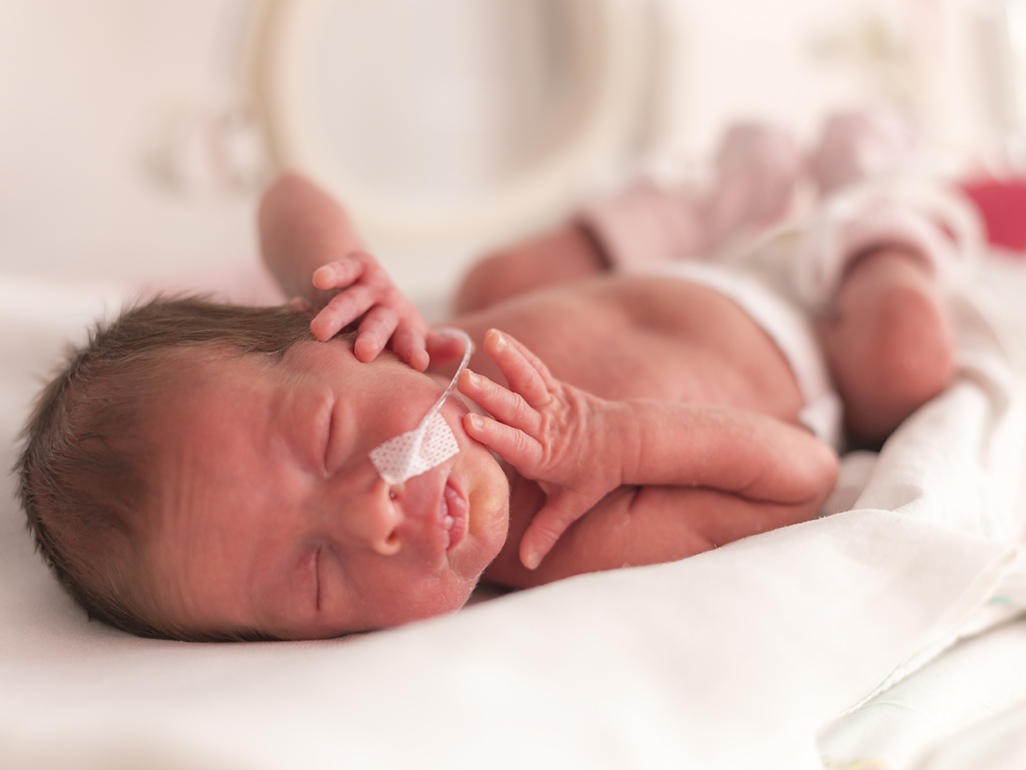
Premature babies usually weigh less than 2.5 kilograms, and some weigh only 500 grams. Symptoms often depend on the immaturity of the various organs.
Very preterm newborns most often require a longer stay in the intensive care unit and neonatal intensive care (NICU) hospital until their organs begin to function normally on one's own. On the other hand, in newborns born prematurely in late pregnancy, only a few organ systems (or none) may take time to mature. Newborns born prematurely in late pregnancy may remain in the hospital until they can independently regulate your body temperature and blood sugar (glucose) levels, suck well and gain weight body.
The immune system of all premature newborns is also underdeveloped, and therefore, premature newborns are prone to developing infections.
Physical signs of premature babies:
- small size
- large head relative to the rest of the body;
- little fat under the skin;
- thin glowing pink skin;
- veins are visible under the skin;
- several folds on the feet;
- little hair;
- soft ears with little cartilage;
- underdeveloped breast tissue;
- boys: small scrotum with several folds; in deeply premature babies testicles may be undescended;
- girls: on the genitals the labia majora do not yet cover the labia minora;
- rapid breathing with short pauses (intermittent breathing), apnea attacks (pauses lasting more than 20 seconds), or both;
- weak poorly coordinated sucking and swallowing reflexes;
- decreased physical activity and muscle tone (premature newborns, as a rule, do not stretch their arms and legs at rest, as full-term newborns do);
- sleep most of the time.
Complications
Most of the complications of prematurity are caused by the underdevelopment and immaturity of organs and organ systems. The risk of developing complications increases in parallel with the degree of prematurity. The risk of complications also depends in part on the presence of certain causes of prematurity, such as infection, diabetes mellitus, high blood pressure, or preeclampsia.
- Underdeveloped brain.
If a baby is born before the brain is fully developed, a number of problems arise. These problems include:
- Unstable breathing: the part of the brain that controls regular breathing may be so immature that premature newborns breathe unstable, with short pauses in breathing or cycles during which breathing stops completely for 20 seconds or more (apnea premature).
- Impaired sucking and breathing coordination: parts of the brain that control reflexes involving the mouth and throat are immature, so premature infants are unable to suck or swallow normally, resulting in difficulty in coordinating sucking with breathing.
- Bleeding (hemorrhage) in the brain: deeply premature newborns are at increased risk cerebral hemorrhage.
- Underdeveloped digestive tract and liver.
An underdeveloped digestive tract and liver can cause a number of problems, including the following:
- Common cases of regurgitation: Initially, premature infants may have difficulty sucking. They not only have not developed the reflex of sucking and swallowing, but also have a slow emptying of the stomach due to its small size, which can lead to frequent cases of regurgitation (reflux).
- Frequent episodes of feed intolerance: The intestines of premature babies move very slowly, so premature babies often have difficulty emptying their bowels. Due to the slow movements of the gastrointestinal tract, premature babies do not digest well the breast milk or baby food they are given.
- Intestinal damage: A very preterm newborn can develop a serious illness in which part of the intestine is severely damaged, which can lead to infection (necrotizing enterocolitis).
- Hyperbilirubinemia: Premature infants are prone to developing hyperbilirubinemia. In hyperbilirubinemia, the liver of newborns slowly removes bilirubin (a yellow pigment in bile that occurs as a result of the normal destruction of red blood cells) from the blood. Therefore, the yellow pigment accumulates, the skin and whites of the eyes acquire a yellowish color (jaundice). The skin of premature newborns tends to turn yellowish in the first few days after birth. The jaundice is usually mild and goes away when the newborn begins to eat more and he has more frequent bowel movements (bilirubin is excreted in the feces, giving it a bright yellow at first Colour). Rarely, very high levels of bilirubin accumulate and the newborn may develop bilirubin encephalopathy. Bilirubin encephalopathy is a form of brain damage caused by the deposition of bilirubin in the brain.
- Underdeveloped immune system.
Premature babies have low levels of antibodies, which are proteins in the blood that provide protection against infection. The mother's antibodies cross the placenta during late pregnancy and help protect the newborn from infection during delivery. Premature babies have fewer maternal protective antibodies and therefore have a higher risk of developing infections, especially infections in the blood (sepsis newborns) or tissue around the brain (meningitis). The use of invasive treatment devices such as catheters in blood vessels and breathing tubes (endotracheal tubes), further increases the risk of developing serious bacterial infections.
- Underdeveloped kidneys.
Before delivery, the waste products of the fetus are excreted by the placenta, and then by the mother's kidneys. After delivery, the kidneys of the newborn must take over these functions. In deeply preterm infants, kidney function is reduced but gradually improves as the kidneys develop. In newborns with underdeveloped kidneys, the regulation of the amount of salt and other electrolytes, as well as water in the body, may be impaired. Kidney problems can slow growth and build up acids in the blood (metabolic acidosis).
- Underdeveloped lungs.
The lungs of premature newborns may not have enough time to fully develop before birth. The small air sacs (alveoli) that capture oxygen from the air and remove carbon dioxide from the blood do not form until about the last third of pregnancy (3rd trimester). In addition to this structural development, the lung tissue must produce a fatty substance called a surfactant. The surfactant coats the alveoli from the inside and allows them to remain open during the respiratory cycle, making breathing easier. Without surfactant, the air sacs tend to collapse at the end of each exhalation, making breathing extremely difficult. Usually, the lungs do not make surfactant until about 32 weeks gestation, and not enough surfactant is produced until about 34 to 36 weeks.
These factors mean that premature babies are at risk of breathing problems, including respiratory distress syndrome (RDS). Newborns who have trouble breathing may need breathing relief with a ventilator (a device that helps air enter and exit the lungs them). The earlier a newborn is born, the less surfactant it has, and the more likely it is to develop respiratory distress syndrome.
There is no cure to help the lung structure mature more quickly, but with proper nutrition, the lungs continue to mature over time.
There are two approaches to increasing the amount of surfactant and decreasing the likelihood and severity of respiratory distress:
- Before giving birth: corticosteroid drugs, such as betamethasone, increase surfactant production in the fetus and are prescribed mothers by injection in cases where preterm birth is predicted, usually within 24 to 48 hours before childbirth.
- After birth: Doctors may inject surfactant directly into the windpipe (trachea) of a newborn.
Bronchopulmonary dysplasia (BPD) - chronic lung diseasethat occurs in premature babies, especially in the least mature babies. Most infants with bronchopulmonary dysplasia have experienced respiratory distress and need ventilator treatment. In bronchopulmonary dysplasia, scar tissue forms in the lungs and the infant needs constant breathing relief, sometimes with a ventilator. In most cases, the infant recovers very slowly from the illness.
- Underdeveloped eyes.
The retina is the light-sensitive tissue at the back of the eye. The retina is nourished by the blood vessels on its surface. Blood vessels grow from the center of the retina to the edges of the retina during pregnancy and do not stop growing until due date. In premature babies, especially the least mature, blood vessels stop growing and / or grow abnormally. These abnormal blood vessels can bleed or lead to the formation of scar tissue, which can stretch the retina. This disorder is called neonatal retinopathy and occurs after childbirth.
In the most severe cases, the retina flakes off from the back of the eye, resulting in blindness. Premature babies, especially those born before the 31st week of gestation, usually have periodic eye examinations so that doctors can detect abnormal blood vessel development. If there is a high risk of retinal detachment, doctors may use laser therapy or prescribe a drug called bevacizumab.
Premature newborns are also at increased risk of developing other eye problems, such as myopia (myopia), strabismus (strabismus) or combinations thereof.
- Dysregulation of blood sugar levels.
Because premature newborns have problems sucking and maintaining normal levels sugar (glucose) in the blood, they are often given intravenous glucose solutions or are often fed small portions. Without regular feedings, these newborns can have low blood sugar levels (hypoglycemia). Most newborns with hypoglycemia have no symptoms. Other newborns become lethargic with poor muscle tone, poor suckling, or restlessness. Seizures develop occasionally.
Premature babies are also prone to developing high blood sugar (hyperglycemia) if they develop an infection or have a cerebral hemorrhage, or if they receive too much glucose intravenously. However, hyperglycemia is rarely symptomatic and can be controlled by limiting the amount of glucose given to the newborn or by administering insulin for a short period of time.
- Heart problems.
A common problem in less mature infants is the ductus botalle (NBD). Botallov's duct is a fetal blood vessel that connects two large arteries leaving the heart, the pulmonary artery and the aorta. In full-term infants, the muscular wall of the Botallov's duct closes off the bloodstream during the first few hours or days of life. However, in premature babies, the blood vessel can remain open, resulting in excessive blood flow through the lungs and requires more work from the heart. In most premature babies, the Botallo duct opening will eventually close on its own, but sometimes medications are prescribed that contribute to the faster closure of the unsealed botallov duct. In some cases, a surgical procedure is performed to close the unsealed Botallic duct.
- Violation of the regulation of body temperature.
Because premature infants have more skin surface area relative to their weight compared to full-term infants, they tend to lose heat quickly and their ability to maintain normal body temperature is impaired, especially if they are in a cool room, there is a draft in the room, or they are near a window when on it's cold outside. If the baby is not kept warm, the body temperature drops (hypothermia). Hypothermic newborns do not gain weight well and may have many other complications. To prevent hypothermia, premature babies are kept warm in an incubator or under an infrared ceiling heater.
Diagnostics
Usually, doctors know if a baby is premature based on the estimated gestational age of the newborn and on the physical characteristics that occur after birth. They examine the newborn and perform all the necessary blood tests, laboratory tests, hearing, eye and imaging tests as part of routine examination and screening newborn. This screening may need to be repeated frequently as the newborn grows and before discharge from the hospital.
Treatment of premature babies
Treatment of prematurity involves the treatment of complications resulting from organ underdevelopment. All specific diseases are treated as needed. For example, preterm infants may be given medication to relieve breathing problems (such as artificial ventilation of the lungs for lung disease and surfactant treatment), antibiotics for infections, blood transfusion for anemia and laser surgery for eye conditions, or they may need special imaging tests such as echocardiography with heart problems.
Parents are encouraged to come and interact with their child as much as possible. Skin-to-skin contact (also called the kangaroo care method - between the newborn and the mother or father is beneficial for the newborn.
At home, parents of all babies should remove soft materials, including blankets, throws, pillows and stuffed animals from the baby's cradle, as these items can increase the risk sudden infant death syndrome (SHSN). At home, babies should be put to sleep on their backs rather than on their stomachs, as sleeping on their stomachs also increases the risk of CHS.
- Deep premature newborns.
Very premature infants may need to be admitted to a neonatal intensive care unit for several days, weeks, or months. They may need to insert a breathing tube and connect to a machine that helps air enter the lungs in and out of them (ventilator) until their lungs can breathe air.
They are fed intravenously until they can tolerate food introduced into the stomach through a feeding tube and eventually switch to oral feeding. Mother's breast milk is the best food for premature babies. Eating breast milk reduces the risk of developing a gut problem called necrotizing enterocolitis and infections. Since breast milk is low in certain nutrients, such as calcium, very low birth weight neonates may need to be mixed with enriching mixture. If needed, you can also use a high-calorie infant formula designed specifically for premature infants.
Very premature newborns may need drugs to induce breathing, such as caffeine, until the part of the brain that controls regular breathing matures.
To stay warm, these newborns need to be kept in an incubator until they are able to maintain a normal body temperature.
- Extremely premature babies.
Extremely premature newborns need the same care as deeply premature newborns. Like deeply premature newborns, these newborns cannot be discharged from the hospital until they have acquired the ability to breathe independently, feed through the mouth, maintain a normal body temperature and will not begin to gain body weight.
- Discharge from the hospital.
Premature babies usually remain in the hospital until their illnesses are adequately controlled and are able to:
- eat enough milk without special help;
- steadily gain body weight;
- maintain a normal body temperature in the cradle.
Most preterm infants are ready to be discharged home when they are 35–37 weeks gestational age and weigh 4 to 5 pounds (2 to 2.5 kilograms). However, wide fluctuations are possible here. The length of the infant's hospitalization does not affect the long-term prognosis.
Because premature infants are at risk of respiratory arrest (apnea), low blood oxygen levels and slow heart rates contractions while in a child car seat, many hospitals in the United States of America perform a provocative test before a newborn is discharged car seat. The test is carried out in order to establish whether the child's condition is stable when the car seat is half-reclined. This test is usually done using a car seat provided by the parents.
The car seat challenge test is not very accurate and is not used by doctors in some other countries. Premature infants, including those who have been tested, should be supervised by a non-driving adult at all times. children in the car seat until the babies reach a gestational age of 40 weeks, while remaining consistently able to tolerate being in car seat. Since it is necessary to observe the color of the child's skin, travel should be limited to daytime hours. Long journeys should be split into 45-60 minute sections to take the child out of the car seat and change their position.
Surveys have shown that most child car seats are not set to the optimum position, so it is recommended that the car seat be checked by a certified car seat inspector. Some hospitals offer a screening service, but occasional advice provided by an uncertified by a hospital staff member should not be equated with a review by a certified expert in car seats.
The American Academy of Pediatrics recommends that the car seat be used only for road transport and not as a chair or crib at home. Many doctors also advise parents not to put premature babies in rocking chairs or sun loungers for the first few months at home.
After discharge, preterm infants are closely monitored for problems. development, and they, as necessary, undergo physiotherapy, occupational therapy, as well as speech and language therapy.
Forecast
Over the past decades, survival and overall outcome in preterm newborns have improved significantly, but problems such as developmental delay, cerebral paralysis, visual and hearing impairment, attention deficit hyperactivity disorder (ADHD) and learning disabilities are still more common in premature infants than in full-term infants. The most important determinants of outcome are:
- birth weight
- degree of prematurity
- whether the mother was given corticosteroids within 24 to 48 hours before the preterm birth
- complications that have arisen after birth
The gender of the baby also affects the likelihood of a good outcome - girls have a better prognosis than boys with a similar degree of prematurity.
If babies are born less than 23 weeks of gestation, they rarely survive. Babies born at 23-24 weeks may survive, but only a small number of babies will have a normal nervous system. Babies born after 27 weeks of gestation survive with a normally functioning nervous system.
Because of the likelihood of a poor outcome, the opinion of neonatal specialists (neonatologists) regarding the aggressiveness of treatment that they recommend for infants born between 22 and 25 weeks of gestation differs. Parents of these babies should discuss prognosis and treatment options with the neonatologist, ideally before delivery, if there is sufficient time for such a discussion.
Prophylaxis
Routine medical care during pregnancy combined with the identification and treatment of any risk factors or pregnancy complications, as well as early smoking cessation, may be the best approach to reduce the risk prematurity. However, many other conditions that increase the risk of prematurity cannot be avoided. In all cases, women who believe they may have preterm labor or have rupture of the membranes, you should immediately contact the obstetrician to arrange a proper examination and treatment.
The use of assisted reproductive technologies often leads to multiple pregnancies (twins, triplets and more). With these types of pregnancies, the risk of premature birth and its complications is significantly higher. However, a technique called selective single embryo transfer, which is implantation single embryo, reduces the risk of multiple pregnancies and may be considered a suitable option for some women.