Hartnup's disease: what is it, causes, symptoms, treatment, prognosis
Content
- What is Hartnup's disease?
- Signs and symptoms
- Causes
- Affected populations
- Symptomatic disorders
- Diagnostics
- Standard treatments
- Forecast
What is Hartnup's disease?
Hartnup's disease Is a rare genetic disorder associated with a congenital error in amino acid metabolism. The disorder is characterized by a severe skin rash and has been accompanied by episodes of neurological damage in several reported cases. lesions, which may include an inability to coordinate voluntary movements (ataxia), vision problems, and cognitive problems delays.
Symptoms associated with this disorder may be triggered by fever, medications, or during situations when a sick person is in a state of emotional or physical stress, for example during disease. As a rule, the frequency of such episodes usually decreases with age. Hartnup's disease is caused by mutations in a gene SLC6A19 and is inherited in an autosomal recessive manner.
Signs and symptoms
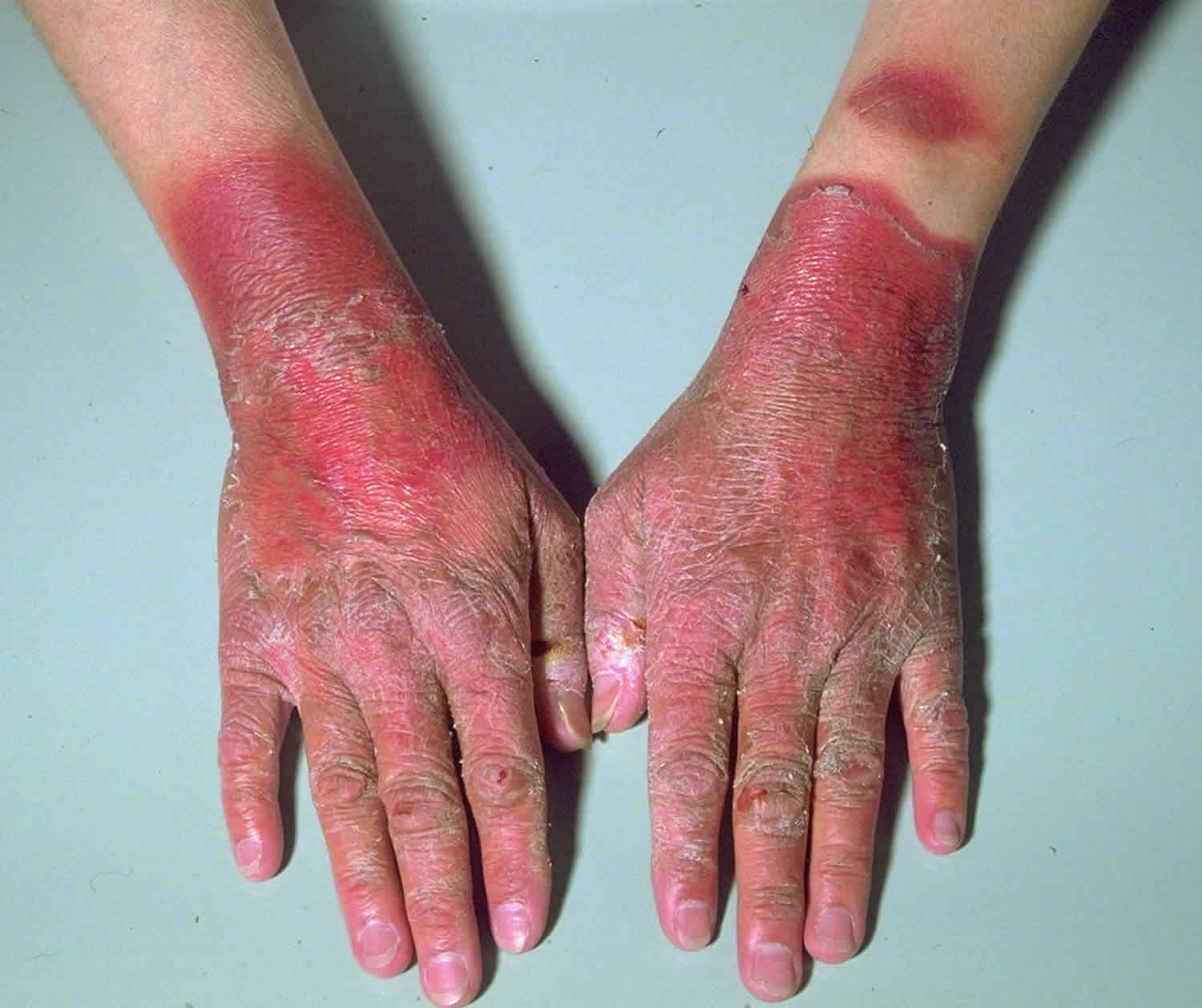
The symptoms of Hartnup's disease vary greatly from person to person. Most of the affected people do not have any overt symptoms. When symptoms do develop, they most often appear between the ages of 3-9 years. In rare cases, symptoms first appear in adulthood.
The most common symptom is red, scaly, light-sensitive rashes on the face, hands, extremities, and other exposed areas of skin. photo above).
A wide variety of neurological disorders can occur, including:
- sudden episodes of impaired muscle coordination (ataxia);
- unsteady walking;
- violation of speech articulation (dysarthria);
- occasional tremors of the hands and tongue;
- spasticity, a condition marked by increased muscle tone and muscle stiffness, especially in the legs.
There have been reports of cognitive retardation and, in rare cases, mild mental retardation in some children. However, it is unclear if these symptoms are related to Hartnoop's disorder or if they happened by chance in the same person and were therefore attributed to Hartnoop's disease.
Similarly, convulsions were observed, fainting, tremors, lack of muscle tone (hypotension), headaches, dizziness, and delays in motor development, but these may not be associated. Some people affected may experience mental health problems, including emotional instability, such as
- rapid mood changes;
- depression;
- confusion;
- anxiety;
- rave;
- hallucinations.
Some children experience stunted growth and may be shorter than might be expected depending on age and gender (short stature). In some cases, the eyes may be affected and patients may experience double vision (diplopia), involuntary rhythmic eye movements (nystagmus) and droopy upper eyelids (ptosis).
An episode of this disorder may be preceded or followed by diarrhea. It has been reported that some adults with Hartnup's disease had an initial symptom of epilepsy in adulthood. Cases have also been reported heartburn in adults with this disorder.
Causes
Hartnup's disease is caused by changes (mutations) in a gene SLC6A19. Genes provide instructions for making proteins that play critical roles in many bodily functions. When a gene mutation occurs, the protein product may be defective, ineffective, or missing. Depending on the functions of a particular protein, it can affect many organ systems in the body.
These changes are inherited in an autosomal recessive manner. Most genetic diseases are determined by the status of two copies of a gene, one from the father and the other from the mother. Recessive genetic disorders occur when a person inherits two copies of an abnormal gene for the same trait, one from each parent. If a person inherits one normal gene and one gene for the disease, the person will be a carrier of the disease, but usually asymptomatic. The risk for two carrier parents who both pass on the altered gene and infect the baby is 25% with each pregnancy. The risk of having a child who will be a carrier, like the parents, is 50% with every pregnancy. The probability for a child to receive normal genes from both parents is 25%. The risk is the same for men and women.
Gene SLC6A19 produces a protein known as an amino acid transporter, which serves to promote movement (or transport) of certain amino acids in the body. This protein is especially active in the kidneys and intestines, although these organs are otherwise unchanged and function normally. Amino acids affected include tryptophan, alanine, asparagine, glutamine, histidine, isoleucine, leucine, phenylalanine, serine, threonine, tyrosine, and valine.
Amino acids are the chemical building blocks of proteins and are essential for proper growth and development. Due to an underlying genetic defect in Hartnoop's disease, the intestines cannot properly absorb amino acids, and the kidneys cannot absorb them properly, resulting in excessive loss of amino acids in the urine. This results in fewer amino acids in the body, which are used as the building blocks of proteins. A deficiency of the amino acid tryptophan is believed to explain the symptoms associated with Hartnup's disease. Tryptophan is needed to create (synthesize) nicotinamide, which is also added to food as a vitamin (also known as vitamin B3).
This amino acid deficiency is most problematic during times of illness or stress. Precipitating factors that can cause acute episodes of Hartnup's disease may include a period of poor nutrition, fever, photosensitivity, sulfonamide drugs, illness and / or psychological stress.
Affected populations
Hartnup's disease affects both men and women in equal numbers. The disorder usually begins in childhood and continues into adulthood. The number of people affected by Hartnoop's disease is unknown. It is estimated that the disease occurs at a rate of approximately 1 in 30,000 based on newborn screening results in the United States and Australia.
Symptomatic disorders
Symptoms of the following disorders may be similar to those of Hartnup's disease. Comparisons can be useful for differential diagnosis:
- Pellagra Is a disease that results from a deficiency of niacin and sometimes tryptophan. The disorder is characterized by lack of appetite, weakness, discomfort, emotional instability, insomnia, bouts of diarrhea or constipation, a burning or tingling sensation of the skin (especially after sun exposure), and pain in the mouth. The skin may turn reddish brown, scaly, and rough. The disorder usually arises from nutritional deficiencies, mainly in countries where corn is a staple food, which is rare in Russia or the United States.
In addition to pellagra, the skin rash associated with Hartnoop's disease may mimic the zygomatic rash seen with lupus erythematosus, childhood atopic dermatitis, seborrheic dermatitis, carcinoid syndrome, pigmented xeroderma and a variety of other metabolic disorders including phenylketonuria and blue / blue diaper syndrome. The neurologic symptoms of Hartnup disease may mimic those seen in other metabolic disorders, ataxia, telangiectasia, and other forms of ataxia.
Diagnostics
Because of the variability of symptoms, an unambiguous diagnosis can only be made with urinalysis. The analysis is based on the detection of elevated amino acids in urine using chromatography and mass spectroscopy.
Molecular genetic testing can confirm the diagnosis of Hartnup's disease in some cases. Molecular genetic testing can detect genetic changes in a gene SLC19A6, which are known to cause the disorder but are generally not needed for a diagnosis.
Standard treatments
People with Hartnup disease who do not have symptoms usually do not need any treatment. Low protein diets (vegan diets or similar) can trigger symptoms that can be reduced or avoided by maintaining good nutrition, including a high protein diet, avoiding excessive sun exposure, and avoiding certain medications such as sulfonamides drugs. Supplementation with nicotinamide or niacin is also helpful in preventing episodes of Hartnup's disease.
In some cases, during symptomatic episodes, treatment with nicotinamide may be recommended.
According to the medical literature, at least one person experienced improvement in symptoms after treatment. an ethyl ester compound of L-tryptophan, which restored both serum and spinal tryptophan levels liquids.
Other treatments are symptomatic and supportive. Genetic counseling will also be helpful for affected families.
Forecast
Hartnup's disease manifests itself in a wide clinical spectrum. Most patients remain asymptomatic, but in a minority of patients, skin photosensitivity, neurological and psychiatric symptoms can have a significant impact on quality of life. Rarely, severe damage to the central nervous system can lead to death. Several patients were diagnosed with mental retardation and short stature. Malnutrition and a low-protein diet are major contributors to morbidity.